
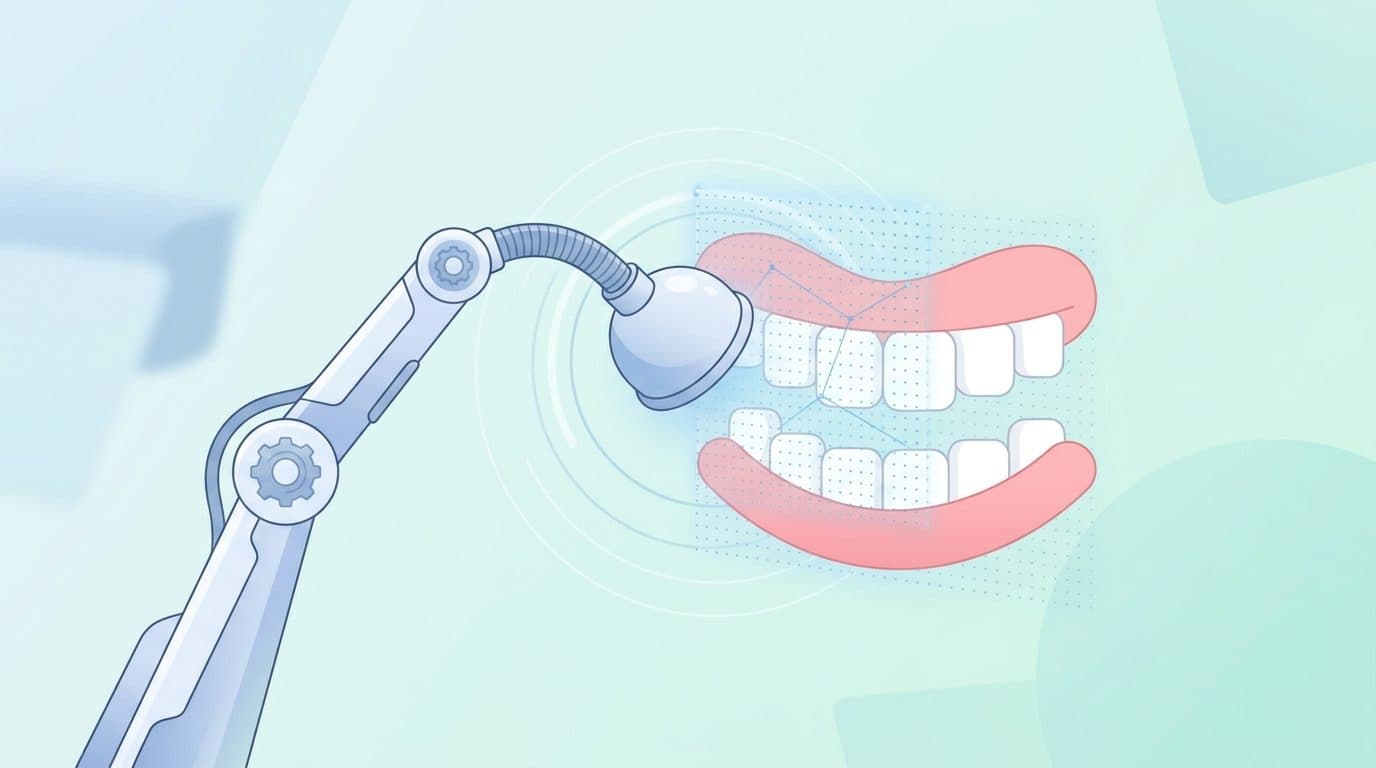
The era in which a robotic arm, not a dental hygienist, holds the suction tip that draws away blood and saliva during dental procedures is approaching. South Korean startup Dental Robotics has raised seed funding for exactly this kind of robot.
AI Angel Club, CNT Tech, People Investment, and Digital Healthcare Partners (DHP) all took part in the round. The investment amount was not disclosed.
A Suction Robot Arm Guided by a Mouth Map and Vision AI
Dental Robotics' robot overlays data from 3D CBCT (dental computed tomography) scans and intraoral scanners to map a patient's mouth at a resolution of 100 micrometers. Real-time computer-vision AI then distinguishes saliva, blood, teeth, and gums, and a 6-axis robotic arm finds and moves to the suction position on its own. The company says registration accuracy is within 0.25 millimeters, and testing across 210 cases showed a 98.6% success rate. A pressure sensor at the tip detects contact starting at 50 grams, and the system has a triple safety layer that avoids or stops the arm and cuts power the moment it senses contact.
The Task That Takes Dental Hygienists 2.5 Hours a Day
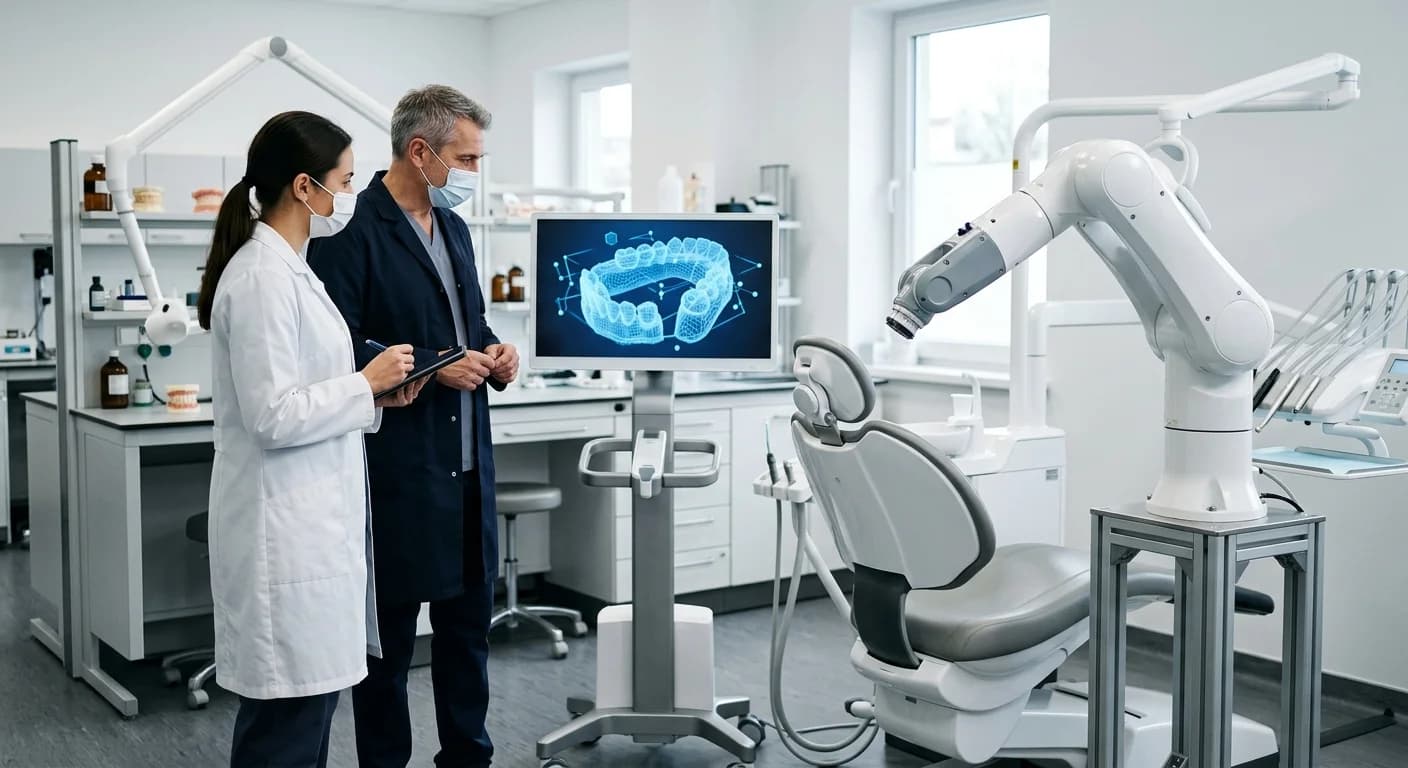
Dental Robotics was founded by practicing dentist Kim Nam-gyun and computer engineering specialist Eom Se-hyun, who serve as co-CEOs. The two built the robot to address a shortage of support staff such as dental hygienists. Industry data shows that a dental hygienist spends an average of 2.5 hours a day on suction work alone. The company is running clinical validation with Korea University Anam Hospital and plans to expand beyond suction into scaling, periodontal treatment, and extraction assistance. Before commercialization, it plans to first obtain Korea's Class II medical device approval, then pursue digital medical device certification and overseas certifications, aiming for a formal launch in 2028.
There is a similar effort targeting the same niche in Korea. Dental robotics startup Dentronic received $1 million (about 1.5 billion won) through South Park Commons' US accelerator fellowship program in March and is developing a 6-degree-of-freedom robotic arm called Dexer that performs repetitive tasks like suction and retraction. The fact that two companies brought out similar robots in the same year suggests the dental staffing shortage has become a market that investors are now watching.
Overseas Dental Robots That Cut Teeth Directly
Perceptive's Tooth Preparation for Crowns
While Korean robots start with tasks that do not touch teeth directly, such as suction and retraction, robots abroad have gone a step further. US startup Perceptive completed a fully robot-automated tooth-preparation procedure for a crown on a real patient in Barranquilla, Colombia, in 15 minutes, a procedure that normally requires two visits of more than an hour each. Still, Perceptive's system is expected to need about five more years before it receives full US Food and Drug Administration (FDA) approval.
Lupin Dental's Veneer Preparation Robot
French startup Lupin Dental (legal name Digicouto) raised a 15 million euro (about 22.8 billion won) Series A led by investor Fynveur in August for a system that hands veneer preparation work to a robot, TechFunding News reported. Under a dentist's supervision, the robot shapes teeth to create space for veneers. It has already received approval in India and the UK, but is not yet usable in the US or the European Union.
Commercialization in Korea Targeted for 2028
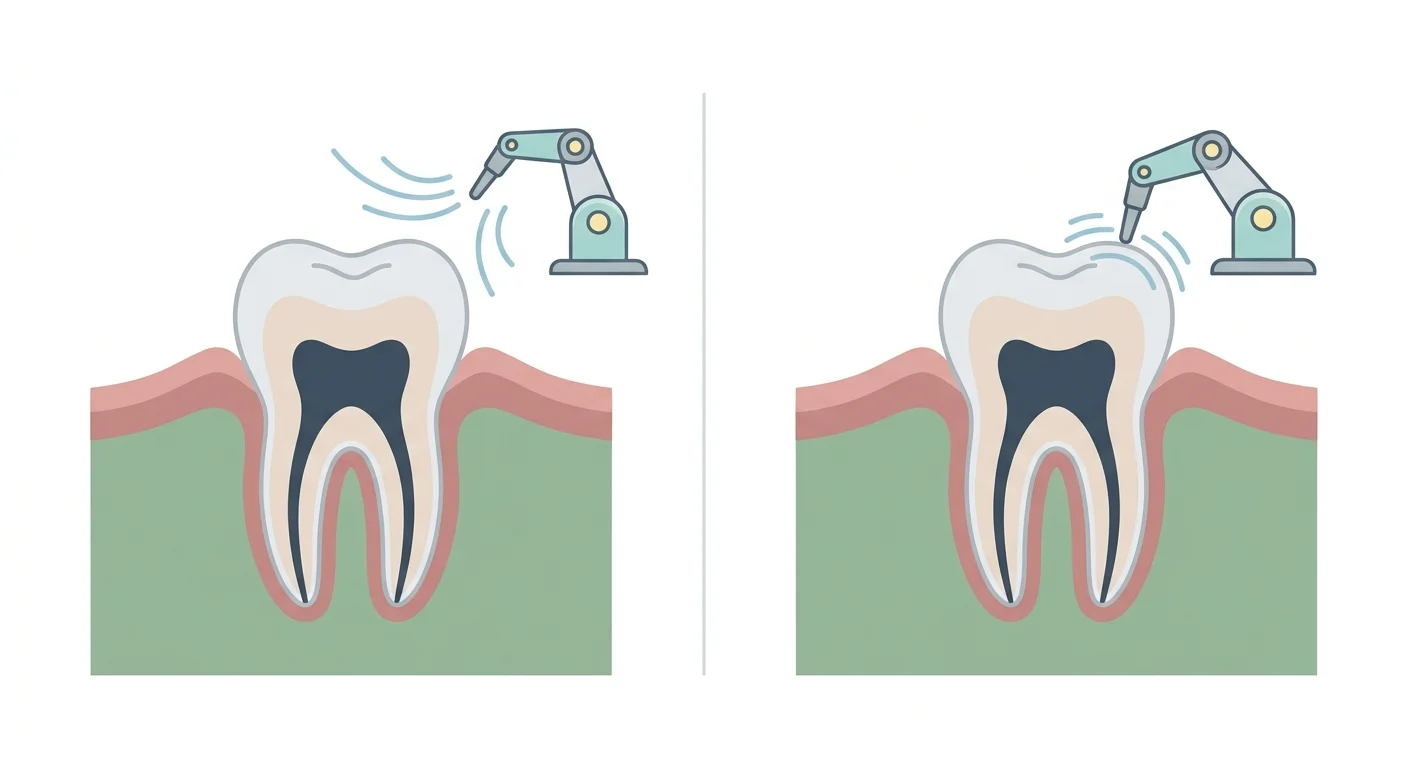
So nothing has changed in Korean clinics yet. Dental Robotics, too, must first go through Korea's medical device approval process before commercialization, and its target date is 2028. As with investment in handing dental phone calls to AI, which found its footing first, it will take more time before robotic arms naturally blend into assistant work in the clinic. Still, the fact that investment is now reaching past the front desk to the dental chair itself is a sign that efforts to solve the dental staffing shortage with technology are moving to their next stage.