
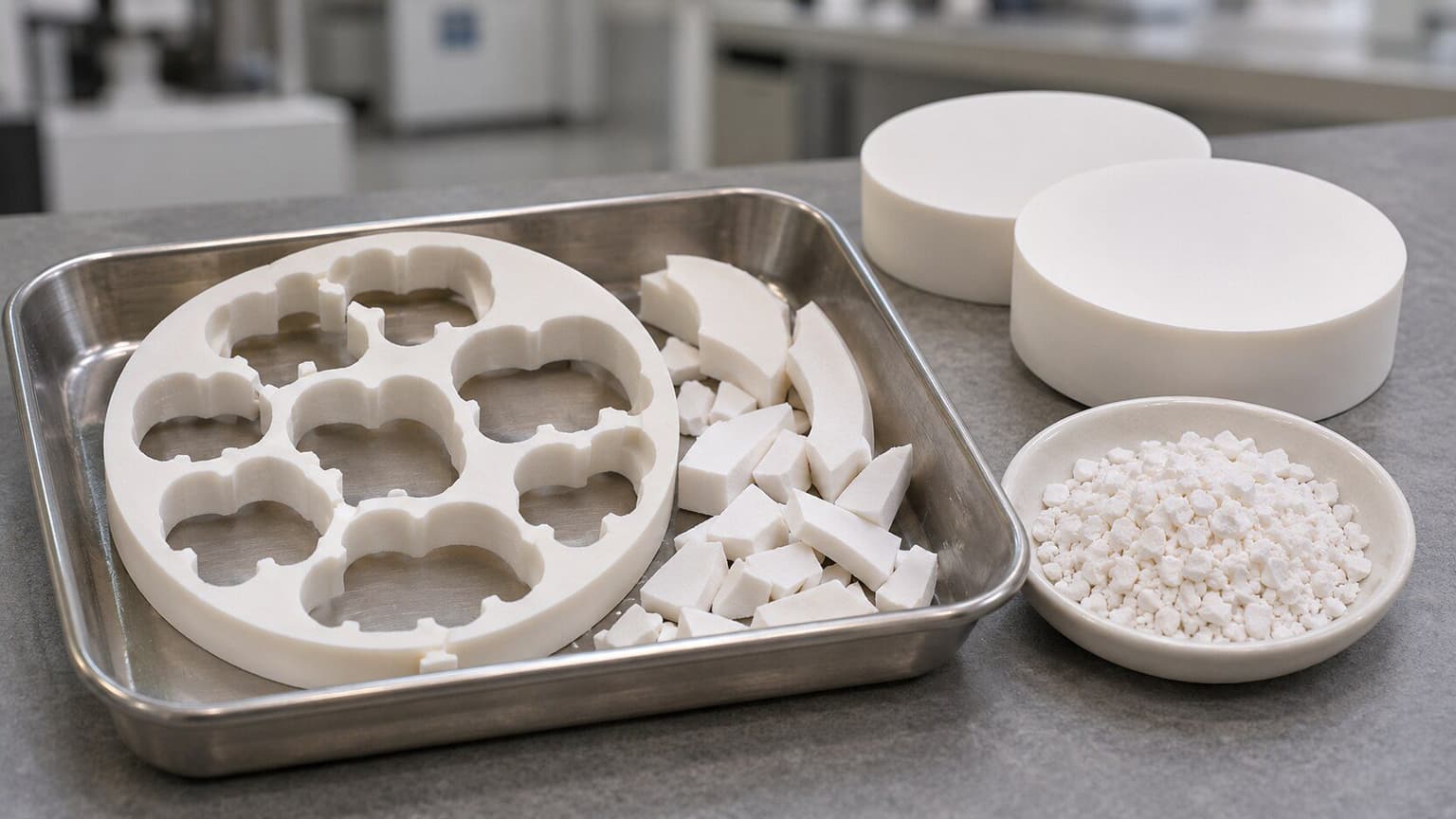
A joint project has begun in Japan to collect zirconia left over from milling crowns and bridges and return it to use as material for dental restorations.
In a joint announcement on May 21, 2026, Shofu, Tosoh, Mitsui Chemicals, and Orbray said they had begun testing the recycling of zirconia milling waste. They aim for practical implementation in fiscal 2028. The announcement reported the start of testing as of that date; it did not specify a separate date for plant operations to begin or for finished products to launch.
Material Left Over After Milling Discs
Zirconia is a material used to make dental restorations such as crowns and bridges. Dental laboratories mill disc-shaped material into the required shapes. The four companies identified the large amount of zirconia left unused and discarded during this process as the starting point for the project.
The companies described the material to be collected as waste generated during the fabrication of dental restorations. They did not present this as a project to collect restorations previously used by patients. The aim is to reduce material loss during milling at the laboratory, before a patient receives a finished crown at the dental office.
Dividing the Roles of Collection, Recovery, and Forming
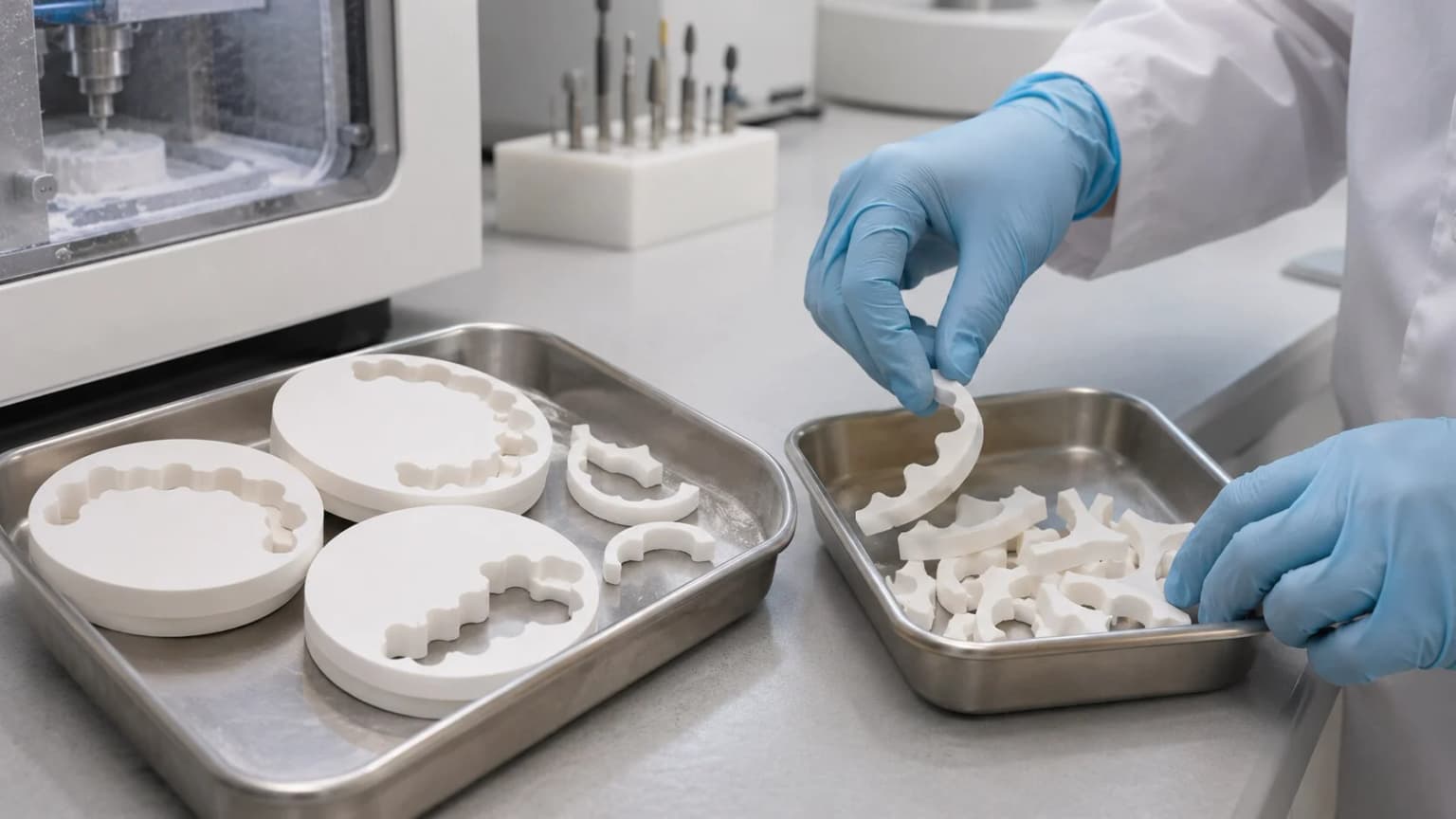
Shofu will collect waste from zirconia products it has sold. Tosoh will use its own technology to turn the collected material back into raw material. Orbray will form the recovered raw material into blocks for commercialization, while Mitsui Chemicals will provide operational and other support.
The testing goes beyond a single process for treating collected material. It connects the entire flow: working with dental laboratories to collect waste, returning it to raw material, and making it into milling blocks again. This is why cooperation from the laboratories, the end users, is part of the project structure.
Testing Still Needed Before Practical Implementation
This announcement does not mark the start of sales of recycled products. The four companies outlined a plan to test a system spanning collection through commercialization. They did not disclose collection volumes, the proportion of recovered raw material, or selling prices. Although they cited environmental improvement as a project objective, the announcement also contains no measured results showing how much waste or carbon emissions would be reduced.
Changes that patients might encounter at the dental office depend on milling blocks made from recovered raw material becoming available as actual products. However, the announcement includes no supply schedule for South Korea or plans for adoption by dental practices there. This news alone provides no basis for concluding that crown materials in South Korea will change or that treatment costs will fall.