
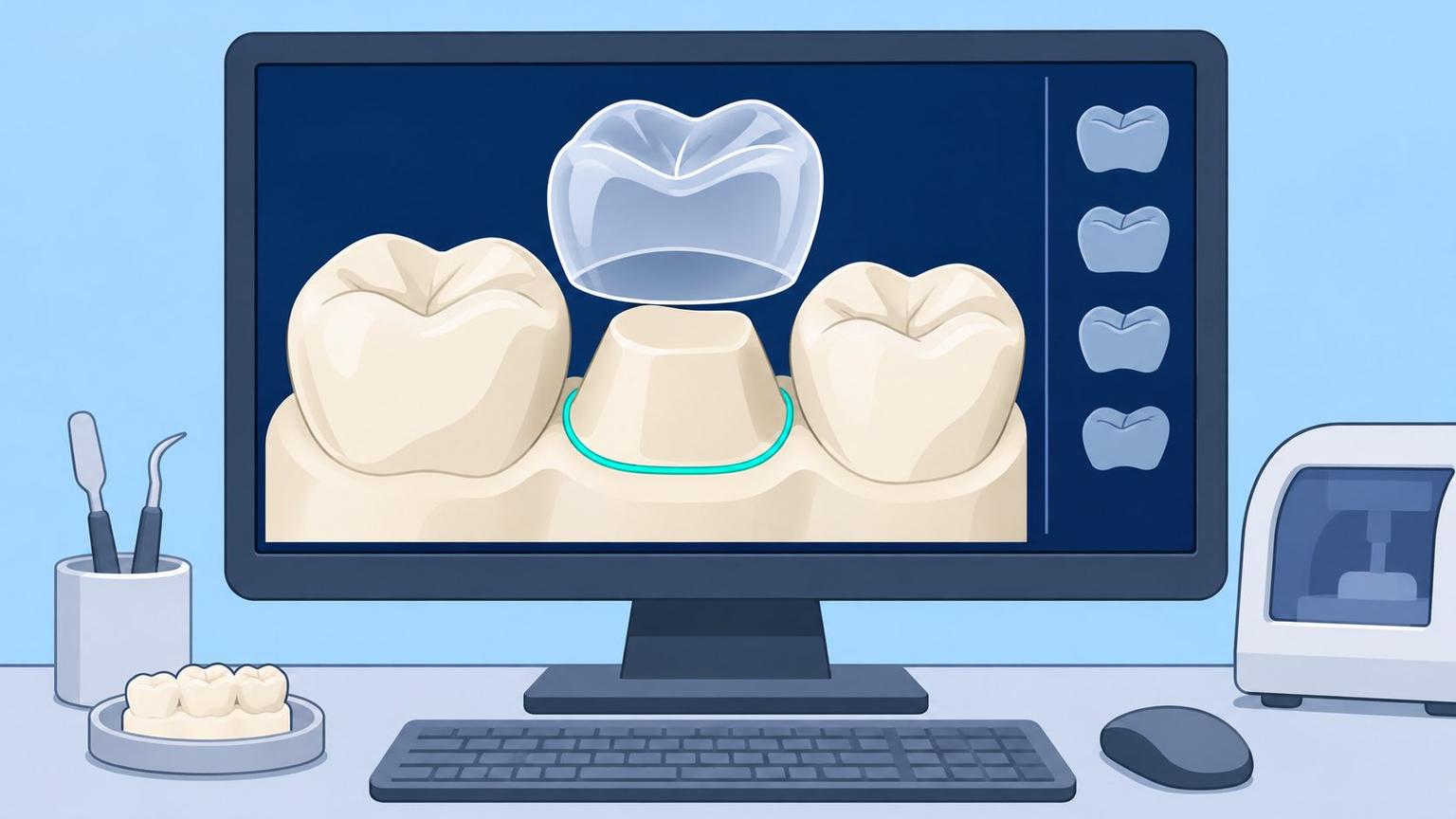
exocad has added AI features that automate finding crown margins and submitting multiple jobs when designing crowns on a computer.
In an official announcement on November 9, the company introduced SR2, the second service update for its DentalCAD 3.3 Chemnitz dental restoration design software. The announcement focuses on changes to repetitive tasks within the design software rather than new equipment. However, it did not provide a country-by-country feature rollout schedule separate from the announcement date.
Submitting Multiple Design Jobs in a Batch
The new batch submission feature lets users select multiple jobs in DentalDB, the job management interface, and send them to AI Design simultaneously. AI Design is exocad's AI-based crown design service. Completed results can be viewed online at my.exocad.
The company explained that the feature aims to simplify the design workflow for users handling large workloads. Its central function is submitting several jobs together. The announcement provided no comparative figures showing how much actual production time was saved, so any reduction in waiting time is difficult to quantify.
Margin Detection and Bite Analysis
The update also adds AI detection of the margins needed for crown design. It identifies the boundary of a tooth prepared for a crown in a 3D scan and marks it with a line. The company said this is intended to reduce the burden of manually defining margins.
Another feature analyzes digital scans showing how a patient's upper and lower teeth fit together and incorporates this into the crown design. The company explained that it designs the crown to follow the curve of the chewing surfaces. This is a design feature described by the company; it was not presented as evidence of improved chewing comfort or longer restoration life in actual patients.
Integration with Printing Software and the South Korean Supplier
SR2 also includes improvements that simplify connecting to production software for 3D printers. The company has also revised the export feature for displaying designs on the web, along with implant recognition. The update addresses production and sharing after design as well as AI features.
The update also changes the underlying software framework to maintain security support. exocad switched to Microsoft's .NET 10 and recommended that existing DentalCAD 3.3 Chemnitz users update to maintain security support for the underlying technology.
In South Korea, Vatech MCIS stated in a February 24 notice that it is an official supplier of exocad Dental CAD software and licenses. It provides information on dental restoration design features and separately purchased add-on modules, and offers purchasing consultations through sales representatives.
The connection between this news and the dental clinic is that these design tools are used in the process of making the crowns patients receive. However, the South Korean supplier's existing notice predates the SR2 announcement. It does not confirm when these AI features will become available in South Korea, any additional costs, or changes to patients' treatment fees or number of visits.