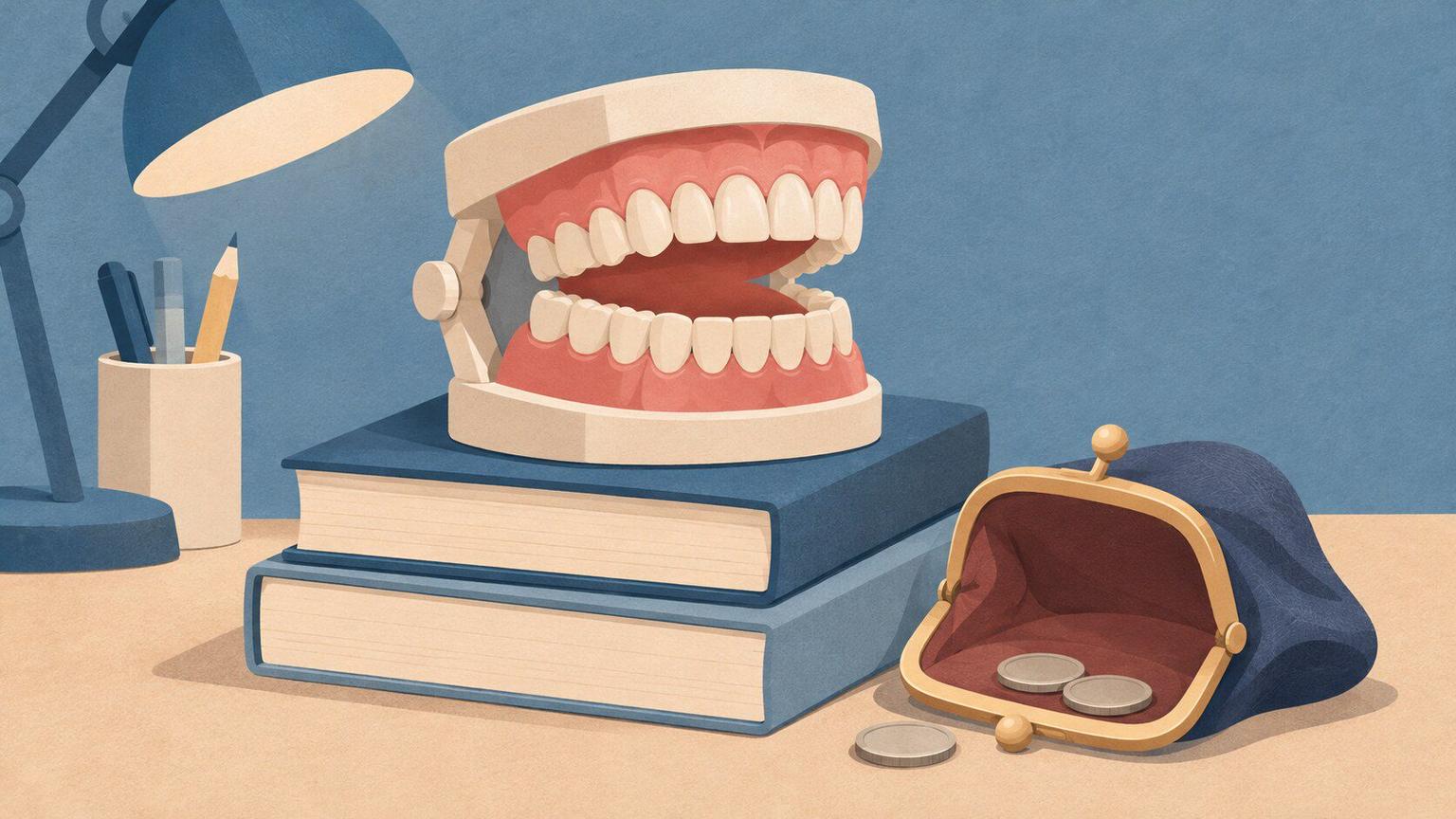
Some students in the United States are turning to crowdfunding after gaining admission to dental school to cover tuition that federal student loans no longer fully fund.
According to a November 6 report by The Associated Press, changes to federal loan caps that took effect this fall are making it harder for students in expensive dentistry, medicine and law programs to finance their studies. When they seek to borrow the shortfall from private lenders, their own or their families' credit becomes another hurdle.
$76,000 Raised After Private Loan Denials
Darian Bogie, 25, a first-year dental student at Howard University, was turned down by several private lenders. He started crowdfunding to cover tens of thousands of dollars in first-year tuition that federal loans would not cover, raising about $76,000. Bogie told AP that this was his last resort.
Students with short credit histories often ask family members to co-sign. But Bogie's father, a sanitation worker, had covered his expenses without borrowing until last year, leaving him without a sufficient credit history either. The case illustrates how even a parent's financial history can affect a student's ability to attend school.

A $200,000 Loan Cap for Professional Degree Programs
Previously, graduate students could take out federal loans up to the full cost of their education. Under the new system, borrowing is capped at $200,000 for programs classified as professional degrees and $100,000 for other graduate programs. New borrowers also face a lifetime borrowing limit of $257,500.
Moving to private loans can also change repayment terms. AP explained that federal loans generally offer more flexible repayment terms, the possibility of having the remaining balance forgiven after 10 years of public service, and lower interest rates for many students.
An analysis by American University's center for research on higher education and economics found that costly programs such as medicine, law and dentistry are particularly affected. However, this report alone does not establish how many dental students overall have been denied private loans or have given up plans to enroll.
Hopes for Lower Tuition and Fears of Barriers to Enrollment
The Trump administration argues that loan limits will reduce excessive borrowing and encourage universities to reconsider their costs. According to the conservative American Enterprise Institute, at least 40 schools have lowered costs for some programs since the caps took effect. This does not mean that every school or dental school has reduced tuition.
Critics worry that most universities have little room to lower tuition and that students from poor families may bear the burden. Meanwhile, Marc Schoonover, a general manager at private lender ELFI, said fewer students than initially feared had been unable to find financing. This should be understood as a lender's assessment.
South Korea also has a system in which total tuition loan limits vary by type of degree program. According to the Korea Student Aid Foundation, the tuition borrowing limit under its standard repayment student loan program is 90 million won for university programs in medicine, dentistry and Korean medicine. The program covers the tuition required for the semester, subject to a total cap that includes outstanding balances on existing tuition loans. Income-contingent repayment loans have separate rules, so comparing the amounts alone with U.S. caps makes it difficult to judge the actual scope of support.