
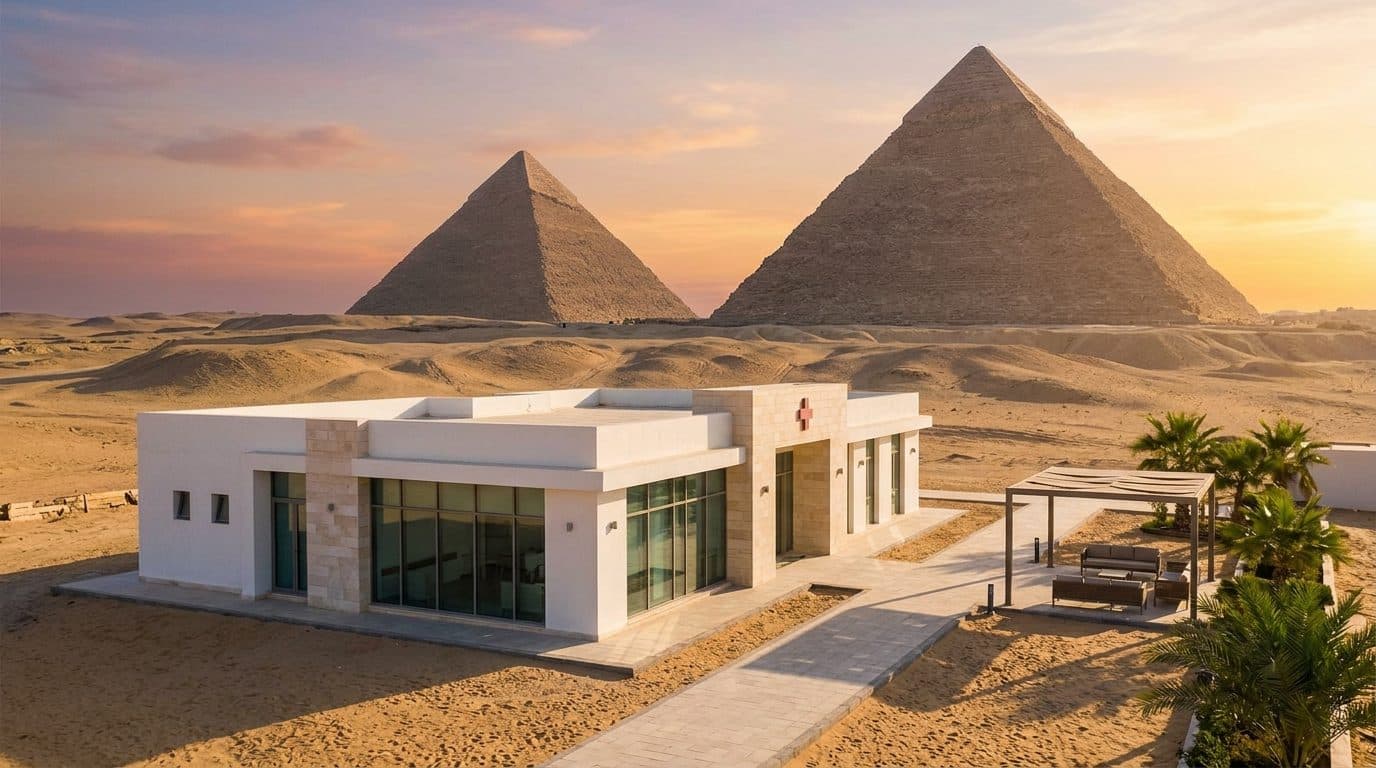
Egypt is bundling hospital care into tourism packages built around the pyramids and Red Sea beaches. Dental care has now joined a list that already includes heart surgery and in vitro fertilization.
According to Bloomberg, Egypt's health authority, the Egypt Healthcare Authority (EHA), is expanding its initiative to attract patients from abroad, called "In Egypt We Care." The EHA operates nearly 400 facilities nationwide, including hospitals, laboratories and clinics, and is adding facilities dedicated to foreign patients near tourist destinations such as Aswan, the Red Sea coast and Luxor.
Expanding Hospitals Near Tourist Sites and Rising Foreign Patient Numbers
Luxor is an ancient city famed for the Karnak temple and the Valley of the Kings. In the 19th century, Britons suffering from pulmonary diseases came here to convalesce, and the travel agency Thomas Cook even opened a hospital that treated locals and foreigners alike. Today, six hospitals in the city offer hotel-grade suites along with obstetrics, pediatrics and radiology services.
According to the EHA, 13,370 foreign patients visited its facilities last year, more than six times the 2,075 recorded in 2022, drawing 124 nationalities from Arab, African, Asian, European and American countries. The EHA expects related revenue to rise from $3.8 million last year to $6 million this year. Last month, it also launched a new service at the Grand Egyptian Museum that lets foreign patients book care online. The EHA said it plans to add 5,000 more medical facilities over the next six years, expanding into cardiovascular, bariatric and cosmetic surgery and IVF, as well as advanced dental care.
The Rivals Egypt Must Overtake
The global medical tourism market was estimated at roughly $34 billion last year. Within that market, Turkey leads in scale and value with "pay-up-front, quick-turnaround" treatments best known for hair transplants, while the UAE holds the edge in premium care.
EHA chairman Ahmed El-Sobky said Egypt has "the ability to combine medical and traditional tourism," adding, "An international patient can receive advanced healthcare while enjoying tourism, cultural and entertainment attractions." Emre Atceken, co-founder of the London-based medical tourism company WeCure, said Egypt "cannot win simply by copying" other countries' approaches. "It must carve out a distinct, well-defined niche to give international patients a real reason to switch," he said.
Concerns Over Medical Tourism Growth and Foreign Patients in Korea
The World Health Organization and the World Medical Association warn that if something goes wrong during treatment abroad, any savings can vanish quickly, and questions of accountability can become complicated. There are concerns within Egypt as well. As private medical tourism grows, critics say, skilled specialists and nursing staff may leave public hospitals, lowering the quality of the public healthcare that ordinary citizens rely on. Egypt added momentum to this trend in 2024 when it passed a law allowing the private sector to manage public medical facilities.

Dental care joining this competitive lineup will feel familiar to Korean readers. According to Ministry of Health and Welfare figures, the number of foreign patients who visited Korea last year reached 2.01 million, topping 2 million for the first time. Among them, patients who used dental clinics rose 128.9% from the year before, the sharpest increase of any medical specialty. The related economic impact, including medical tourism spending, was calculated at 15.8 trillion won. In the market Egypt is just entering, Korea is already an established competitor.