Overview
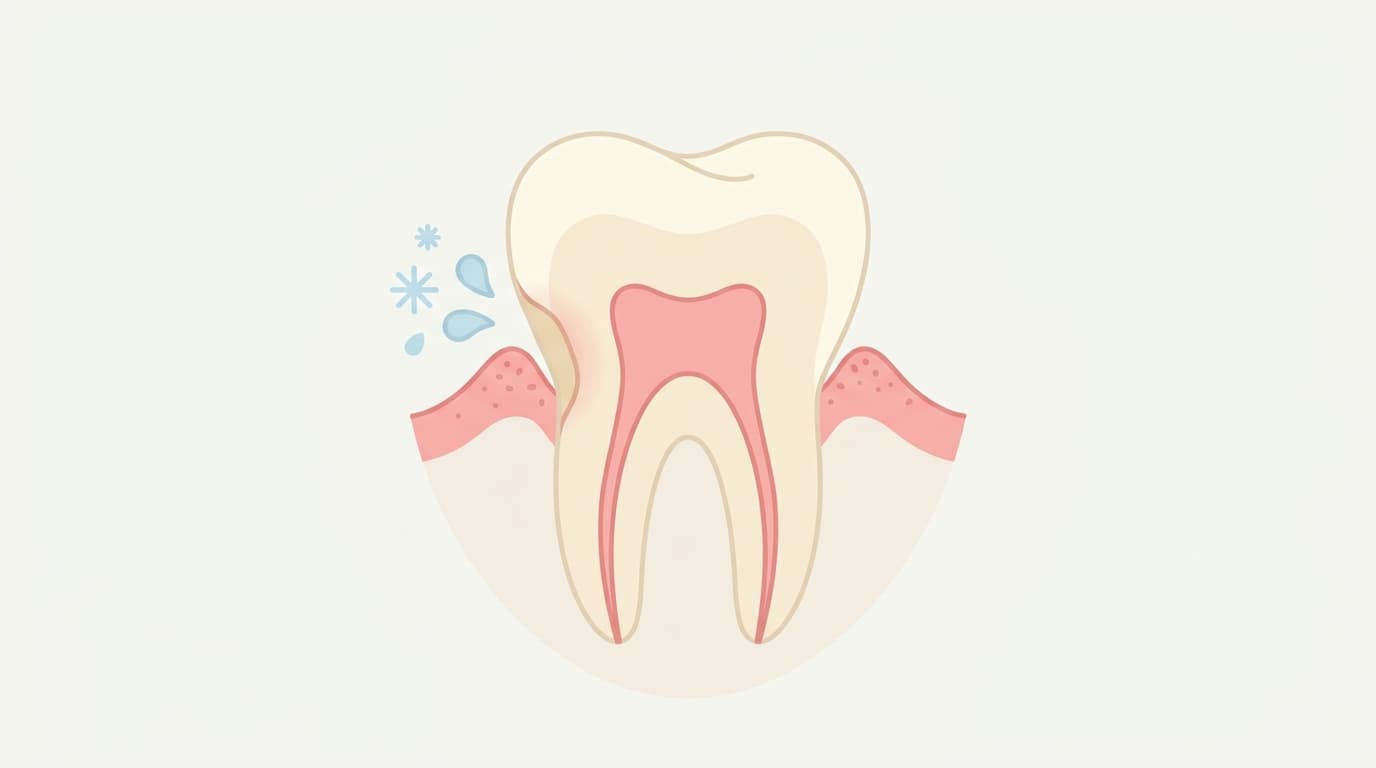
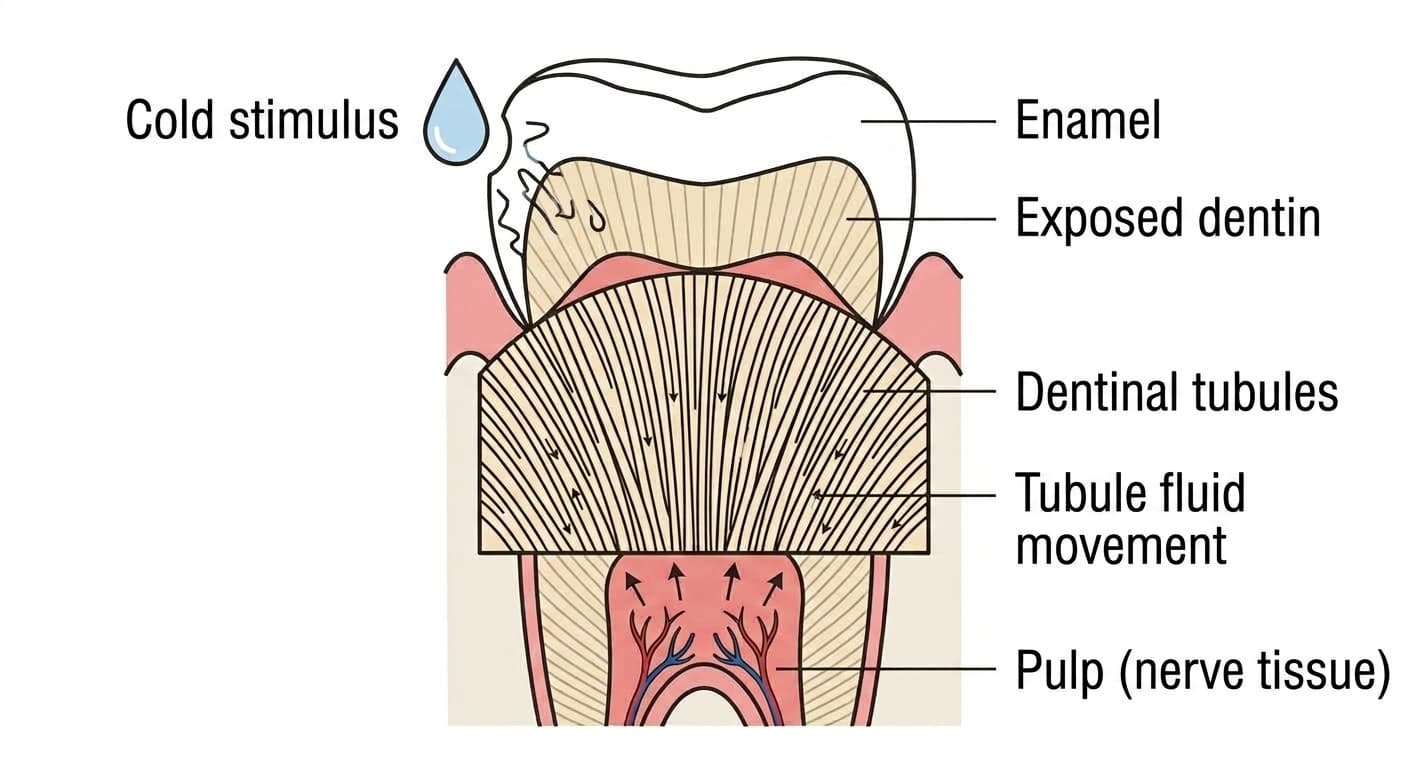
Tooth sensitivity (dentin hypersensitivity) is a condition in which, once gum recession or worn tooth surfaces expose the dentin underneath, a stimulus such as cold water or cold air triggers a sharp, brief twinge of pain the instant it touches the tooth. The dentin is packed with thin dentinal tubules that run all the way to the pulp (nerve tissue); when these tubules are open to the oral cavity, a stimulus sets the fluid inside them in motion, and that movement irritates the nerve, producing the sensation of pain. A defining feature is that the pain disappears as soon as the stimulus is removed, and it can occur even without a cavity or gum disease.
Causes
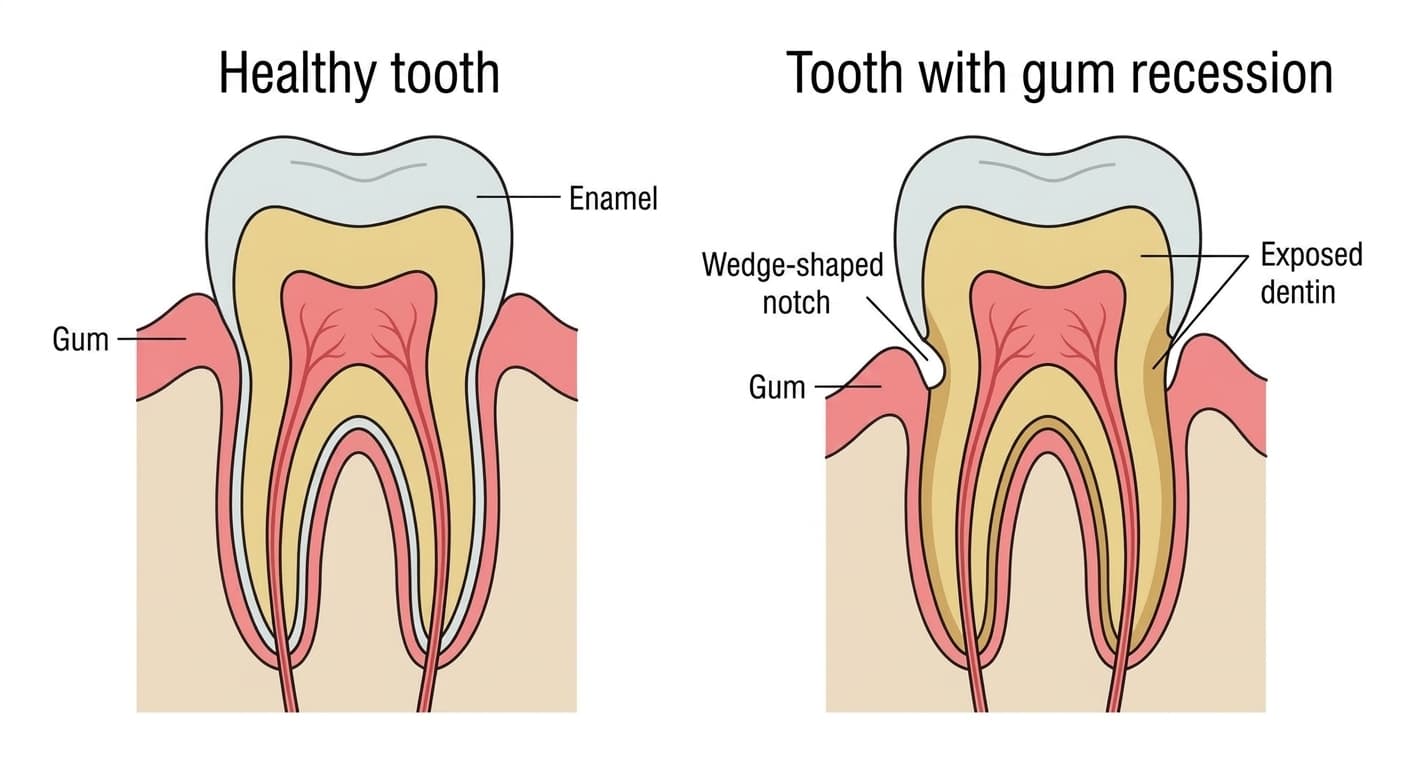
The most common causes are gum recession, which exposes the surface near the tooth root, and physical wear that exposes the dentin on the tooth surface. Brushing too hard or scrubbing side to side can wear a wedge-shaped notch into the side of the tooth, especially at the gumline, while grinding or clenching the teeth wears down tooth structure on the chewing surfaces and the edges of the front teeth. Frequent consumption of acidic foods such as carbonated drinks or fruit can chemically dissolve the tooth surface at the same time, speeding up exposure. A less common cause is acid reflux or an eating disorder involving frequent vomiting; in these cases, stomach acid repeatedly dissolves the inner surfaces of the teeth, and symptoms can appear across multiple teeth at once, so the person's overall health should be evaluated as well. Dry mouth or an uneven bite can also contribute to progression.
Symptoms
The typical pattern is a brief, sharp twinge the instant cold water or cold air touches the tooth, which subsides as soon as the stimulus is removed. Similar pain can also be triggered by sweet or sour foods, or by tactile stimuli like brushing. It's most common in people in their 30s and 40s, and it tends to occur especially on the cheek-side surface of teeth that narrow toward the gumline, such as canines and premolars, and on the sides of teeth with gum recession. However, having an area of exposed dentin doesn't always mean it will be sensitive; some people have the same degree of surface wear or gum recession without any symptoms, so appearance alone isn't enough to determine whether hypersensitivity is present.
Diagnosis
Diagnosis combines asking about the symptoms, applying a stimulus to see how the tooth responds, and examining the tooth directly. The dentist asks what triggers the pain and how long it lasts, and checks the response by applying a cold stimulus; about 75% of people with hypersensitivity are reported to respond to this test, though it alone cannot confirm the diagnosis. Hypersensitivity can occur simply from exposed dentin with no specific lesion, so checking for the presence of a lesion is key to the differential diagnosis.
A similarly sensitive reaction can also occur when a stimulus reaches the tooth through a deep cavity or a gap around a restoration, so when needed the dentist also checks whether the nerve is alive by seeing whether it responds to a mild electrical stimulus. If pain remains after the stimulus is removed, or if spontaneous pain occurs on its own, pulp inflammation is suspected; this shouldn't be self-diagnosed, and the cause should be determined through a dental visit.
Treatment & Where to Go
Treatment follows a stepwise approach. At home, desensitizing toothpaste is used: it works through ingredients that calm nerve excitability, or ingredients such as fluoride that redeposit minerals at the tubule openings (remineralization) to block the pathway, though the effect only appears after weeks of consistent use. If this isn't enough, a dentist can apply a desensitizing agent or an adhesive to seal the tubule openings, cover the exposed surface with resin, apply fluoride varnish, or use laser treatment. If symptoms still persist, the dentist evaluates the depth of the notch, the risk of pulp exposure, and any aesthetic concerns, and may fill the exposed area with resin or a similar material, or, if there is significant gum recession, consider a periodontal approach such as a gum graft to cover the root surface. Treatment begins with restorative dentistry, and if a gum graft is needed, this is coordinated with periodontics.
Outlook & Precautions
If the underlying habit or stimulus continues, the area of exposed dentin can widen and deepen over time, and symptoms may worsen. Brushing right after eating acidic foods wears down the acid-softened surface more easily, so it helps to wait a while before brushing or to rinse with water instead. If the underlying brushing habit or teeth grinding isn't also corrected, symptoms tend to come back even after treatment. If the pain doesn't go away after the stimulus is removed, or if new spontaneous pain appears even at rest, it may have progressed beyond hypersensitivity to pulp inflammation, so you shouldn't delay seeking dental care.