
Overview and Causes
How It Differs from Mucositis
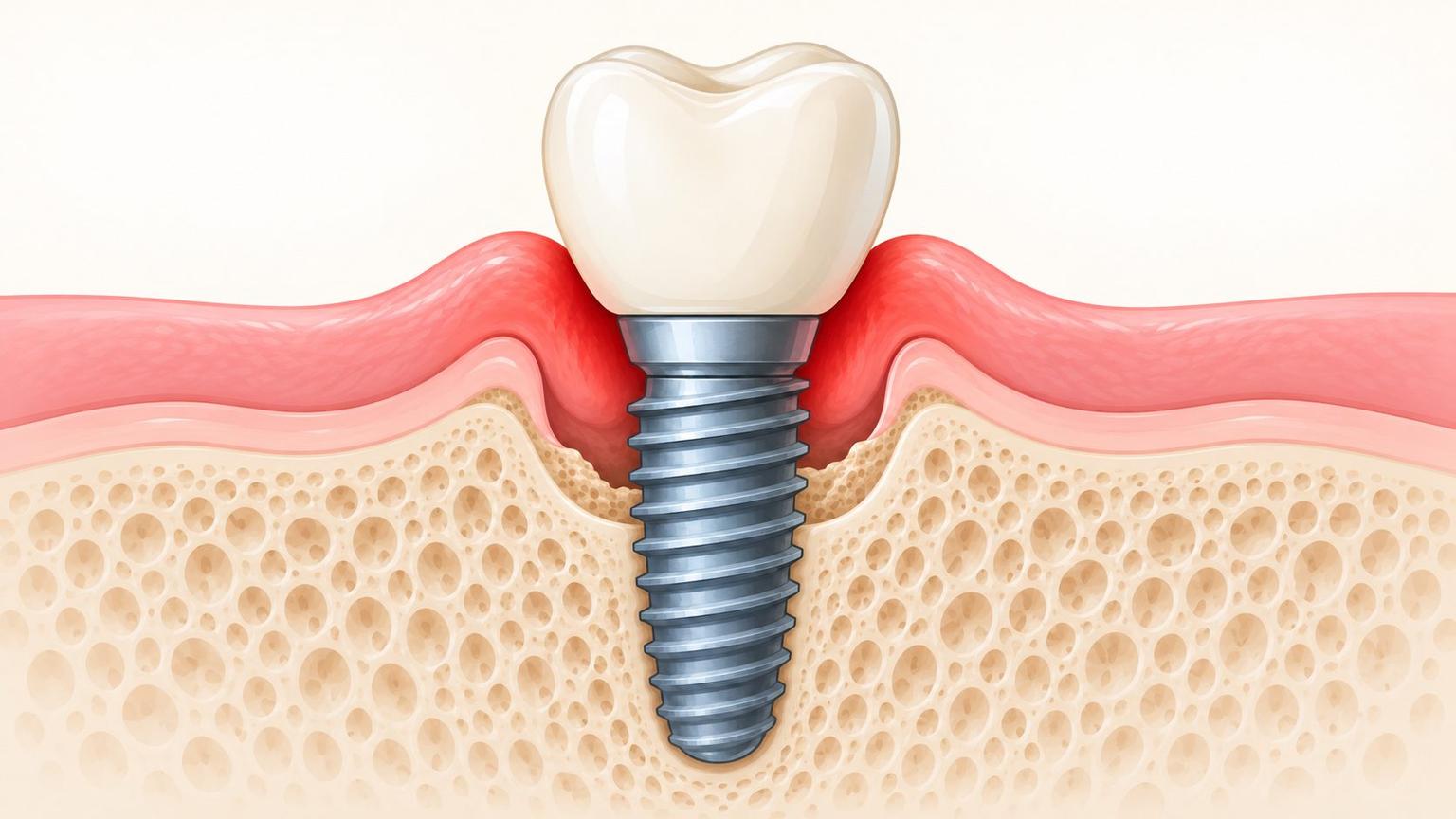
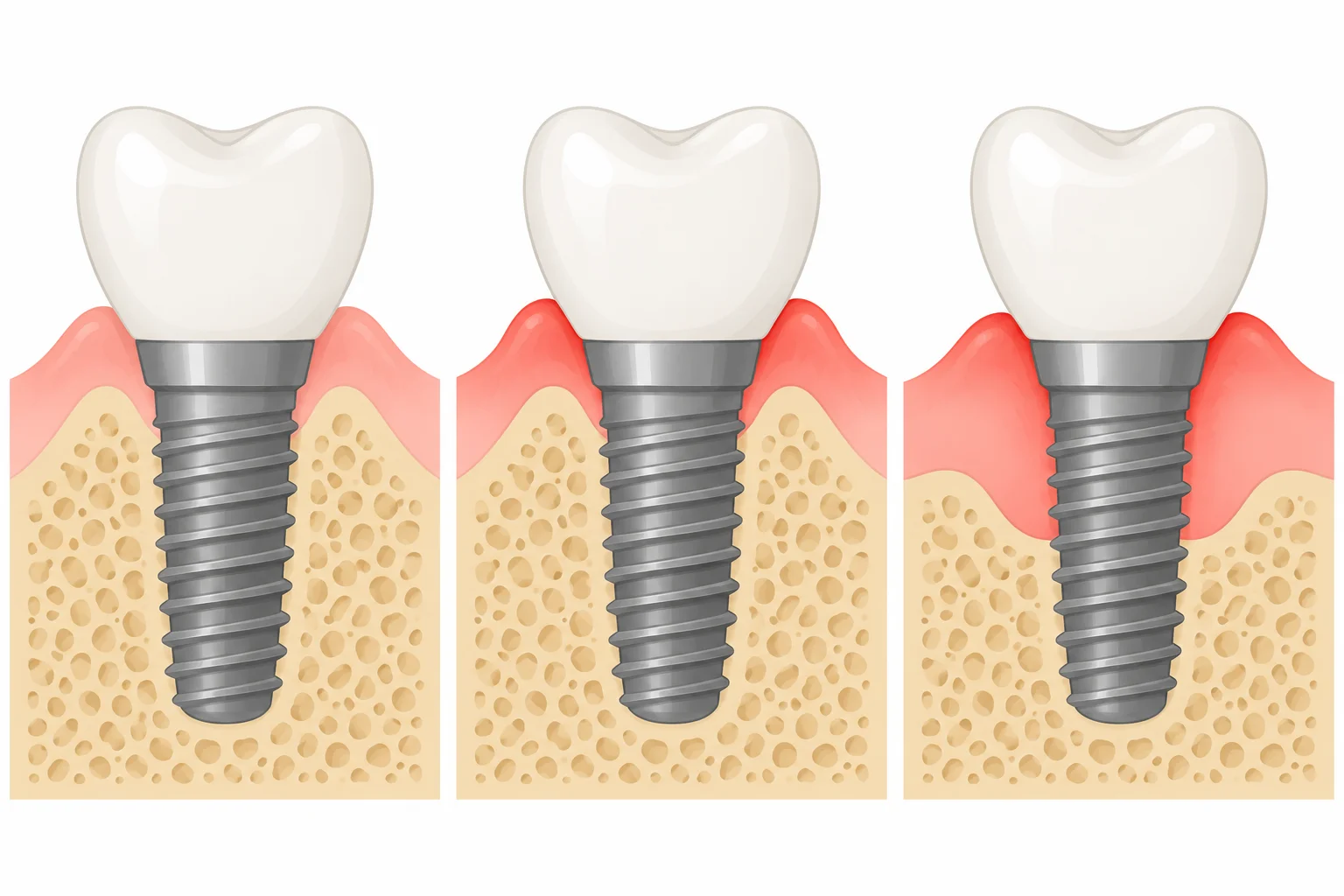
Peri-implantitis is a condition involving inflammation of the gums around an implant and progressive loss of supporting bone. If peri-implantitis is suspected or diagnosed, do not delay dental care. If needed, seek evaluation and treatment from a dentist specializing in periodontal care. Peri-implant mucositis involves inflammation of the surrounding gums without additional bone loss beyond the bone changes that occur during initial healing. Plaque control and nonsurgical care can restore health. If left untreated, mucositis may progress to peri-implantitis.
Plaque and Residual Cement
The main cause is the accumulation of dental biofilm (a layer of bacteria attached to the surface). When a restoration is cemented in place, cement remaining below the gumline can contribute to inflammation around the implant. A history of periodontitis, smoking, uncontrolled diabetes, and a lack of regular maintenance are risk factors.
Diagnosis and Treatment Path
Assessing Gum Findings and Bone Changes Together
The dentist reviews your medical and dental history and maintenance habits, and examines the depth of the space between the implant and gums, bleeding or pus during examination, and bone loss on X-rays together. Where possible, examination records and X-rays taken after the restoration was fitted are compared to determine whether the space has deepened and whether further bone loss has occurred. Gum redness or swelling alone does not distinguish mucositis from peri-implantitis. Depending on its type, cement remaining below the gumline may be difficult to see on X-rays, so imaging alone cannot rule it out.
Treatment Options After Surface Cleaning
Treatment begins with nonsurgical care to remove plaque and contamination from the implant surface. If residual cement is a cause, it is removed. When nonsurgical care alone cannot adequately control inflammation and bone loss, surgery may be considered to open the gums and clean the surface or remove damaged tissue, or to reconstruct bone. The suitability of reconstructive surgery depends on factors such as the shape and depth of the area of bone loss, implant position, and the ability to maintain oral hygiene. Even surgery does not restore all lost bone. The next step is determined by the treatment response and the extent of bone loss. Implant removal may be considered when preservation is difficult, such as when bone loss is very severe or the condition repeatedly worsens after treatment.
Symptoms and Precautions
Swelling, Pus, and When to Seek Care
The surrounding gums may become red or swollen, discharge pus, or recede. Increased bleeding during brushing or cleaning between teeth is another sign to watch for. Changes may be difficult to notice on your own, so regular checkups are needed even without obvious discomfort. If these changes occur, a dentist should check for bone loss. If peri-implantitis is suspected or diagnosed, do not delay dental care. If needed, seek evaluation and treatment from a dentist specializing in periodontal care. If the condition progresses without treatment, it can lead to implant loss.
Managing Recurrence After Treatment
Bone loss may progress again even after treatment, including surgery. The goal of treatment is to reduce inflammation and stop further bone loss. Control plaque every day, and have your gum condition compared with previous records at regular checkups. Along with brushing, learn how to clean between teeth in a way suited to the shape of your restoration. Attend regular visits for examinations and professional plaque removal. Follow-up intervals are determined by risk and treatment response.