
Overview and Causes
Hormonal changes during pregnancy and local irritation
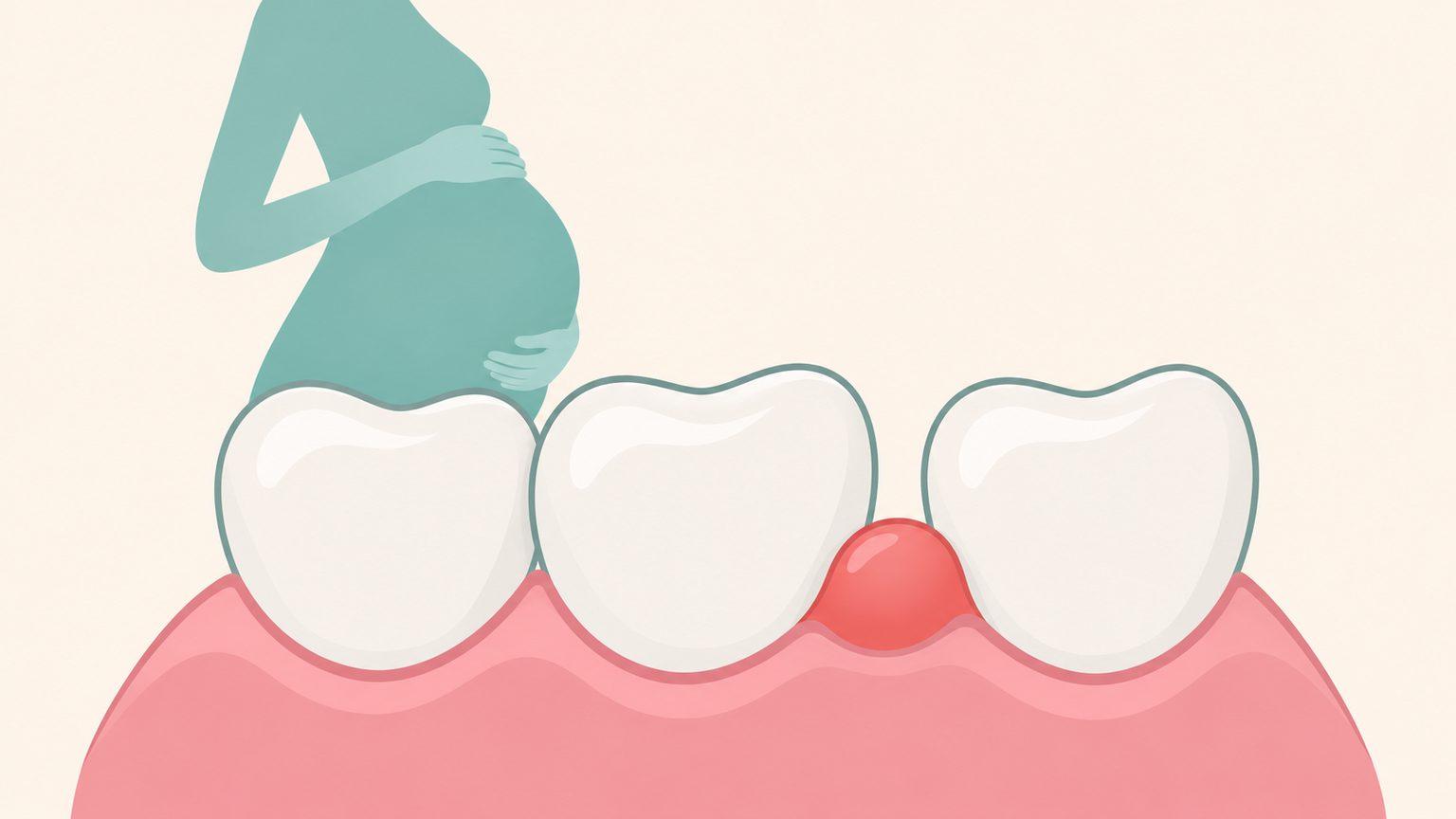
Pregnancy pyogenic granuloma is a benign lesion in which tissue rich in blood vessels grows excessively in response to hormonal changes during pregnancy and local irritation of the gums. Although its name includes the word ‘pyogenic,’ it is not an infectious lesion that produces pus. A gum lump that develops during pregnancy should be assessed by a dentist rather than diagnosed by appearance alone.
Plaque (the bacterial film that adheres to tooth surfaces), tartar, trauma, and poor oral hygiene contribute to its development. It can also develop in areas with severe gingivitis (inflammation limited to the gums). Hormonal changes during pregnancy are thought to contribute by increasing the gums’ response to plaque or repeated irritation. However, the exact mechanisms of its development are not fully understood.
Diagnosis and Treatment Path
Distinguishing it from similar gum lumps
Not every red lump that develops during pregnancy is a pregnancy pyogenic granuloma. The dentist checks when it appeared, changes in its size, its bleeding pattern, and the condition of the surrounding gums. A biopsy is performed if the diagnosis is uncertain or another condition is suspected, and tissue removed by excision is also examined by a pathologist.
Choosing between observation after childbirth and excision
Removal during pregnancy is not always necessary. If a dental examination indicates pregnancy pyogenic granuloma and bleeding or interference with eating is not significant, changes can be monitored after childbirth while maintaining oral hygiene and removing plaque and tartar as needed. Excision may be deferred because the lesion may shrink after childbirth. During pregnancy, hormonal influences and local irritation persist, so the lesion can recur even after excision.
If bleeding recurs, the lump interferes with eating or toothbrushing, or it needs to be distinguished from another condition, biopsy or excision may be considered during pregnancy. Necessary dental treatment and local anesthesia can be provided during pregnancy, with consultation with the obstetric care team depending on the pregnancy and the extent of treatment. When removal is needed, the lesion is excised and the local irritants that contributed to it are also eliminated. For gum lesions, scaling of the adjacent teeth removes plaque and tartar as well. Consult a dentist who provides periodontal treatment or oral and maxillofacial surgery.
Symptoms and Precautions
A painless red lump and bleeding
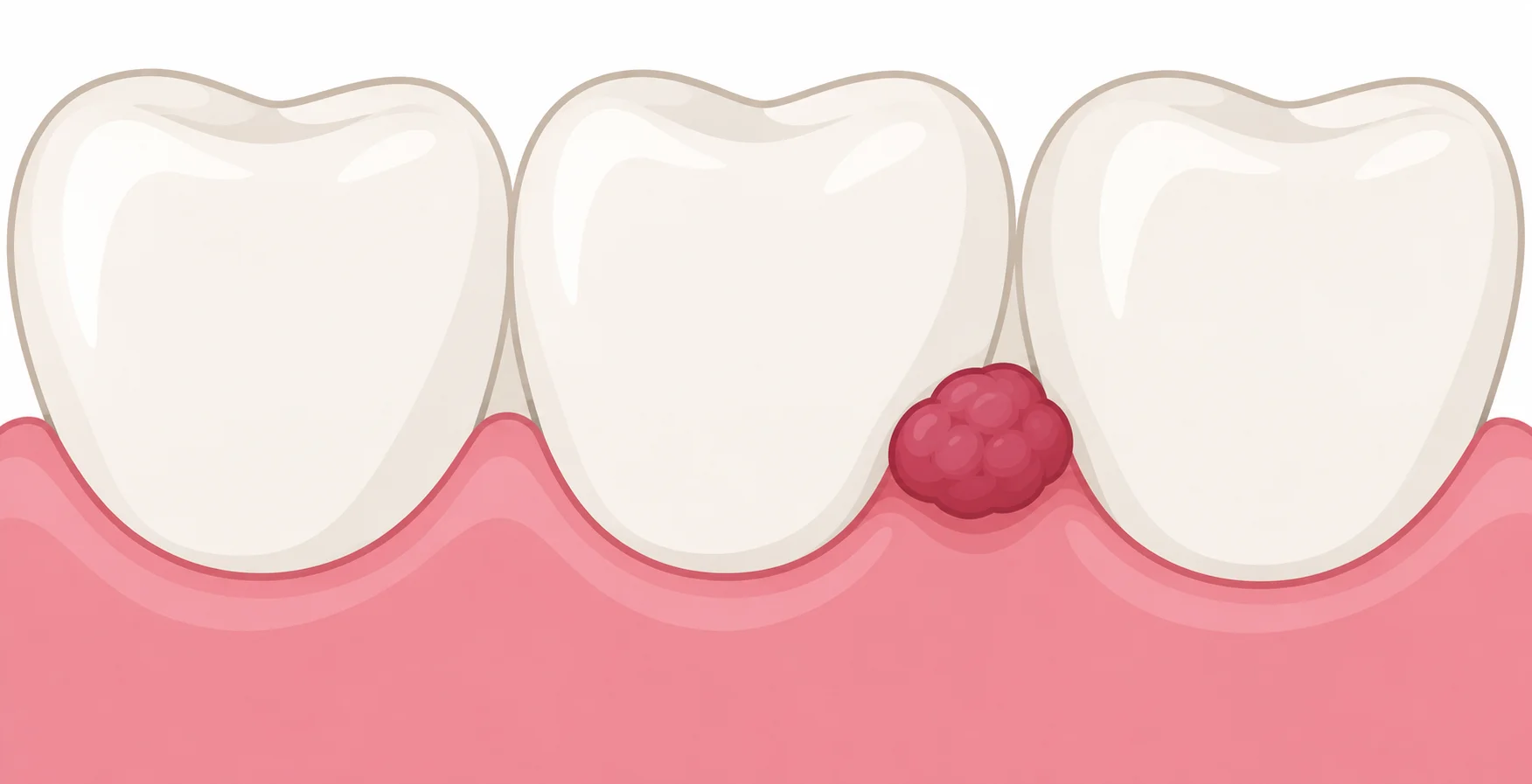
A red or purple lump appears on the gums and bleeds easily. Because the lesion contains many blood vessels, even minor irritation, such as toothbrushing or contact with food, can cause bleeding. It may be attached by a thin stalk or a broad base, and its surface may ulcerate. It is often painless, so a new gum lump should be checked by a dentist even if it does not hurt.
Changes after childbirth and management of recurrence
Not all lesions disappear on their own after childbirth. The timing of treatment is determined by checking whether the lesion is shrinking and whether it interferes with daily life. Because it can recur after removal, management addresses irritants such as plaque and tartar as well as the lesion itself. Oral hygiene and tartar removal are also important for controlling accompanying gum inflammation. During observation, contact the dentist before the scheduled appointment if the lump keeps growing, bleeding recurs, or eating becomes difficult. Seek prompt care if bleeding does not stop or is heavy.