

Overview and Causes
Crowns and Roots Broken by Impact
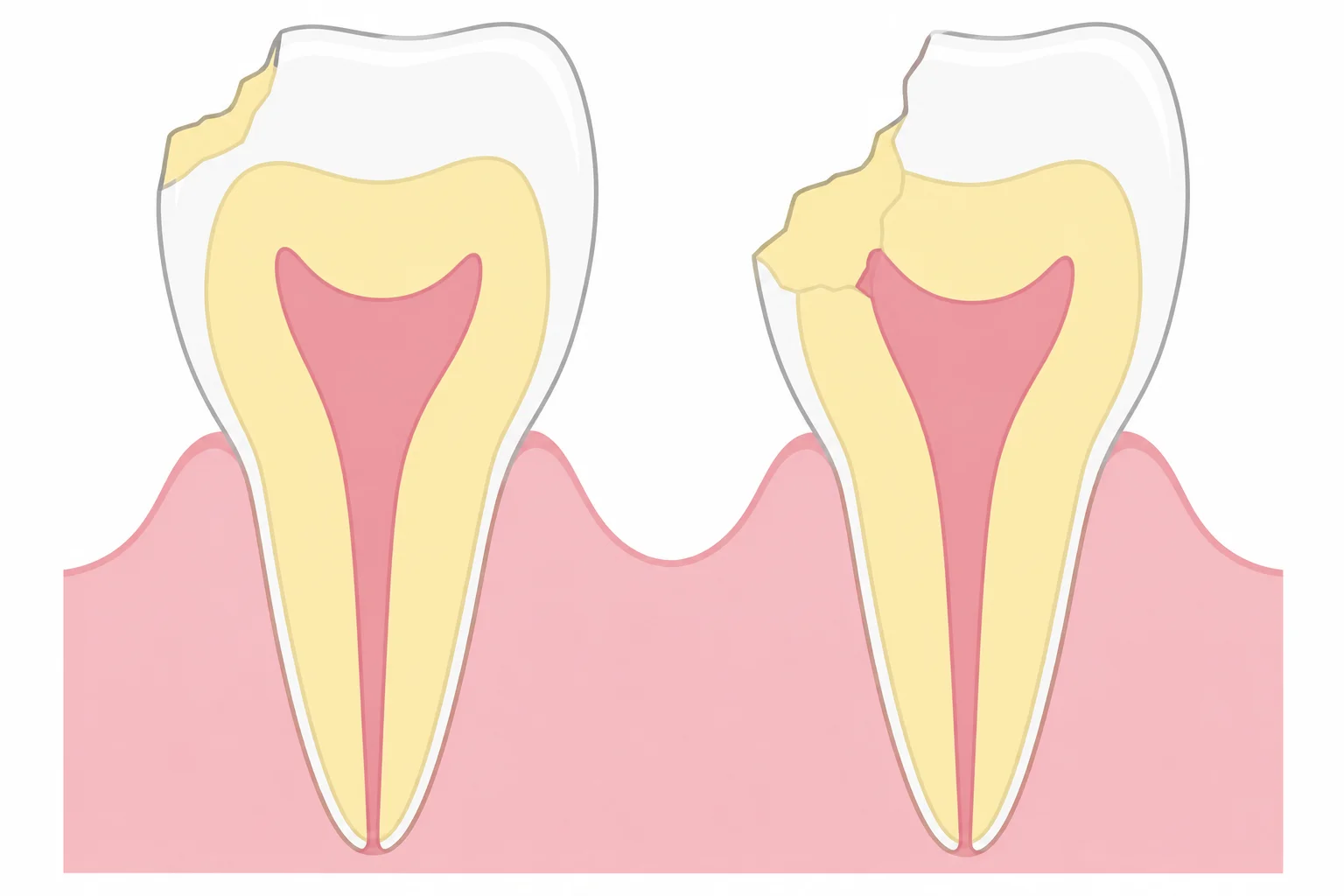
A traumatic tooth fracture is an injury in which an external impact breaks the crown or root of a tooth. Treatment is not determined by the size of the broken area alone. Pulp exposure (exposure of the nerves and blood vessels inside the tooth) and root damage must also be assessed.
An impact, such as one sustained during contact sports, can injure both the tooth and its supporting tissues. Crown fractures are classified as uncomplicated when the pulp is not exposed and complicated when it is exposed. Other types include crown-root fractures, in which the fracture line extends below the gumline into the root, and root fractures, which occur within the root.
Diagnosis and Treatment Path
Assessing Fracture Extent and Tooth Sensibility Together
The assessment considers the time since the injury, the extent of pulp exposure, and tooth mobility, together with sensibility tests and X-rays. A root fracture may not be visible at a particular X-ray angle, so images from several angles or, when needed, a CT scan are used to assess it. The tooth may temporarily stop responding to sensibility tests immediately after trauma, so pulp necrosis is not diagnosed from a single test.
Choosing Between Pulp Preservation and Root Canal Treatment
Not every broken tooth needs root canal treatment. If the pulp is not exposed, the exposed dentin (the hard tissue beneath the enamel) is protected and the tooth is restored. A recovered tooth fragment may also be reattached.
If the pulp is exposed, treatment decisions take into account the condition of the remaining pulp, time since the injury, exposure size, and root maturity. A partial pulpotomy can remove only the inflamed surface tissue while preserving healthy pulp. This is especially valuable in immature permanent teeth because it allows root development to continue. If pulp necrosis is confirmed after pulp-preserving treatment, root canal treatment or other options are considered.
Root Fractures and Restorability
A tooth displaced by a root fracture is repositioned and splinted to adjacent teeth. For a tooth fractured below the gumline, treatment to bring the tooth further out of the gum or gum surgery may be considered, depending on the remaining tooth structure and whether it can be restored. Extraction is considered if the tooth is difficult to preserve. A dentist who restores teeth and treats the pulp can assess the fracture and pulp condition.
Symptoms and Precautions
Pain and Same-Day Dental Care
Part of the tooth may be missing, the tooth may be loose, or stimuli may cause sharp pain. Even a fracture that exposes the pulp can be painless, so the absence of pain does not mean the injury is minor. If the inside of the tooth is exposed or the tooth is loose, same-day dental assessment is advised. Exposed dentin also needs protection without delaying treatment. If you have a broken tooth fragment, bring it in saline or a similar liquid to keep it from drying out.
Follow-Up After the Pain Has Gone
The disappearance of pain does not necessarily mean the tooth has healed. After trauma, pulp necrosis can develop without early symptoms, and the tooth may turn gray or brown. After treatment, sensibility tests and X-ray findings are checked repeatedly. Even an uncomplicated crown fracture is usually checked again 6-8 weeks and one year after restoration, with longer follow-up depending on associated injuries.