
Overview and Causes
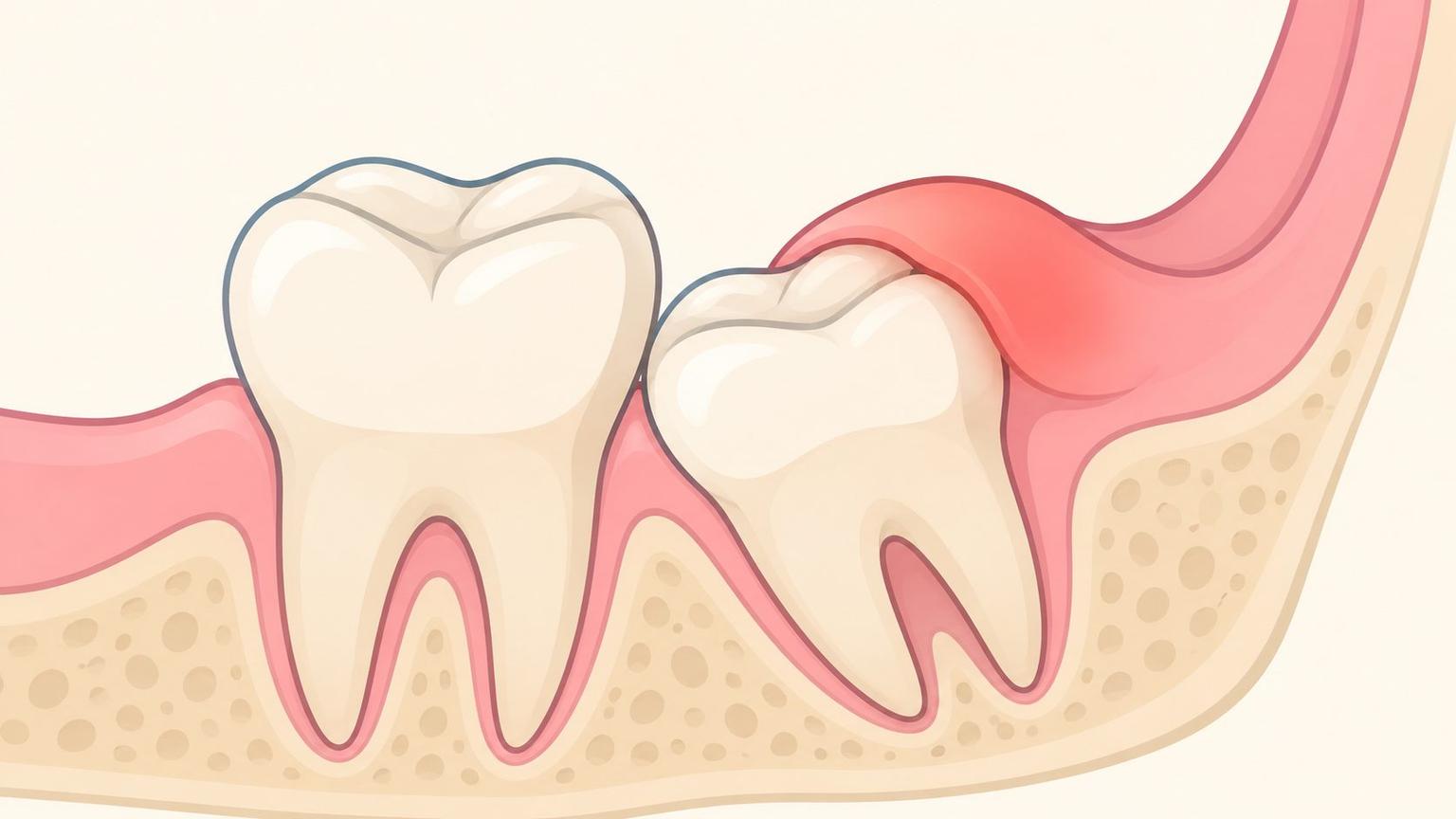
Gum covering a partially erupted wisdom tooth
Pericoronitis is inflammation around the gum covering the crown of a partially erupted tooth. It is most common around lower wisdom teeth. If the gum behind a wisdom tooth is painful and swollen, seek dental care to identify the cause.
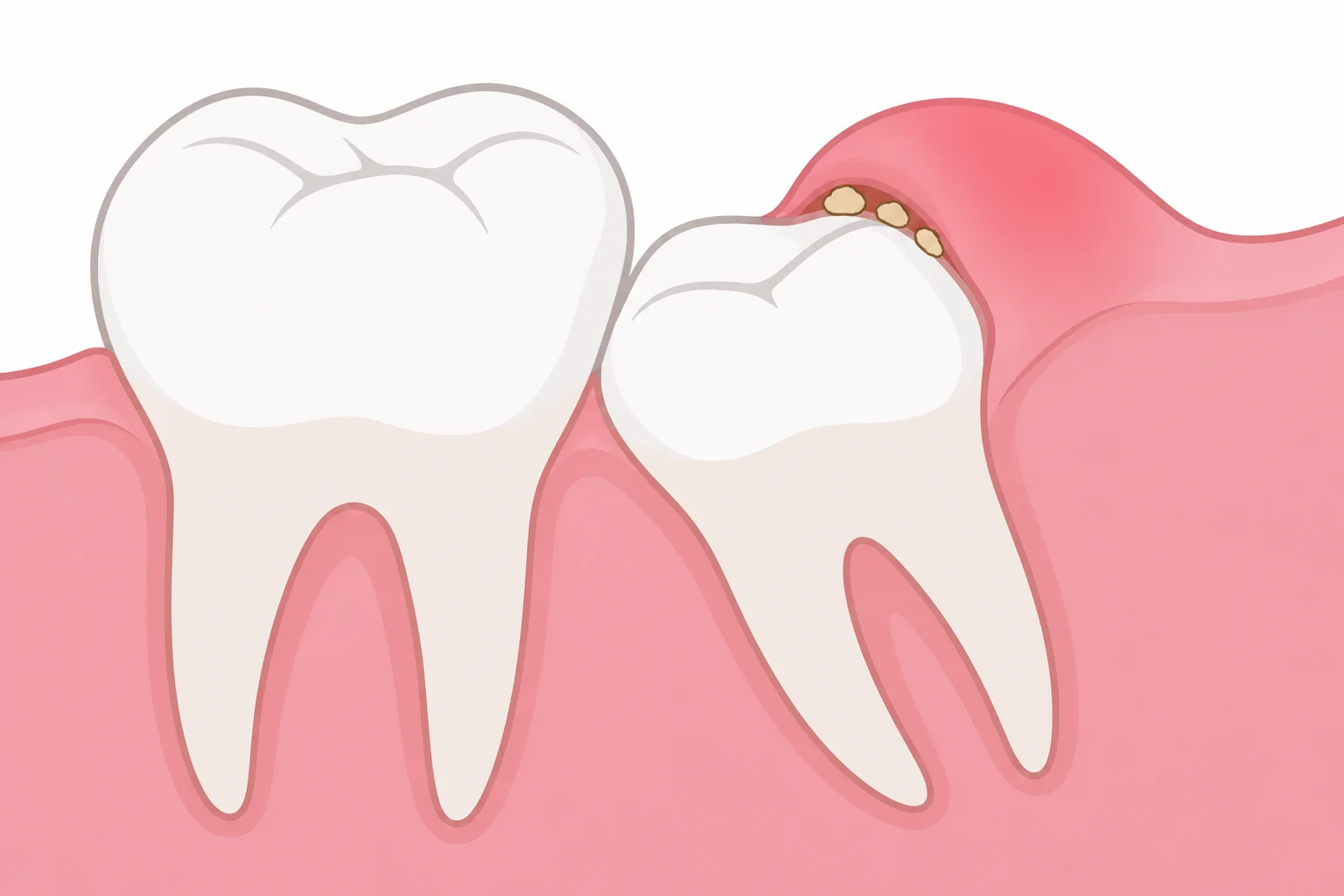
Inflammation develops when food and bacteria collect beneath the gum flap. The opposing upper tooth can also cause inflammation by irritating the flap or injuring it during chewing. Fatigue and stress may contribute to the onset or worsening of symptoms. If immune function is reduced by illness, medication, or other factors, the risk of the infection worsening is also considered.
Diagnosis and Treatment Path
Checking the gum flap and the extent of inflammation
During the examination, the dentist checks how much of the wisdom tooth has erupted and looks for swelling and redness in the gum covering it. Pain when chewing, how far the mouth can open, fever, and discomfort when swallowing are also assessed. Pericoronitis is not diagnosed from a single symptom alone. Care is provided by dentists who treat gum disease or perform oral and maxillofacial surgery.
Deciding whether to retain or extract the tooth after irrigation and drainage
First, debris beneath the gum flap is removed and the area is irrigated. If pus has collected, incision and drainage (opening the gum to release the pus) may be performed. Antibiotics are given when needed, and irritation from the opposing tooth is also addressed.
Inflammation around a wisdom tooth does not always mean it must be extracted immediately. Usually, acute symptoms are brought under control with measures such as irrigation before deciding whether to retain or extract the tooth, taking its position and the likelihood of recurrence into account. In some cases, however, extraction may be performed before the inflammation has fully subsided to remove the source of infection. The timing of extraction depends on the extent of infection, how far the mouth can open, and the person's overall health. If a drain has been placed, follow-up visits are needed to remove it and irrigate the area again. If swelling or systemic symptoms worsen even after treatment, the dentist needs to reassess whether the infection has spread.
Symptoms and Precautions
Pain, limited mouth opening, and fever
The gum covering the tooth may become swollen and red, and chewing may hurt. Bad breath and severe pain may also occur. Seek same-day dental care if you develop a fever, have limited mouth opening, or notice worsening swelling. If you can barely open your mouth, have difficulty swallowing saliva or water, or notice a change in your voice, seek immediate evaluation in an emergency department.
Swelling spreading beneath the jaw and tongue
The inflammation can progress to cellulitis, which spreads through the surrounding soft tissues. Rarely, Ludwig's angina can develop when the infection spreads into deep spaces beneath the jaw and tongue, creating a risk of airway obstruction. Seek immediate evaluation in an emergency department if the area under your jaw or your neck becomes swollen and firm, swelling beneath your tongue lifts it, or you have difficulty breathing. Gently cleaning the surrounding area as pain allows and rinsing lightly with lukewarm salt water may help. These measures do not replace professional irrigation and any necessary dental treatment.