
Question
I went to the dentist because something like a white film had formed in my mouth, and I was diagnosed with oral candidiasis. Hearing that this is a condition that tends to affect infants or people who are very weak, I became more worried. Since it happened to me, an adult who had otherwise been healthy without any particular illness, could this be a sign that something serious is wrong with my body?
Short Answer
Oral candidiasis (an infection caused by an overgrowth of Candida, a fungus that lives in the mouth) is a common oral condition that can also affect adults. This fungus normally lives in small amounts in most people's mouths, and symptoms appear when, for whatever reason, that balance is disrupted and the fungus overgrows. So this diagnosis alone does not confirm that you have a specific serious illness. Still, it is worth checking for conditions that can easily disrupt this balance, such as certain medications, a dry mouth, or diabetes.
Why Is That?
What Does Oral Candidiasis Look Like?
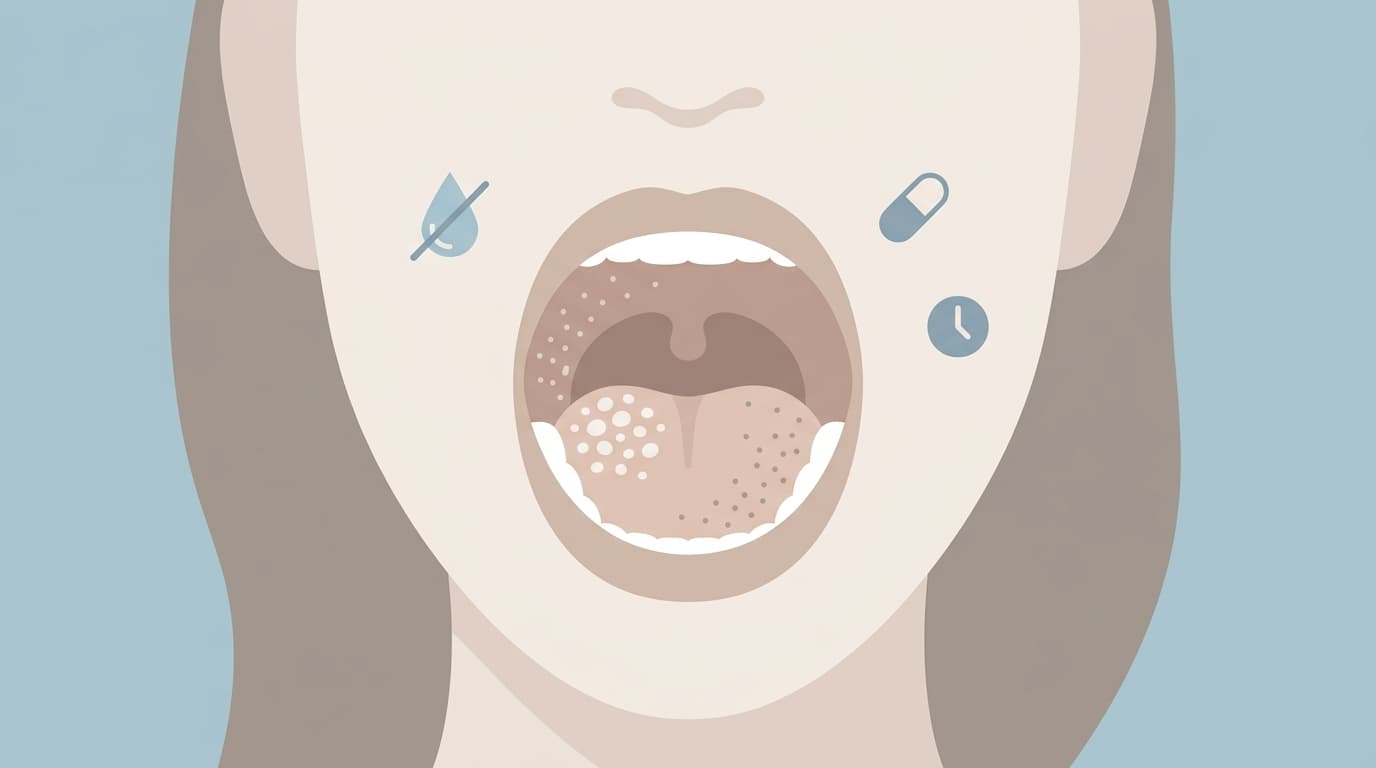
Oral candidiasis is an infection caused by the fungus Candida albicans overgrowing on the mucous membranes of the mouth. It commonly appears on the roof of the mouth, the inner cheeks, and the tongue. The most common form is a coating of raised white patches; when wiped with gauze or a toothbrush, these patches come off and the surface underneath bleeds slightly. Pain, a burning sensation, or a feeling of something catching when swallowing food can also occur.
Why Can It Affect Adults Too?
Candida is not a fungus that suddenly comes in from outside; it normally lives in the mouth already. The problem is not the fungus's presence itself, but rather that the balance is disrupted and it overgrows. The conditions that disrupt this balance are common in adults too, regardless of age.

Taking antibiotics, corticosteroids (medications that strongly suppress inflammation), or immunosuppressants (medications that lower the body's immune response) over a long period can itself be a cause. Corticosteroids in particular are known to have a side effect where long-term use lowers the body's resistance to infection.
Frequent dry mouth is another common cause. Saliva helps rinse the mouth and suppress the growth of bacteria and fungi, so when saliva production decreases, this protective effect weakens as well. Dry mouth can result from various causes, including medications such as antidepressants, diuretics, antihypertensives, and antihistamines, as well as radiation therapy.
Diabetes is another factor worth checking. When blood sugar is not well controlled, the function of neutrophils, a type of white blood cell that fights bacteria and fungi, declines, making the mouth more vulnerable to infection.
Poor nutritional status or a significantly weakened immune system are also considered related factors. That said, none of these factors on its own points directly to a specific illness, so it is important to review your medical history together with the dentist or physician who made the diagnosis.
How Is It Treated?
Treatment involves antifungal medications that suppress the growth of Candida. If the affected area is small, a topical antifungal that is applied in the mouth or held there is used; if the area is larger or does not respond well, an oral antifungal medication may be added as well. Which approach is appropriate is determined during care based on the extent of the symptoms and the factors discussed above.