
Question
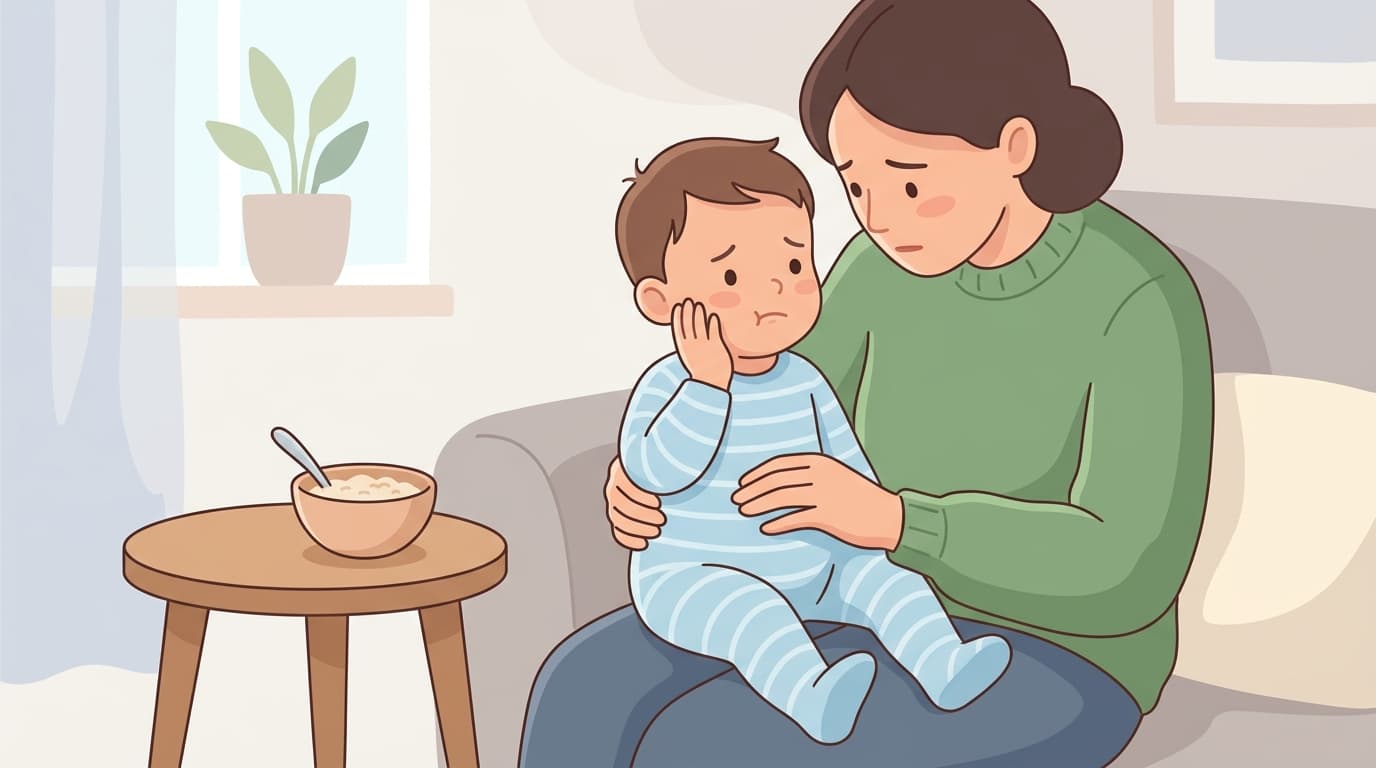
Several blisters have appeared in my young child's mouth, and after bursting they turned into painful, bleeding sores. My child is refusing to eat because of the pain. Could this be herpes?
Short Answer
If blisters appear in several spots in a young child's mouth, then burst into painful ulcers, and the child refuses to eat because of the pain, herpetic gingivostomatitis is a possibility worth considering. However, the appearance of the blisters and ulcers alone cannot confirm this diagnosis. Other oral conditions can look similar, so an exam is needed to determine which condition it actually is. In particular, giving antibiotics before confirmation is not recommended. If the cause is a virus rather than bacteria, antibiotics will not work and may instead significantly lengthen the time it takes for the condition to heal.
Why Is That?
The Typical Appearance of Herpetic Gingivostomatitis
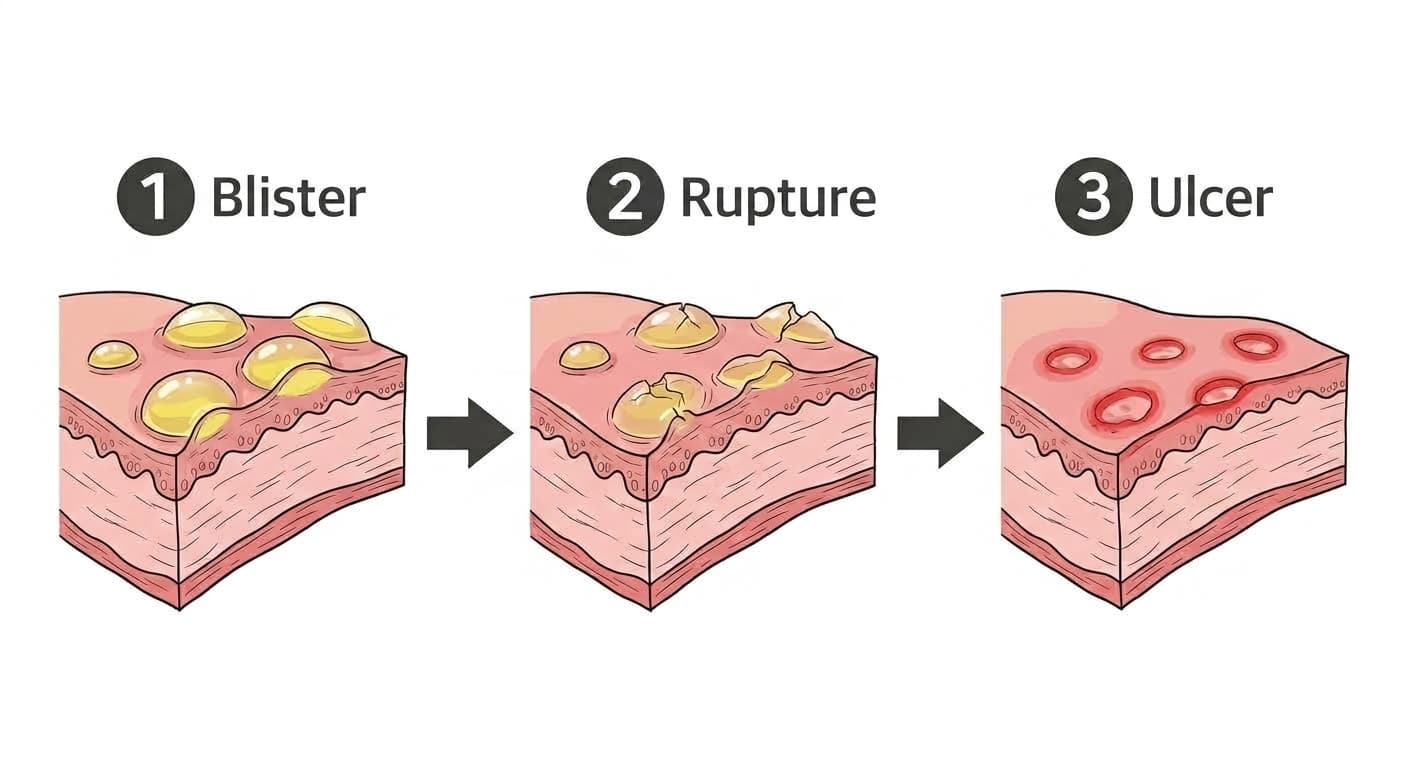
Herpetic gingivostomatitis occurs when HSV-1 (herpes simplex virus type 1) infects the oral mucosa for the first time. It commonly appears in children around 2 to 4 years old. A sudden high fever develops along with gingival redness, and the lymph nodes around the neck may become swollen and tender. Small blisters filled with yellow or white fluid then appear in several areas of the mouth, such as the inner cheek mucosa, tongue, lips, and palate. These blisters soon burst and turn into painful ulcers about 1 to 3mm in diameter. Because ulcers form in multiple areas at once rather than in just one or two spots, they are irritated with every bite and swallow, and it is common for the child to struggle with eating altogether.
This pattern of ulcers spreading across multiple areas of the mouth at once, as described here, mainly occurs during the first infection with this virus. The virus can then lie dormant in the body's nerves and become active again later. When it reactivates, it usually appears as recurrent herpes, typically as a single blister at the edge of the lip that bursts, forms a scab, and heals on its own within 7 to 14 days.
Why It Must Be Distinguished from Similar-Looking Oral Conditions
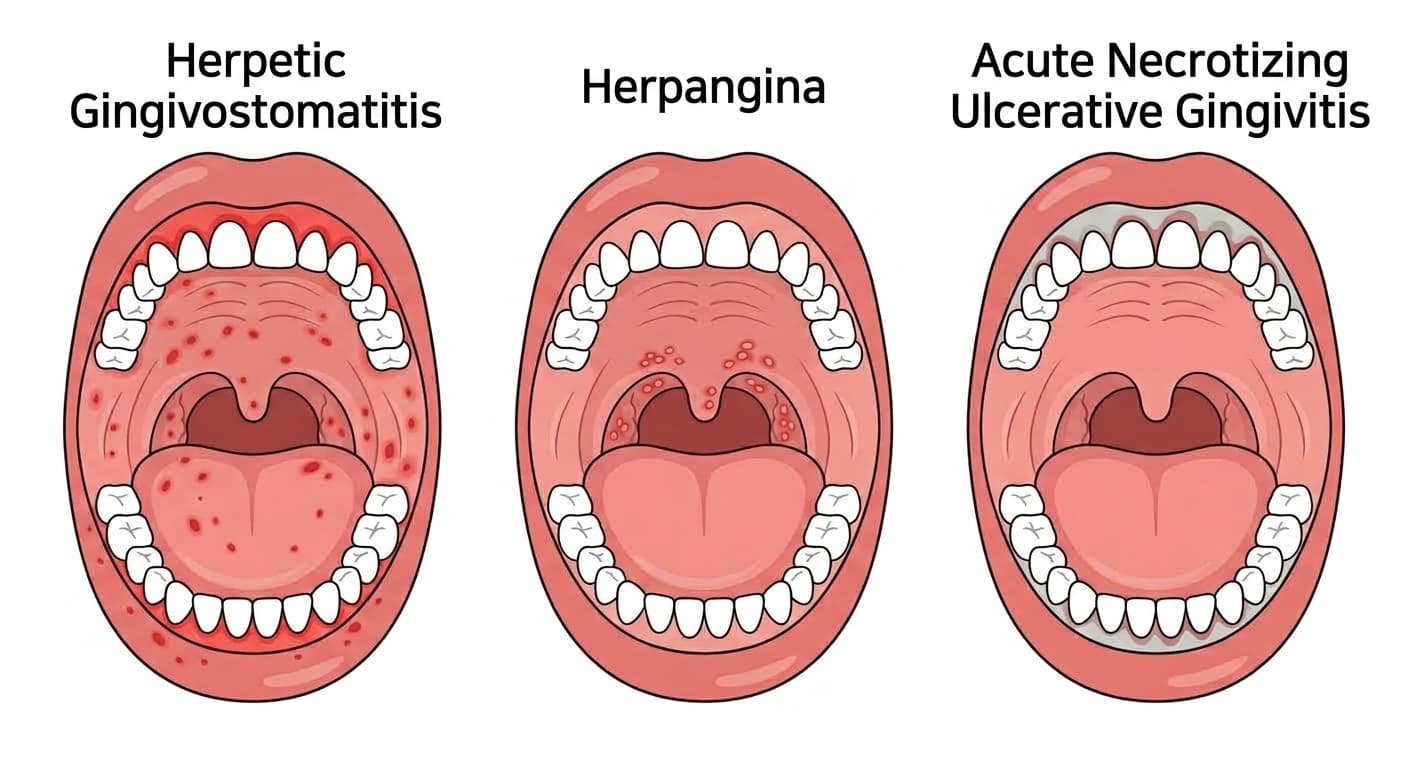
Herpetic gingivostomatitis is not the only condition that causes blisters and ulcers in the mouth. Herpangina, caused by a different virus called Coxsackievirus, also produces ulcers along with fever, but its ulcers cluster deep in the back of the throat, such as the soft palate, tonsils, and uvula, rather than at the front of the mouth. Acute necrotizing ulcerative gingivitis occasionally appears in children aged 6 to 12 and is most common in young adulthood. It differs from herpetic gingivostomatitis in that it affects only the gum tissue between the teeth, is covered by a grayish-white membrane, is caused by bacterial infection, and is not contagious between people.
These conditions can sometimes be difficult to fully distinguish by appearance alone, so an exam that looks at the location and shape of the ulcers along with any accompanying symptoms is needed to pinpoint the correct diagnosis. Confirming herpetic gingivostomatitis itself requires checking both a fourfold or greater rise in viral antibodies in the serum and a positive viral culture test, so a conclusion cannot be reached from visual appearance alone.
Why Antibiotics Should Not Be Used Without Caution
Because herpetic gingivostomatitis is caused by a virus, antibiotics, which target bacteria, cannot eliminate the underlying cause. Using penicillin-class antibiotics in this situation has been reported to significantly lengthen the time it takes for the condition to heal. For this reason, giving antibiotics before an exam should be avoided. In severe cases, a doctor may consider antiviral treatment, but this is a decision to be made after an examination. If the child is already struggling to eat because of pain, the priority is to help reduce the pain and ensure adequate fluid intake, and specific methods for doing so should be discussed during a dental visit.