Question
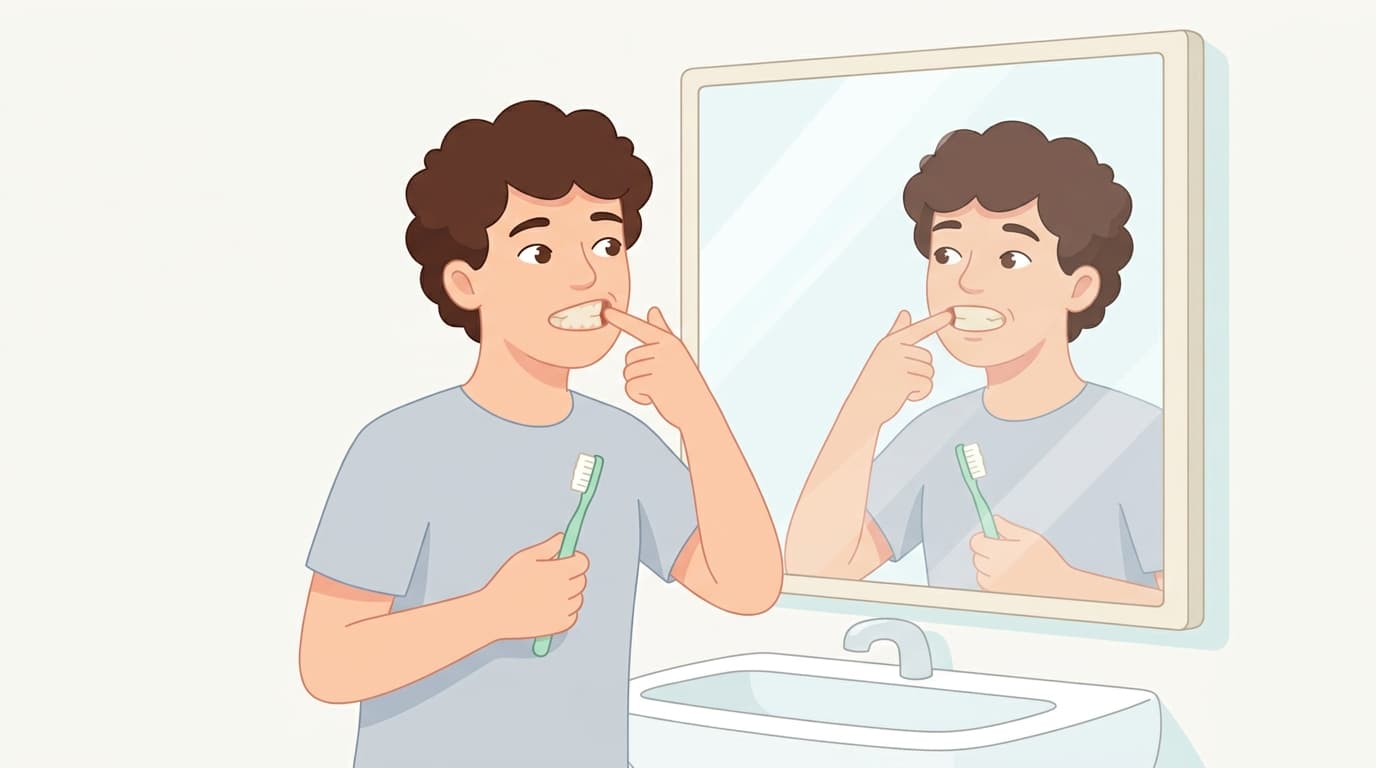
Even with diligent brushing, teeth still look yellow or blotchy. The concern is whether whitening treatment or brushing alone can bring the teeth back close to their original color.
Short Answer
The approach depends on whether the staining is only on the tooth surface or extends into the tooth itself. Surface staining caused by food or plaque often lightens considerably with professional cleaning (scaling and surface cleaning) and polishing at the dentist. In contrast, discoloration that reaches the dentin inside the tooth cannot be removed by brushing or surface cleaning and requires chemical whitening or other restorative treatment. Which category applies, and how effective whitening will be, depends on the cause of the discoloration, so this needs to be checked directly in the dental office.
Why Is That?
Surface Staining and Intrinsic Discoloration Occur in Different Layers
Tooth color is determined by light that passes through the translucent enamel covering the surface and reflects off the dentin underneath. Because of this, how staining is removed depends entirely on which layer it sits in.
Surface staining (extrinsic discoloration) occurs when pigments adhere to the outer surface of the tooth. Common causes include coffee, tea, tobacco, and pigment-producing bacteria in the mouth, and it becomes more noticeable with poor oral hygiene. This type of staining is largely removed by professional cleaning and surface polishing at the dentist, and any thin layer of staining that remains can be addressed with microabrasion (a technique that removes up to 0.2-0.3mm of the enamel surface using acid and fine abrasive particles).
Intrinsic discoloration results from pigment deposits or structural changes deep within the enamel or dentin. Common causes include taking tetracycline-class antibiotics during tooth development, growing up in an area with high fluoride concentration in the tap water (fluorosis), trauma that damages the tooth's nerve (pulp), dentin thickening from the inside with age, and staining that spreads inward from decay or a leaking old restoration. This kind of discoloration cannot be removed no matter how much the surface is cleaned.
Whether Whitening Works Well Depends on the Cause and the Tooth's Condition
Discoloration in a tooth with a live nerve (vital tooth) is addressed with dental whitening treatment. Options include in-office whitening, where a high concentration (30-35%) of hydrogen peroxide is applied and the reaction is accelerated with heat or light, and at-home whitening, where a custom tray made at the dental office is used to wear a 10-15% whitening gel overnight. Because teeth temporarily lose moisture right after whitening and appear whiter than they actually are, the treatment needs to be repeated at least three times before the color stabilizes, and about two out of three patients may experience temporary sensitivity or gum irritation for one to four days after the procedure.
That said, the response to whitening varies greatly depending on the cause and shade of discoloration. In general, teeth with a yellowish discoloration tend to respond better to whitening than teeth discolored to a gray or blue-gray shade. Tetracycline-related discoloration is classified into four stages depending on severity; when the banding is distinct or very dark, whitening alone is unlikely to produce much improvement, and only a long-term at-home whitening regimen of around six months is worth attempting. Brownish fluorosis, on the other hand, tends to respond relatively well to vital tooth whitening, and cases limited to the surface layer can improve with microabrasion alone.
The approach is different for a tooth that has had root canal treatment and no longer has a live nerve (non-vital tooth) when it discolors to gray or brown from the inside. In this case, a non-vital whitening technique is used, placing whitening agent inside the tooth's pulp chamber to bleach the color from within. The area above the root canal filling is sealed with cement to keep the whitening agent from leaking toward the root tip, and after whitening is completed, calcium hydroxide is placed inside the pulp chamber for about two weeks to prevent cervical external resorption (a side effect in which the upper part of the tooth root dissolves). For teeth that have turned severely dark from the inside because of old amalgam restorations, redoing the restoration in that area is sometimes a better option than whitening.
If Whitening Alone Isn't Enough, Other Options Are Considered Together
When discoloration is severe, when the shape of the tooth itself is a problem, or when whitening does not produce a satisfactory color, veneers (a restoration that attaches a thin tooth-colored material to the front surface of the tooth) may be considered. Common indications for veneers include severe tetracycline discoloration, extensive fluorosis, and teeth whose surfaces have been damaged by wear or erosion. However, veneers often require some reshaping of the tooth surface and are a fundamentally different type of treatment from whitening, so which approach is right should be decided only after checking the cause of the discoloration and the condition of the tooth directly in the dental office.