
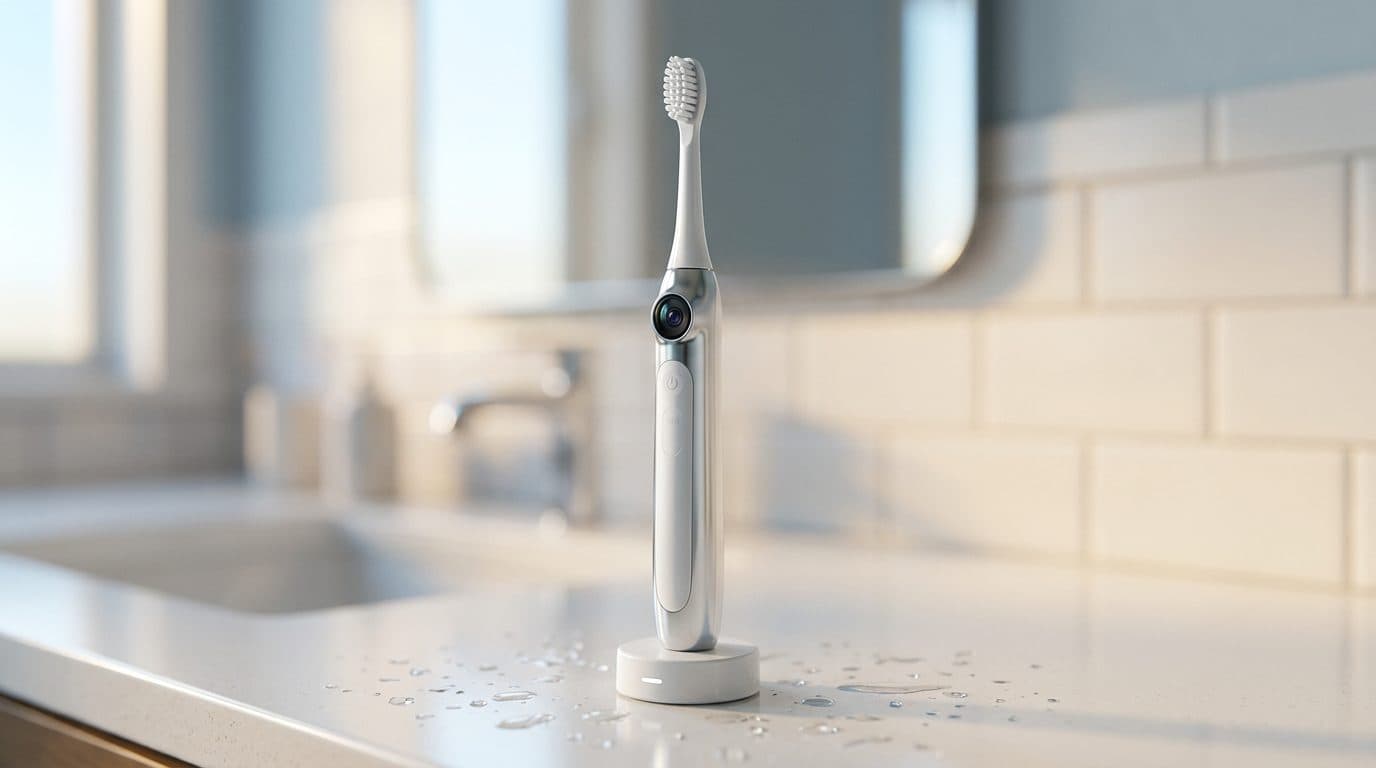
Dyson has followed vacuum cleaners and hair dryers with a move into toothbrushes. An electric toothbrush priced at 749,000 won, which uses a camera to find gaps between teeth and an AI algorithm to spray water at them, sold out in Korea on the first day of preorders.
Dyson unveiled CameraJet, an electric toothbrush with a built-in camera, on September 1, Bloomberg reported. The US price is $499, and Dyson Korea opened preorders for the same product at 749,000 won starting September 1. The preorder stock sold out entirely before launch, and a restocking date has not yet been set.
How CameraJet Sprays and Its Brushing Features
A Camera That Finds Gaps and a 0.1-Second Spray
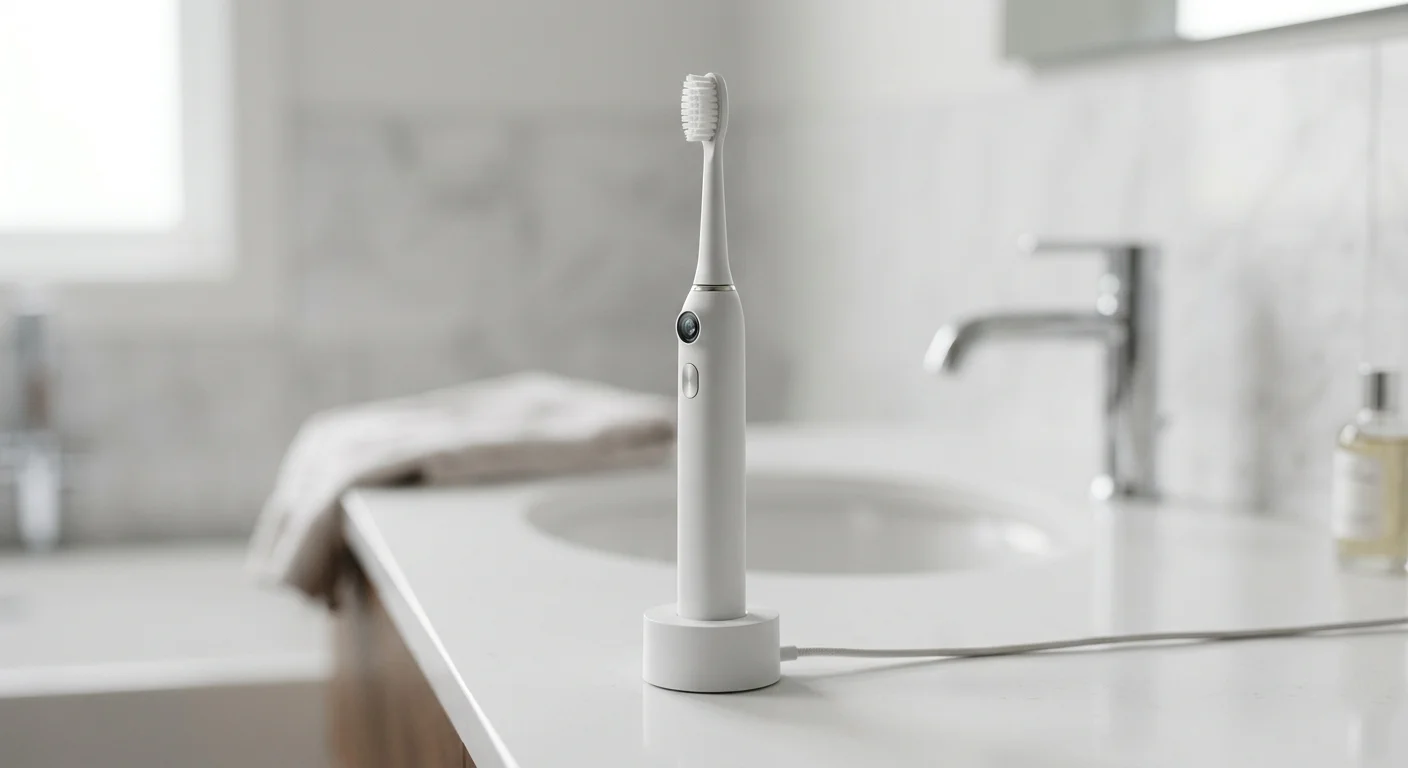
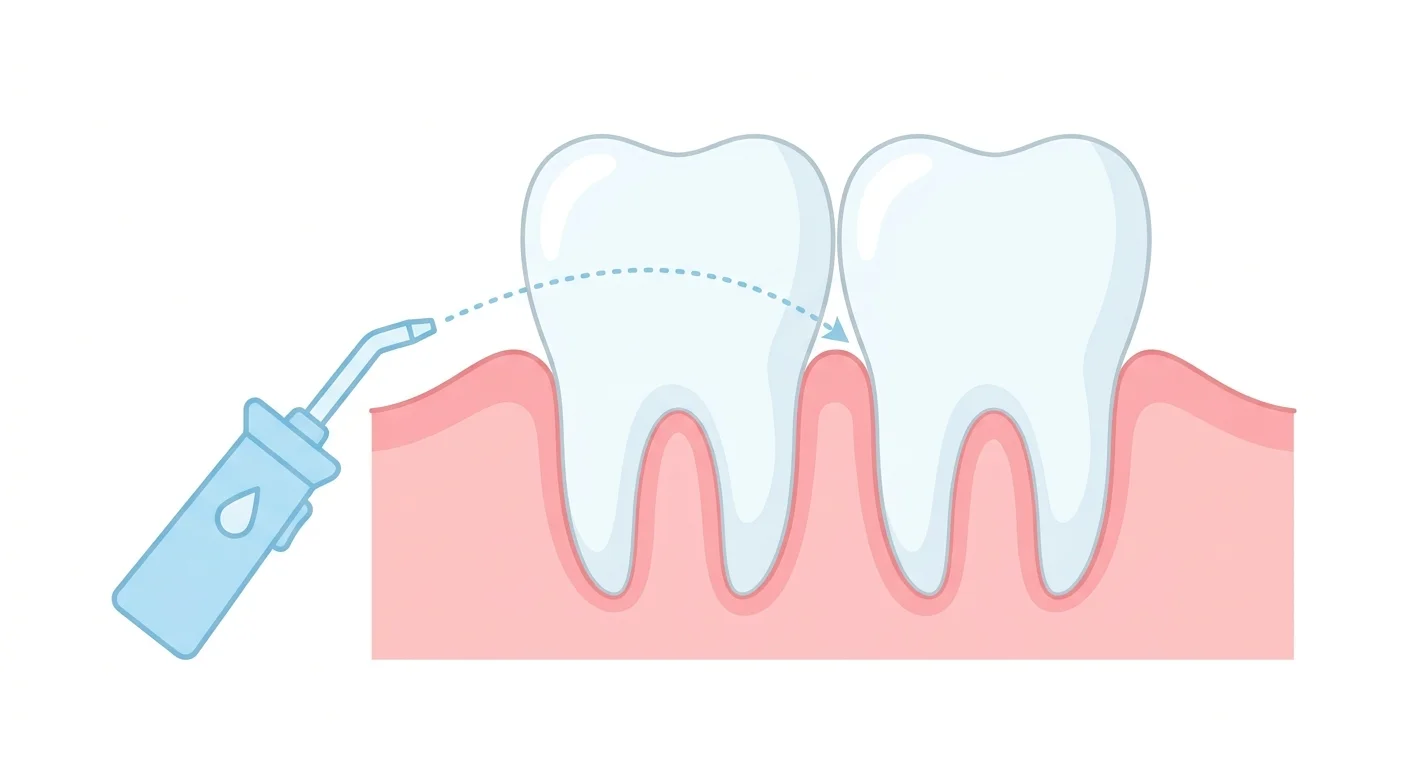
CameraJet's handle houses a 100,000-pixel macro-lens camera. A machine learning algorithm, trained on roughly 470,000 images of teeth, analyzes 28 frames per second to locate the position and angle of gaps between teeth in real time. Once it detects a gap, it fires a short burst of oral cleansing liquid at that exact spot within 0.1 seconds.
Two Bristle Types and Three Intensity Levels
The brush head combines stiff bristles for removing stains with soft bristles for cleaning along the gumline, vibrating to reach areas that are otherwise hard to clean. Intensity is split into three levels: gentle, adaptive, and strong, and the handle vibrates to signal when brushing pressure is too high. Dyson recommends brushing for three minutes a day, and a single charge lasts seven to ten days.
App Live View and Whether Video Is Stored
Connecting the toothbrush to the MyDyson smartphone app enables a live-view feature that shows a real-time video feed of the inside of the mouth while brushing. Dyson says the camera only activates when live view or the automatic spray feature is turned on, and that recorded footage is not stored on the device or in the cloud. This publication has previously covered an academic technique that uses sensors on the wrist and brush handle to recognize which part of the mouth is being brushed. CameraJet differs in that it uses a camera to directly capture the gaps between teeth and spray water, rather than relying on sensors.
Why Dyson Sees the Mouth as Its Next Battleground
Dyson started out as a vacuum cleaner company, exited the washing machine business in 2005, and abandoned its electric vehicle project in 2019. By contrast, the roughly $400 Supersonic hair dryer it launched in 2016 succeeded in the hairstyling market, with hairstyling products accounting for 30% of Dyson's US sales as of 2023. The $100 portable fan it launched in April of this year, Hushjet Mini Cool, has also repeatedly sold out. Building on this pattern, Dyson says it is making oral care its next focus area and is preparing follow-up products, including a foam-free toothpaste. CameraJet took six years to develop.
Preorders Sold Out in Korea Too
In Korea, the product was sold on preorder through Dyson Korea's official website and online channels in two colors, Ceramic Pink and Ceramic Ultra Blue. Existing electric toothbrushes from brands like Oral-B and Philips also connect to apps to report brushing time, pressure, and missed spots, but Dyson says CameraJet is the first product to use a camera to directly locate gaps between teeth and spray water at them.
Nothing has changed yet in dental clinics. In Korea, toothbrushes are not classified as medical devices but as oral care products under the Hygiene Products Control Act, so CameraJet is sold without separate approval from the Ministry of Food and Drug Safety. That means it is a cleaning tool for home use, not a device for diagnosis or treatment. The 749,000-won price is also not covered by national health insurance, so consumers bear the full cost, and Dyson Korea has not yet announced a restocking date.