
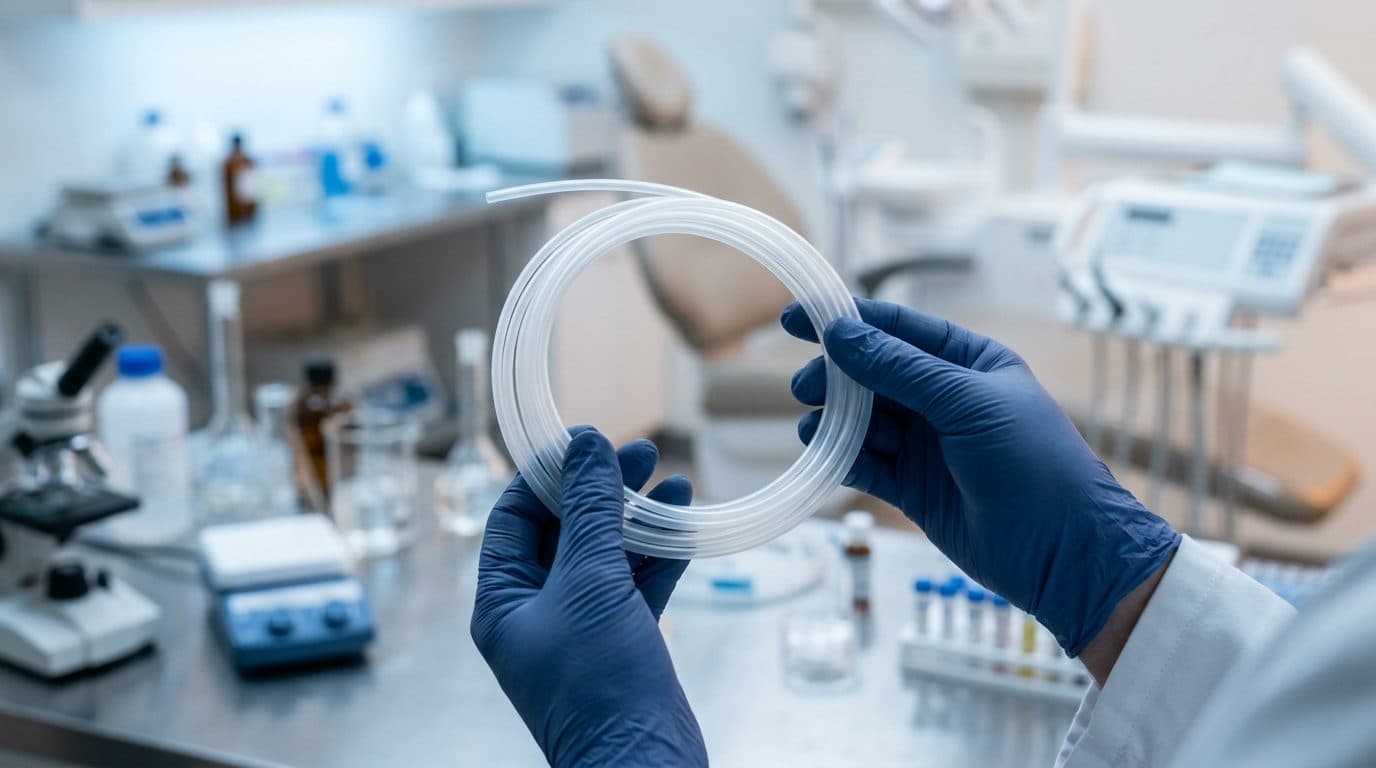
The very thin tubing that sprays water from a dental chair, or dental unit, is called a dental waterline. Biofilm that grows inside these tubes has long been a headache for dental infection control, because a single round of disinfection does not easily remove it. In 2026, a research team from Donghua University and the Shanghai Xuhui District Stomatological Hospital in China presented results that tackled this problem by changing the tubing material itself. It is a polyurethane material that makes bacteria less likely to attach to the surface while recharging its antibacterial power every time it goes through the chlorine disinfection dental clinics are already using.
Biofilm Growing Inside Narrow Tubes Where Water Sits Still
Dental waterlines are so narrow that their diameter measures only a few millimeters, and between appointments the water inside them sits still for long stretches instead of flowing. These conditions are ideal for the small number of bacteria floating in the water to settle on the tube wall, wrap themselves in a slimy film, and multiply. A study that tracked dental units at a university dental hospital in Vienna, Austria, found that biofilm formed this way served as a reservoir where pathogens such as Legionella pneumophila and Pseudomonas aeruginosa could hide. In Korea as well, clinics are advised to flush out standing water before and after treatment and to keep bacterial counts at or below 100 CFU/mL through residual chlorine and bacterial testing, but this is a procedure that still has to be carried out by hand every time.
The Limits of Flushing Disinfectant Through the Tubes
Most solutions proposed so far have relied on flushing disinfectant through the tubing. Various chemicals have been tried, but their effectiveness varied widely from method to method. Phenol-based agents worked, while alcohol was of little use, and combinations that added other ingredients to chlorine-based agents generally performed better. Flushing disinfectant weekly kept bacterial counts within standard more often than flushing it forcefully once every three weeks (68% of days versus 100%). Electrochemically activated water reliably brought floating bacteria below the threshold, but it only removed part of the biofilm that had already taken hold. A university dental hospital in Vienna, Austria succeeded in suppressing Legionella pneumophila over three years by continuously flushing chlorine-based disinfectant water (hypochlorous acid) and checking residual chlorine daily, but bacteria were still confirmed to remain in one unit during that period. In the end, it came down to a contest over how often and how forcefully disinfectant was flushed through. Even so, biofilm that had already attached to the tube wall did not disappear completely.
A Tube Surface Recharged by Chlorine Disinfection
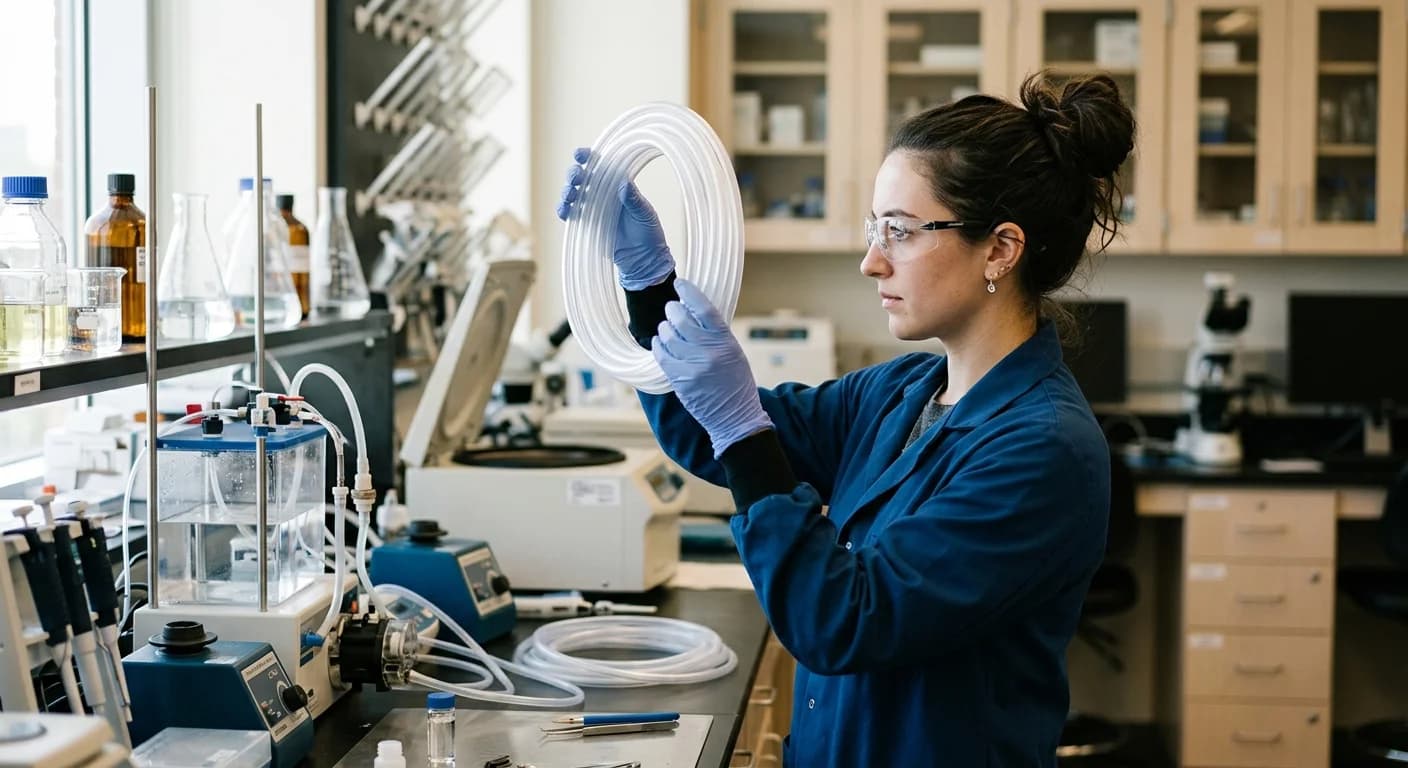
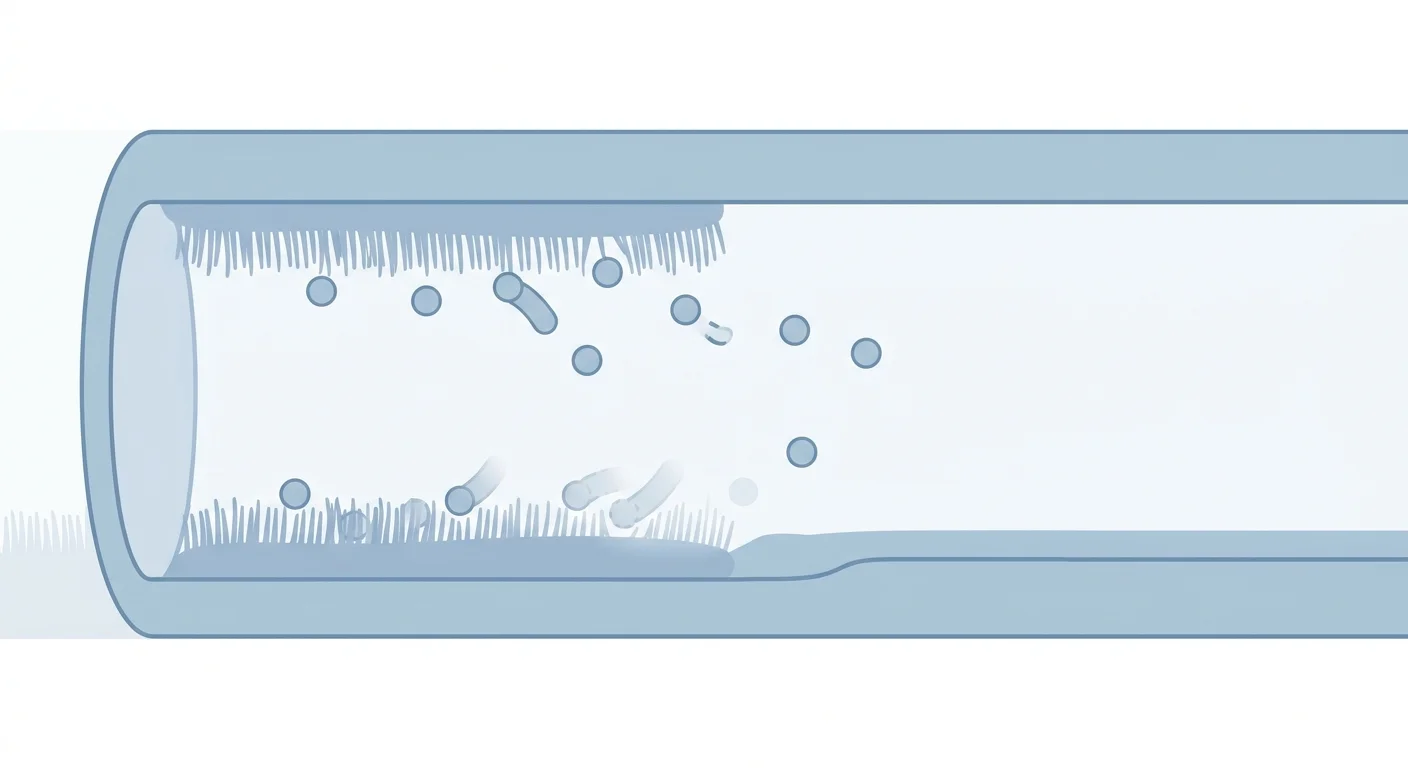
The research team flipped the approach around. They first densely attached polyethylene glycol (PEG) chains to the polyurethane surface, then grafted on a compound called dimethylhydantoin (DMH) alongside them. The resulting surface cut protein adsorption by more than 50%, meaning it reduced the very foothold bacteria need to attach in the first place. On top of this, a single round of the chlorine disinfection clinics already use converts the nitrogen atoms attached to DMH into a germ-killing structure called an 'N-halamine.' This structure kills bacteria on contact with the surface while also slowly releasing chlorine into the water to catch bacteria passing by. The most important feature is that once this antibacterial power runs out, it is recharged simply by going through the sterilization and disinfection procedure the clinic was already performing. However, this result comes from testing the material's surface in the lab, and it has not yet been confirmed whether the recharging would keep working after months or years of actual use inside a waterline.
Recharging Instead of Flushing
Until now, managing dental waterlines has been a process of tweaking how often and how forcefully disinfectant is flushed through. This new material shifts the approach: it makes the tube wall itself resistant to bacterial attachment and has that wall store disinfectant to release later. It departs from the chemical treatment methods developed so far in that, instead of requiring a new disinfection schedule, a single round of the disinfection procedure a clinic already performs doubles as a recharge.