
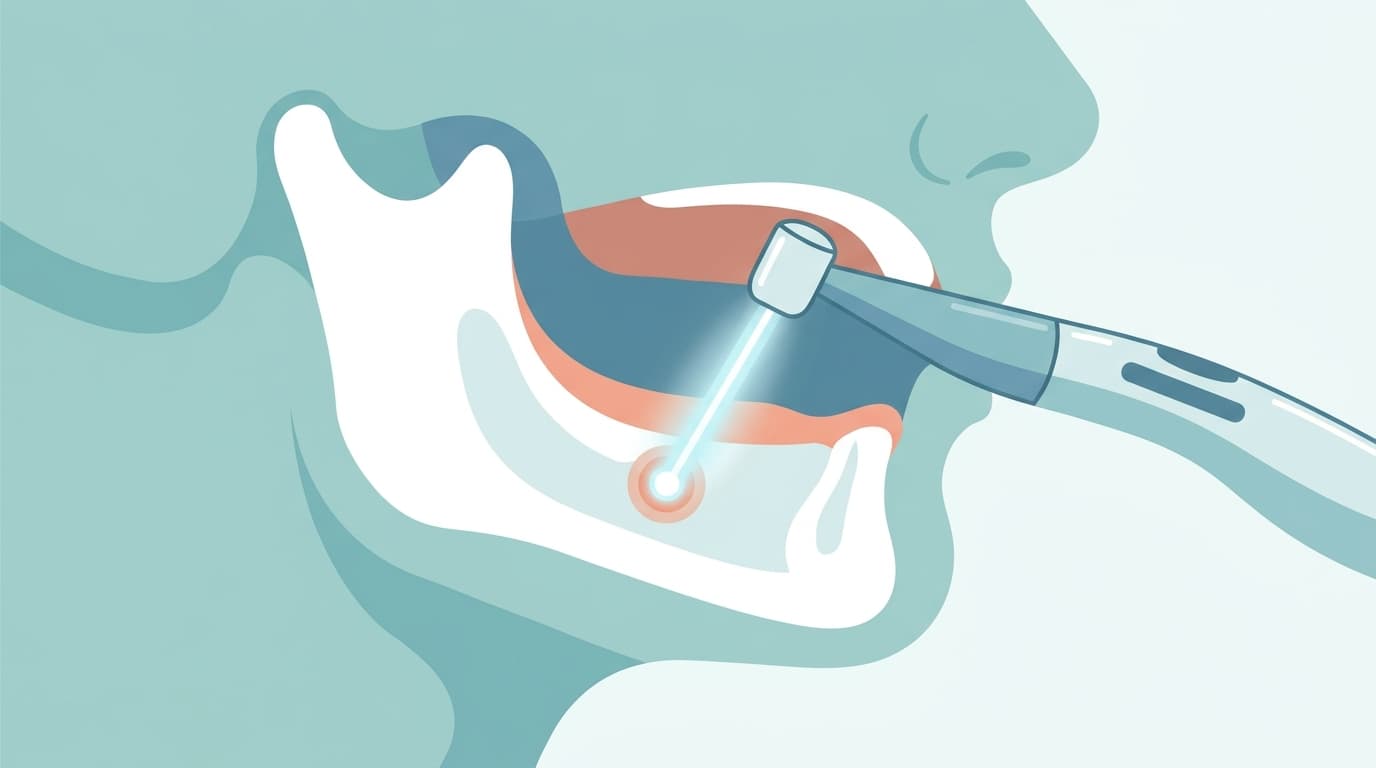
A randomized controlled trial has found that adding a laser to surgery for medication-related osteonecrosis of the jaw (MRONJ), in which drugs used to treat osteoporosis or cancer cause part of the jawbone to die and become exposed, leads to better recovery. Research teams in Poland and Canada randomly assigned 65 patients and observed them: the group that received surgery to remove the dead bone combined with an Erbium
(Er) laser had a postoperative complication rate of only 17.1%, while the group that received surgery alone, without the laser, had a rate of 60%. The rate of complete gum mucosa healing was also far higher in the laser group, at 85.7%, compared with the surgery-only group (26.7%).Why Do Osteoporosis Drugs Kill Jawbone Tissue?
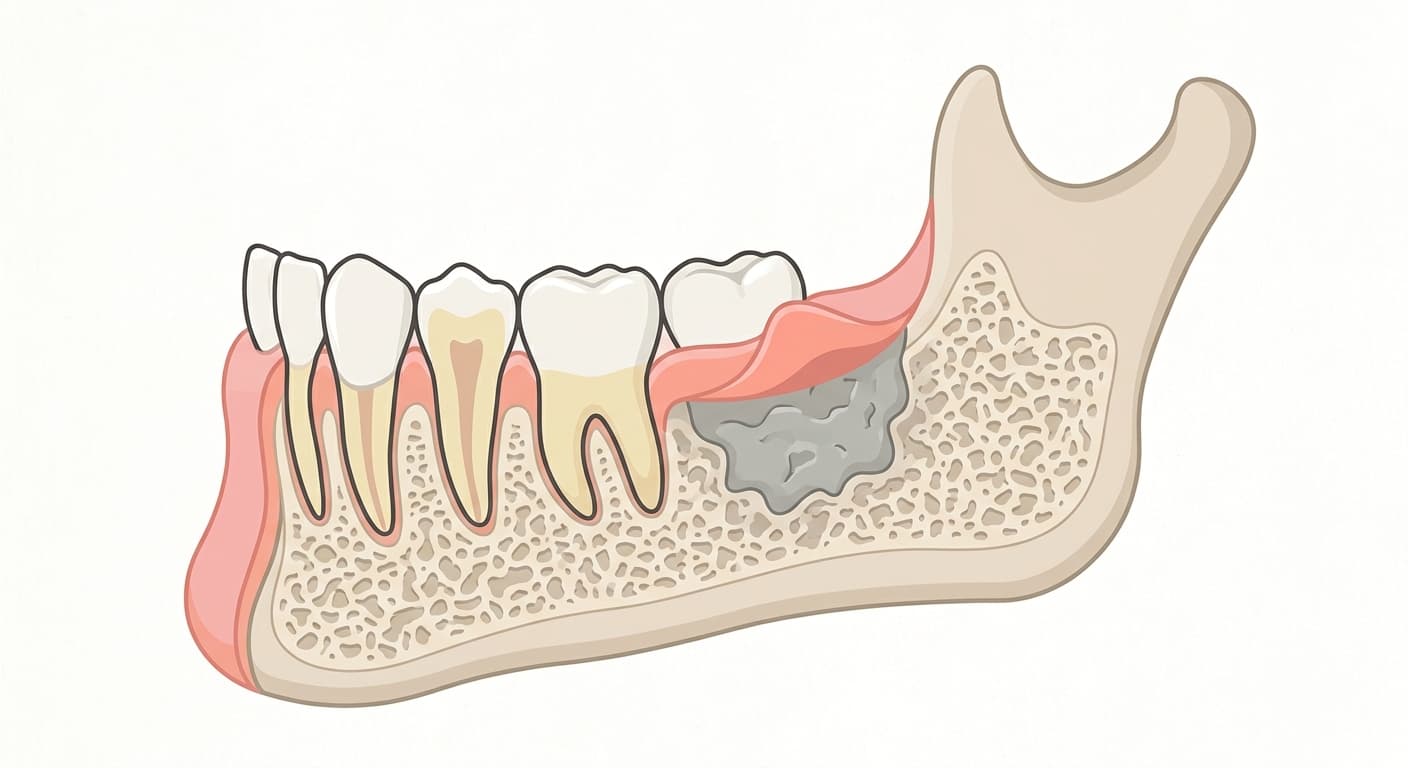
Medication-related osteonecrosis of the jaw was originally called bisphosphonate-related osteonecrosis of the jaw (BRONJ). The name was changed because the same problem also appears with antiangiogenic drugs used in cancer treatment, not just with antiresorptive drugs that block bone resorption. Drugs such as bisphosphonates directly interfere with the differentiation of osteoclasts, the cells that break down bone, and with the bone remodeling process in which new bone is formed. A recent paper synthesizing the latest research found that these drugs also reduce the capacity for new blood vessel growth and the ability of soft tissue inside the mouth to heal on its own. The jawbone is a site that is constantly remodeled under chewing forces, so this healing capacity is especially important when the bone is wounded, as happens with a tooth extraction, and in these patients it is already suppressed. As a result, the bone fails to heal properly and dead bone becomes exposed outside the gums.
How Is a Laser Different From Surgical Instruments?
Conventional surgery uses instruments such as curettes or drills to physically scrape or shave away the dead bone. An Er
laser uses the property that light energy is strongly absorbed by water molecules in tissue to precisely vaporize and remove the dead bone tissue. In a recent set of recommendations that synthesized related research, the World Federation for Laser Dentistry (WFLD) and the Polish Society for Laser Dentistry concluded that Er laser surgery is used to precisely remove dead bone, while low-level laser therapy, which stimulates cellular activity with low-power light, is used to reduce pain and support soft-tissue healing.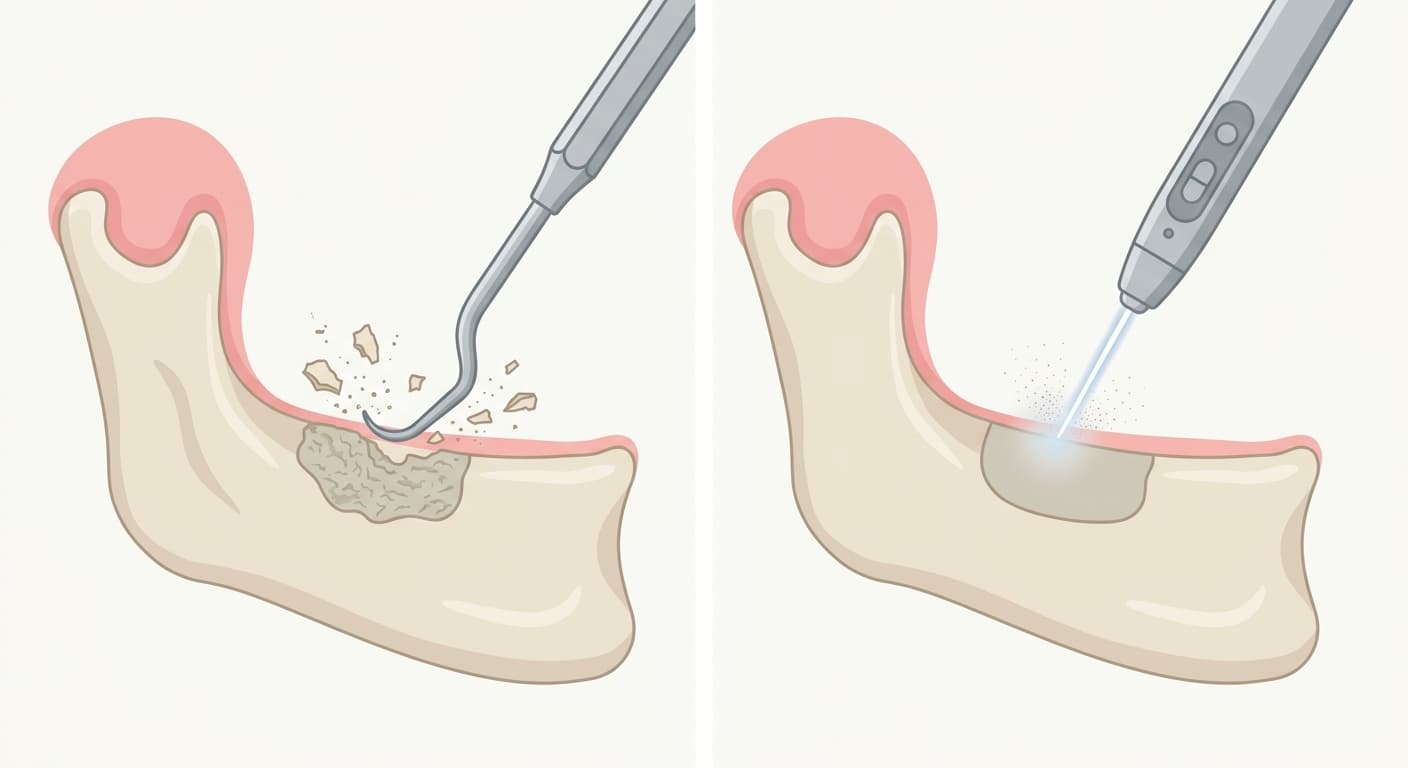
Results After Following 65 Patients for 24 Weeks
This clinical trial randomly assigned 65 patients with stage 2 or 3 medication-related osteonecrosis of the jaw to receive either conventional surgery alone (30 patients) or surgery combined with an Er
laser (35 patients). All patients took antibiotics for 3 days before surgery and 14 days after surgery, and their condition was checked at 1, 2, 4, 12, and 24 weeks. The laser-assisted group also reported less pain. However, laser-assisted surgery took longer, averaging 70 minutes, about 12 minutes more than conventional surgery (58 minutes).The Evidence Is Still Accumulating
This result comes from a single randomized controlled trial, so confirmation from other research teams is still needed. When the WFLD and the Polish Society for Laser Dentistry reviewed related studies published since 2015, they found that laser-assisted treatment generally appeared to help, but the type and method of laser used and the criteria for measuring outcomes varied so much from study to study that the results could not yet be combined into a single figure. Because medication-related osteonecrosis of the jaw affects a relatively small number of patients, large randomized controlled trials have been rare, which makes this result, following 65 patients for 24 weeks, itself a rare piece of evidence. Adding a laser to surgery that removes dead bone takes more time, but the evidence gathered so far points toward it reducing complications and speeding mucosal recovery.