
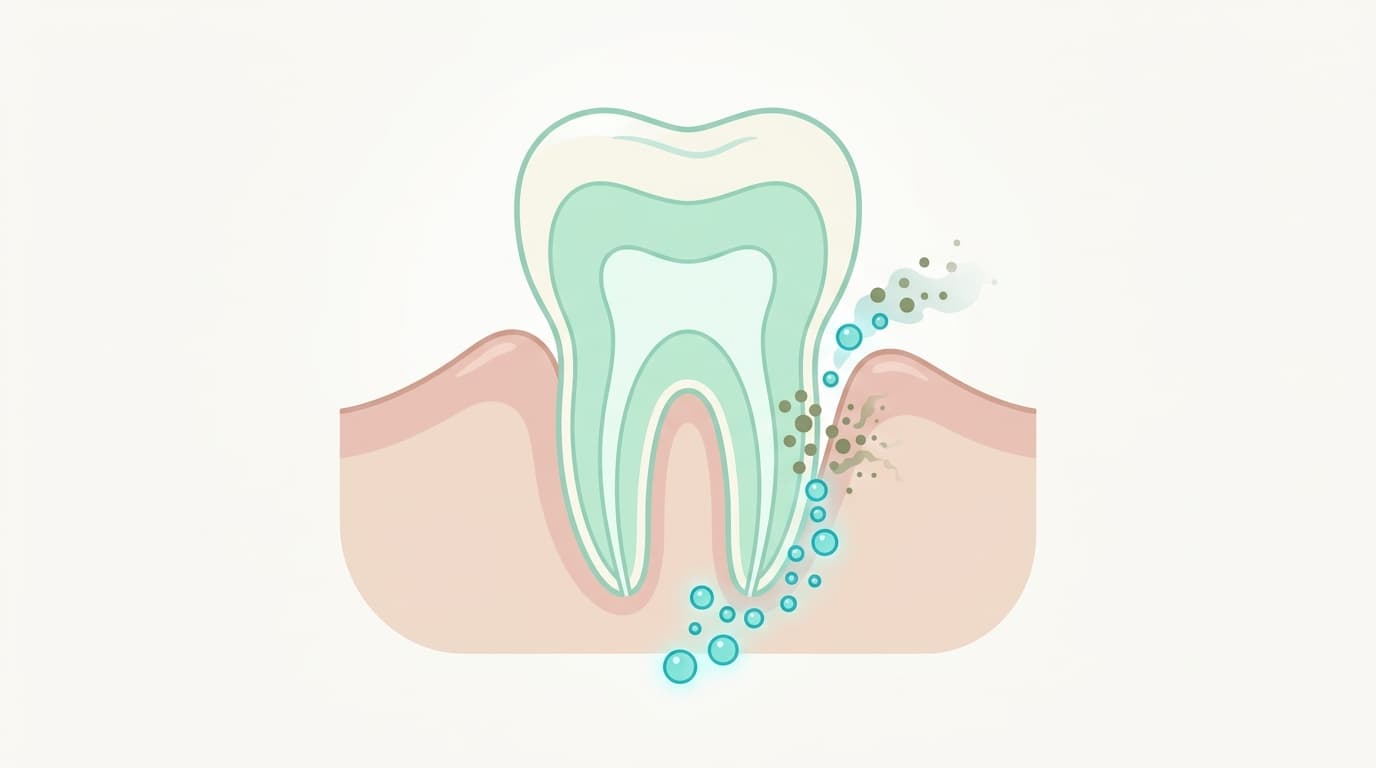
A research team at the University of Verona in Italy ran a split-mouth clinical trial in 39 patients with periodontitis, treating each side of the mouth differently. The side that received ozone gas in addition to calculus removal (scaling and root planing) showed greater improvement in periodontal pocket depth and attachment level after 90 days. However, adding ozone made no difference in gingival bleeding or plaque levels, and the conclusions of other studies accumulated so far remain mixed, so this result alone will not change the standard of care for periodontitis.
What Happened When Ozone Gas Was Added
Published in an international journal in August 2026, the study enrolled 39 patients with moderate-to-severe periodontitis in stages II through IV. On one side of the mouth, teeth received only ultrasonic scaling and root planing; on the other side, the same treatment was followed by blowing ozone gas (a mixture of 80% oxygen and 2,100 ppm ozone) directly into the periodontal pockets. This was repeated three times, and periodontal status was measured at baseline, day 45, and day 90. At day 90, the ozone side showed an average pocket depth reduction of 1.6mm, greater than the 1.2mm seen on the control side, and attachment level (a measure of how firmly the periodontal ligament holds the tooth in place) improved by 1.1mm, better than the 0.6mm on the control side. The bacterial tests also showed a clear difference. Tracking six species of anaerobic bacteria that cause periodontitis with PCR testing, the ozone side showed Treponema denticola reduced to the point of being undetectable, and other anaerobic bacteria also dropped sharply.
Breaking Down Bacteria by Oxidizing Them With Ozone
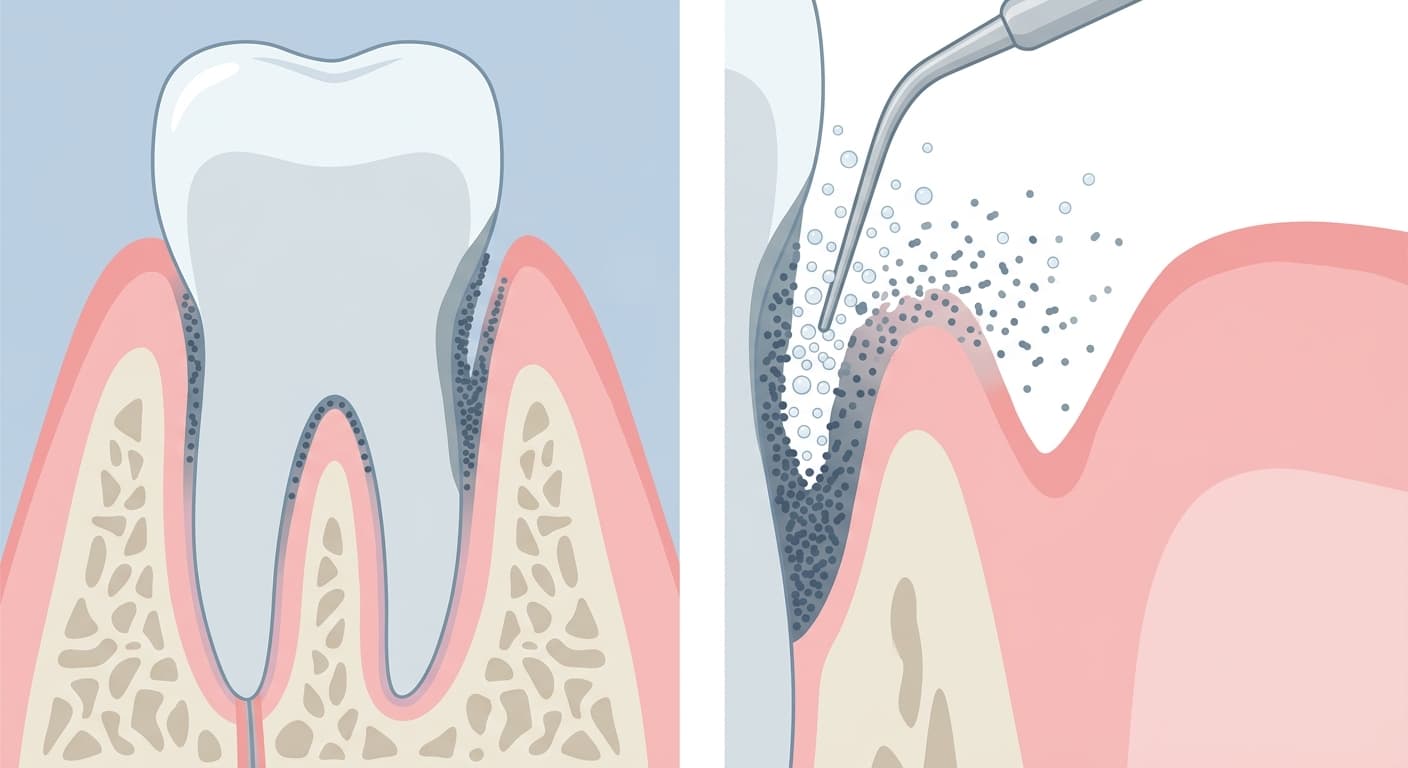
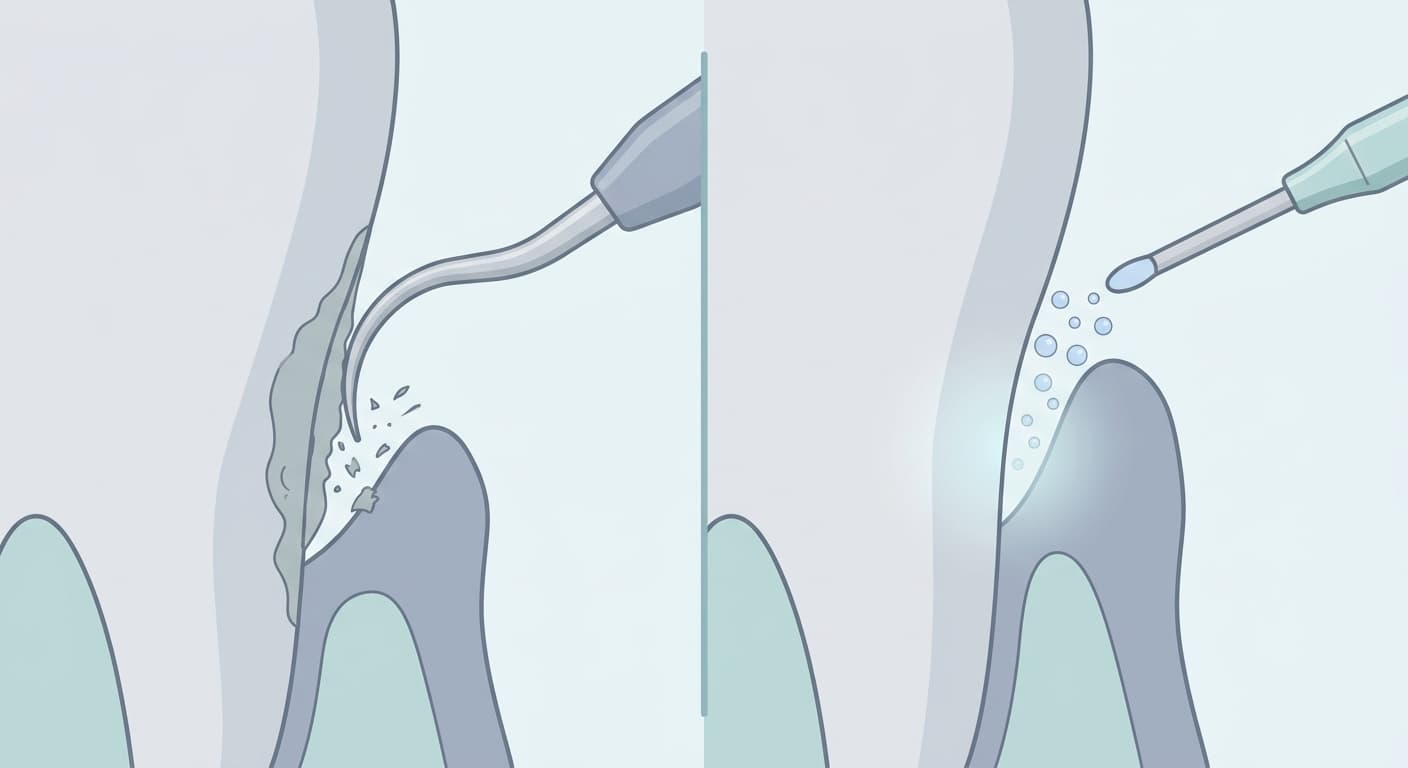
Ozone (O3) is a molecule made of three oxygen atoms and is far more reactive than oxygen. This reactivity oxidizes the lipids and proteins that make up bacterial cell membranes and the biofilm bacteria build, breaking down their structure. Anaerobic bacteria living deep in periodontal pockets, where oxygen is scarce, are thought to have weaker defenses against this kind of oxidative stress and so take a bigger hit. Conventional scaling and root planing relied entirely on physical removal, scraping calculus and bacterial film off the root surface with sharp-tipped instruments or ultrasonic vibration, with antibiotics or chlorhexidine rinses added at most as a supplement. Ozone gas is different in that it spreads as a gas into narrow, deep gaps instruments cannot reach and attacks bacteria chemically.
Why the Meta-Analyses Disagree
Pooling studies that have used ozone for periodontitis does not produce a single, consistent conclusion. A meta-analysis published in 2025 combined 13 randomized controlled trials and found that the ozone-added side did better on pocket depth and the gingival inflammation index but showed no difference in bleeding, plaque, or attachment level. Another meta-analysis from the same year re-examined 22 studies, splitting ozone into three forms: gas, ozonated water, and oil. It confirmed improvement in the gingival inflammation index, but the other outcomes varied widely from study to study. A clinical trial from fall 2025 that used ozonated water also found a greater reduction in pocket depth, but the difference was not statistically significant compared with the control group, and the improvement in attachment level was modest enough that it was unclear whether patients would notice it in actual practice. Much of this is attributed to differences across studies in form, concentration, and number of applications. A comprehensive review published in the first half of 2026 gathered meta-analyses of ozone therapy used for periodontitis and various other conditions and re-graded the certainty of the evidence. For periodontitis as well, the certainty of the evidence remained low or very low, and the review concluded it is still too early to use ozone therapy in routine practice.
The Cells That Make Up the Gums Are Oxidized Too
Ozone's oxidative power does not target bacteria alone. The same mechanism that attacks bacteria also places oxidative stress on the periodontal ligament cells that make up gum tissue. A recent review summarized that ozone depletes the cell's internal antioxidant (glutathione), raises inflammatory signals (NF-κB, IL-6, TNF-α), reduces the cells' ability to migrate and attach, and in severe cases can kill the cells outright. When used in gas form, tissue drying has even been reported as a side effect. Researchers are therefore trying to reduce this side effect by combining ozone with antioxidant compounds (such as polyphenols and vitamin C) or by loading ozone into nanoparticles for slow release.
The improvements in pocket depth and suppression of anaerobic bacteria shown in this University of Verona study are clear. But no effect appeared on other measures such as gingival bleeding or plaque, and the concentration, form, and method of applying ozone still vary from study to study. Ozone therapy is not a replacement for scaling but remains at the stage of searching for a standardized way to use it as a possible adjunct that could boost scaling's effectiveness.