
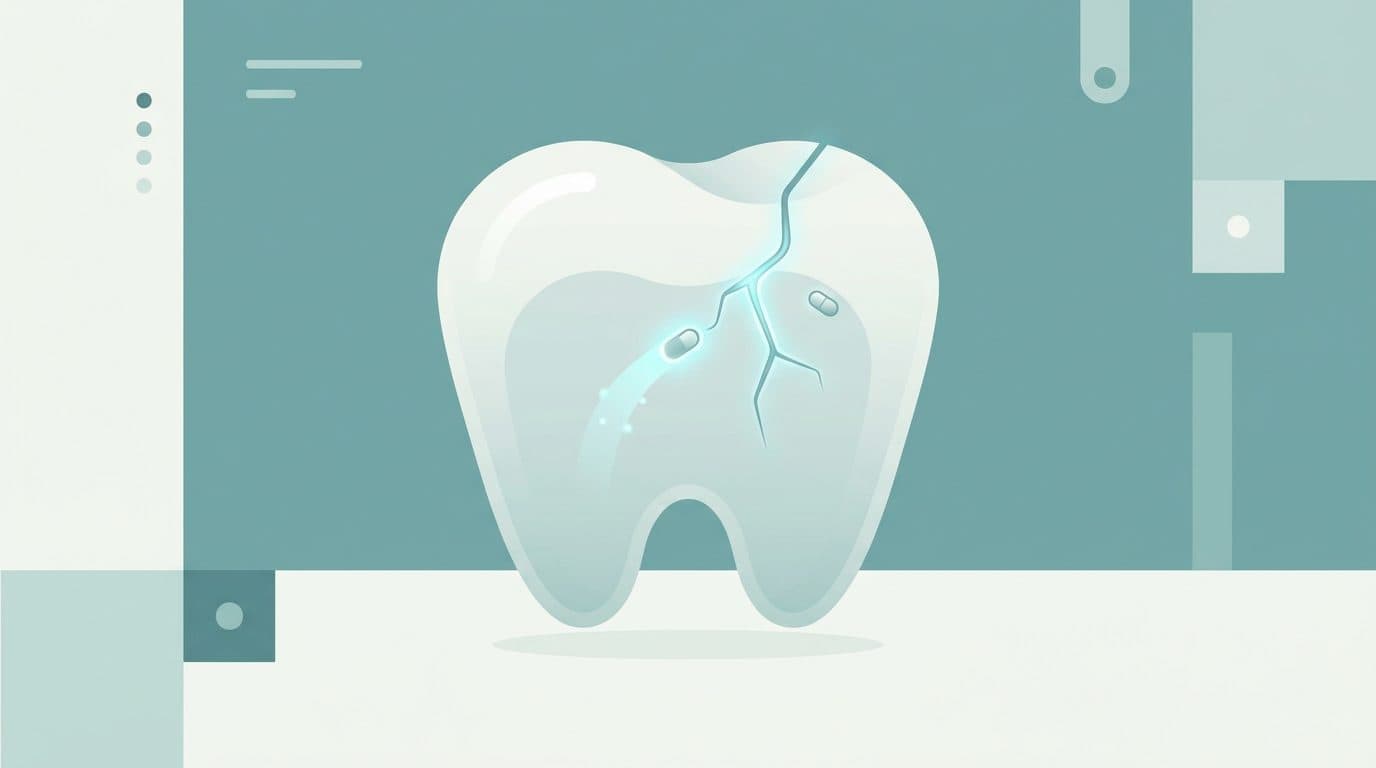
Composite resin fillings in teeth accumulate invisible microcracks as they absorb countless chewing forces. These cracks often go unnoticed by both patients and dentists until the moment the filling cracks or breaks off. When a filling fails this way, the site has to be drilled out again and refilled with new material, repeating the restoration process.
A study published in 2026 by a research team at Shandong University in China added two functions to this resin: a dual-capsule material that combines capsules signaling a crack with light the moment it forms and capsules that seal the site on their own.
Capsules That Reveal Cracks With Light
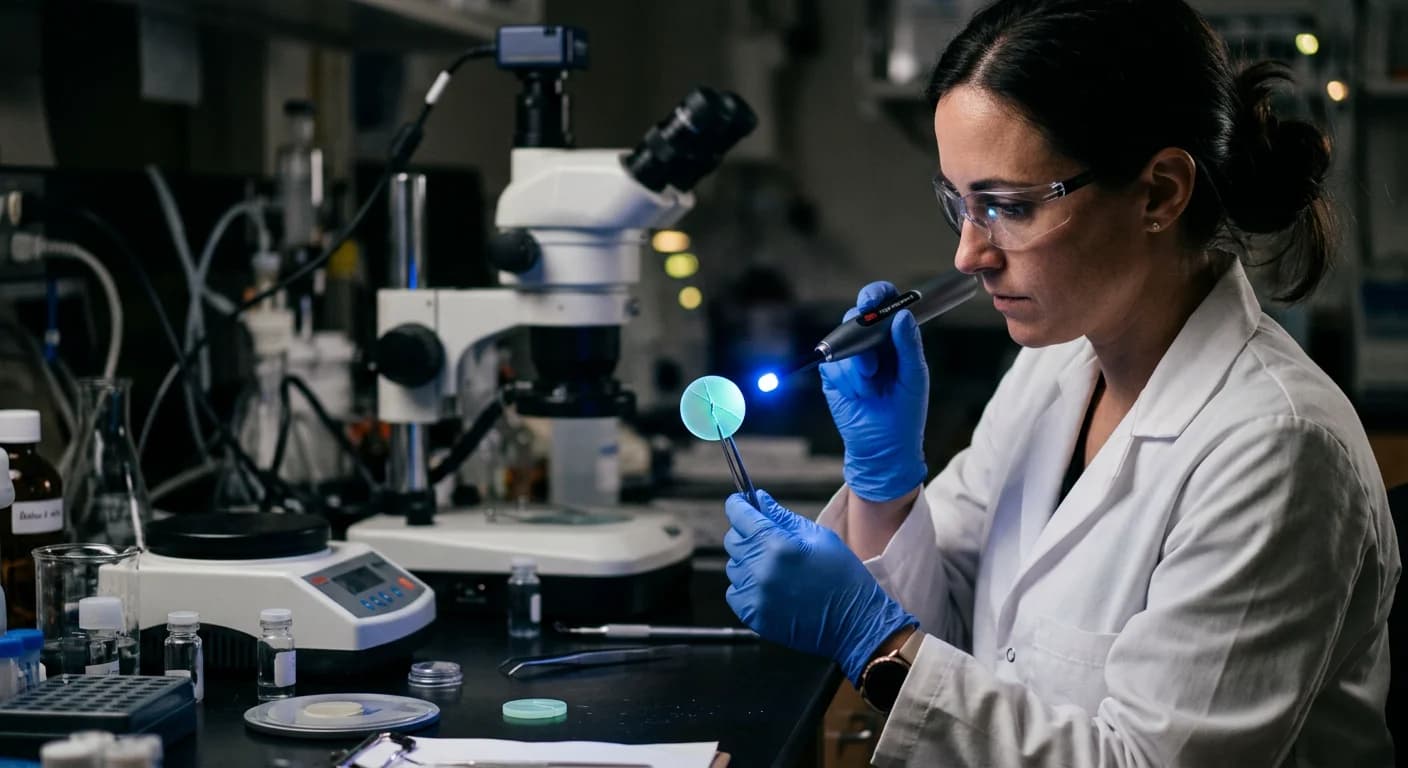
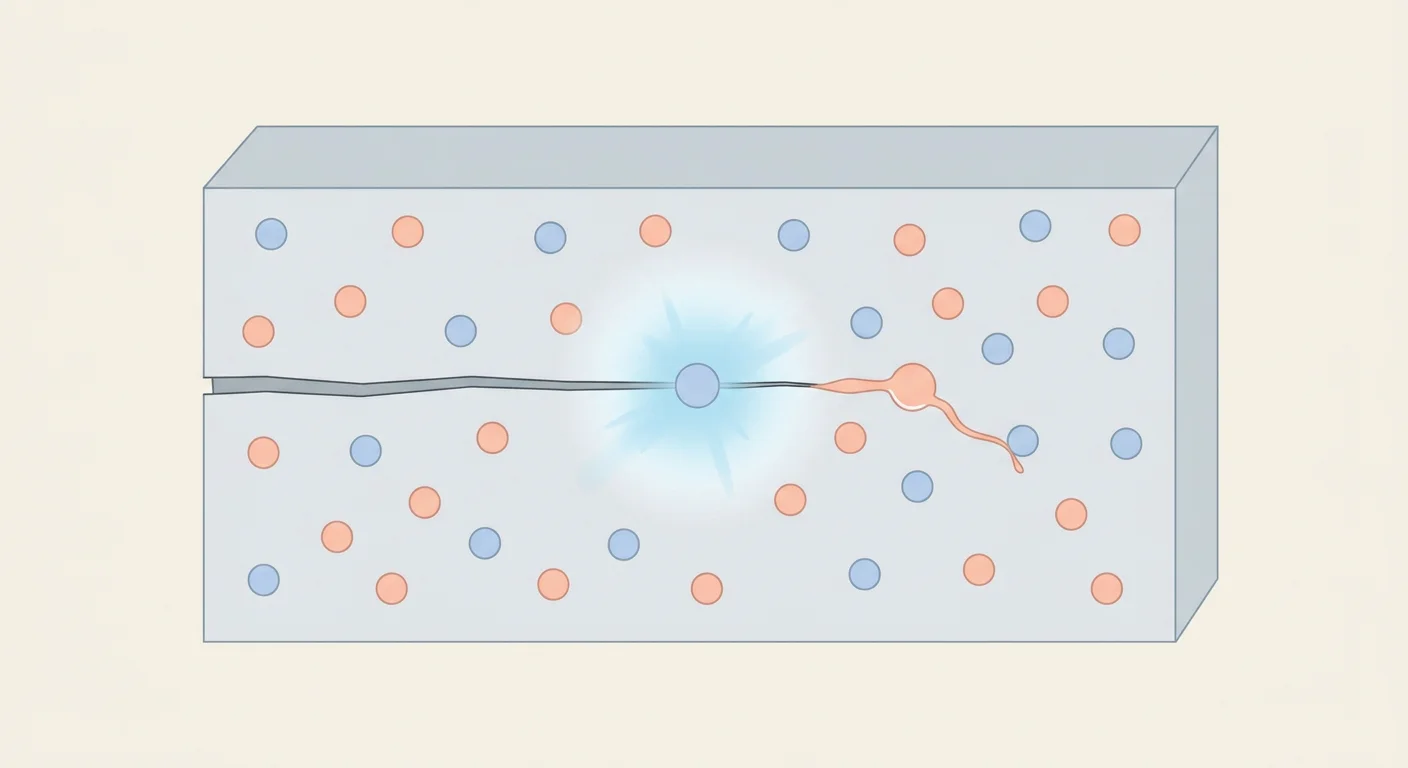
This resin contains capsules (AIE-MC) holding a fluorescent material that glows only when its molecules aggregate. Under normal conditions, the material is spread evenly through the resin and stays invisible, but when chewing forces create a microcrack and rupture a capsule, the fluorescent material clusters together at the gap and lights up. It is the same principle behind a bruise showing up as discoloration on skin, applied to resin. The researchers made and compared three types of capsules: two using differently colored carbon dots (carbon-based nanoparticles) and one using a conventional fluorescent material already in use. When these capsules made up 7.5% of the resin's total weight, the cracked area lit up clearly enough to be seen with the naked eye.
Capsules That Heal the Cracks
The same resin also contains another type of capsule (TD-MC) carrying a healing agent. When a crack ruptures this capsule as well, the liquid inside flows out and reacts with the surrounding resin components to seal the gap. This liquid hardens the same way the resin did when it first set, rejoining the cracked site. Across all three combinations that included 7.5% healing capsules, the self-healing efficiency came out to 62.7-64.2%, meaning the material recovered roughly 60% of its pre-crack strength on its own. Adding both the fluorescent and healing capsules together did not produce any notable difference in the resin's flexural strength, water absorption, heat resistance, or cytotoxicity.
Experiments Aiming for Regeneration
A study published around the same time in Shanghai replaced the material inside the capsules with a glass ionomer cement component used to remineralize teeth. When a crack ruptured the capsules, this component flowed out and hardened to seal the gap, raising the resin's flexural strength by about 50%, from 58.6 MPa to 87.8 MPa, surpassing the ISO international standard. When this resin was placed in rat teeth, researchers even observed new growth of dentin, the tissue that forms the body of the tooth beneath the enamel. However, this result came from experiments on rats, not humans.
A systematic review published in October 2026 that re-examined 22 laboratory studies in this field found that loading capsules at 5-15% of the resin's weight achieved crack-recovery rates of 60-75% without significantly compromising strength, with the highest recovery rate reported so far reaching 76%. Balancing healing efficiency against strength based on how much capsule material is added remains a shared challenge across this field.
All of the results so far come from laboratory tests in which resin samples were deliberately cracked. It remains unconfirmed how well the capsules would hold up against years of repeated chewing forces, temperature changes, and enzymes in saliva inside the mouth. Even so, the fact that the resin reveals its own cracking and partially seals the site on its own clearly sets it apart from conventional fillings, which have left invisible damage unaddressed. Whether this kind of signal can actually be used to gauge when a filling needs to be replaced is a question future research will have to answer.