
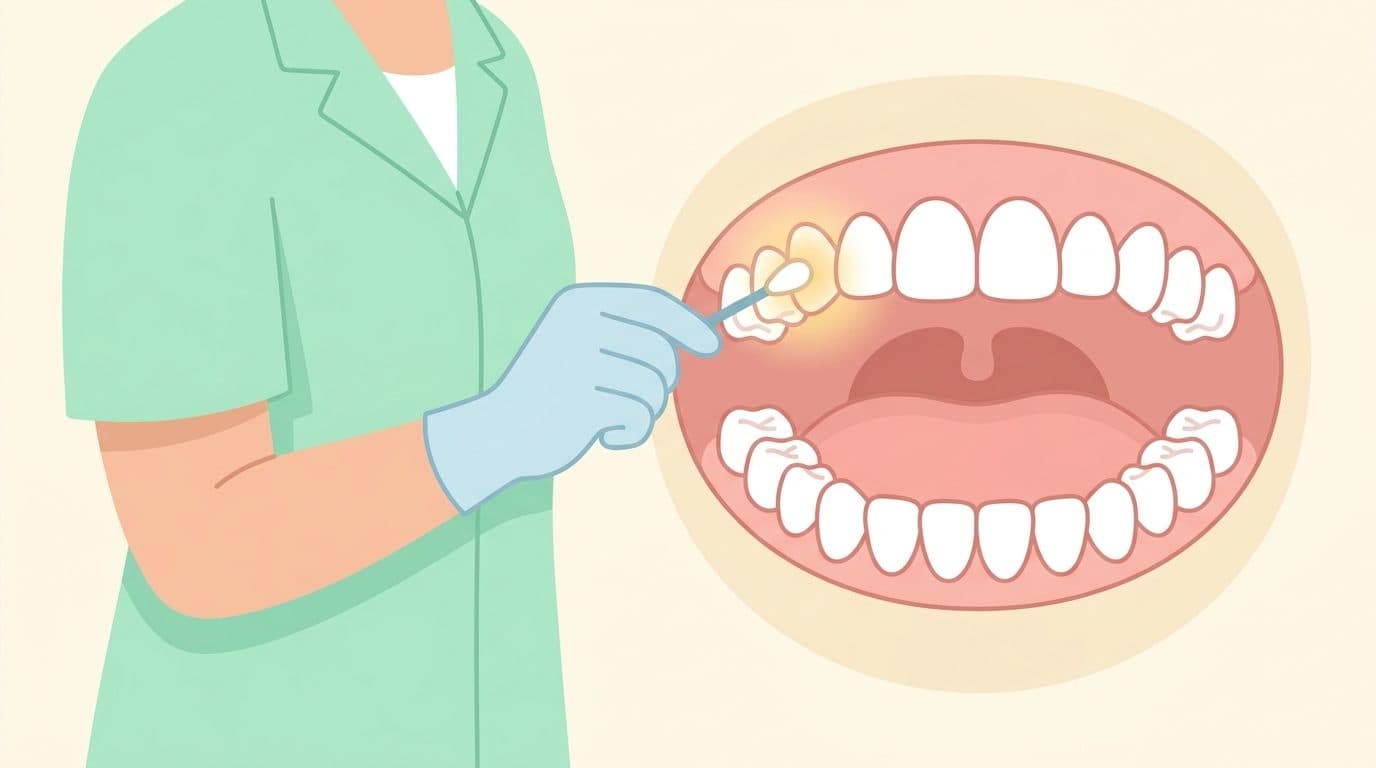
In Maine, pediatricians have started stepping in to stop tooth decay themselves for children who can't get a dental appointment. The method involves applying a solution of silver and fluoride to the affected tooth, with no anesthesia or drilling, to keep the cavity from growing any larger.
According to reporting by the Maine Monitor, distributed by The Associated Press, some pediatricians in Maine have recently begun offering a treatment called silver diamine fluoride (SDF). Once used exclusively by dentists, the treatment has spread into pediatric offices as more children struggle to get through the dentist's door.
How Silver Diamine Fluoride Works and Its Limits on Use
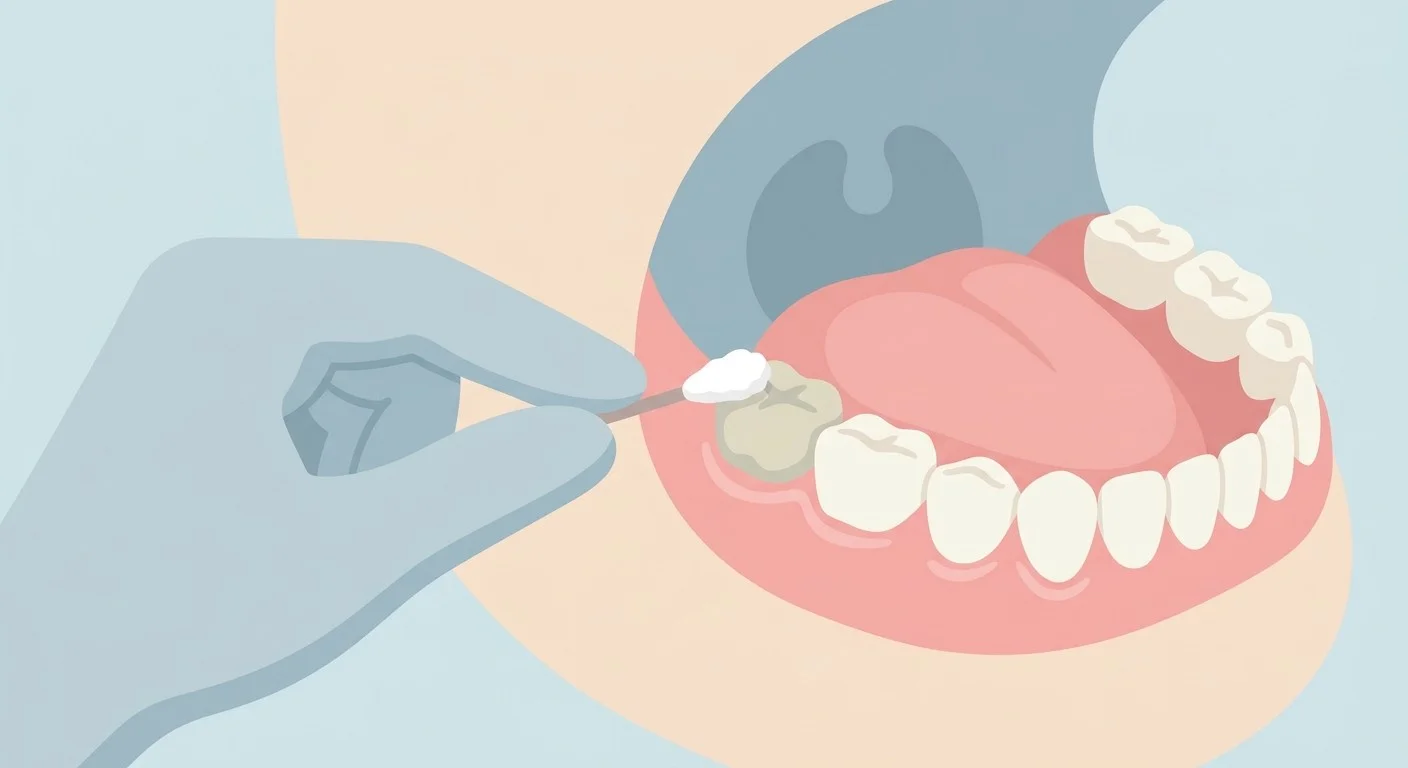
Silver diamine fluoride is a liquid that combines silver and fluoride. Using an applicator similar to a cotton swab, it's rubbed onto the decayed area for 30 seconds to a minute. The solution suppresses bacterial growth and hardens the tooth surface, keeping the decay from spreading any deeper. Unlike conventional treatment, which drills away the decayed portion, it requires no anesthesia and no drilling. The trade-off is that the treated spot turns black or brown, and the treatment can't be used on children with a silver allergy or on cavities that have already progressed too far.
Maine's Falling Dentist Numbers and Pediatricians Applying the Treatment
The number of dentists in Maine fell from 590 in 2019 to 530 in 2023. According to a survey by the Children's Oral Health Network of Maine, only a third of children with dental insurance get both a checkup and a cleaning every year. Dr. Brian Youth, a pediatrician at Maine Medical Center, learned the treatment last fall and has since treated more than 70 children. He brings families back four to six weeks after the treatment to check whether another application is needed and whether the child should see a dentist for a full evaluation. "Pediatricians have so much on their plate that they need to cover with families at different visits, and some might see this as an additional task that pediatricians are taking on because patients can't get the dental care that they need," Youth said. "But I would say this is an important one because of the morbidity associated with dental (decay) in our patients." Where the dental therapist role covered earlier in this section created an entirely new license, Maine instead chose to teach existing pediatricians one more procedure.
International Endorsement and Barriers to Use in Korea
WHO Listing and Maine's Pilot Programs
The World Health Organization added the treatment to its Model List of Essential Medicines in 2021, and the American Academy of Pediatrics has issued guidance for using it in pediatric offices. Maine has also run a pilot program training school nurses in the technique, along with another pilot in which dental hygienists screen students at school and have a dentist remotely review their X-rays. Becca Matusovich, executive director of the Children's Oral Health Network of Maine, said the treatment is "one of many ongoing solutions." She added that training more dentists and dental hygienists, and raising reimbursement rates for treating low-income patients, need to happen alongside it.
Korea's Fluoride Application Dispute and the Limits of Medical Law
A similar dispute has played out in South Korea. Last year, when some pediatric clinics began advertising fluoride application treatments online, the Korean Academy of Pediatric Dentistry raised concerns. Lee Nan-young, the academy's president, said fluoride application should be accompanied by regular checkups and assessment of active decay lesions. Critics also pointed out that dentists and pediatricians give parents different guidance on how long to restrict eating afterward, causing confusion.
Korean medical law draws an even sharper line. The Supreme Court has ruled that applying an adhesive or corrosive agent to a cavity to produce a physical or chemical change is a medical act reserved for dentists, meaning even dental hygienists cannot perform it without authorization. Given how strictly that boundary is drawn even among dental professionals, an approach like Maine's, where pediatricians apply silver diamine fluoride themselves, would be difficult to transplant directly into Korea. Instead, Korea's National Health Insurance Service has focused on catching cavities early by covering dental sealants for children 18 and under and resin fillings for children 12 and under through national health insurance.