
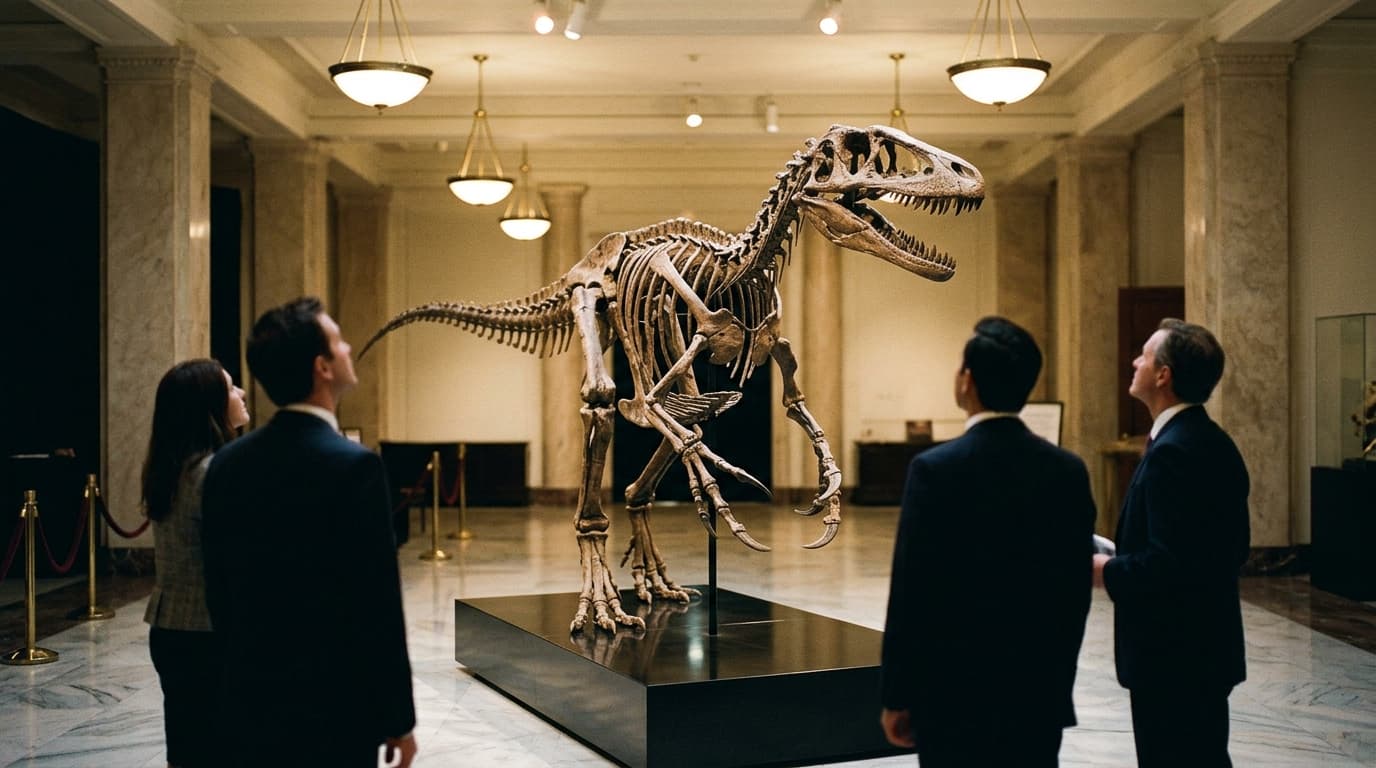
A rare dinosaur fossil that resembles a Tyrannosaurus but differs sharply starting with its teeth is heading to a U.S. auction next month carrying a price tag in the billions of won.
According to The Associated Press, the fossil is the skeleton of a carnivorous dinosaur discovered by Montana rancher Jodi Pierson on her own land in 2019, and it was nicknamed 'Jodi' after her. Standing 2 meters tall and stretching 6 meters long, it is about 70% complete, with a nearly complete skull that still has roughly 50 teeth embedded in its jaws. The auction will be held at Sotheby's in New York on the 27th, with an estimated hammer price of $6 million to $9 million, or roughly 8.1 to 12.1 billion won at the October 14 exchange rate of 1,343 won per dollar. Only three skeletons of this kind are known to exist worldwide.
Teeth and Forelimbs Set the Two Dinosaurs Apart
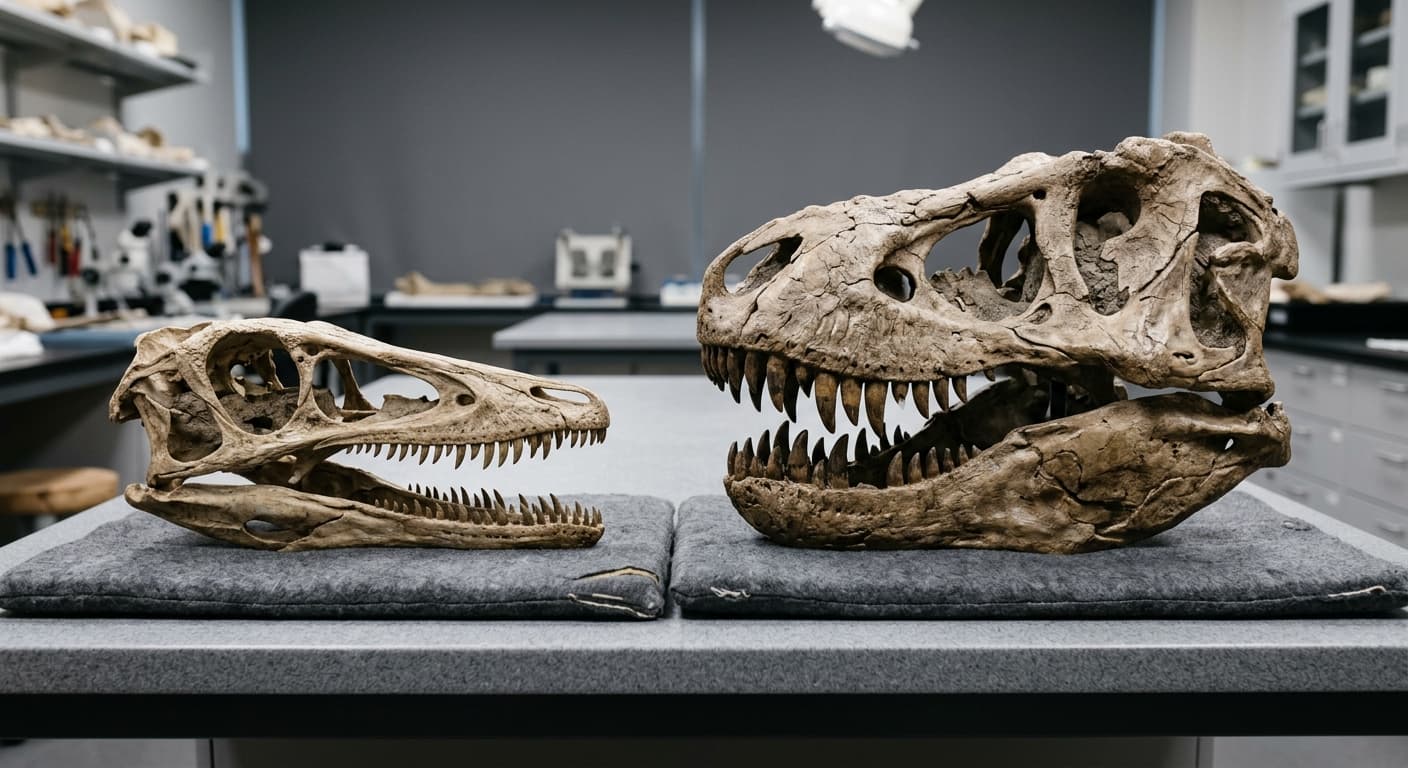
'Jodi' wasn't considered a remarkable fossil from the start. After a skull fossil now held at the Cleveland Museum of Natural History surfaced in 1942, scientists argued for more than 80 years over whether it should be classified as a juvenile Tyrannosaurus or a separate species, Nanotyrannus. Last October, a U.S. research team analyzed growth rings preserved in the bone, like tree rings, and concluded the dinosaur was already a fully grown adult. Their reasoning was that puberty alone couldn't account for the differences in skull bone structure and nerve pathways. 'It's like a lion and a cheetah,' explained Cassandra Hatton, Sotheby's head of science and natural history. 'They hunted different prey. They were around at the same time.'
There are more than 150 differences between the two dinosaurs, the most striking being their teeth. A Tyrannosaurus's teeth are thick enough to crush bone and shaped almost like bananas, while a Nanotyrannus's teeth are slender and blade-like, suited to slicing meat off faster-moving prey. Its forelimbs are also longer, with larger claws. We've previously covered research that used isotopes inside teeth to gauge Tyrannosaurus body temperature; this time, what's different is that the shape of the teeth itself served as the evidence separating the two species.
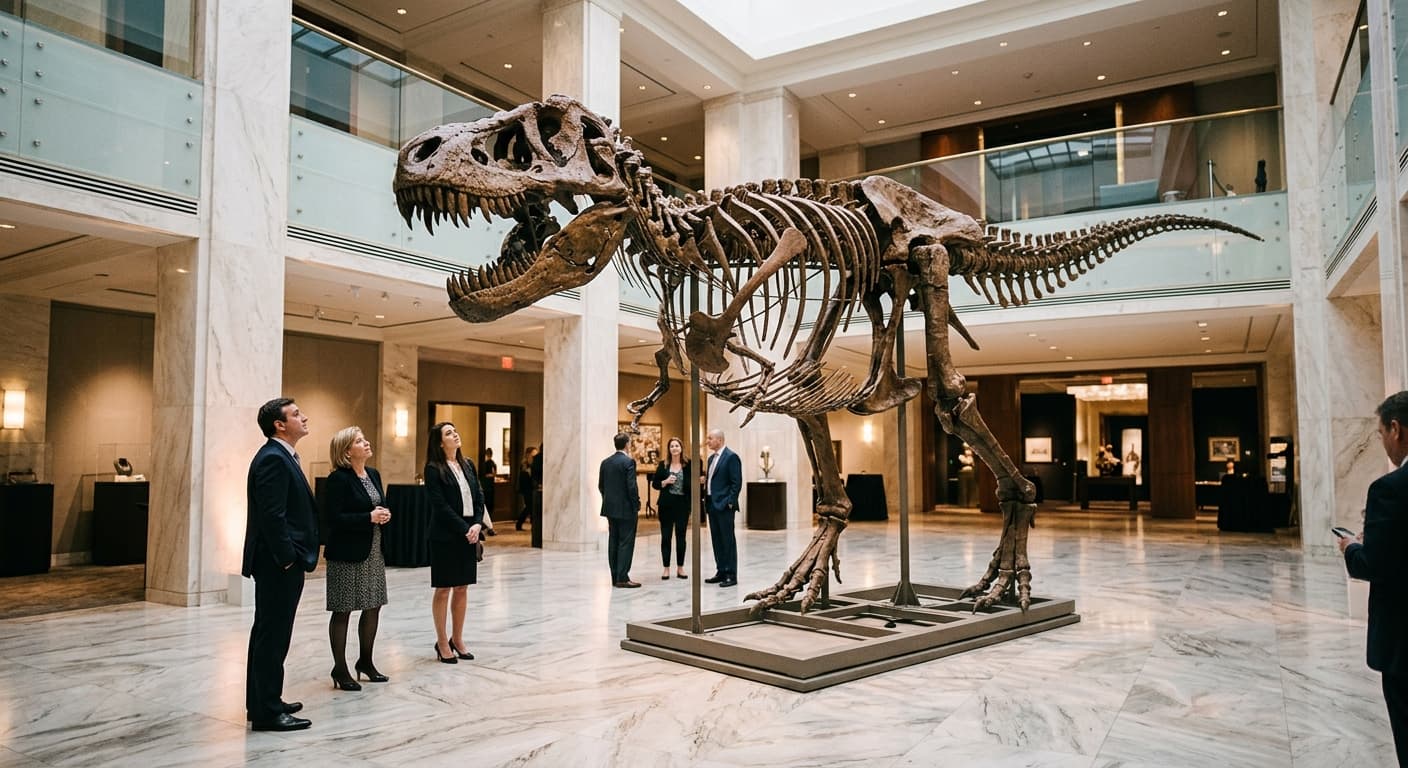
A Research Opportunity Lost Once It Enters Private Hands
Not every scientist agrees with this interpretation, but there are concerns that once the fossil becomes a private collector's item through auction, neither rebuttal nor further research will be able to continue. Stuart Sumida, president of the Society of Vertebrate Paleontology and a biology professor at California State University, San Bernardino, said, 'No peer-reviewed scientific study can be published on specimens that are not held in the public trust. Once in private hands it can never be studied, and generations of children and adults alike will never see it again.' Hatton countered that without professional dinosaur hunters, the world might never have known Nanotyrannus existed at all, arguing that universities and museums alone can't cover the manpower and cost of excavation.
Sotheby's also sold a complete Tyrannosaurus skeleton for $50.1 million this summer. Of the other two known skeletons, one was found tangled with a Triceratops in 2006 and is known as the 'Dueling Dinosaurs'; it is held at the North Carolina Museum of Natural Sciences and isn't for sale, while the other is at the Burpee Museum of Natural History in Illinois.
In South Korea, this kind of private fossil auction would be difficult to carry out in the first place. Under the Act on Protection and Investigation of Buried Heritage, anyone who discovers a fossil must report it to the relevant authority within 30 days of discovery, and if no rightful owner is identified, it is appraised to determine whether it qualifies as a national heritage item and is then either turned over to the state or kept as educational or academic material. Finders only receive a reward payment, so the practice seen in Montana, where a landowner puts a fossil directly up for auction, is far removed from South Korea's system.