
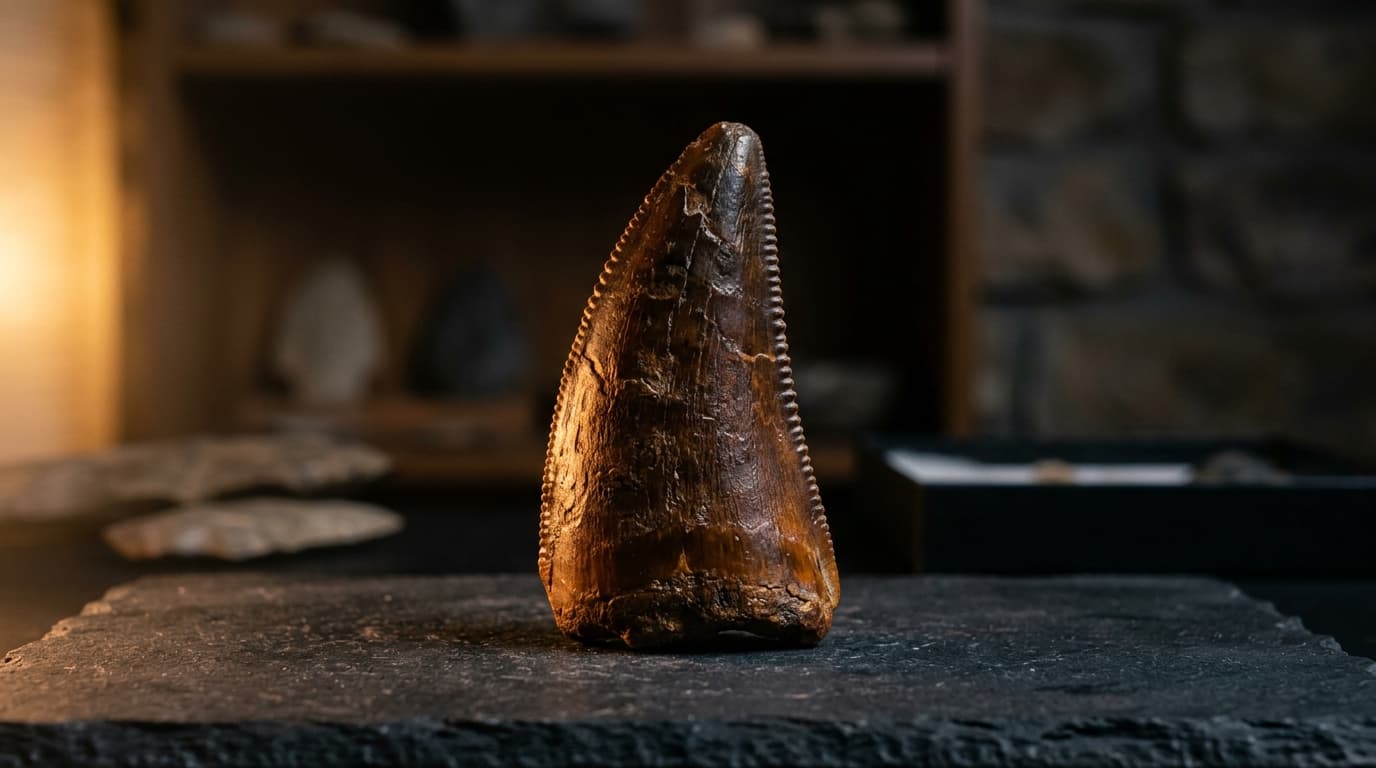
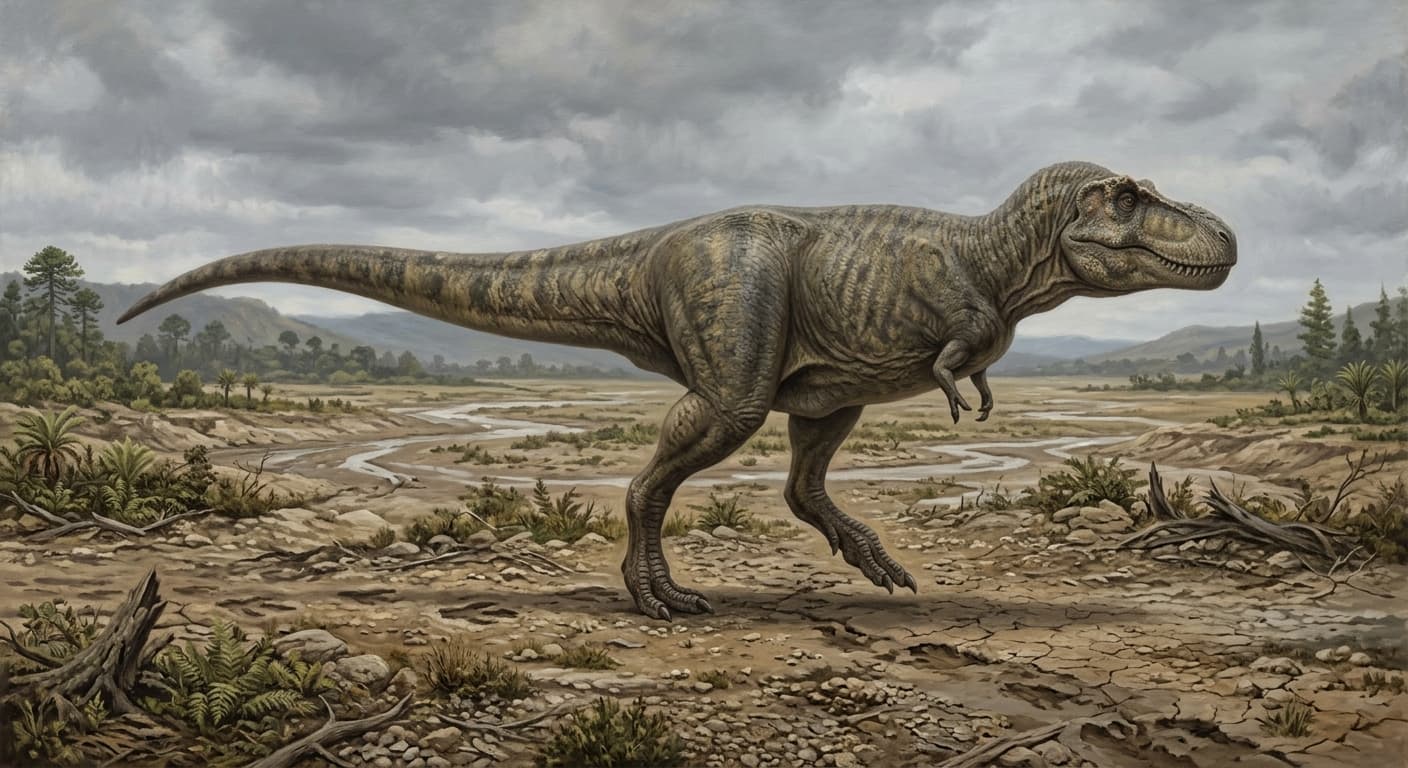
Scientists have found that the body temperature of Tyrannosaurus rex, the carnivorous dinosaur that went extinct 66 million years ago, was close to that of humans, based on an analysis of fossilized teeth.
According to The Associated Press, a research team at the University of California, Los Angeles (UCLA) worked backward to calculate the T. rex's body temperature at the time its teeth formed by measuring how closely carbon and oxygen isotopes clumped together within the tooth enamel. The findings were published in the journal Science Advances on September 16, 2026.
A Temperature Record Written in Teeth
Unlike bone, tooth enamel does not restructure itself once it has formed, so it preserves information about an animal's body fairly faithfully from when it was alive. The research team measured how closely carbon and oxygen isotopes within the enamel clumped together. This clumping increases at lower temperatures and decreases at higher ones, making it possible to work backward to the temperature at which the fossil formed. "We figured out how warm the most famous animal of all, a T. rex, was," said Aradhna Tripati, a UCLA geochemist who led the study.
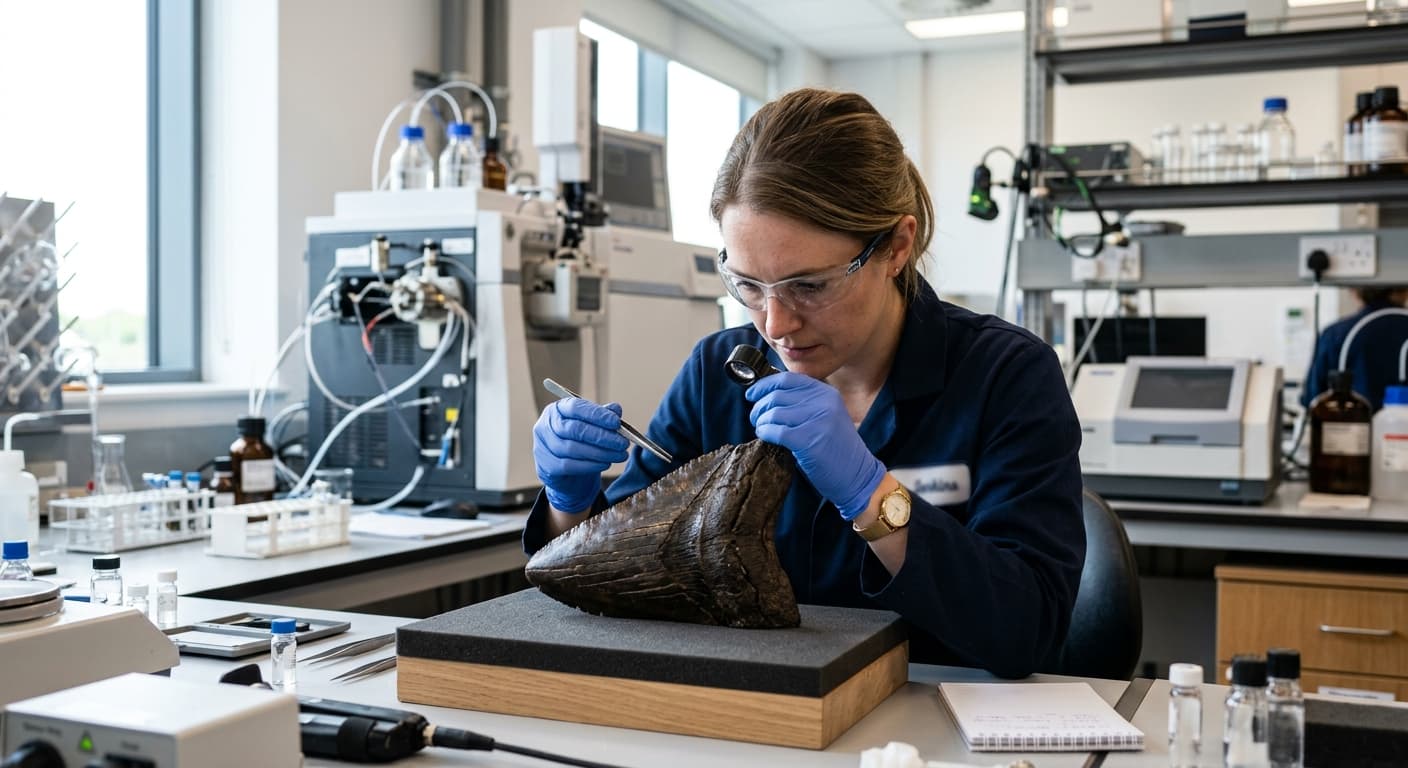
Three Teeth Point to 36 Degrees
The three T. rex teeth the team analyzed showed an average body temperature of around 36°C (97°F). That's nearly identical to the average human body temperature of 36 to 37°C and similar to the body temperature of modern elephants. Because heat from the surrounding environment alone could not raise body temperature this much, the research team concluded that T. rex was closer to an animal that regulated its own body temperature. At this temperature, Tripati said, T. rex could have maintained a stable internal temperature across most of prehistoric North America, regardless of whether the region was cold or hot.
New Evidence in the Warm-Blooded Dinosaur Debate
The debate over whether dinosaurs were cold-blooded or warm-blooded has continued for decades. Arguments based on dinosaurs' growth rates and bone structure have tended to favor the warm-blooded side, but this is the first time body temperature has been confirmed directly, as a number. Jasmina Wiemann, a paleobiologist at Johns Hopkins University who was not involved in the study, called it an unexpected result. "I almost would have expected a higher body temperature," she said, noting that based on her previous work she had thought the predator might have run a few degrees hotter, similar to modern birds, dinosaurs' warm-blooded descendants. Robert Eagle, a UCLA geobiologist and co-author of the study, said, "There's lots of interesting, charismatic species that could be explored using this," adding that the team plans to apply the same method of analysis to other fossils.
This is not the first study to read an organism's past from chemical information preserved in its teeth. Earlier research that analyzed proteins in Homo erectus tooth fossils from China to find traces of interbreeding with other human populations used a similar underlying principle. That study, however, read genetic relationships from proteins, whereas this one reads a physiological trait, body temperature, from isotopes.
In Korea, it is difficult to find fossils for this kind of research in the first place. According to the Korea Heritage Service, the south coast region stretching from Goseong in South Gyeongsang Province to Haenam in South Jeolla Province has yielded large numbers of dinosaur footprint fossils along Cretaceous-period strata, and the area is on UNESCO's World Heritage Tentative List. Yeosu alone has produced 3,546 footprints, the largest number found anywhere in the world, and more than 3,800 have been confirmed at Deokmyeong-ri in Goseong. Most of these fossils, however, are traces dinosaurs left behind, such as footprints or eggs, and bone or tooth fossils that could be used to measure body temperature are almost never found. Footprints pressed into lakeshore sediment can fossilize easily if simply covered by sand, but a dinosaur's body that died in a forest or field decomposes down to the bone unless it is buried quickly.