
Overview and Causes
An injury that loosens a tooth without displacing it
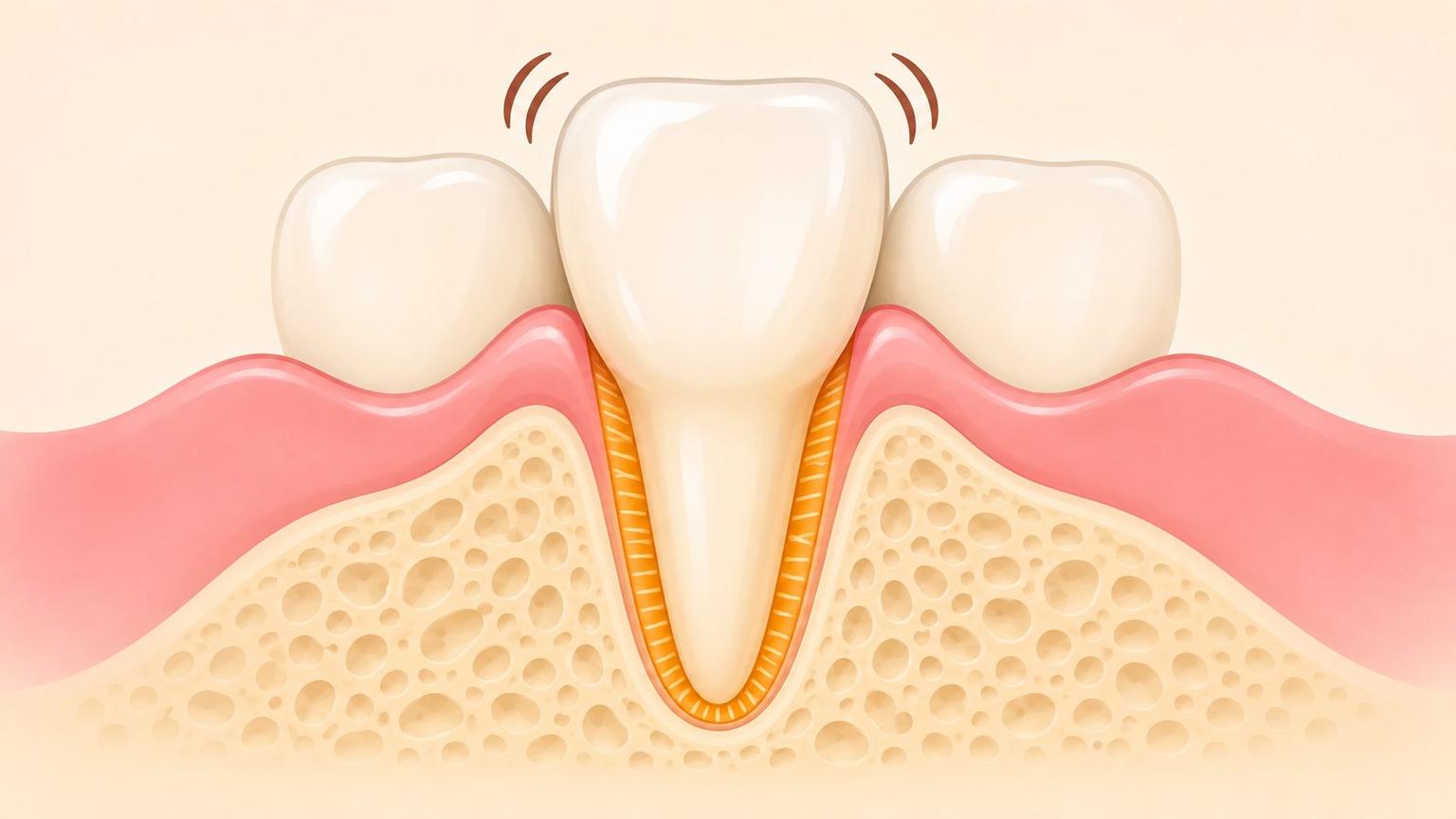
Subluxation occurs when trauma damages the tissues supporting a tooth, increasing its mobility while it remains in its original position. It is distinguished from luxation injuries in which the tooth is pushed outward or sideways. Even if the position appears unchanged, a dentist needs to assess the supporting tissues and the pulp (the tissue inside the tooth containing nerves and blood vessels).
Supporting tissues damaged by trauma
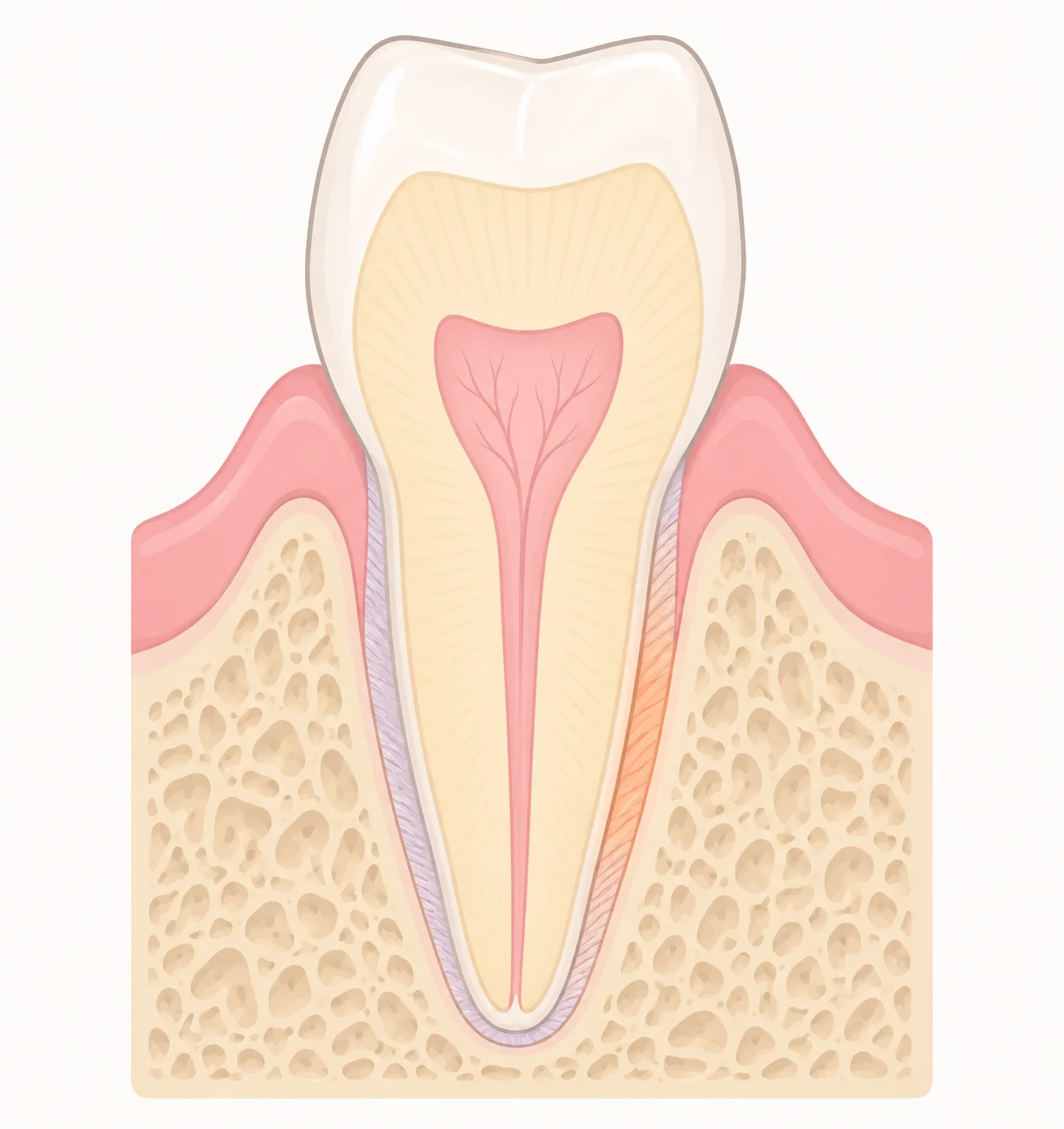
The periodontal ligament connects the tooth root to the surrounding bone and cushions impacts. In subluxation, this tissue is damaged, and the blood vessels supplying the pulp may also sustain temporary or partial injury.
Diagnosis and Treatment Path
Assessing mobility, bleeding, and pulp sensibility together
After trauma, the dentist examines the tooth's position and mobility, pain when tapping the tooth, and bleeding at the gum margin, alongside radiographs. The tooth may appear in its normal position on radiographs. Pulp sensibility testing is also performed, but the response may be temporarily absent immediately after trauma, so pulp necrosis is not diagnosed on the basis of a single test.
Choosing monitoring or short-term splinting
In most cases, the tooth is monitored without a procedure to reposition it. If excessive mobility or significant pain when biting makes splinting necessary, a flexible splint that allows slight tooth movement is used for up to about two weeks.
Root canal treatment is not always necessary. If pulp necrosis is confirmed later, the maturity of the root and other factors are assessed to determine the next treatment, such as root canal treatment. A dentist who treats dental trauma and performs root canal treatment can assess the pulp after trauma and determine whether treatment is needed.
Symptoms and Precautions
Pain when biting and gum bleeding
The tooth may move from side to side or hurt when biting, and a small amount of blood may appear between the tooth and gum. These changes alone do not establish a diagnosis of subluxation, so mobility and pain that develop after trauma should be checked by a dentist.
Follow-up is needed even after pain subsides
The outlook for subluxation is generally good, but pulp necrosis may develop later. Reduced pain does not mean the pulp has recovered. Pulp necrosis may initially cause no symptoms, so scheduled follow-up visits should continue. Subluxation of a permanent tooth is usually reassessed at two weeks, three months, six months, and one year. If a tooth turns gray or brown after trauma, the pulp needs to be checked again.