
Overview and Causes
Inflammation confined to the gums without additional bone loss
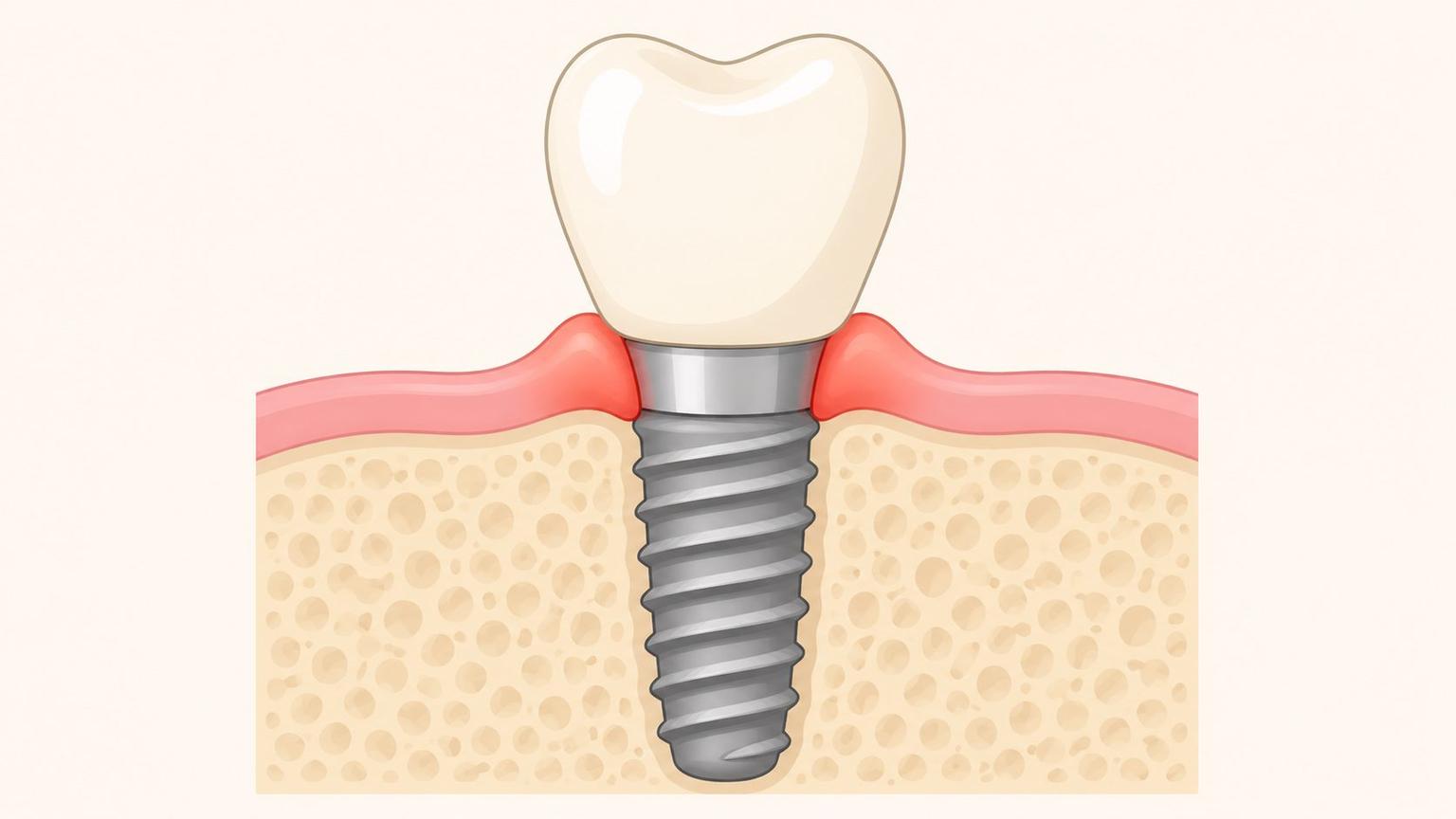
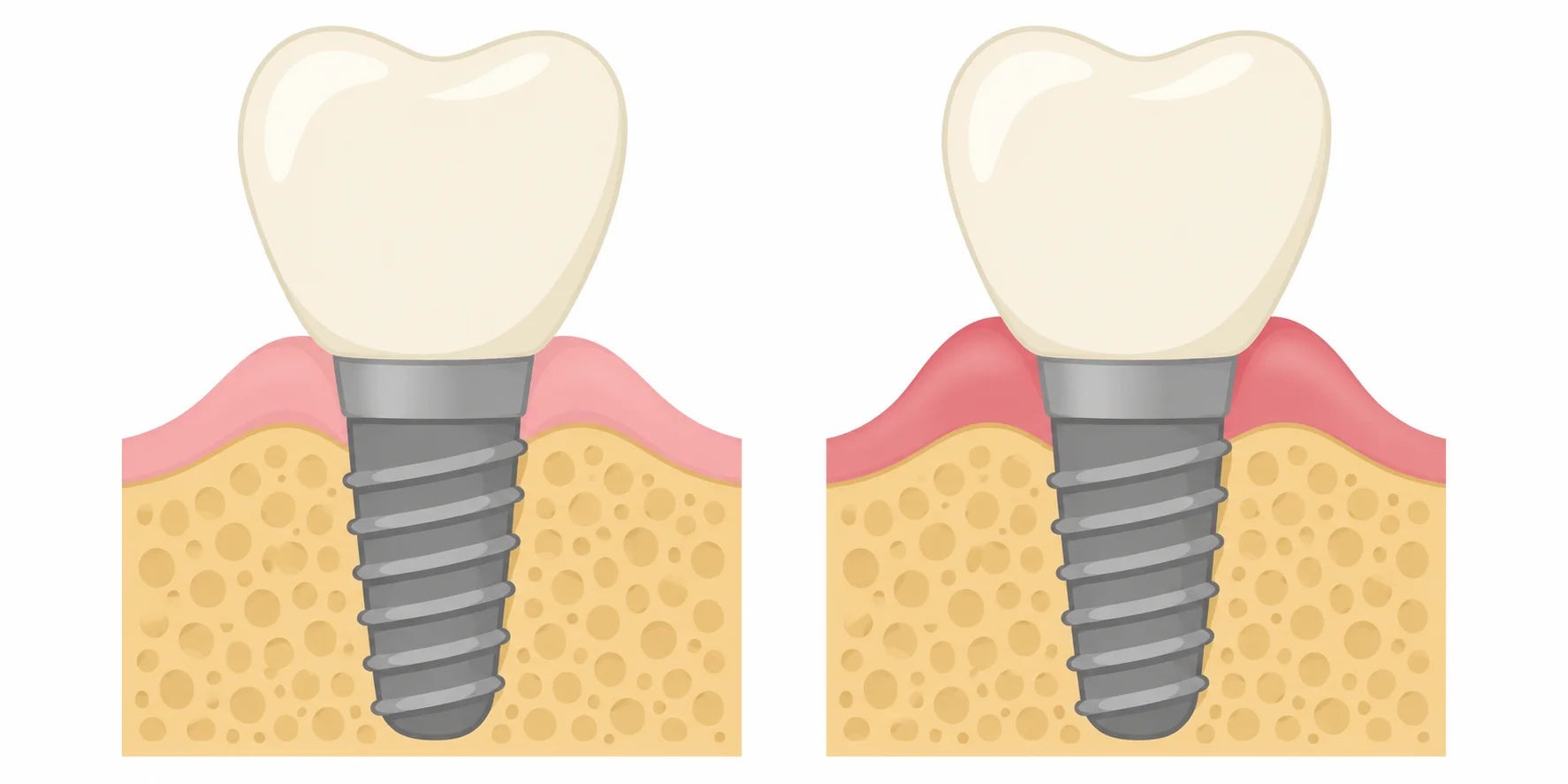
Peri-implant mucositis is a condition in which the gums around an implant are inflamed, but there is no additional bone loss beyond the bone changes that occur during initial healing. It is distinguished from peri-implantitis, in which inflammation is accompanied by progressive loss of the supporting bone.
The main cause is the buildup of dental biofilm (a bacterial film that adheres to tooth or implant surfaces). Appropriate biofilm removal and oral hygiene can restore health.
Diagnosis and Treatment Path
Assessing the gums and bone together
The dentist checks for gum redness and swelling, as well as bleeding or pus when gently examining the space between the gum and implant with an instrument. The depth of this space and the condition of the bone on X-rays are also assessed. Bleeding alone does not distinguish mucositis from peri-implantitis. It is important to distinguish changes caused by initial bone remodeling after implant placement from subsequent progressive bone loss.
Nonsurgical treatment and reassessment
You may wonder whether surgery is always necessary. Mucositis is initially treated with nonsurgical measures, such as professional biofilm removal, along with personal oral hygiene. However, achieving complete resolution of inflammation can be challenging, so recovery is checked. Adding antibiotics is generally not recommended. An antiseptic mouthwash may be used for a limited period under the dentist's instructions when needed. After treatment, signs of inflammation, such as bleeding and pus, are reassessed to see whether they have decreased, and additional treatment is provided if necessary.
If inflammation persists after treatment, the gums and bone are assessed again. If peri-implantitis is diagnosed, additional treatment, including surgery, is considered according to the severity of the disease and the response to treatment. Referral to a dentist specializing in treating the gums and supporting tissues may be made if needed.
Symptoms and Precautions
Bleeding, redness, and swelling
The gums around an implant may become red or swollen and may bleed during brushing or cleaning between the teeth. Pus may also be present. If you notice these changes, have them checked by a dentist. Visible symptoms alone cannot tell you whether the bone is healthy. If progressive bone loss is confirmed, do not delay dental care, and seek an assessment by a dentist specializing in treating the gums and supporting tissues if needed.
Biofilm control after recovery
Mucositis is reversible, but it can progress to peri-implantitis if left untreated. After treatment, continue personal oral hygiene and regular professional care. Along with brushing, use interdental brushes, dental floss, or other aids suited to the shape of the restoration and the spaces between the teeth. The dental team identifies areas that are difficult to clean and explains which tools to use and how to use them. At each visit, gum health and biofilm control are checked, and the interval between visits is tailored to your individual risk and how well you are managing oral hygiene.