
Overview and Causes
Infection in a deep gum pocket
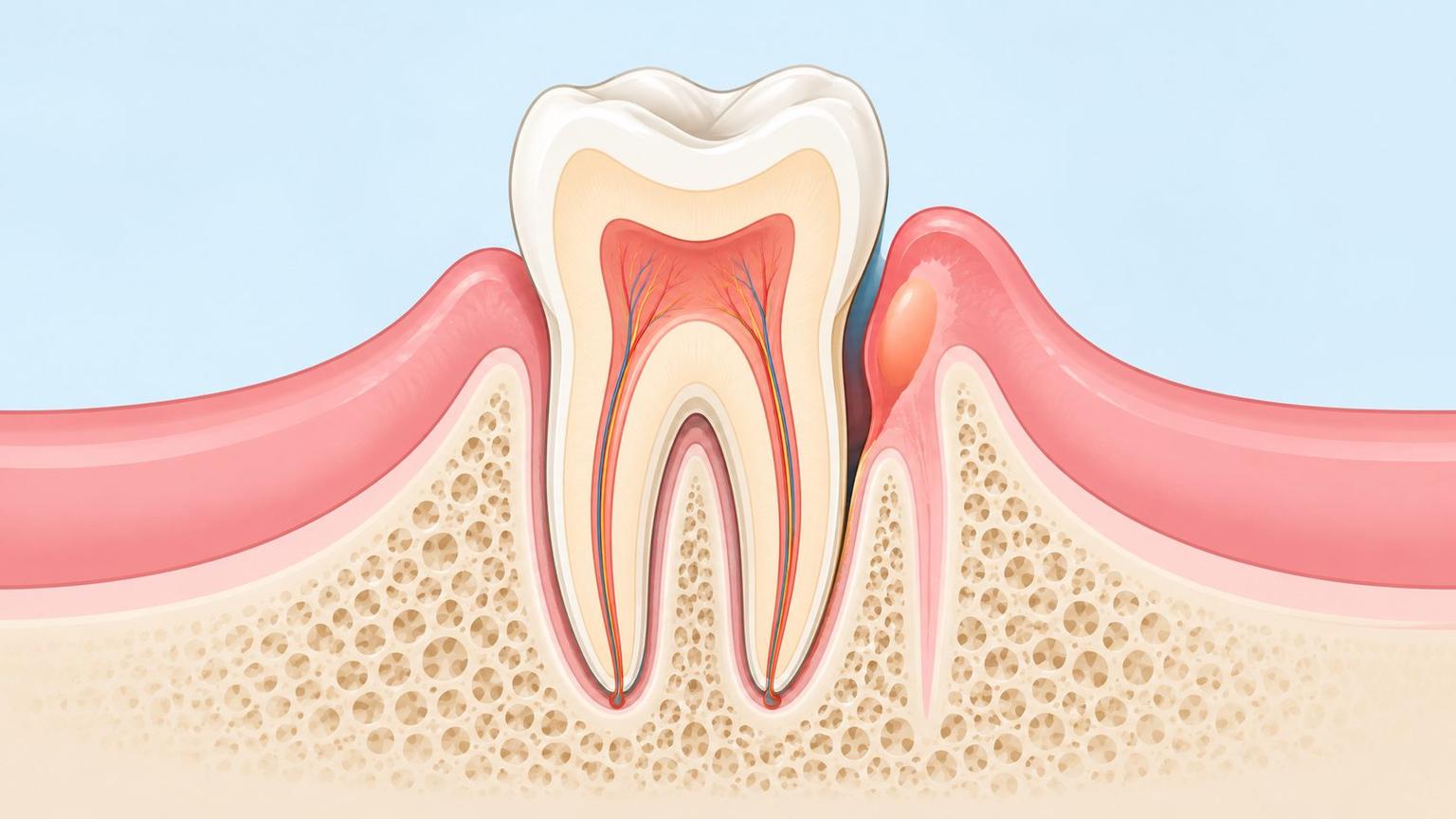
A periodontal abscess is a localized infection in which pus collects within the gum wall of a periodontal pocket (an abnormally deepened gap between a tooth and the gum). Tissue damage can progress rapidly, so sudden gum swelling and severe pain require prompt dental care.
It often develops when calculus or debris blocks drainage from a deep periodontal pocket associated with existing periodontitis, but it can also occur without pre-existing periodontitis. It may develop when calculus remains after scaling or food becomes trapped. A reaction to a foreign object or detachment of a piece of cementum, the layer covering the tooth root, can also cause it. Uncontrolled diabetes increases the risk.
Diagnosis and Treatment Path
Distinguishing it from an abscess originating in the dental pulp
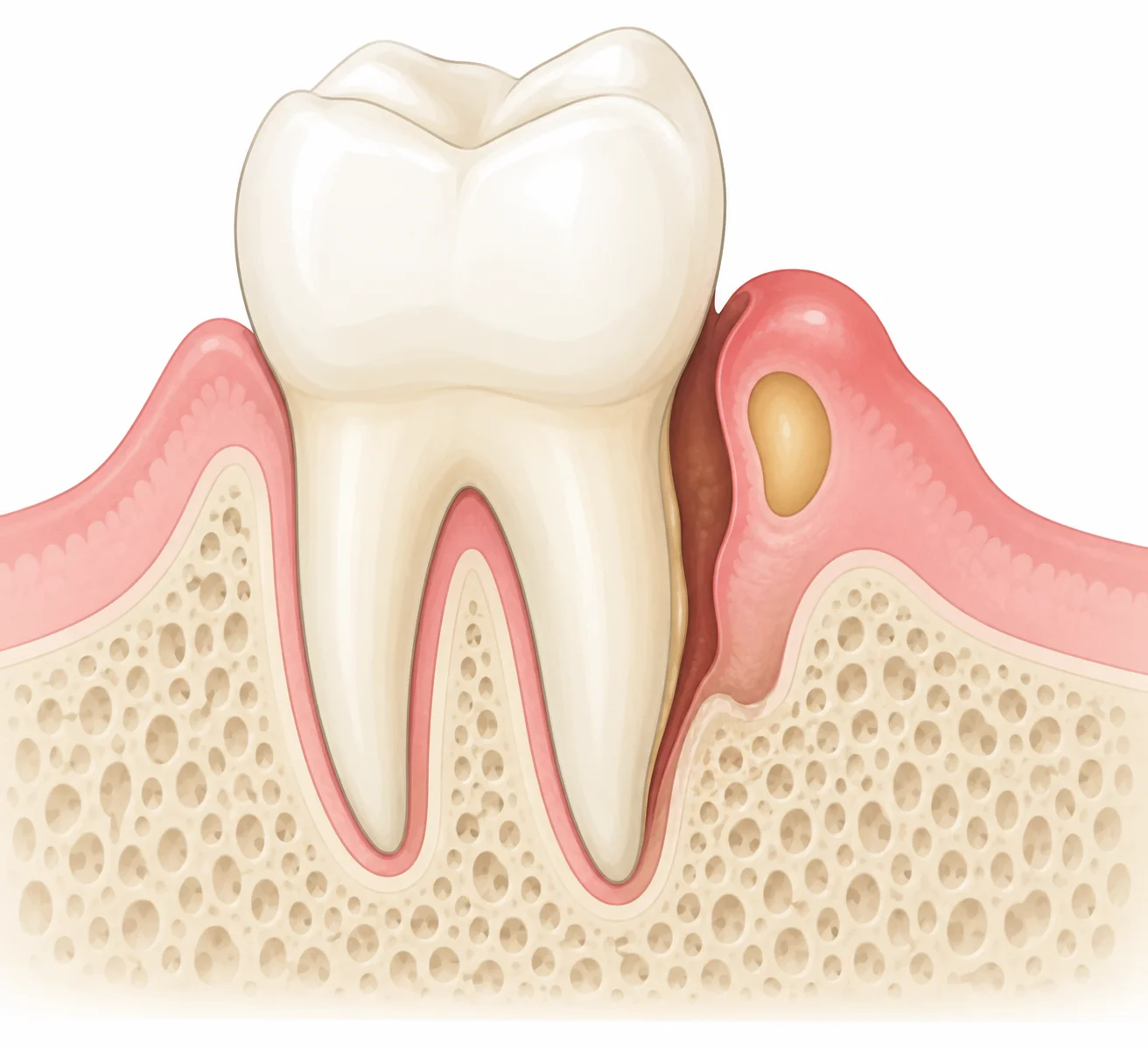
Pus in the gums alone does not establish the cause. The dentist considers medical and dental history, periodontal pocket depth, the location of swelling and drainage, tooth mobility, pulp responses to stimulation, and radiographs together to distinguish it from an abscess originating in the dental pulp (a dentoalveolar abscess). The pulp is often still vital in a periodontal abscess, although this may not be the case in severe cases. Early on, radiographs may show no changes even when pain is severe.
Reassessment after drainage and removal of the cause
An abscess of periodontal origin does not necessarily require root canal treatment if it has not involved the dental pulp. During the acute phase, pus is drained through the periodontal pocket or an incision if needed, and the area is irrigated to control pain and infection. Antibiotics are not needed in every case. They may be considered when there are systemic symptoms such as fever or general malaise, when infection is spreading, or when adequate drainage is difficult. A dentist providing periodontal care evaluates the abscess and also determines whether the infection originated in the pulp.
After the urgent symptoms settle, scaling and root planing (treatment to remove deposits from root surfaces below the gumline) address the cause. If deep calculus remains or inflammation persists, surgery to open the gum, inspect the roots, and remove calculus may be considered.
Symptoms and Precautions
Acute pain and chronic drainage
In the acute phase, the gum becomes red and swollen, with pain at rest or when chewing. The tooth may feel raised or suddenly become loose. In chronic cases, a tract may form through the gum to drain pus, leaving little pain or only a dull ache.
Drainage of pus and reduced pain do not mean the condition has healed. A chronic lesion may remain and flare up again, so follow-up periodontal treatment is needed. After treatment, brush as instructed by your dentist and control plaque with interdental brushes suited to the spaces between your teeth or with dental floss. Rinsing with water alone does not remove plaque.
Changes that require same-day care
Seek same-day dental care if severe swelling and pain develop suddenly or tooth mobility increases sharply. If you also have fever or weakness, tell the dentist at the visit. An acute periodontal abscess can rapidly destroy the tissues supporting the tooth and carries a risk of infection spreading throughout the body, so treatment should not be delayed. Seek immediate assessment in an emergency department if swelling of the face or neck increases rapidly, you can barely open your mouth, or you have difficulty swallowing saliva or water or difficulty breathing.