Overview
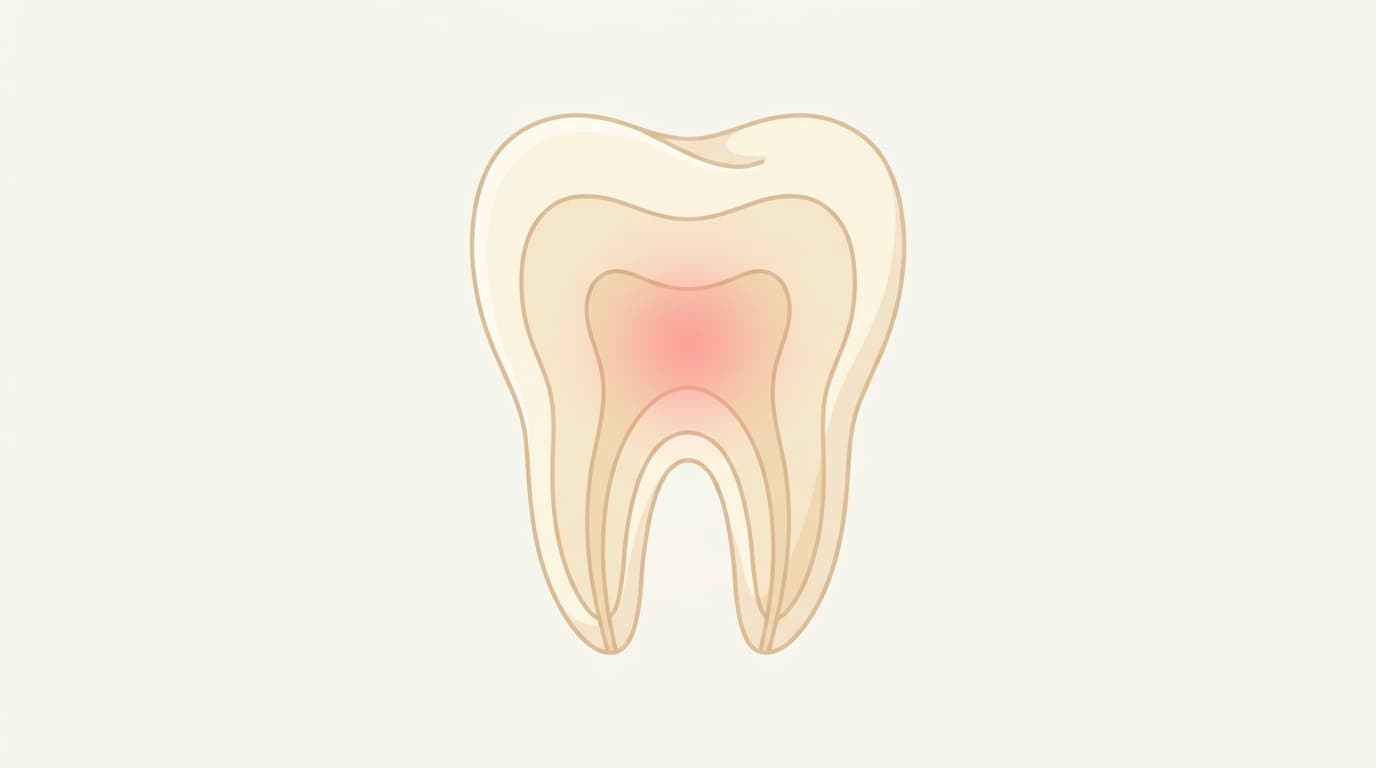
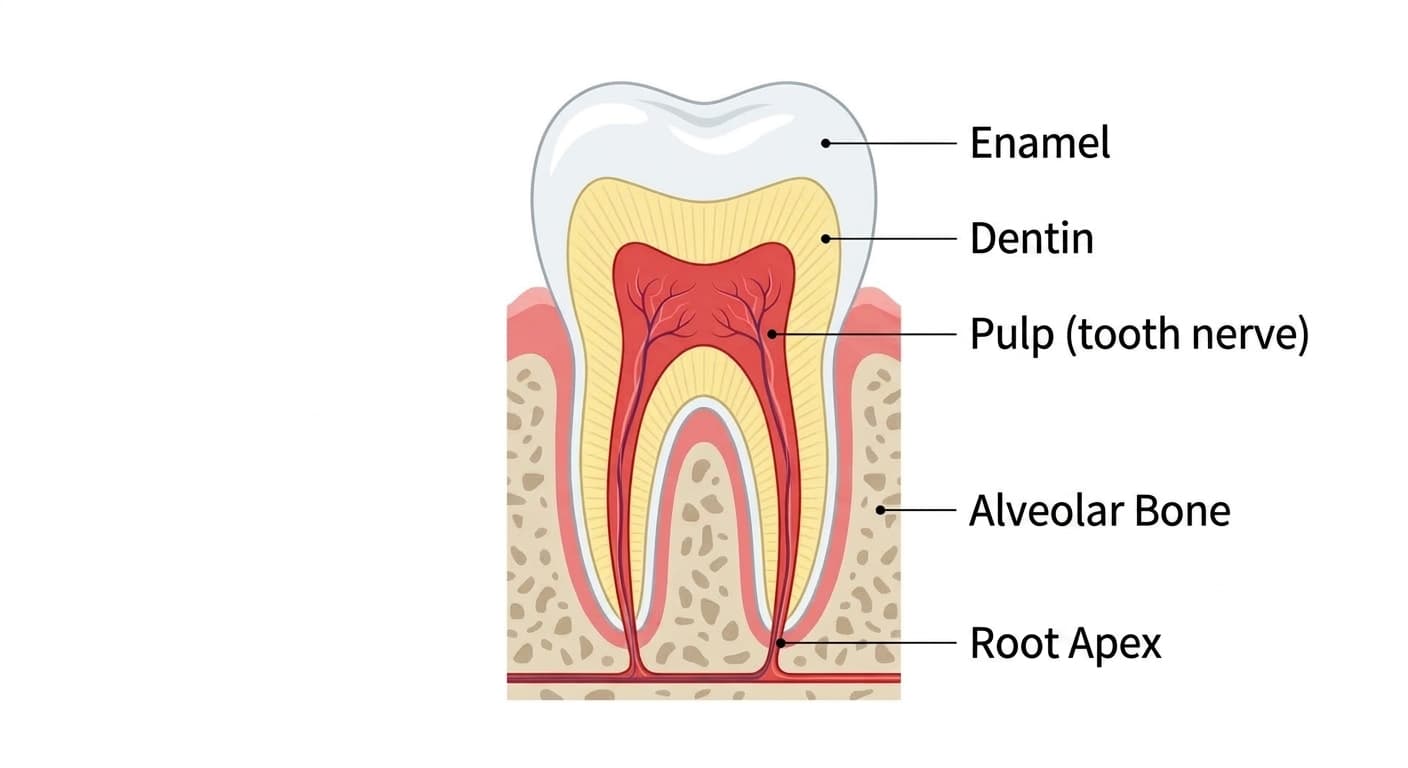
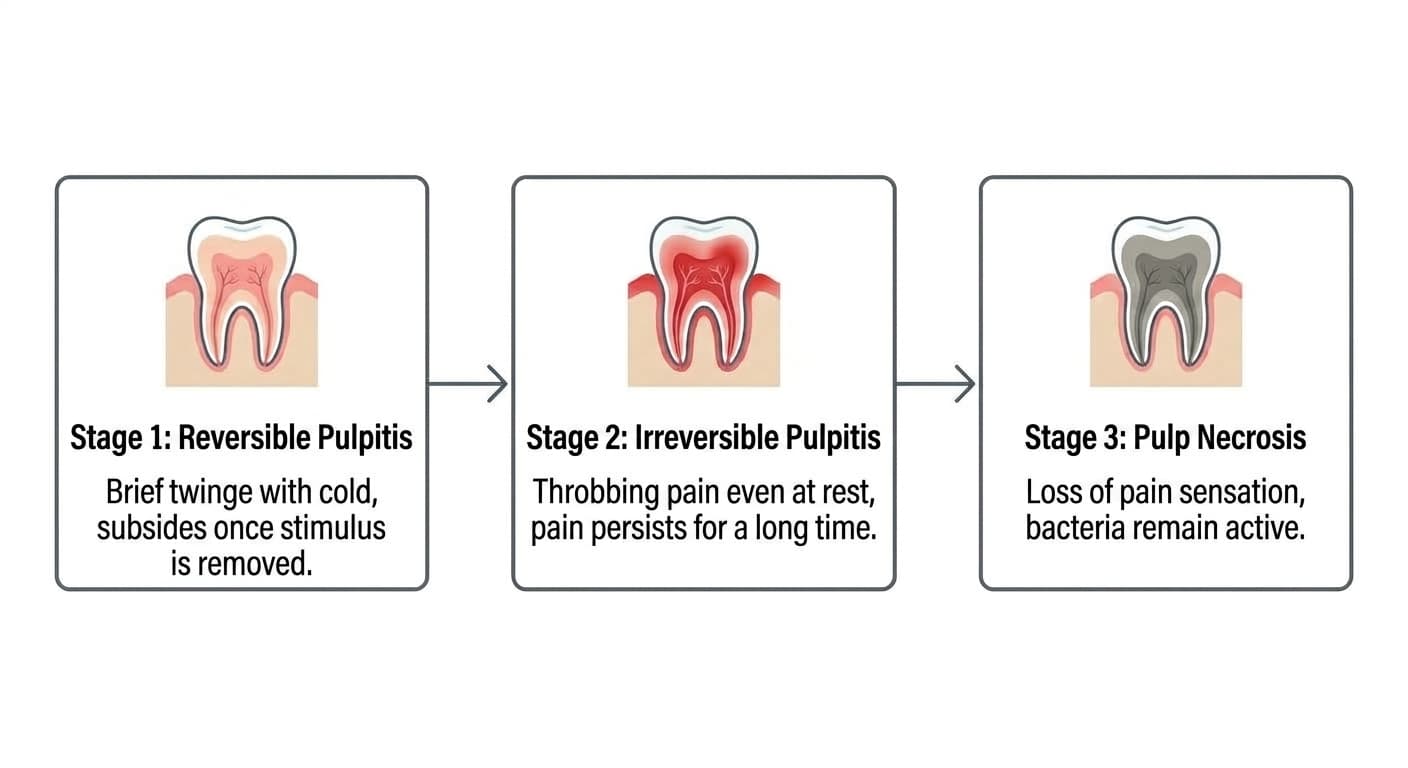
Pulpitis is inflammation of the pulp, the nerve and blood vessel tissue inside a tooth. It consists of two stages: reversible pulpitis, in which the inflammation resolves completely once the cause is removed and the tooth is treated, and irreversible pulpitis, in which the pulp tissue can no longer recover on its own. If irreversible pulpitis is left untreated, it progresses to pulp necrosis, in which the entire pulp tissue dies.
Causes
The most common cause is deep dental caries (cavities). As decay progresses, bacteria and their toxins reach the pulp through the dentinal tubules and trigger inflammation. Microleakage (bacteria seeping through tiny gaps between a restoration and the tooth) is another common cause. A less common but important cause is a cracked tooth: bacteria can penetrate through an inconspicuous, hairline crack and lead to pulpitis and pulp necrosis. Trauma that delivers a strong impact to a tooth can also damage the pulp tissue and cause irreversible pulpitis or pulp necrosis.
Symptoms
In the reversible pulpitis stage, cold water or cold air causes a brief, sharp twinge of pain that quickly subsides once the stimulus is removed. Once it progresses to irreversible pulpitis, throbbing pain (spontaneous pain) appears even without a particular stimulus, and once it starts, it characteristically lasts anywhere from several minutes to several hours. At more advanced stages, heat tends to worsen the pain more than cold does, and holding cold water in the mouth may actually ease it. It can be difficult to pinpoint exactly where the pain is coming from, and it may radiate to a neighboring tooth, the jaw, or the ear. However, pulpitis can be fairly advanced without producing noticeable pain, so the absence of symptoms should not be taken as reassurance.
Diagnosis
Diagnosis is made by asking about the symptoms and combining that with several tests. When a cold stimulus is applied to the tooth to observe the response, a brief, sharp hypersensitive reaction suggests reversible pulpitis, while a dull ache that lingers for several minutes suggests irreversible pulpitis. A mild electrical stimulus is also used to check whether the nerve is still alive, but because age, the tooth's condition, and recent trauma can all produce misleading results, it is not used alone to confirm a diagnosis. Gently tapping the tooth helps gauge whether the inflammation has spread to the tissue around the tooth root. No single test is used to reach a conclusion; diagnosis is made by weighing the pattern of symptoms together with the results of multiple tests.
Treatment & Where to Go
Reversible pulpitis can recover with the pulp intact if the underlying decay or irritant is removed and the tooth is restored. For deep decay with a high risk of pulp exposure, indirect pulp capping (preserving the tissue closest to the pulp and covering it with a medicated material to encourage recovery) may be used, or root canal treatment may be carried out instead.
Once the condition has progressed to irreversible pulpitis or pulp necrosis, root canal treatment is needed, which removes the pulp and cleans and fills the canal. In emergencies with very severe pain, a pulpotomy (removing only the pulp in the crown portion of the tooth while leaving the root pulp intact) may be used as emergency treatment before proceeding to root canal treatment. However, for irreversible pulpitis, depending on the condition of the tooth and how well bleeding can be controlled, a complete pulpotomy (removing only the pulp in the upper part of the root) may instead be chosen as the definitive treatment.
If pain does not resolve even after root canal treatment, or if a crack is too deep to save the tooth itself, extraction may be considered. Care is provided by a dentist who performs root canal treatment.
Outlook & Precautions
If irreversible pulpitis is left untreated, it progresses to pulp necrosis, in which the entire pulp tissue dies, and the infection can then spread to the tissue around the root tip, leading to apical periodontitis or an acute alveolar abscess. An acute alveolar abscess causes severe pain along with gum swelling and can be accompanied by fever or chills, signs that call for same-day care. Notably, once the pulp has died, sensation can be lost to the point that the tooth no longer responds to cold or electrical stimulation, but bacteria can still remain in the canal and continue spreading into the tissue around the root tip even in that state, so a reduction in pain should not be taken to mean the condition has healed. After root canal treatment, the tooth is weakened, so it is important to keep to the scheduled restoration and follow-up visits.