
Overview and Causes
Changes in tooth position after trauma
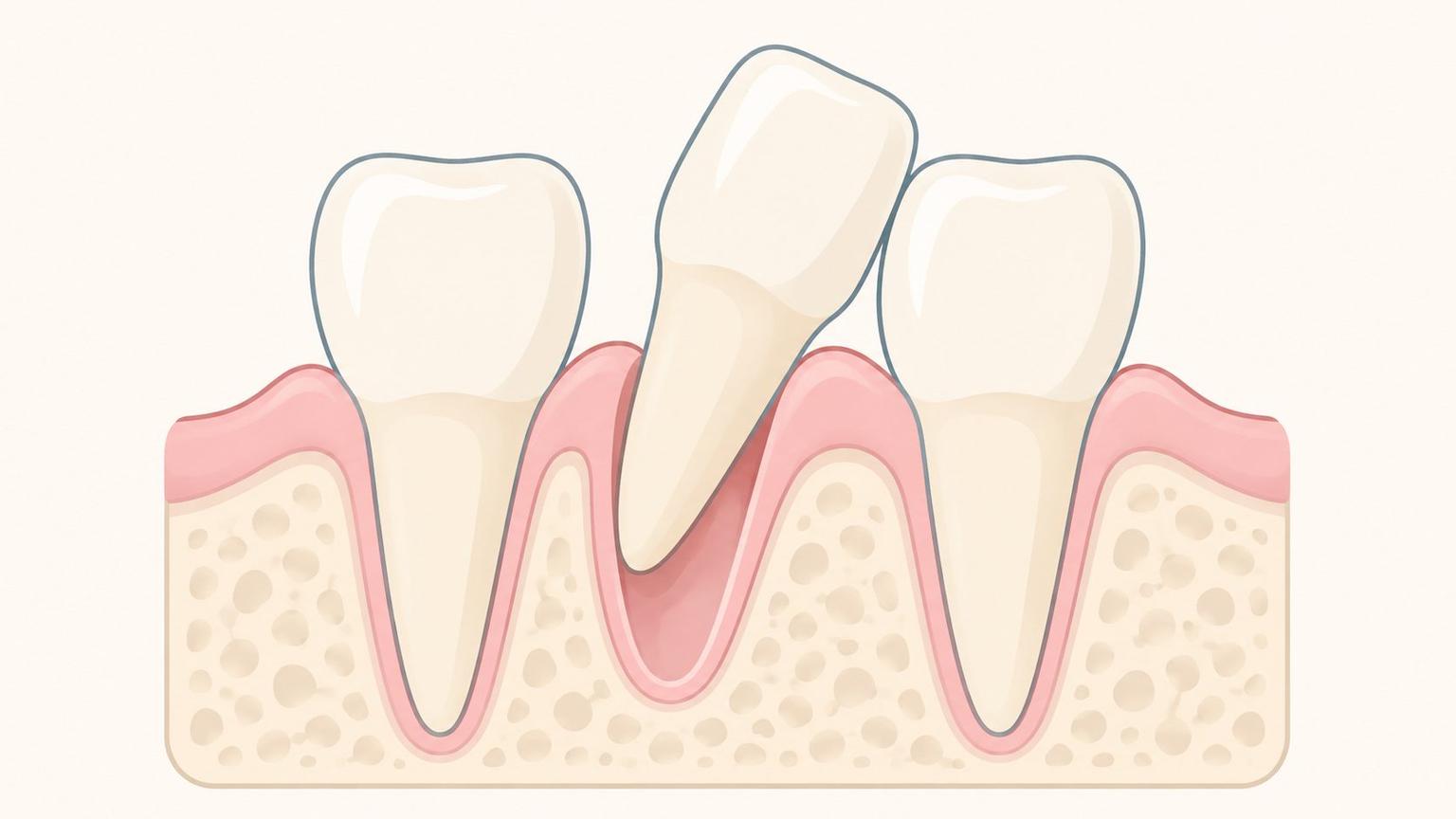
Tooth luxation is an injury in which trauma damages the tissues supporting a tooth, causing it to move from its original position or come out completely. Treatment varies with the direction and extent of displacement, so a tooth whose position has changed after trauma needs prompt dental assessment.
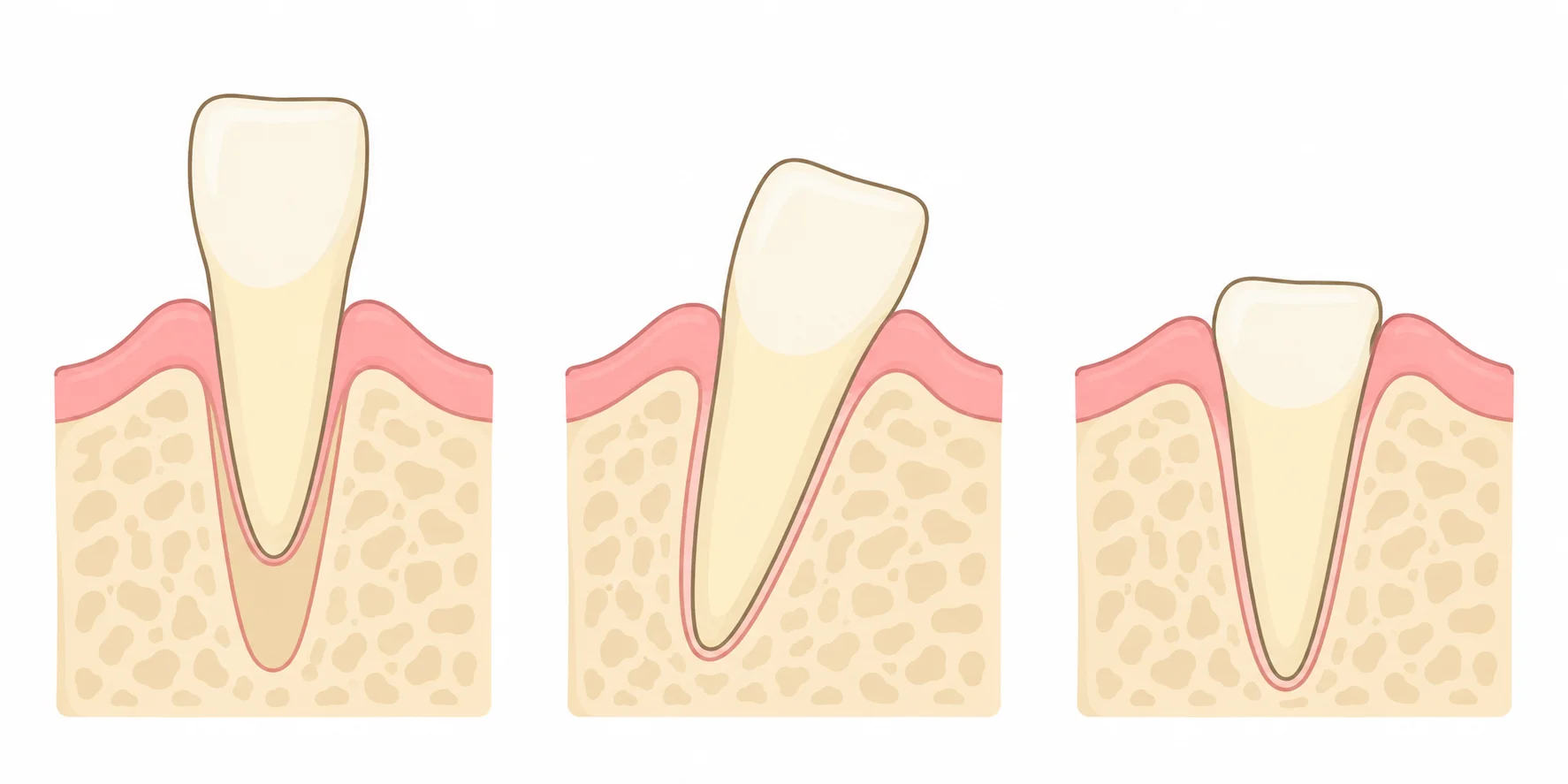
A tooth that is partly pulled out and looks longer has an extrusive luxation; one pushed sideways has a lateral luxation; and one driven into the bone has an intrusive luxation. Lateral and intrusive luxation may be accompanied by a fracture of the bone surrounding the tooth. These injuries are distinguished from subluxation, in which the tooth is loose but remains in its original position.
Diagnosis and Treatment Path
Assessing displacement and pulp responses together
The dentist checks the tooth's position, mobility, and response to tapping, and examines the root and surrounding bone on X-rays. Responses to electrical and cold stimuli are also assessed. Immediately after trauma, even living pulp (the nerve and blood vessel tissue inside the tooth) may not respond, so testing is repeated rather than diagnosing necrosis from a single test.
Deciding on repositioning, splinting, and root canal treatment
Extruded and laterally luxated teeth are repositioned at the dental clinic and splinted to adjacent teeth. Extruded teeth are usually splinted for about 2 weeks and laterally luxated teeth for about 4 weeks; a bone fracture may require a longer period. Subluxation may only require observation, or short-term splinting if the tooth is very loose.
For intrusive luxation, depending on root development and the depth of intrusion, the dentist may monitor whether the tooth re-erupts on its own or restore its position using orthodontic or surgical methods. Orthodontic extrusion is considered if an immature permanent tooth does not re-erupt during observation. For intrusion of a primary tooth, the general approach is to observe for spontaneous recovery, taking the developing permanent tooth into account.
Not every luxated tooth needs immediate root canal treatment. The decision depends on pulp condition, root maturity, and injury severity. However, in a mature permanent tooth that has been knocked out and replanted, root canal treatment begins within 2 weeks of replantation. Early root canal treatment is also considered for intrusion or severe lateral luxation of a permanent tooth with a fully developed root because the risk of pulp necrosis is high. Assessment is available from a dentist who treats damaged teeth and performs root canal treatment; orthodontic or surgical repositioning may require collaboration with other dentists.
Symptoms and Precautions
When looseness and pain do not tell the whole story
The tooth may look longer or shorter, or tilt sideways. A subluxated tooth may hurt when chewing or tapping, and bleeding may occur at the gum margin. In contrast, a laterally luxated or intruded tooth locked in the bone may not be loose, so firmness does not mean the injury is mild.
The disappearance of pain does not necessarily indicate recovery. Pulp necrosis can develop after trauma without symptoms. Even after treatment, regular checks are needed to assess pulp responses, root resorption, and ankylosis, in which the root becomes fused to the bone.
Same-day assessment and emergency care for a knocked-out tooth
Seek dental assessment on the same day if a tooth has changed position after trauma, or is loose and painful when chewing. If a permanent tooth has been knocked out, it is best to put it back in its original position immediately if the person is conscious and it can be done safely. If this is difficult, hold the tooth only by its crown, keep it in milk or saline, and take it to a dentist immediately. The outcome of replantation is affected by how long the tooth has been dry outside the mouth and how quickly initial care is provided. Do not replant a knocked-out primary tooth.