
Question
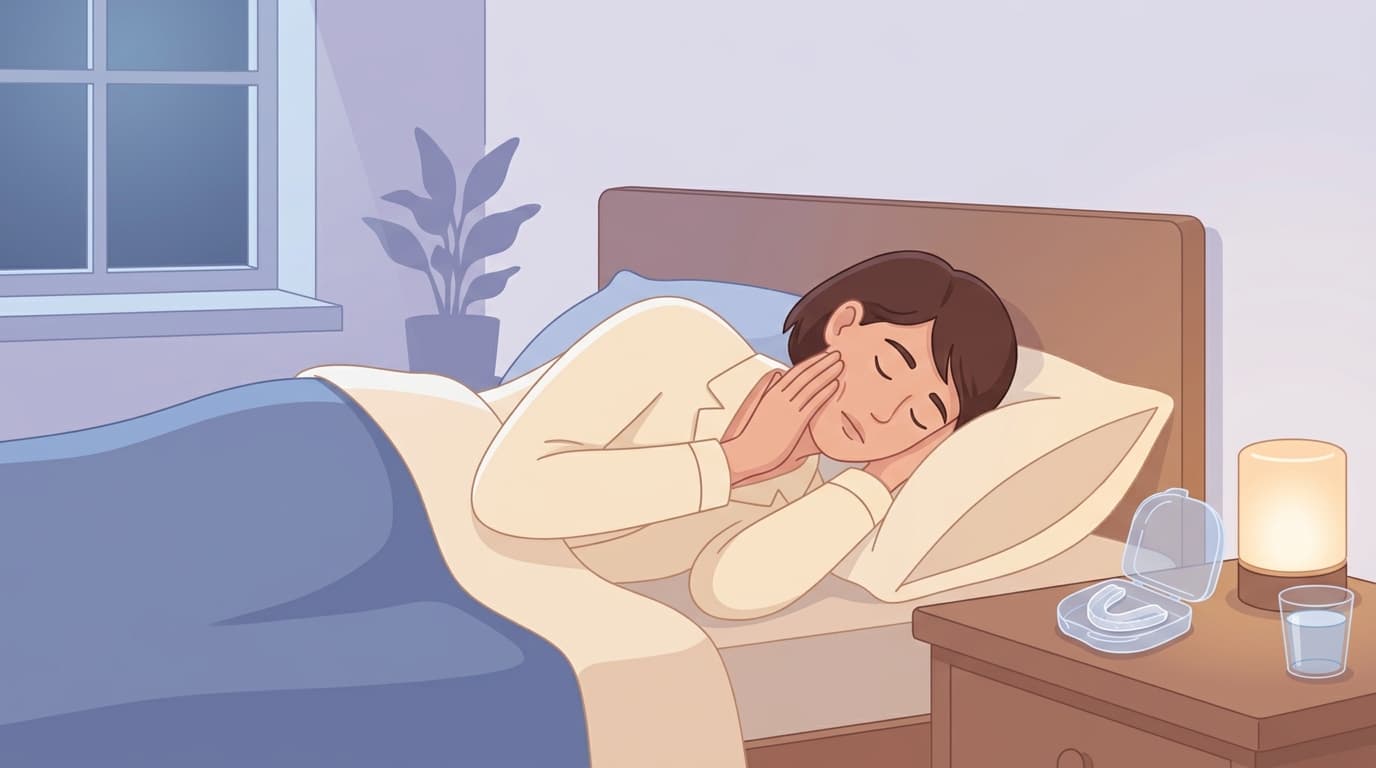
I was told that I grind my teeth badly at night, and my dentist recommended a night guard (a bruxism protection device). I'd like to know whether I really need to wear it, and if so, how long I should use it.
Short Answer
A night guard for bruxism protects the teeth and jaw joint from the force of grinding, but it does not eliminate the grinding habit itself. So whether you truly need to wear one depends on how much the grinding is wearing down your teeth and how much strain it is putting on your jaw joint or chewing muscles. There is no fixed length of time to use it either; instead, the duration is decided by periodically checking whether the grinding habit continues and whether the device has been damaged.
Why Is That?
What the Night Guard Blocks
Bruxism is the habit of repeatedly grinding the teeth during sleep or in an unconscious state, and the force involved can reach 2-3 times the force of a maximum voluntary bite. When this force is repeated, it can wear down the tooth surface (attrition), cause tenderness in the chewing muscles, and lead to micro-damage in the jaw joint or displacement of the articular disc, the cushioning structure inside the joint, from its normal position.
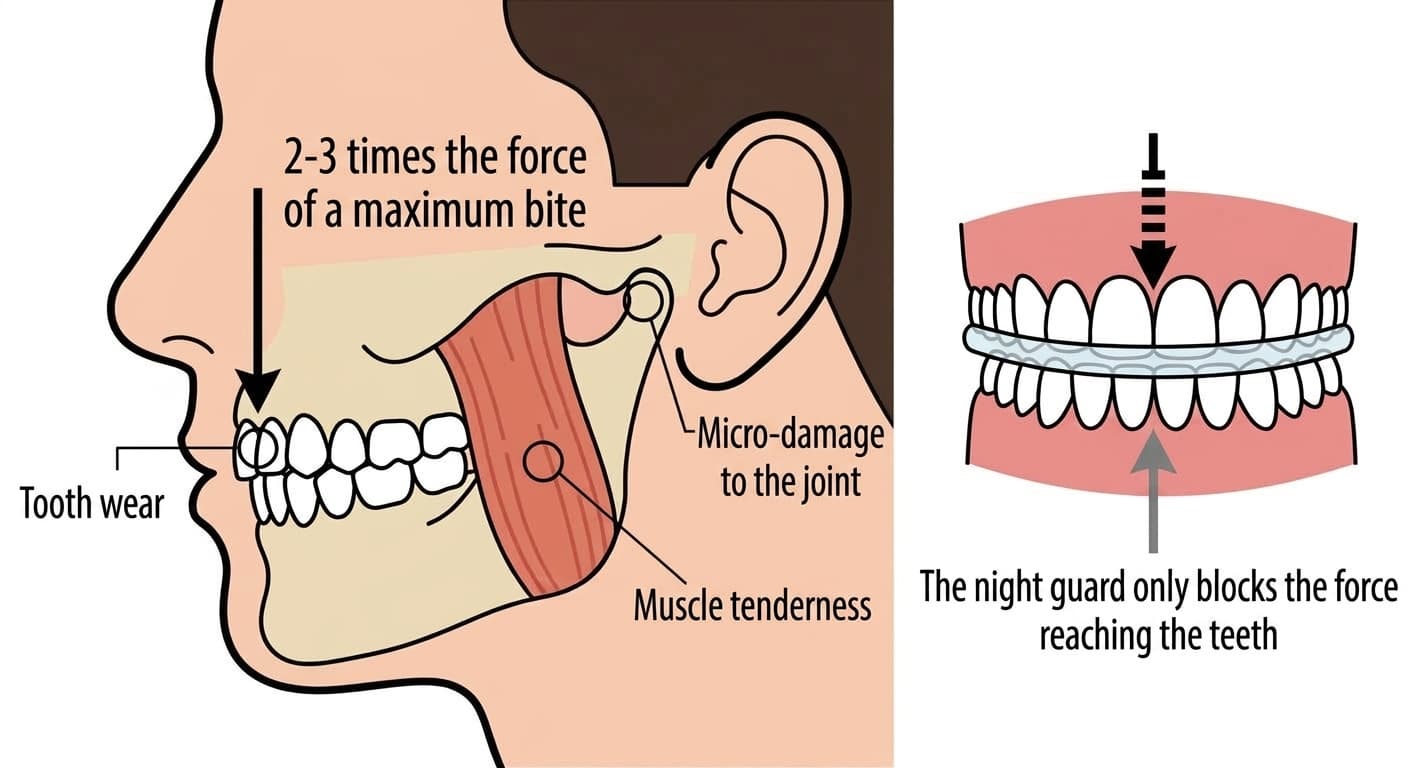
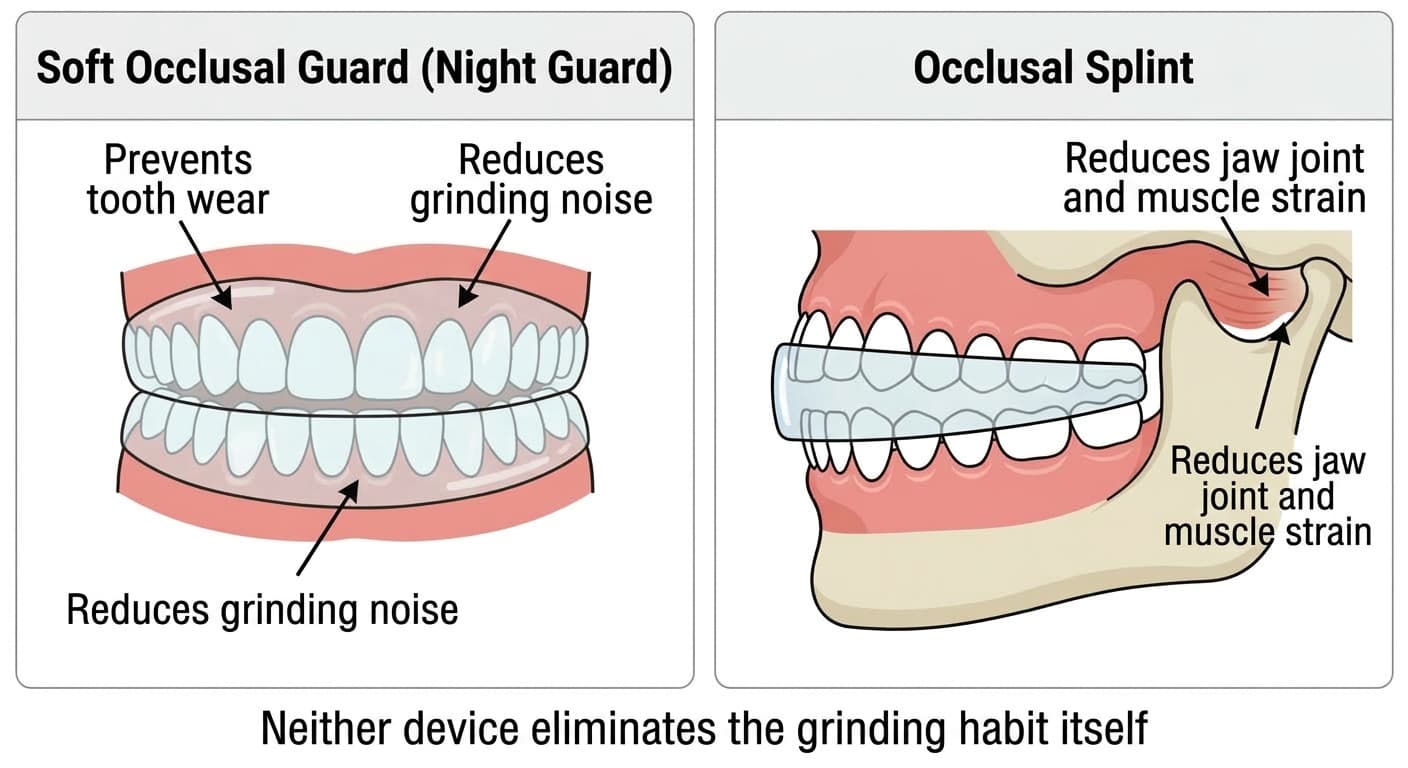
A night guard worn at night (a soft occlusal guard) is made of a vinyl-like material that covers the chewing surface of every tooth and flattens it, preventing this force from concentrating on any single spot. This prevents further tooth wear during sleep and also reduces the noise of grinding. When the strain on the jaw joint or chewing muscles is more severe, for example when jaw joint pain is also present, a separate occlusal splint may be used, which opens a larger gap between the upper and lower teeth to suppress excessive muscle activity. Because the two devices differ in material and purpose, which one is needed is decided after evaluating both the degree of tooth wear and the condition of the jaw joint and muscles.
It Is Not a Treatment That Eliminates the Habit
A night guard is only a device that blocks the force applied while grinding; it cannot eliminate the habit of grinding itself. Mental stress is commonly cited as a cause of bruxism, and it can also occur alongside malocclusion, where the upper and lower teeth do not meet correctly, or a narrowed airway. If these underlying causes remain, the grinding behavior itself can continue even while wearing a night guard. In children with severe grinding that has caused significant tooth wear, occlusal adjustment (smoothing down the spots that make first contact on the chewing surface), a device called an anterior bite plane that opens a gap between the upper and lower teeth, or medication taken before sleep may be used together with the night guard, so a night guard alone does not complete the overall management.
In particular, bruxism in children is often related to mental stress, malocclusion, or a narrowed airway rather than being a pathological condition, and it is reported to mostly be a temporary symptom that decreases over time. When the habit diminishes on its own like this, the reason to keep wearing the device also diminishes.
How Long Should You Wear It
There is no predetermined length of time, such as a certain number of days or months, after which you can stop using a night guard for bruxism. This is because the device continues to play its protective role for as long as the grinding habit and the resulting tooth wear continue. Instead, periodically checking whether the device itself has been damaged is the practical criterion for deciding how long to wear it. In cases of severe grinding, the device can tear, and when this happens, its protective function declines, so it needs to be replaced with a new one.
In other words, the point at which you stop wearing it is not a fixed calendar date, but a decision made together with your dentist by checking whether the grinding habit has decreased and whether the device still covers the teeth properly.