
Question
My child has been receiving regular fluoride applications. Now that their permanent teeth are starting to come in, should they continue? How often should they receive them, and until what age?
Short answer
Fluoride applications are not stopped simply because permanent teeth have erupted. Whether to continue and how often to apply fluoride depend on both caries (tooth decay) risk and the condition of newly erupted teeth. Fluoride varnish (a professional fluoride preparation applied to tooth surfaces) is recommended every 3 months for those at high caries risk and every 6 months for those at moderate risk.
These intervals are not applied uniformly to every child, nor is a specific age set as the stopping point. Risk is reassessed at regular dental checkups, and the next application is discussed based on the results.
Why is that?
The surfaces of permanent teeth continue to mature after eruption
The enamel (the hard outer layer of a tooth) of newly erupted permanent teeth continues to absorb minerals such as calcium and phosphorus from saliva and harden after entering the mouth. This is called post-eruptive maturation. During this process, resistance to acid increases and susceptibility to tooth decay decreases. The first appearance of permanent teeth should therefore be distinguished from the completion of tooth surface maturation.
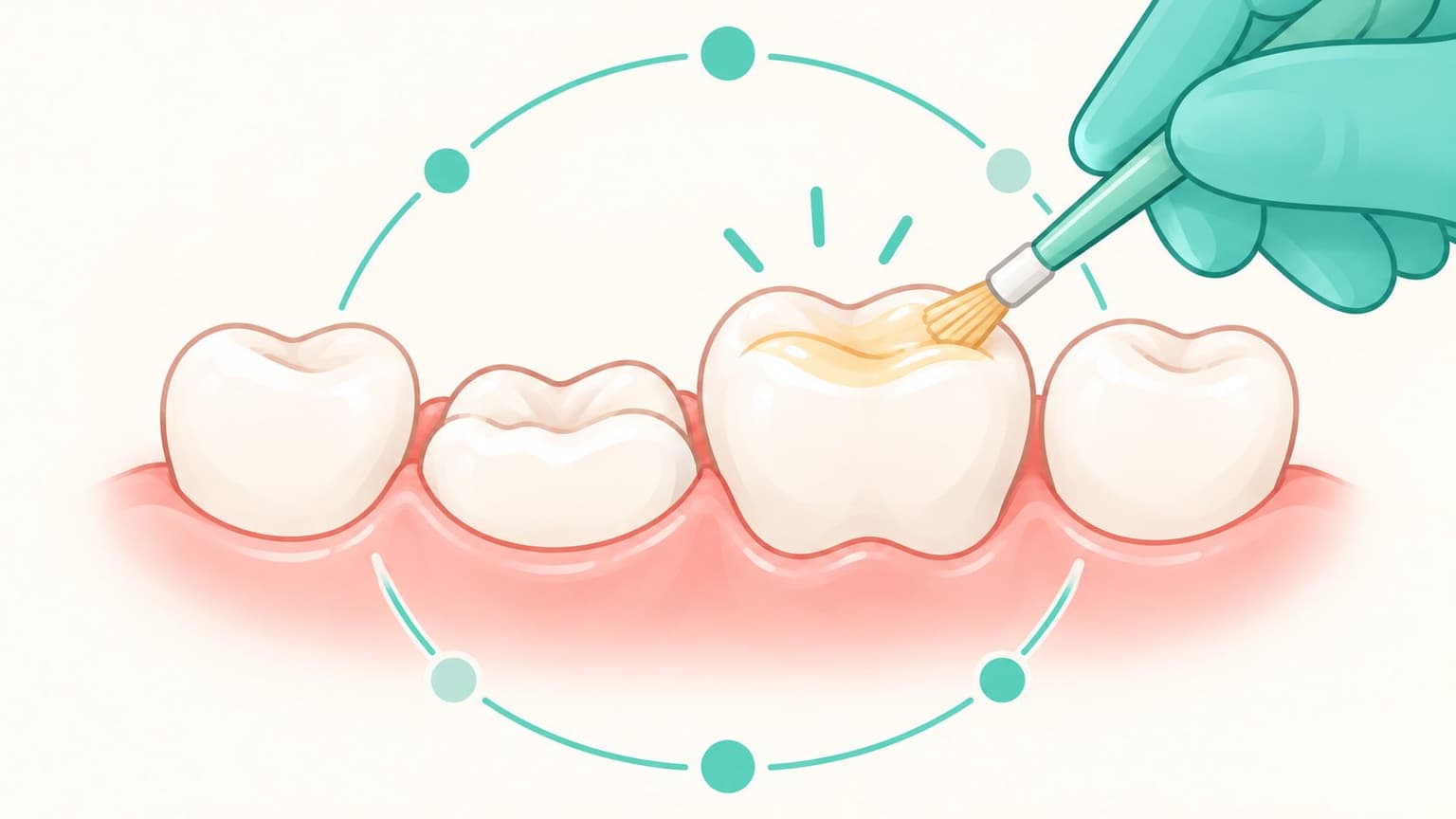
Fluoride varnish adheres to tooth surfaces and slowly releases fluoride. Fluoride supports remineralization, the replenishment of minerals in areas of early tooth decay. This is why professional fluoride applications may still be considered after permanent teeth erupt if tooth decay prevention and management of early lesions are needed.
Application intervals are tailored to the likelihood of tooth decay
Caries risk assessment brings together factors that protect teeth, lifestyle and environmental factors that increase the risk of decay, and the actual state of tooth decay. It considers routine fluoride use, diet, oral hygiene, saliva production, and past tooth decay experience. In particular, recent new decay is an important clue to the likelihood of future decay. The assessment factors are also explained in How to decide whether your child needs fluoride varnish.
Application intervals differ between those at high and moderate caries risk because their preventive care needs differ. The 3-month and 6-month intervals refer to fluoride varnish application based on risk; they are not fixed checkup or treatment schedules for every child.
When to stop is determined through reassessment
Even after permanent teeth erupt, diet, fluoride use, oral hygiene, and tooth decay status vary from child to child. How far the teeth have erupted and whether they are still maturing are also considered, so age alone is not enough to determine the need for fluoride applications.
Rather than deciding in advance to keep the same interval, regular dental checkups reassess whether new decay or early lesions have developed and how protective and risk factors have changed. The results guide whether professional fluoride applications should continue and the interval until the next application.