
Question
I'm planning to get an implant later in the spot where a tooth was extracted. I'd like to know whether bone grafting is done right at the time of extraction, or at a separate time, and how that timing is decided.
Short Answer
Bone grafting after an extraction does not happen on one fixed date. The timing depends on what the graft is meant to achieve, and on the condition of the alveolar bone (the jawbone that surrounds the tooth root) and the extraction socket (the cavity left after a tooth is removed) at the time of extraction. If the graft is meant to prevent the bone from shrinking, it is done on the day of extraction itself. If it is meant to fill the gap between the implant and the socket wall, it is done at the moment the implant is placed. And if it is meant to rebuild bone that is already deficient or has partially collapsed, it is done either before implant placement or at the same time as placement, depending on the size of the defect.
Why Is That?
Bone graft timing depends on its purpose
Bone grafting after an extraction is not a single procedure. It is done for at least three different purposes, each at a different point in time.
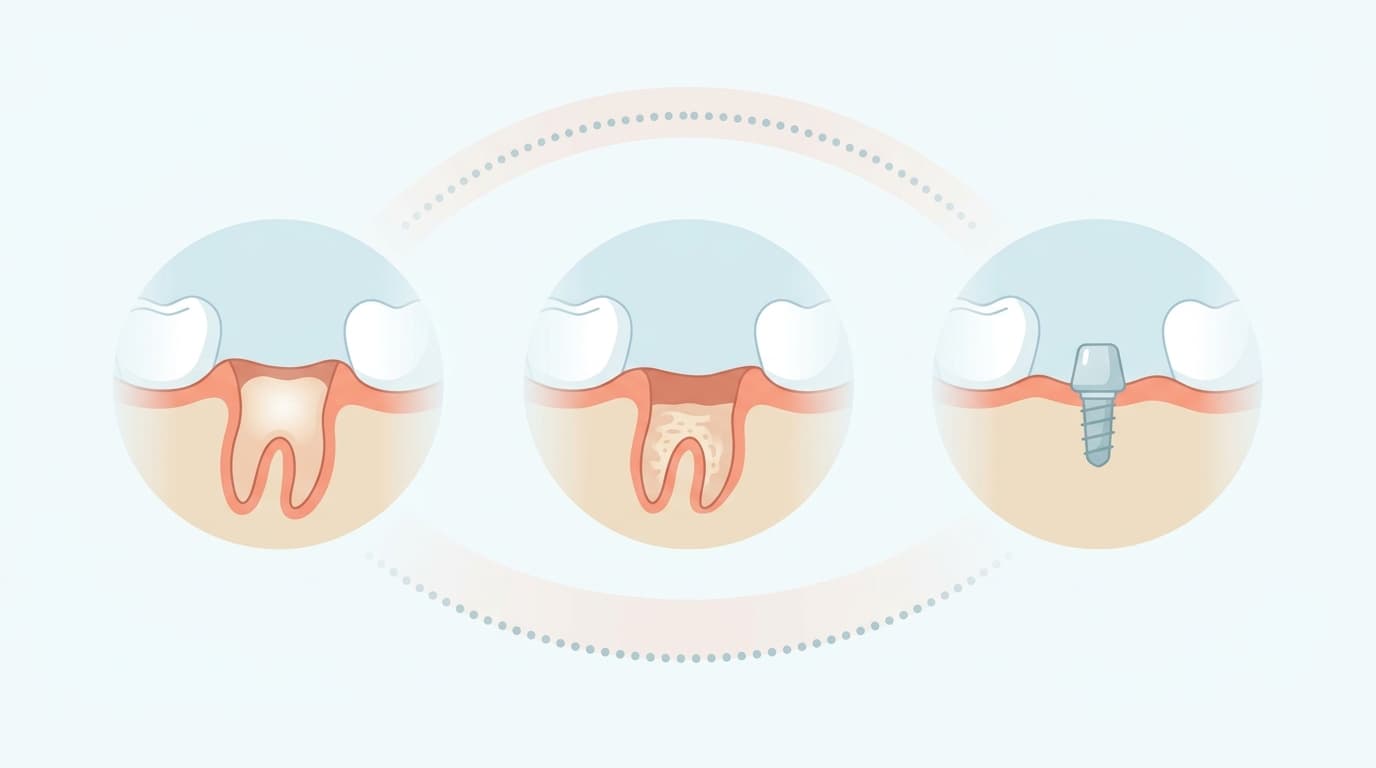
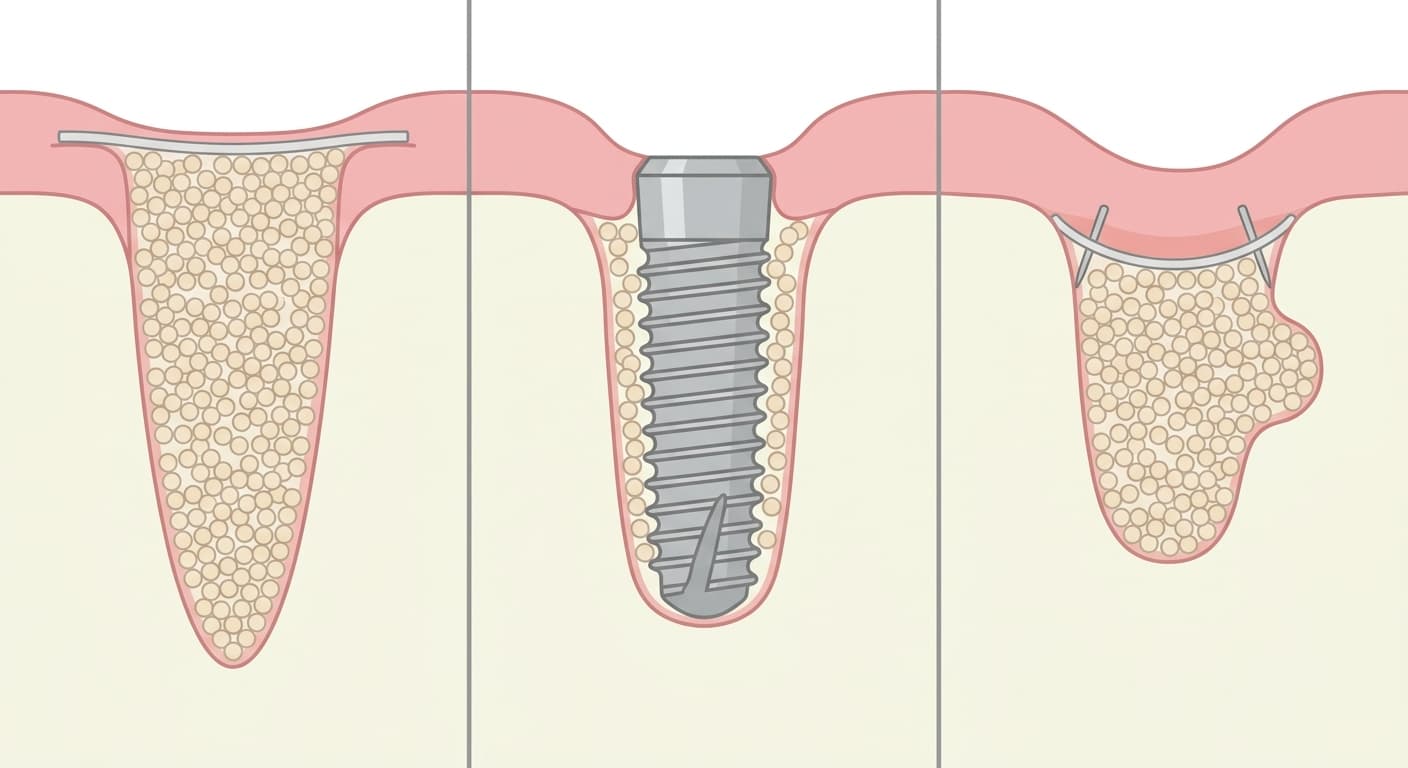
The first is socket preservation. After a tooth is extracted, the alveolar bone at that site shrinks over time. The thin outer bone on the lip or cheek side in particular shrinks quickly, and its thickness can decrease substantially within the first three months after extraction, while overall bone resorption is reported to occur over a span of six months to two years after extraction. Socket preservation is done to reduce this resorption: on the day of extraction, immediately after the tooth is removed, the socket is filled with a graft material such as allograft (bone-derived material from another person), xenograft (animal-derived bone), or synthetic bone, and the opening is covered with a collagen dressing or membrane. As discussed in Is bone grafting always necessary when getting an implant?, the purpose is to preserve bone volume in advance when an implant is planned for that site later on. The timing for placing an implant in a socket preserved this way is set once the soft tissue and bone have healed sufficiently; depending on how healing progresses, the implant may be placed relatively early or only after the bone has fully settled.
The second is the bone graft placed together with an immediate implant after extraction. In immediate placement, where the implant is placed in the socket right after the tooth is removed, a gap can remain between the implant surface and the socket wall. This gap is filled at the exact moment the implant is placed with a particulate graft material such as xenograft, which supports bone formation around the implant. This graft is not meant to preserve bone volume on its own; its role is to fill the narrow space between the implant and the bone. The cases where an immediate implant after extraction can be considered are explained further in Can a tooth extracted due to gum infection still get a same-day implant?.
The third is guided bone regeneration (GBR). If bone is already deficient or has partially collapsed, leaving a defect, the site is rebuilt using a membrane and graft material. Depending on the size of the defect, this rebuilding may be done before implant placement or at the same time as placement.
Bone condition and infection status at extraction determine whether immediate placement is possible
Whether an immediate implant with bone grafting can be done instead of socket preservation is determined by the condition at the time of extraction. The most important condition for success is achieving solid primary stability (a state in which the implant sits firmly in the bone without moving) the moment the implant is placed. If the socket walls are intact and enough bone remains at the root apex or palatal side to anchor the implant, immediate placement and bone grafting can be done together.
On the other hand, if acute infection remains in the socket, a more cautious approach is taken. Placing an immediate implant into an infected socket is reported to carry about three times the risk of implant failure compared to an uninfected socket. In such cases, the implant and bone graft are often delayed, allowing time for the infection to resolve and the socket to recover first. A lack of bone to achieve primary stability is another condition that similarly makes immediate placement difficult.
If bone is deficient or has collapsed, defect size determines the timing of reconstruction
If the alveolar bone is deficient in width or height, or has partially collapsed leaving a defect, the site is rebuilt using guided bone regeneration. A membrane blocks the fast-growing gum tissue from invading the defect first, while the space underneath is maintained so that bone-forming cells can fill it in. Whether this reconstruction is done before the implant or on the same day as the implant depends on the size of the defect and whether the implant can achieve primary stability at that site.
If the remaining bone can stably anchor the implant, reconstruction of the defect can be carried out at the same time as implant placement. If the defect is large enough that not enough bone remains to place the implant right away, the site is first filled with a bone graft, and the implant is placed only after the bone has settled and stabilized sufficiently. When such reconstruction takes hold successfully, implants placed on it are reported to show survival rates similar to those placed in natural bone, but because the reconstruction itself does not always go as planned, healing still needs to be monitored closely.
When bone grafting happens after an extraction is not set by a fixed calendar. It is determined by the treating clinician based on what the graft is meant to preserve or fill, together with the condition of the bone and socket at the time of extraction.