
Question
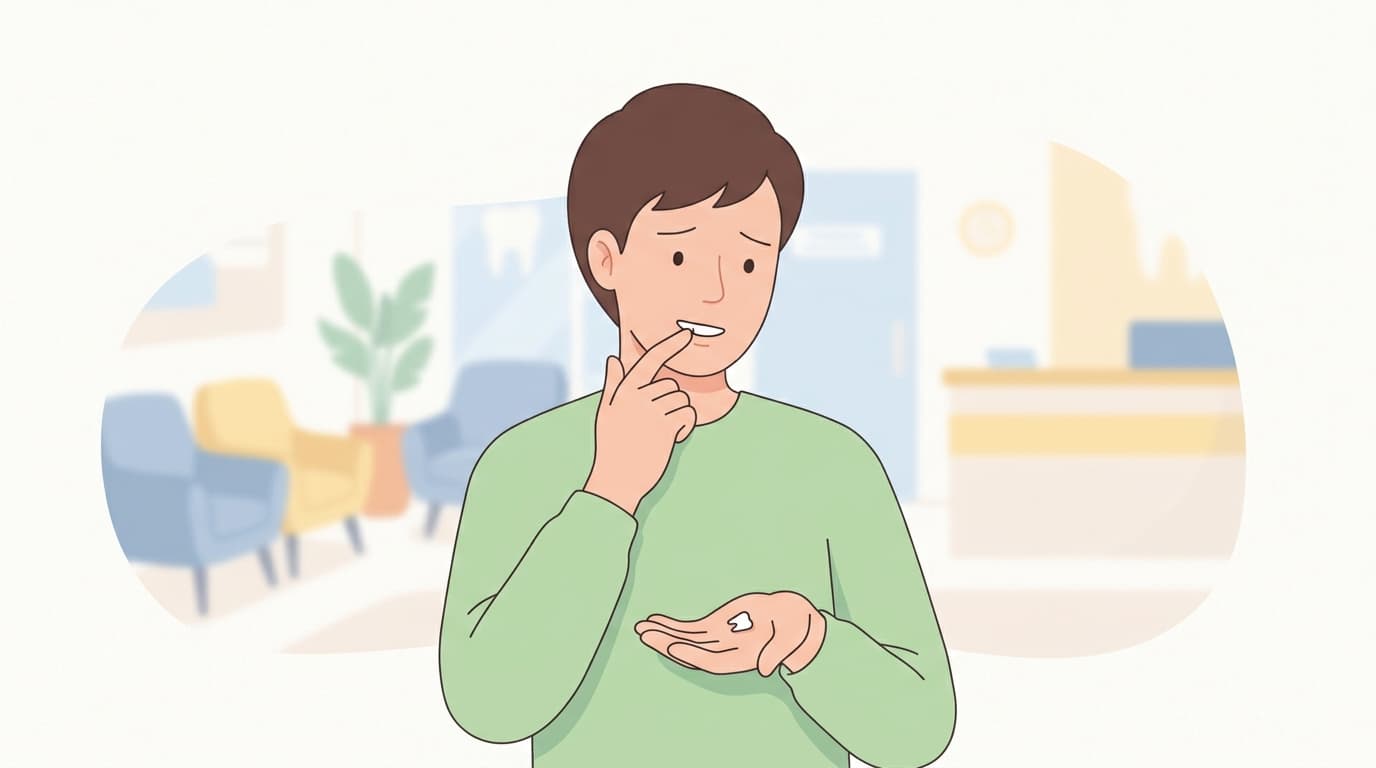
I chipped the corner of my front tooth in a collision, and I brought the piece that broke off. I'd like to know if it's possible to reattach this fragment.
Short Answer
If the fragment is well preserved and the fractured surface fits precisely back into its original position, treatment to reattach it with adhesive and resin can be considered. However, whether the fragment had dried out, and whether the fracture line reached the nerve (pulp), determine what treatment is needed before bonding, and not every fragment is in a condition that can still be reused.
Why Is That?
The Condition and Fit of the Fragment Determine Whether Reattachment Is Possible
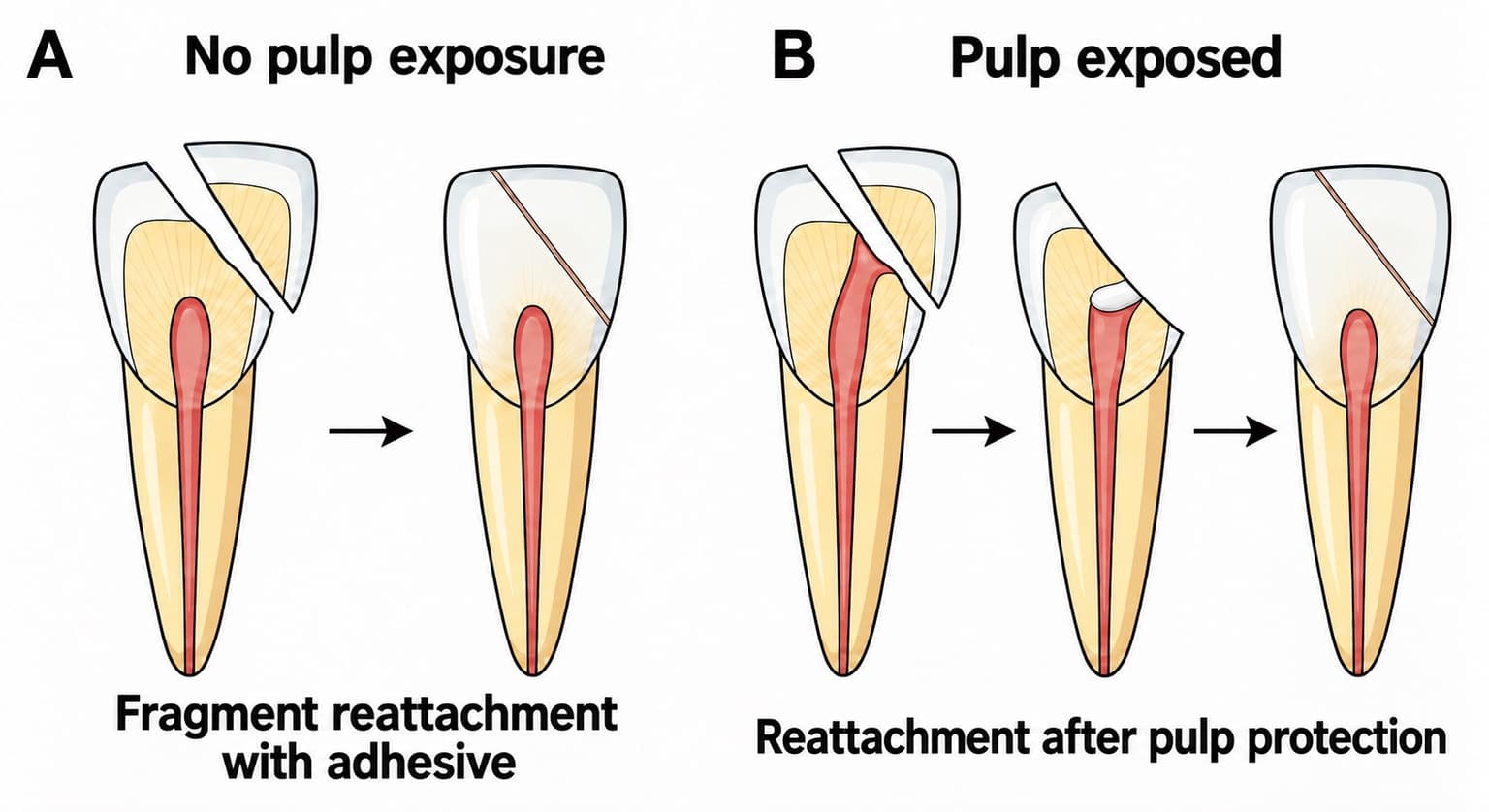
Reattaching a broken fragment is a conservative method that uses acid etching (a process that microscopically roughens the tooth surface for bonding) and composite resin bonding techniques to restore the crown to its original shape. Its advantage is that, because it uses the patient's own tooth fragment, the original shape and color can be preserved exactly. For this method to be possible, two things must be confirmed: the fragment itself must be intact and undamaged, and the fractured surfaces must fit together without any gap when matched up.
Even if the fragment had dried out over time, that does not necessarily rule out reattachment. It can be soaked in saline or a similar solution to rehydrate it before the bonding procedure, and a beveled groove is sometimes cut along the fracture line to reinforce the bonded area. So if the fragment was dry when it was brought to the dental office, there is no need to give up on reattachment for that reason alone.
Treatment Before Bonding Depends on Whether the Pulp Is Exposed
If the fracture line stays within the enamel and dentin and does not reach the pulp (nerve tissue), and a large area of dentin is exposed, a protective treatment is applied first to block irritation, and then the fragment is bonded right away. In this case, reattachment can proceed through a relatively simple procedure.
On the other hand, if the fracture line reaches the pulp and the nerve is directly exposed, one additional step is needed. Depending on how much time has passed since the injury, how far the tooth root has developed, whether the pulp is still vital, and how large the area of exposure is, vital pulp therapy such as pulp capping or partial pulpotomy is considered. If pulp preservation is difficult or necrosis has progressed but the tooth can still be restored, root canal treatment is considered; if the tooth itself is difficult to restore, extraction is discussed. There are cases where the fragment is bonded back on the same day, right after the pulp protection procedure is completed. Delaying this kind of treatment increases the risk that the pulp will die (pulp necrosis) or that inflammation will develop at the root tip, so once pulp exposure is confirmed, it is best not to delay treatment regardless of whether reattachment will ultimately be done.
If the Fracture Line Extends Below the Gumline, an Access Procedure May Be Added
If the fractured margin extends down below the gumline, a procedure to lift the gum tissue may be performed first to secure visibility and access and to prevent saliva or blood from contaminating the bonding surface, before the fragment is reattached. In this case, the reattachment itself uses the same bonding principle, but one additional preparatory step is involved.
How Is the Bonding Done?
During the bonding procedure, the neighboring teeth are isolated with a barrier and tape to keep adhesive from getting on them, a flowable composite resin is applied thinly to the bonding surface, and it is then cured with light. Once it has set, the bonded margin is smoothed and finished so that the seam is not noticeable.