
Question
A patient shared a concern after noticing in the mirror that the tips of their front teeth seem shorter than before and the chewing surfaces of their molars look flatter. Nothing hurts in particular, but the teeth overall feel like they have gradually worn down and shortened, and the patient wants to know whether this can be reversed and, if so, what treatment would restore them.
Short Answer
Teeth appearing generally shorter usually results from several causes overlapping rather than a single one. Before deciding on a restoration method, you first need to identify what has been wearing down the teeth and examine where and how much bite force is being applied. If the underlying cause is left unaddressed and only the surface is filled, the new filling can wear down or come off again for the same reason. Partially worn areas can be filled with resin, but if the site bears strong bite force or the damage is extensive, resin alone may not be enough to handle it.
Why Is That?
First, Identify What Is Wearing Down the Teeth
Tooth wear that shortens teeth falls into three broad categories depending on the cause.
The first is attrition (wear from teeth striking each other). This occurs when the upper and lower teeth make direct contact, wearing down the chewing surfaces and the edges of the front teeth, and is characterized by flat wear facets that exactly match the bite position. As people age, the contact areas between adjacent teeth also widen, and habits such as bruxism or clenching accelerate the wear further. If you wake up with a stiff jaw or have been told you grind your teeth in your sleep, it's worth also considering a connection to bruxism or clenching.
The second is abrasion (wear from friction between the tooth and another object). This commonly appears with improper toothbrushing technique or long-term use of toothpaste with a high abrasive content, and it shows up as a wide, shallow, U-shaped notch where the tooth meets the gum.
The third is erosion (wear caused by acid drawing minerals out of the tooth). This is a chemical process in which acid dissolves the enamel directly, unrelated to bacteria. Acid from food, such as strongly sour fruit or carbonated drinks, mainly damages the cheek-side surfaces and chewing surfaces, while acid rising from within the body, such as from acid reflux or repeated vomiting, leaves round, smooth defects in different locations, such as the inner surfaces of the upper front teeth and the chewing surfaces of the lower molars.
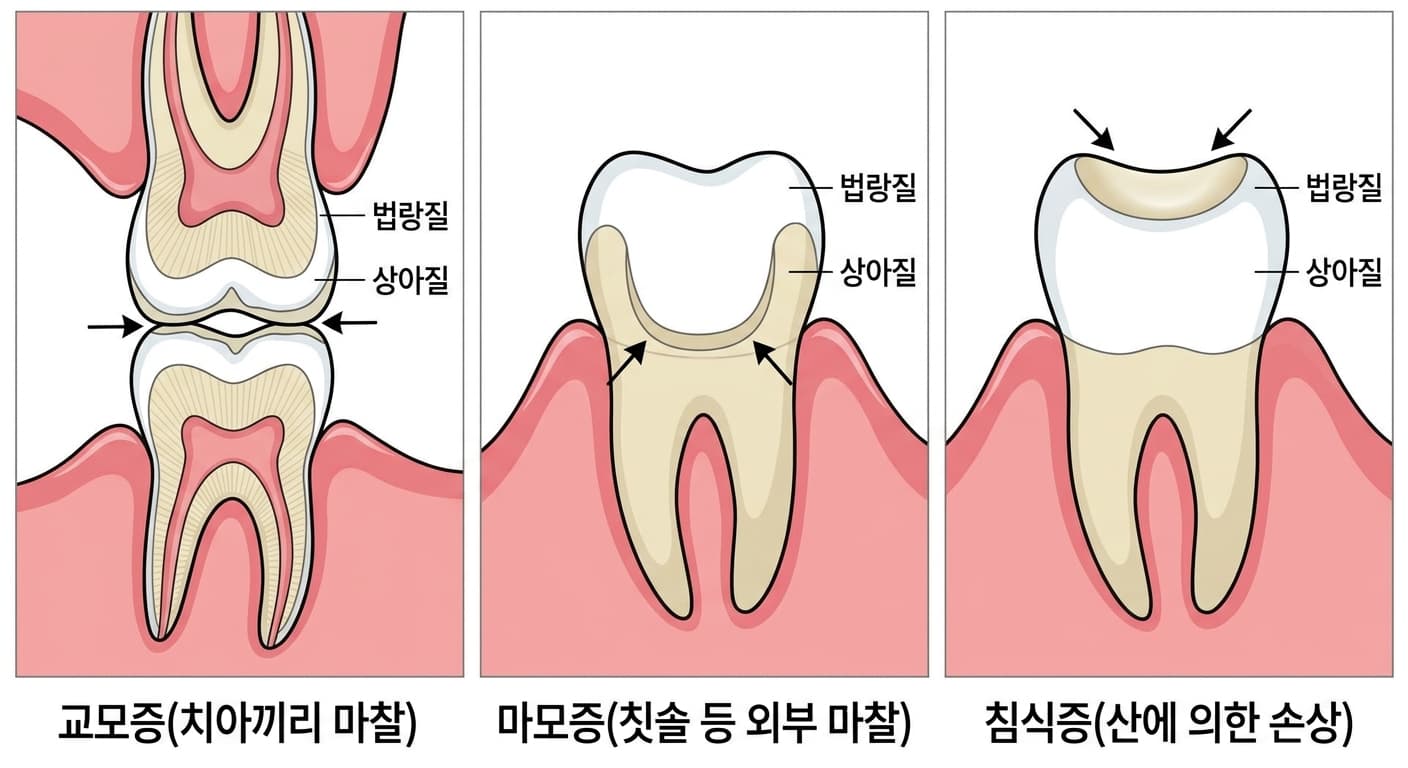
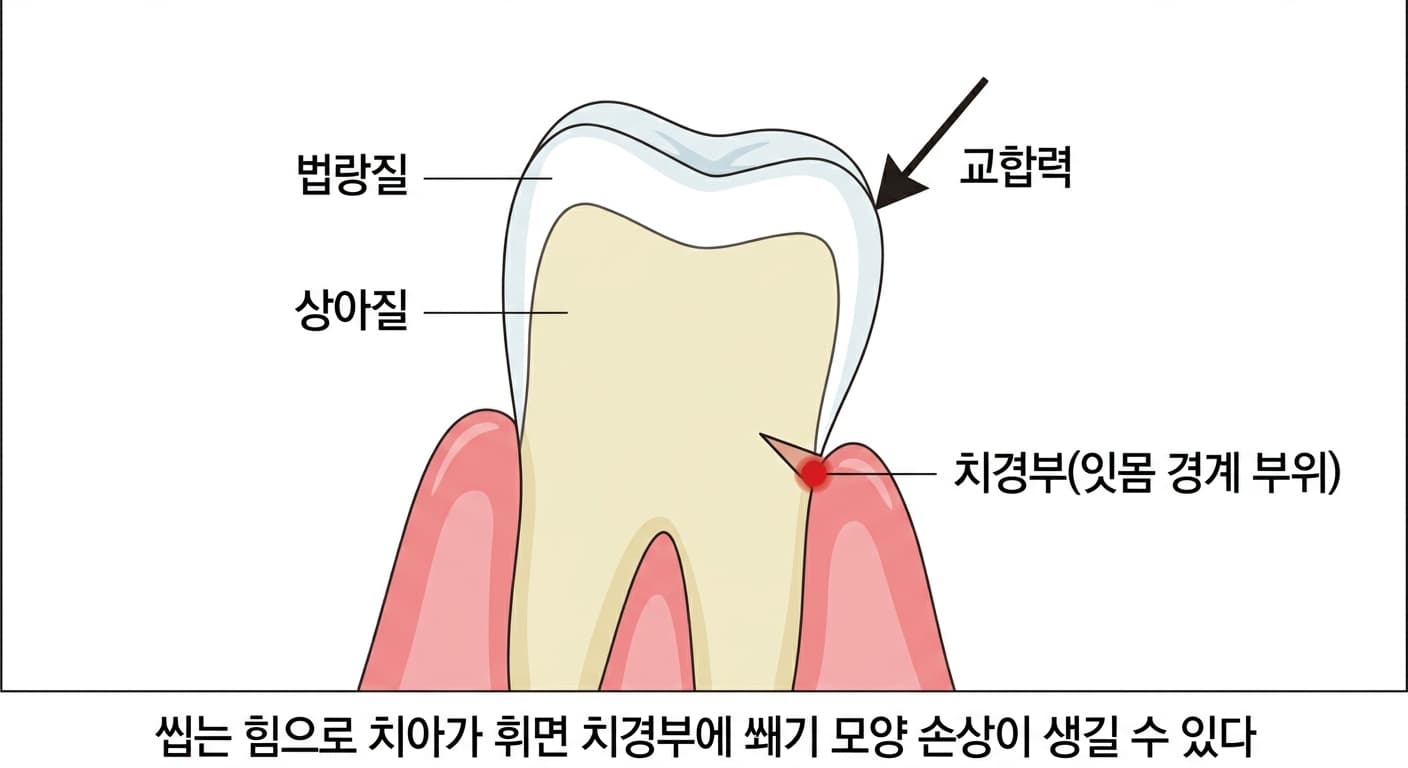
In practice, it is common for all three to appear together in the same person. On top of this, bite force can also flex the tooth and produce a wedge-shaped defect at the gumline, so the location and shape of the wear alone can suggest what kind of force has been acting on the tooth over time.
Check Bite Force and the Cause Before Filling
Whether to fill an area where tooth structure has worn thin is decided based on the depth of the damage and any symptoms. Restoration is considered if there is sensitivity to cold, the damage is considerably deep, or it is a cosmetic concern. If the damage is shallow and there are no symptoms, it may be reasonable to first manage the cause and monitor the situation.
Composite resin (a tooth-colored filling material) commonly used for restoration is bonded to the tooth surface. However, it has limitations under two conditions. One is moisture control: if saliva or moisture gets into the bonding process, the bond strength drops, so sites that can be isolated well give more stable results. The other is bite force: composite resin alone may not be appropriate for sites where strong force is concentrated. This is the same reason that, when comparing direct resin and resin inlays, the remaining tooth thickness and the location of bite force are checked together.
For wedge-shaped damage caused by bite force itself, this factor is also taken into account when choosing a filling material. Using a material with some elasticity, one that can flex along with the degree the tooth bends, can reduce the strain placed on the bonded surface.
If only the filling is done without managing the cause, the new filling is exposed to the same force and friction again. If bruxism or clenching is the cause, a nightguard (a soft device worn over the teeth during sleep) is used alongside treatment to prevent further wear. However, this device does not eliminate the grinding habit itself; it only serves to block the wear. If toothbrushing habits are the cause, the brushing method and toothpaste are changed. If acidic food is the cause, the frequency and manner of intake are adjusted. Managing these causes together is what allows the new filling to last.
When multiple teeth have shortened severely together and the bite height itself needs to be reestablished, this is a matter that requires judgment on a different level than localized resin restoration. In such cases, separate from identifying the cause, additional consultation on an overall bite design is necessary.