

Question
My jaw clicks when I open or close my mouth. Do I need splint treatment if it makes a sound?
Short answer
Jaw sounds alone do not mean you need splint treatment. A splint is an appliance worn over the teeth to reduce the load on the temporomandibular joint and chewing muscles. The need for treatment is determined after assessing whether the sounds occur with pain, whether you can open your mouth fully, and whether your jaw locks.
Why is that?
How the sound occurs and whether treatment is needed are separate questions
The temporomandibular joint is the joint in front of the ear where the lower jawbone meets the skull. Between the two bones is an articular disc made of fibrous tissue. When you open your mouth, the joint portion of the lower jawbone and the articular disc move together.
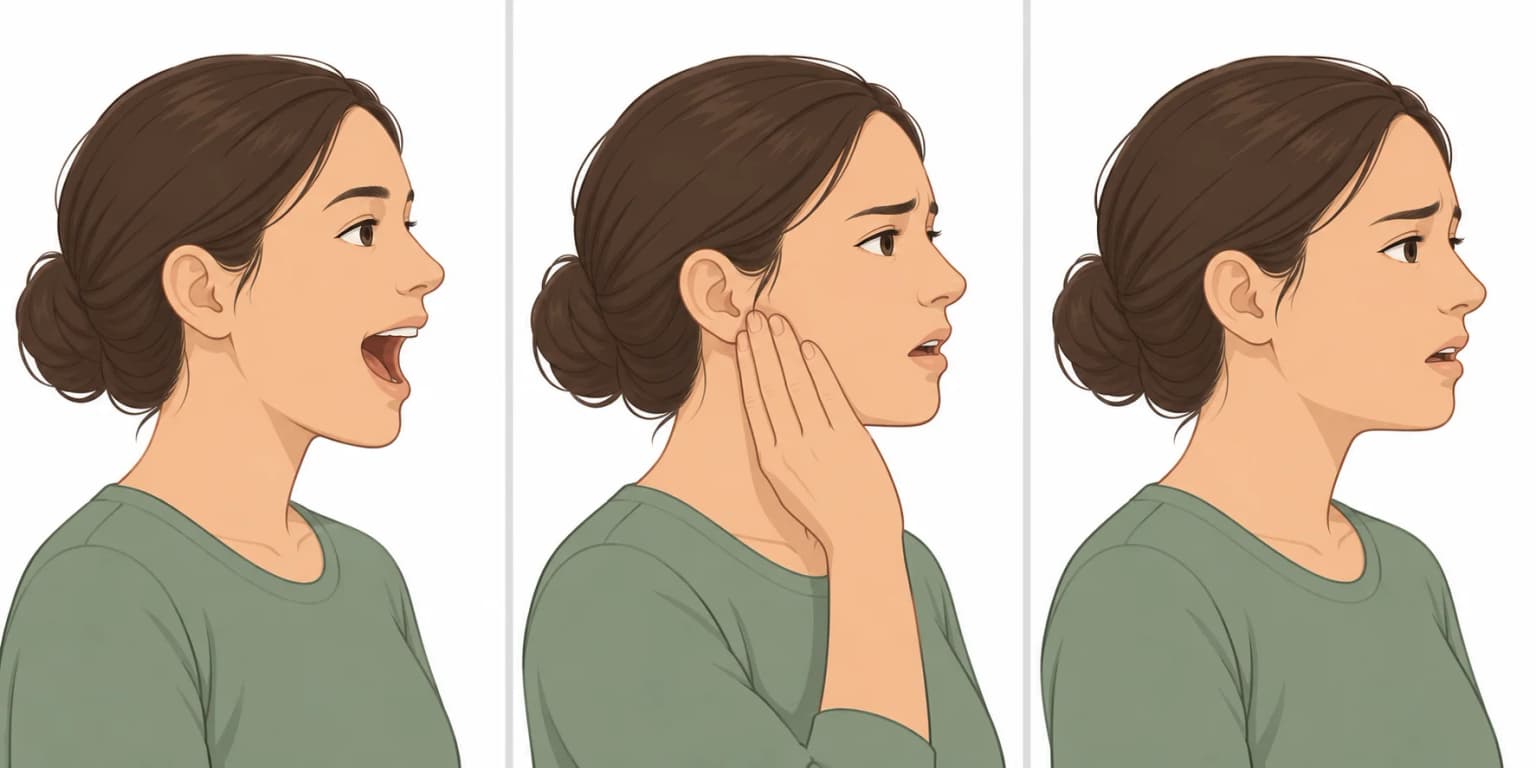
Sometimes the articular disc has shifted forward but returns to its normal relationship with the bone when the mouth opens. This is called disc displacement with reduction. It can cause sounds when you open and close your mouth, with relatively little restriction of movement, but pain may occur as the disc returns. However, a report of clicking alone cannot confirm this condition.
Pain, mouth opening, and locking are assessed together
Pain and functional problems involving the temporomandibular joint and chewing muscles are collectively called temporomandibular disorders. During an examination, the dentist assesses joint sounds along with the location of pain, tenderness to pressure, and the range and pattern of mouth opening. Assessment and treatment decisions differ depending on whether there are sounds alone or accompanying pain or difficulty with movement.
In particular, if your jaw locks or your mouth does not open as well as before, you should have it examined to identify the cause. If a displaced articular disc no longer returns to its normal relationship with the bone when you open your mouth, the previous sound may disappear while mouth opening becomes limited. Therefore, a reduction in sound alone does not mean the condition has improved.
Splints are selected according to the problem identified
An occlusal stabilization appliance, a type of splint, is used to reduce excessive activity of the chewing muscles and address an imbalance between the position where the teeth meet and the joint position. It is also sometimes used to reduce pain within the joint when treating disc displacement with reduction. Appliance selection is guided by the disorder identified and the treatment goals, rather than the presence or absence of sounds alone.
For temporomandibular disorders, conservative approaches such as behavioral therapy and physical therapy are considered first, alongside appliance treatment. For disc displacement with reduction, guidance on avoiding excessively wide mouth opening is also provided. Repeatedly moving the jaw to make it click is not used as a form of self-correction treatment. You can also read about how appliance treatment differs depending on pain and mouth opening in splint treatment for jaw joint pain and limited mouth opening.