Question
After I had a cavity treated, the dentist told me it had been "filled with resin." But other materials described it using the term "composite resin." I'm wondering whether resin and composite resin refer to the same material, or whether they are different materials.
Short Answer
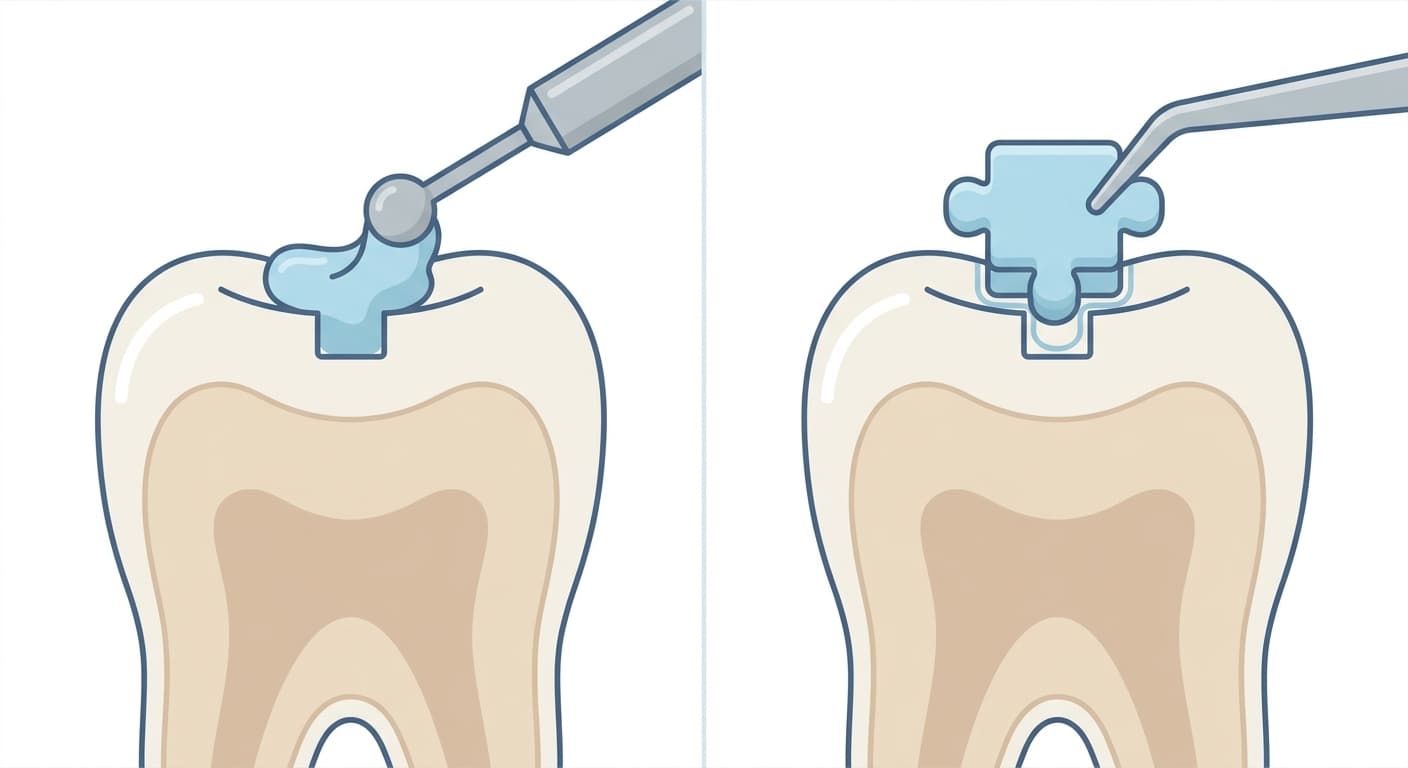
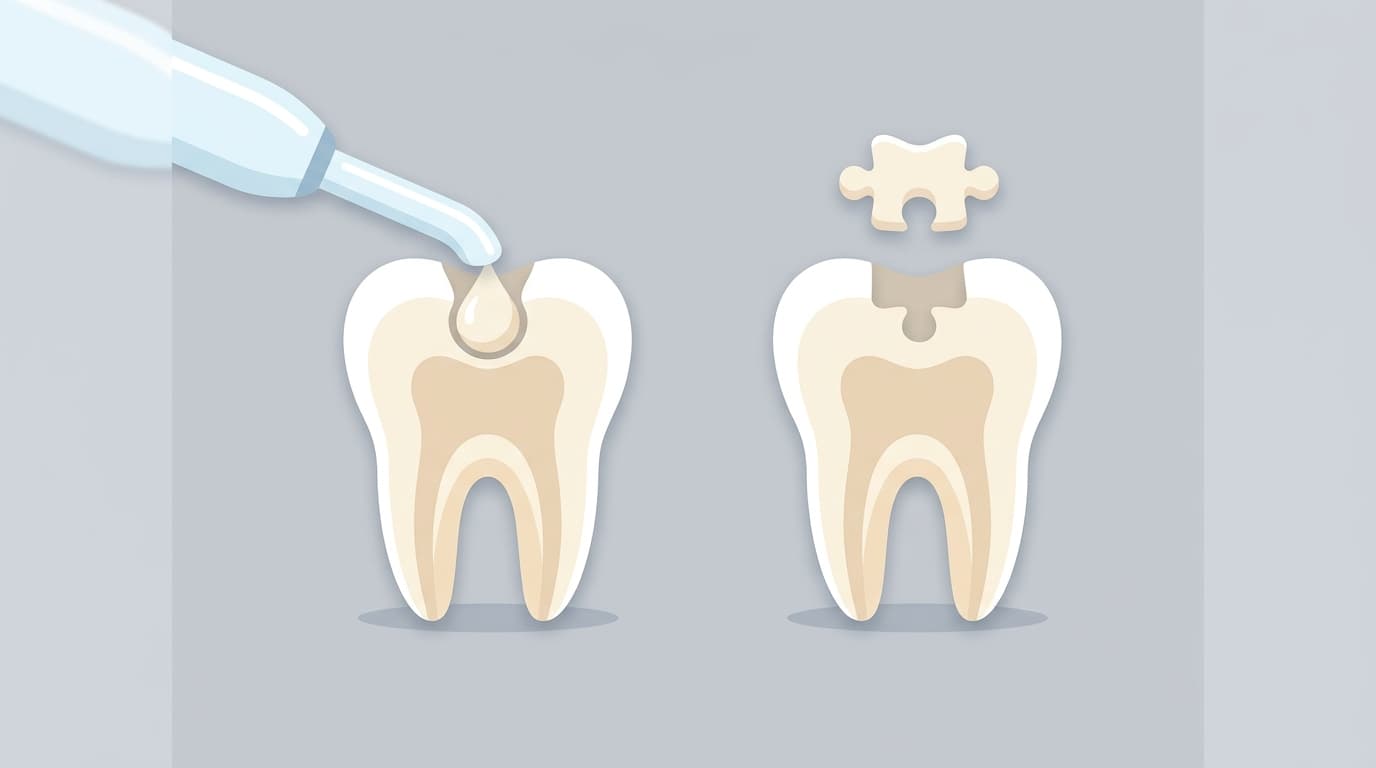
In dental practice, the term "resin" that is commonly used is, in most cases, a shortened way of saying "composite resin." When it refers to a cavity treatment in which the material is placed directly into the tooth, resin and composite resin often refer to the same material. However, the word "resin" can also refer to other treatments made from composite resin. This includes resin inlays, which are fabricated outside the mouth and then bonded in place, and resin cement, which is used to bond a prosthesis. In these cases, the manufacturing process and the intended use differ, so it is difficult to treat every use of the word "resin" as referring to the same treatment.
Why Is That?
What Is Composite Resin Made Of?
Composite resin is generally made by combining two main components. One is an organic material that hardens from a liquid into a solid when exposed to light. The other is an inorganic filler, such as finely crushed glass particles. A bonding agent that links the two components together and an initiator that starts the hardening reaction are also added.
The more filler that is mixed in, the greater the strength and wear resistance. Recent products make the filler particles small enough (under 0.4 micrometers) that they are barely noticeable. Because it bonds well to both enamel and dentin, it has become a widely used material that can be applied to nearly any tooth surface.
Why "Resin" Became Shorthand for Composite Resin
Before composite resin came into wide use, amalgam had long been the standard material for filling teeth. Composite resin, introduced through a technique that bonds directly to the tooth surface, came to be seen as a new-generation material distinct from amalgam. Because of this, dental offices often shorten the name to simply "resin." Treatment that fills a tooth with this material is also frequently called "resin treatment." "Resin" functions less as a formal name and more as an everyday shorthand for composite resin.
Similar Names, Different Materials: Resin Inlays and Resin Cement
Just because a material's name includes "resin" does not mean it is always used the same way.
Resin inlay is also made from composite resin, but it is not hardened directly inside the tooth. Instead, it is first shaped to fit the tooth outside the mouth and hardened, then bonded into place. Outside the mouth, it undergoes an additional hardening step using heat and pressure. As a result, its strength increases. The shrinkage that occurs as the material hardens also happens mostly within the material itself outside the mouth, rather than in the tooth. In this respect, both the fabrication process and the stress placed on the tooth differ from direct resin treatment, in which the material is placed and hardened in the tooth on the spot.
Resin cement serves an entirely different purpose. Rather than filling a cavity caused by dental caries, it is an adhesive used to bond a prosthesis made of resin inlay or ceramic onto the tooth surface. Although it belongs to the same resin family of materials, it is formulated with a lower proportion of filler to make it more flowable. Its role is fundamentally different from that of composite resin, which is used to fill and shape a cavity.
So rather than assuming what material or treatment is meant just from the word "resin," it helps to check whether it refers to filling the tooth directly, an outside-fabricated restoration bonded in place, or an adhesive process for attaching a prosthesis. Doing so can reduce confusion.