
Question
A pus-filled bump has appeared on the gum around a tooth that had root canal treatment and a crown, and pus is draining from it. Do I need root canal treatment again? I am worried that the tooth might need to be removed.
Short Answer
Retreatment may be needed, but the appearance of draining pus alone does not determine this. First, the dentist identifies which tooth the pus comes from and assesses the existing crown, whether the root canals inside the roots can be accessed again, and whether there is a root fracture or surrounding gum disease. If a root canal infection is the cause and the canals can be accessed again, root canal retreatment is considered first. Surgery or extraction is chosen after other relevant conditions have also been assessed.
Why Is That?
A drainage tract can mean less pain
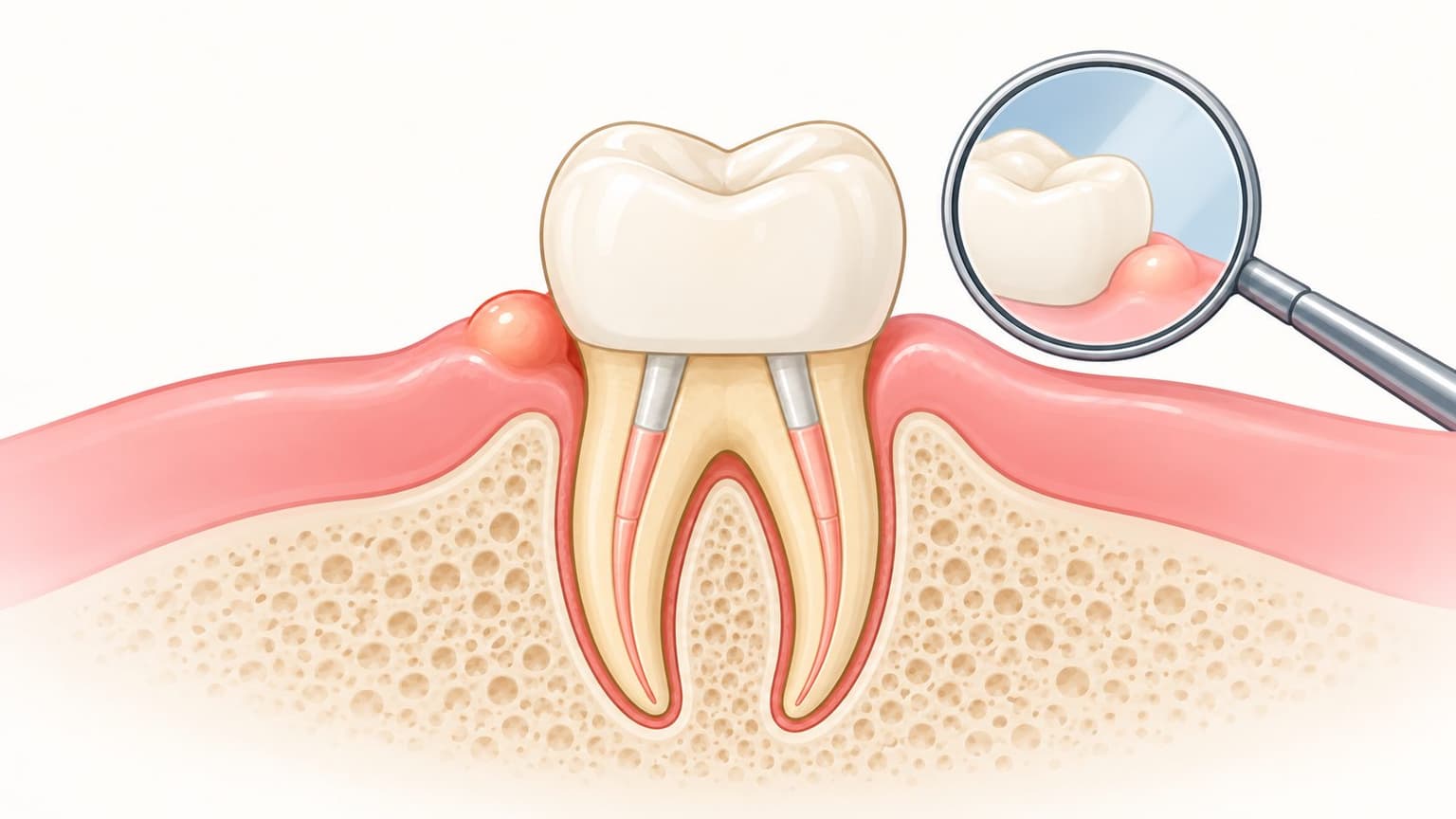
A small bump on the gum may be the opening of a sinus tract, a passage through which pus drains out. A chronic alveolar abscess involves an area of infection in the bone around a tooth root, with pus draining through a sinus tract. When pus drains freely, there may be few or no noticeable symptoms, so little pain alone does not mean the infection has resolved.
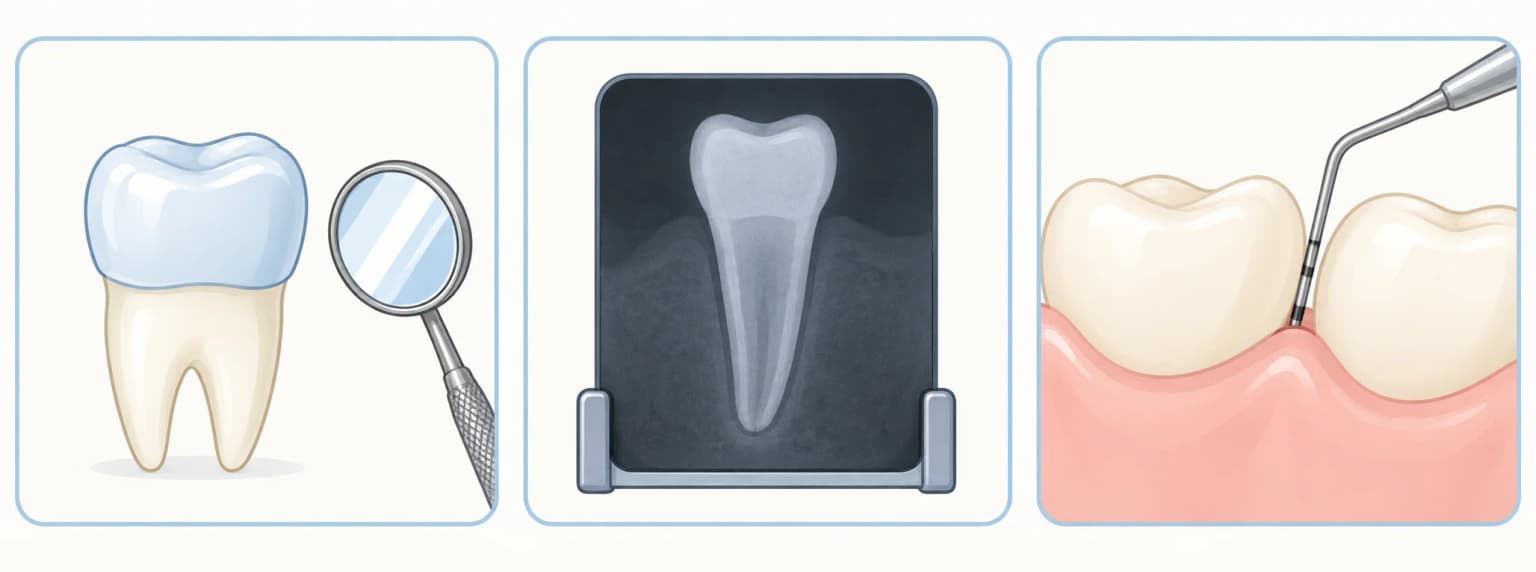
At the dental office, a thin tracing material may be inserted into the tract and an X-ray taken to identify the tooth where the pus originates. The dentist also considers measurements of the depth of the space between the gum and tooth, tests involving tapping the tooth or pressing the surrounding area, and imaging findings. The cause and treatment cannot be established solely from the location of the pus and a single image.
If a root canal infection is the cause, the source of infection inside is removed
A draining tract caused by a root canal infection can heal when the infection inside the canals is controlled. If the previous root canal treatment is assessed as having failed, nonsurgical root canal retreatment, which involves re-entering through the top of the tooth to treat the canals, is considered first. This treatment removes the existing filling material and sources of infection, then reshapes, disinfects, and refills the canals.
Having a crown does not automatically mean surgery is chosen. The dentist first assesses the existing crown, the posts and reinforcing materials inside the tooth, and whether the canals can be accessed all the way to their ends. The treatment plan depends on whether access can be re-established. The considerations involved in retreatment are also explained in When a Previously Root Canal-Treated Tooth Hurts Again.
Surgery, extraction, and gum treatment are needed under different conditions
Root-end surgery, an operation that treats the area at the tip of a tooth root, is considered to preserve a tooth when a lesion at the root tip does not heal after conventional root canal treatment or retreatment, or when access through the canal is difficult. A draining tract alone does not establish the need for surgery.
A vertical root fracture, in which the root splits lengthwise, must be distinguished from a root canal infection. Findings such as a narrow, deep gum pocket in one area can provide clues, but the diagnosis is confirmed by considering the examination findings together. Once a fracture is confirmed, extraction is considered in most cases. For a tooth with multiple roots and healthy surrounding gums, an approach that preserves some of the roots may be considered.
When infection inside the tooth and surrounding gum disease coexist, root canal retreatment alone may not resolve every problem. Gum treatment is also needed when gum disease is present independently or when the two infections are combined. The extent of damage to the tissues supporting the tooth affects the outcome. Treatment choices therefore depend on where the infection began and the condition of the roots and surrounding tissues, rather than simply on whether a pus-filled bump is present.