

Question
There are cases where the material sealing a hole in the tooth, or a temporary crown, falls out while a person is receiving root canal (endodontic) treatment. Many people wonder whether it's fine to just leave it and wait until the next appointment if there's no particular pain.
Short Answer
We do not recommend simply leaving it and waiting until your next appointment. The material or temporary crown sealing a tooth during root canal treatment blocks saliva and bacteria from reaching the inner passage of the tooth (the root canal) that is being treated. If it falls out, bacteria can re-enter through the gap, so even without pain it is best to contact the dental office where you are being treated as soon as possible and have it resealed. Until you can reach them, be careful not to chew food with that tooth.
Why Is That?
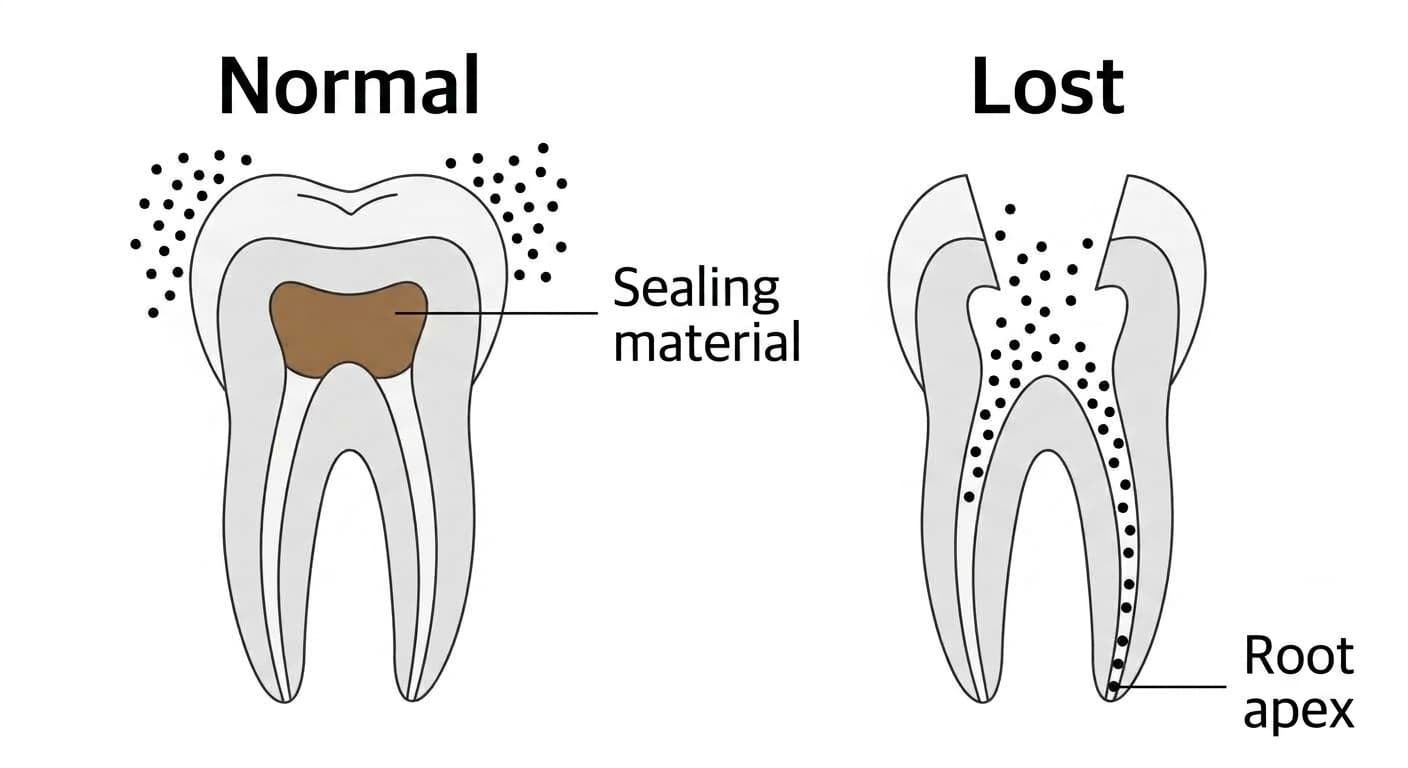
What the Temporary Sealing Material Does
Root canal treatment is usually carried out over several visits. Until treatment is finished, the inside of the tooth is not left empty. The opening is filled with cotton and a temporary sealing material instead. This material does more than just cover the hole; it blocks the inner canal from saliva and bacteria.
To make the seal more secure, a double-seal method is sometimes used, in which a material such as cotton or gutta-percha is placed on the inside and then covered with a hardening material on top. In this case, the outer sealing material needs to be filled to a certain minimum thickness for it to keep blocking bacteria effectively. If this thickness is insufficient, or if the sealing material falls out entirely, the inside becomes that much more exposed.
The situation is similar after treatment is finished and the material that fills the canal itself (the root canal filling) has been placed. While the final crown is being made, a temporary crown or temporary filling holds that place. It plays a similar dual role: it keeps bacteria from re-entering, and it supports the tooth structure, which has been reduced by the opening made for the root canal treatment.
The Risks When the Sealing Material or Crown Falls Out
Saliva and bacteria re-entering the root canal after the sealing material falls out is called coronal leakage. If bacteria get in between the material filling the canal (gutta-percha), they can reach the root tip (apex) within a few days, potentially recontaminating a canal that has already been disinfected.
If the sealing material falls out before the canal-filling material has been placed, in other words while treatment is still in progress, bacteria can go directly into the passage that has already been cleaned and disinfected, which may mean the cleaning and disinfection need to be redone at the next visit.
If you have finished the canal filling and are waiting for the final crown, then in addition to the filling material becoming contaminated, there is also a greater risk that the remaining tooth walls cannot withstand chewing force and crack or break. If the material filling the canal is left exposed to saliva for more than a month, the likelihood of bacterial contamination rises, and the root canal treatment may need to be redone. This is also why a crown is placed over a tooth after root canal treatment.
In any case, having your next appointment within a few days does not necessarily guarantee safety. As shown above, how quickly the risk grows depends on which stage the treatment is at and how long the tooth has been exposed, so rather than leaving it, the priority is to let the dental office know about the situation.
Protecting the Tooth Until You Can Be Seen Again
Contact the dental office where you are being treated as soon as possible to see if your appointment can be moved up. If your next appointment is still a long way off, then even if you visit a different clinic in the meantime, let them know you are undergoing root canal treatment and have a temporary seal placed again for safety. Until you can be reached, avoid chewing food with that tooth and avoid hard or sticky foods as well, so that no excessive force is placed on the remaining sealing material and tooth structure.