Question
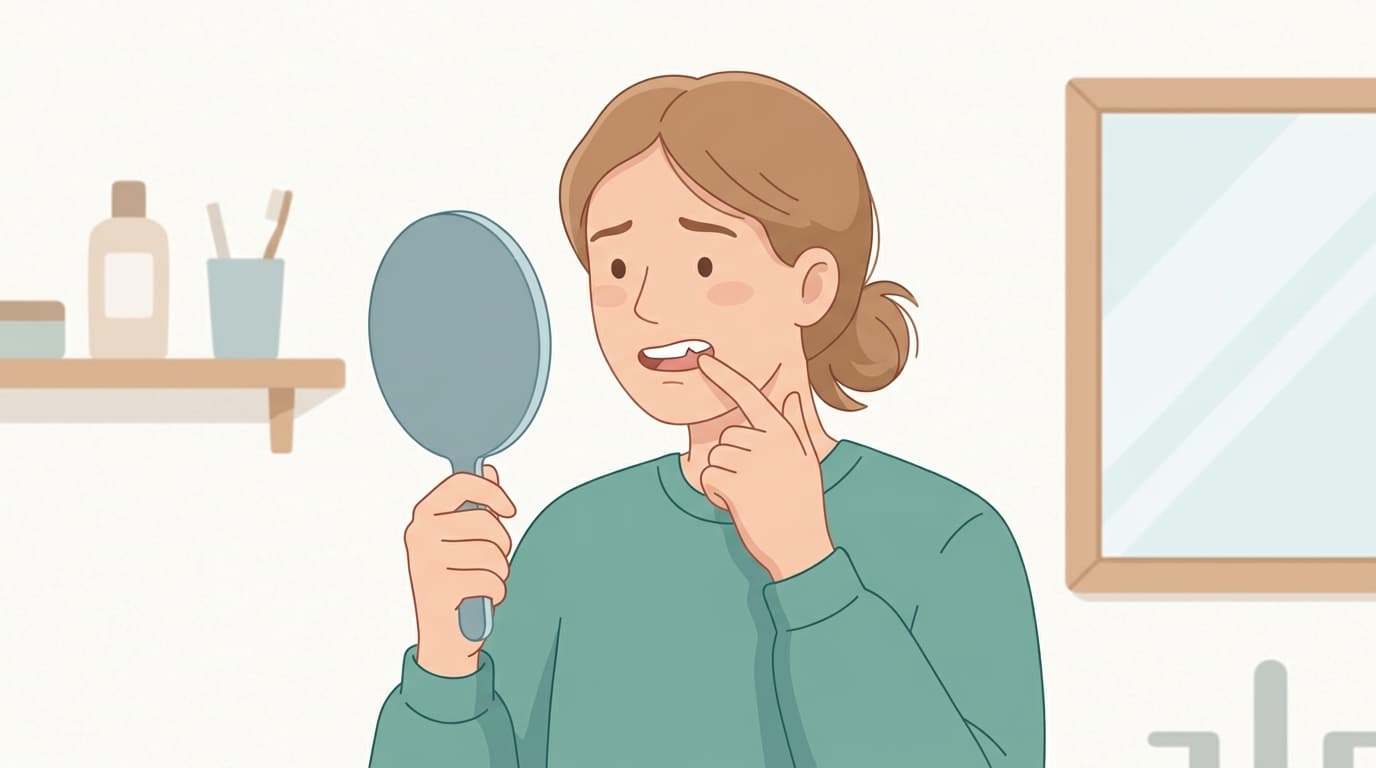
Yesterday I accidentally bumped the tip of my front tooth. Even looking closely in the mirror, the chip seems so small it's barely visible, and it doesn't hurt or feel sensitive at all. I'm wondering whether I should still see a dentist for a defect this small.
Short Answer
Even a chip small enough to go unnoticed is safest to have checked by a dentist at least once. The absence of pain alone doesn't tell you whether the fracture stopped within the enamel (the hard outer layer covering the tooth surface) or reached the dentin (the tissue that makes up the body of the tooth, just beneath the enamel). A fracture confined to the enamel is often finished simply by smoothing the rough edge or with a simple resin (tooth-colored filling material) restoration, but if dentin is exposed, treatment to protect the pulp is needed first.
Why Is That?
Even a Tiny Chip Can Vary in Depth
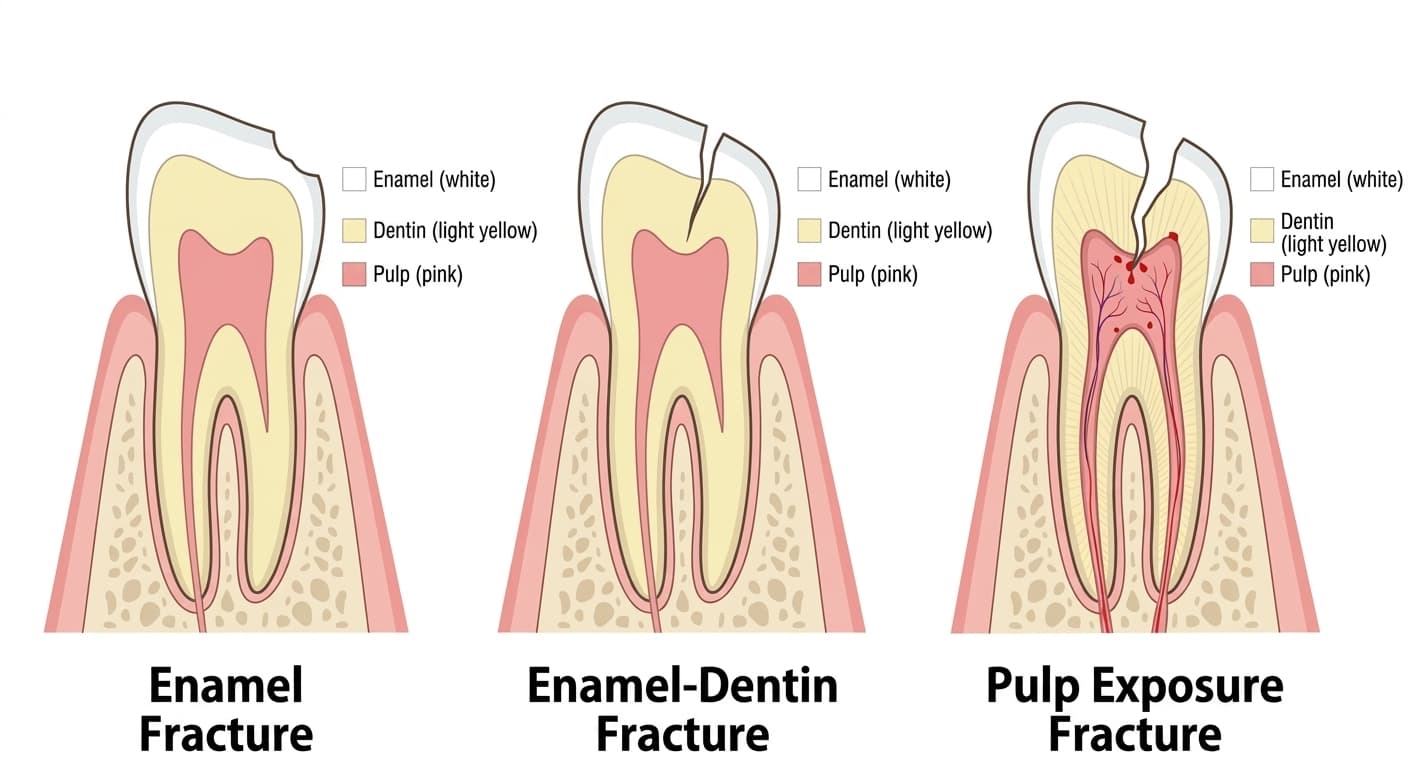
A fracture caused by a tooth impact can be confined to the enamel alone, can involve both the enamel and the dentin beneath it, or, rarely, can expose the pulp (the nerve and blood vessel tissue inside the tooth). According to dental trauma statistics, fractures confined to enamel alone account for 17.4%, and enamel-and-dentin fractures for 18.2%, while pulp exposure is comparatively rare at 2.6%. That said, these are only overall statistics, and even when a chip looks very slight on the surface, it is hard to judge by eye alone how far the fracture line actually extends.
Fractures confined to the enamel include cracks and chipped corners, and they usually show no discomfort on percussion testing (tapping the tooth) and a normal response on pulp vitality testing. In a study that followed 32 teeth with fully formed roots for 10 years, none of these cases lost pulp vitality, so the outlook tends to be good. Still, a traumatized tooth can change over time, so periodic checkups are recommended: 6 to 8 weeks after the injury, and again at 1 year if nothing is wrong.
Cases with extensive pulp exposure call for a different priority and approach to treatment, and are outside the scope of this article.
If Dentin Is Reached, Protecting the Pulp Comes First
Things change once a fracture extends into the dentin. When a large area of dentin is exposed, the pulp beneath it is left directly exposed to outside stimuli, and pulp hyperemia (an early inflammatory response in which the tiny blood vessels inside the pulp dilate and blood pools in the nerve tissue) can occur. This stage is reversible, with pain settling quickly once the stimulus is removed, but leaving it untreated can let the inflammation progress further, so sealing the exposed dentin to block the stimulus comes first. In such cases it often takes at least 4 weeks, sometimes 6 to 8 weeks, for the pulp to settle, and in the meantime a temporary restoration with glass ionomer cement (a tooth-colored filling material used for temporary restorations) is common, followed later by a resin restoration using a celluloid crown form.
What the Dentist Checks
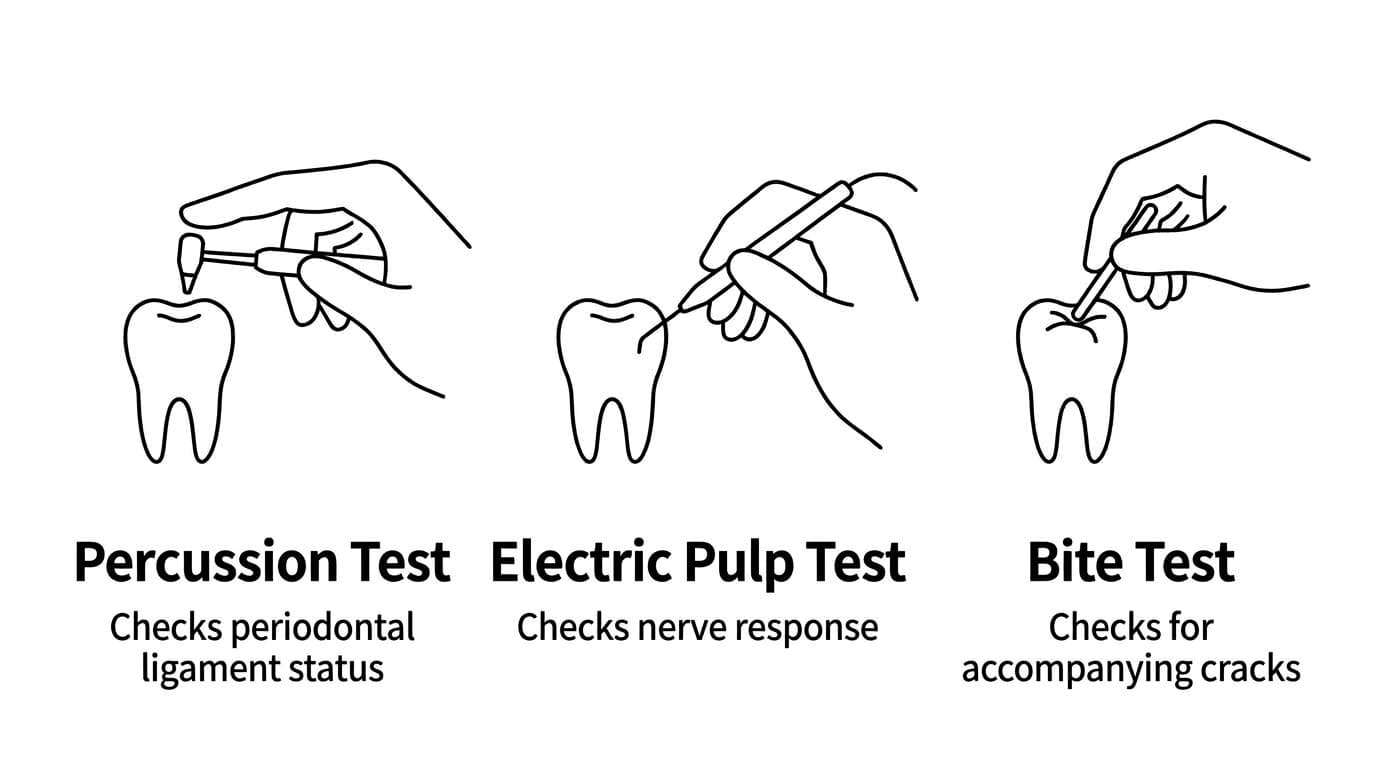
A dentist uses several tests to gauge how far the fracture extends. The percussion test, gently tapping the tooth, checks for inflammation in the periodontal ligament that surrounds and supports the tooth. With a fracture confined to the enamel, this test is usually painless, but pain on tapping raises suspicion of damage to the supporting tissue or a deeper problem such as a root fracture, which calls for further examination.
Pulp vitality testing, such as the electric pulp test, checks whether the pulp is still alive. Right after trauma, though, the nerve can be temporarily stunned and fail to respond to testing even though it is actually still alive, so rather than concluding from a single result that the pulp has died, the test is repeated 1-2 weeks later to check for recovery.
Whether a fine crack formed along with the chip is also checked. The bite test, pressing on each cusp (the pointed part of the chewing surface) one at a time with a wooden stick or a tool such as a Tooth Slooth, is used to rule out a cracked tooth, which causes a brief, sharp pain only while chewing.
How Is the Restoration Method Decided
The choice of restoration depends on how far the fracture extends and whether the broken piece was saved. If the fracture is confined to the enamel and only the surface has become rough, it may be finished simply by smoothing that area, or, if the defect is visible, filled in with resin. If dentin is exposed, the protective treatment described above comes first, followed by the definitive restoration.
If the broken piece was saved and brought in, reattachment (bonding the fragment back into its original shape) is also an option. Using acid etching (a process that microscopically roughens the tooth surface for better bonding) and resin adhesive, the fragment is bonded back into its original position; this can be done when the piece is well preserved and the fracture surfaces fit together well. If dentin is extensively exposed, pulp-protecting treatment is carried out first before reattachment.