Overview
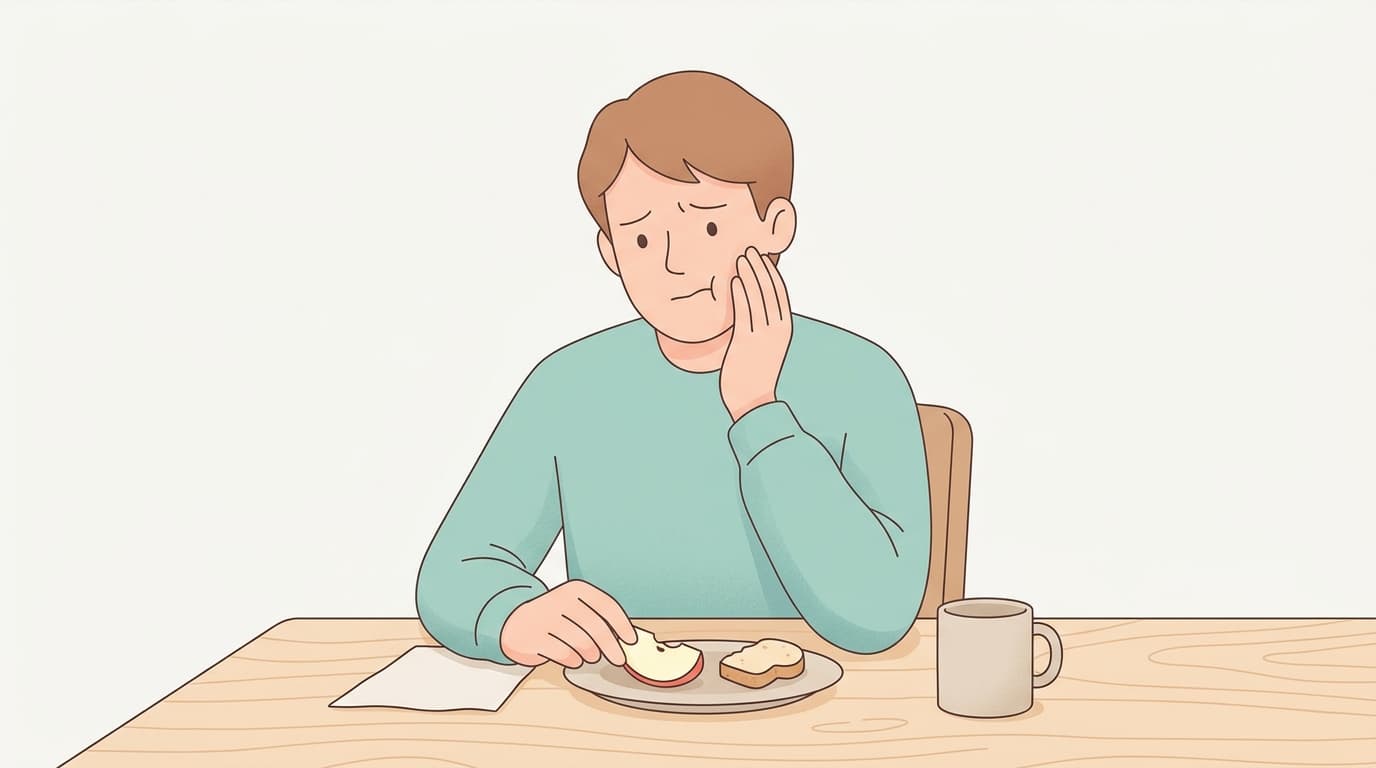
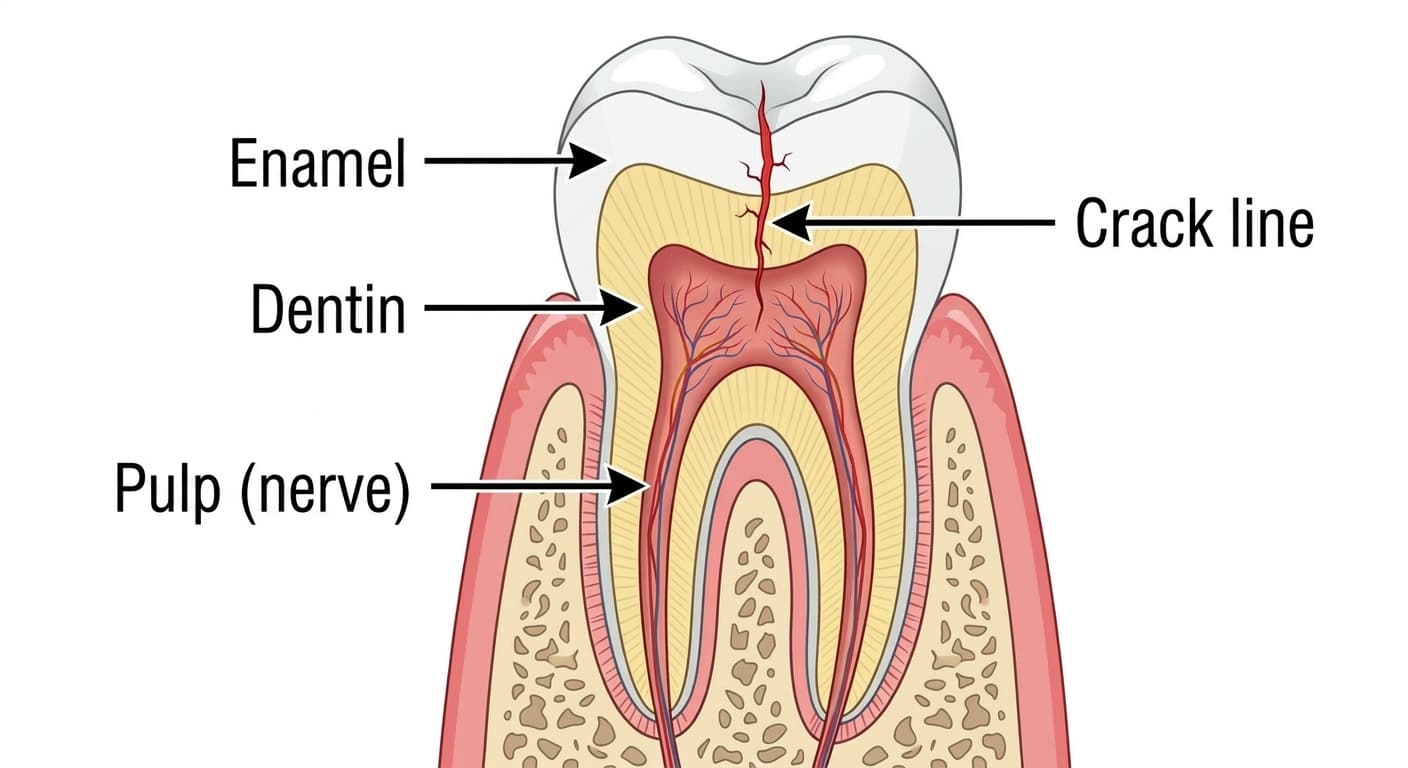
A cracked tooth is a tooth that hasn't broken all the way through but has a fine crack running along the chewing surface. The hallmark is a brief, sharp pain when chewing or biting down on something hard, especially at the moment the bite pressure is released. When the crack is shallow, it stays within the enamel and dentin, but if it deepens it can reach the pulp chamber where the tooth's nerve sits, progressing to pulpitis or pulp necrosis.
Causes
A crack forms when a large chewing force is applied suddenly. Biting down hard on something can apply a sudden burst of force, and repeated heavy force from habits like teeth grinding or clenching can crack even a healthy tooth. Teeth with a large inlay or amalgam filling covering most of the chewing surface are especially prone to cracking because the remaining tooth structure is weaker. Rarely, over-shaping the inside of the root canal during root canal treatment can worsen an existing crack.
Symptoms
The most common symptom is a brief, tingling or sharp pain that appears while chewing and quickly disappears. The pain is sometimes felt more clearly when releasing bite pressure than when biting down. Because the pain is often reproduced only when chewing on one particular tooth, and even then only in a specific spot, it can be difficult to pinpoint the affected tooth. Sensitivity to cold food or cold water may also occur. If the crack deepens, reaches the pulp chamber, and pulpitis develops, it can cause spontaneous throbbing pain even at rest, as well as pain triggered by hot or cold stimuli.
Diagnosis
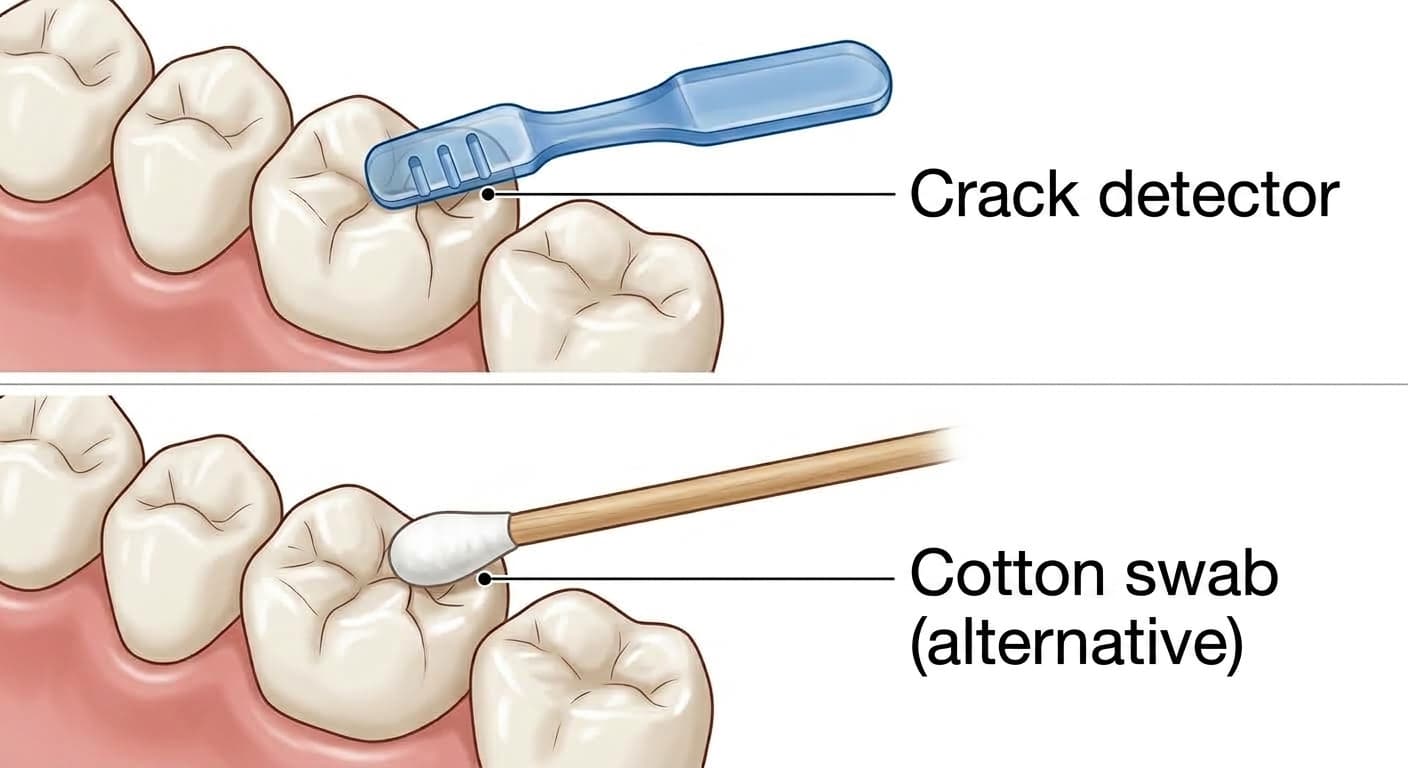
A bite test, in which pressure is applied individually to each cusp to see whether it reproduces the pain, is useful and can narrow down which cusp the crack affects. Transillumination, which shines a strong light through the tooth to see whether the cracked side appears darker, and a dye test, which marks the crack line with a colored dye, are performed together as well.
Cold and electric pulp tests are also performed together to check whether the nerve is still alive. In the early stage, when the crack is confined to the dentin, there may be no notable change on an X-ray, so a single X-ray image cannot rule out a problem.
Treatment & Where to Go
A dentist who performs root canal treatment handles diagnosis and treatment. The treatment approach is decided based on a comprehensive assessment of the crack's location, symptoms, the condition of the pulp and root tip, whether the periodontal tissue is involved, and how much healthy tooth structure remains.
Generally, the tooth is wrapped with an orthodontic band or a temporary crown, and the pain is monitored for several weeks to several months to see whether it subsides. During this period, avoiding hard foods on the affected tooth is essential for an accurate observation. Once symptoms improve, treatment is completed either by covering the entire tooth with a permanent full-coverage crown or by bonding a composite resin restoration. If the pain persists even after observation with a temporary restoration, or if the crack has reached the nerve, root canal treatment may be needed. If the crack may have extended down to the root, extraction may need to be considered.
That said, because cracked tooth cases vary so widely, the treatment actually given may differ depending on the situation.
Outlook & Precautions
Left untreated, bacteria can invade along the crack and lead to pulpitis or pulp necrosis, and the inflammation can spread further to the bone around the root tip, as in apical periodontitis. A reduction or disappearance of pain does not mean the tooth has healed. As the nerve dies, sensation is lost, so the pain may disappear even though the inflammation continues. If brief pain while chewing keeps recurring, it should not be ignored and needs to be evaluated by a dentist; if the pain changes from intermittent tingling to a constant throbbing ache even at rest, that is a sign the condition has progressed and prompt care is needed.