
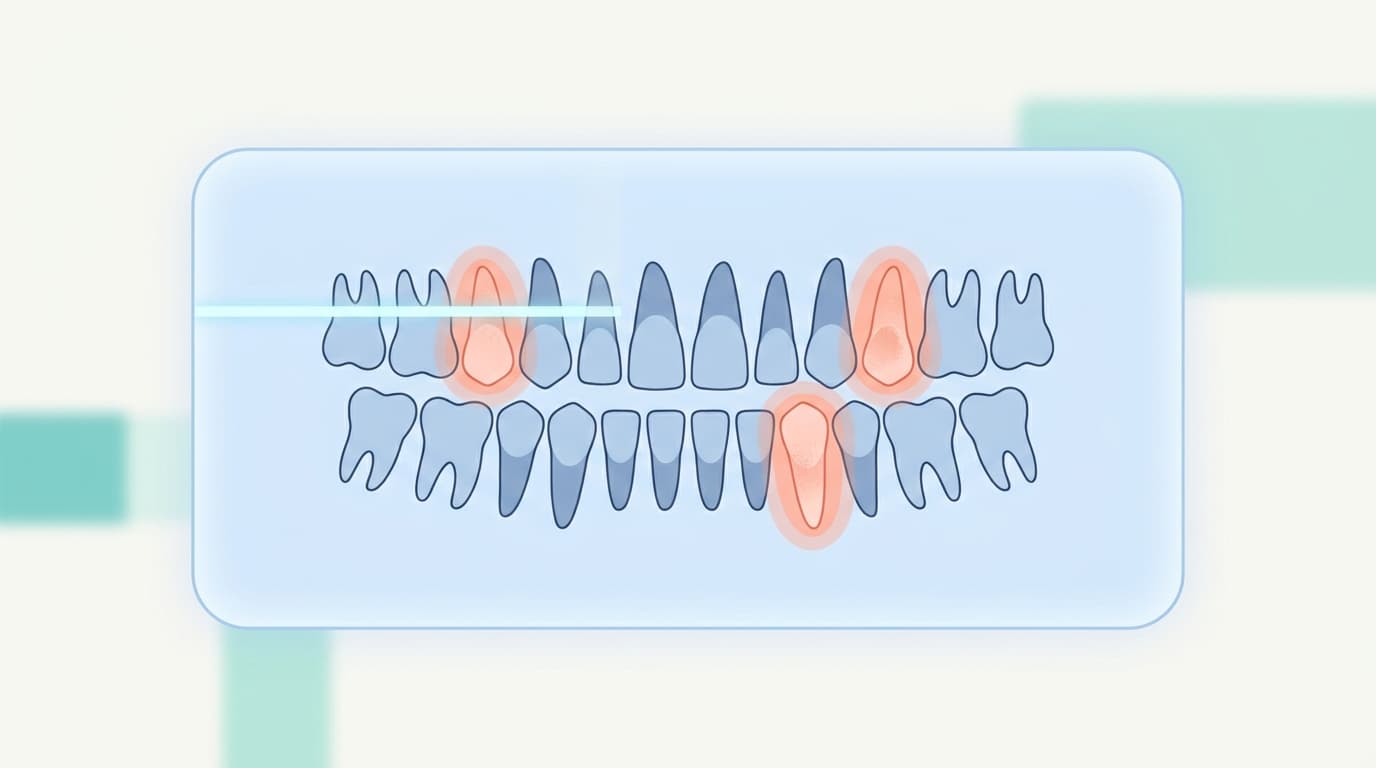
More dental clinics are having artificial intelligence (AI) take a first look at X-rays or intraoral photos and flag spots that look like cavities. These programs are trained beforehand on thousands to tens of thousands of tooth images, then look for similar patterns in newly taken photos. Some people have already seen a red box appear over their checkup photo saying "Suspected cavity here."
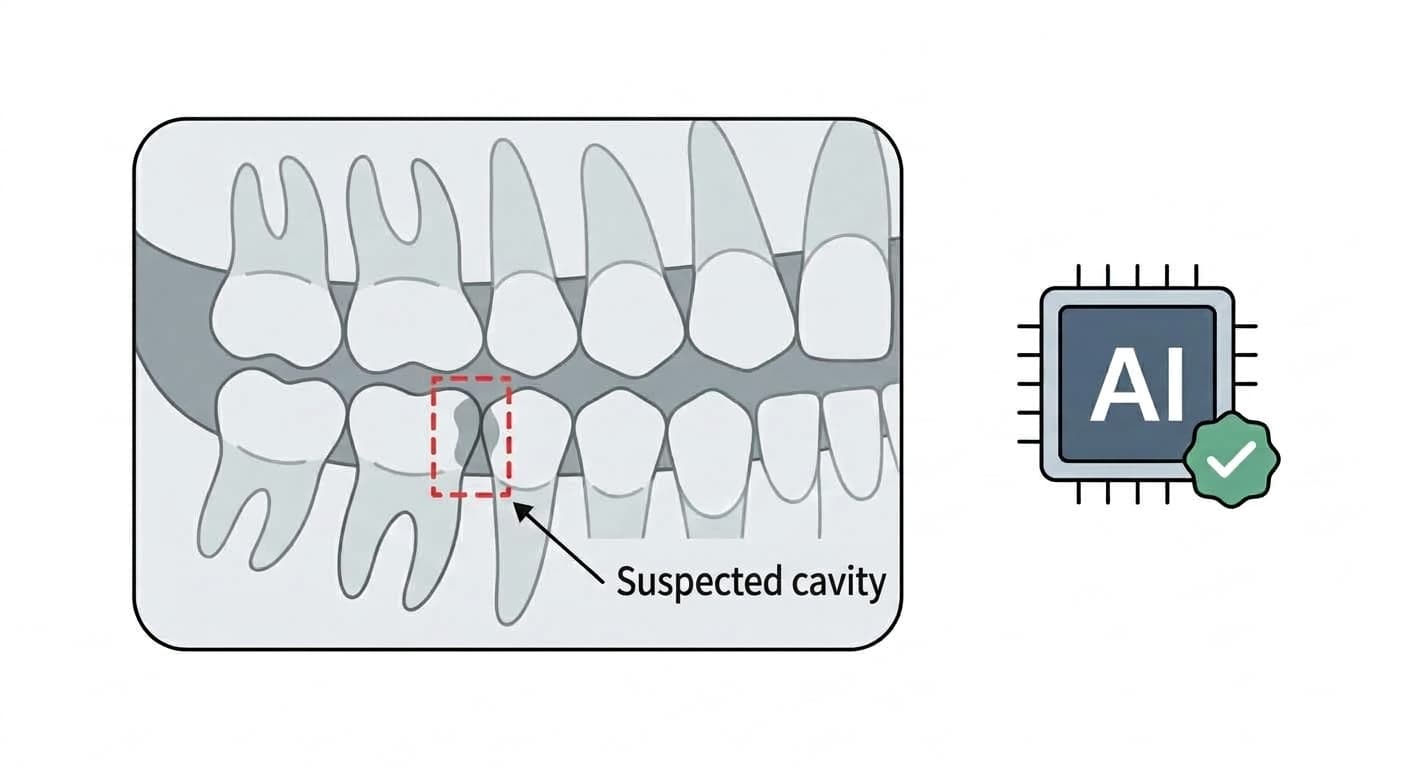
A recent review pooling studies from several countries has shown just how reliable these programs really are. The short answer: they catch a good share of cavities, but they also flag plenty of false positives, so at this stage they can't replace a dentist's final check.
Show It 100 Cavities: How Many Does It Catch?
Results varied quite a bit from study to study. Lining up several studies side by side, when AI was shown 100 teeth that actually had cavities, some programs found as many as 94 while others found only 76. In other words, the number of missed cavities ranged from 6 to 24 depending on the program. Conversely, out of 100 perfectly healthy teeth, AI mistakenly flagged around 9 to 15 as having cavities. An analysis that looked only at cavities between teeth (proximal surfaces) found somewhat better performance: catching 94 out of 100 while cutting false flags to about 9. Still, the researchers note that these figures come from experimental settings where the images were already curated, so whether the same results hold up in a real clinic with a mix of different patients still needs to be confirmed.
A "Cavity" Flag May Be Right Less Than Half the Time
An even more important number is how likely it is that a spot AI flags as a cavity is actually a cavity. In the analysis of proximal cavities, this probability ranged widely across studies, from 15% to 87%. That means in some cases, out of 100 flagged spots, only 15 were real cavities and the other 85 were false alarms. By contrast, the probability that a spot AI cleared as fine was truly healthy was far more stable, ranging from 79% to 100%. The same analysis concluded that AI is trustworthy at ruling out spots that aren't cavities, but a dentist needs to double-check anything it flags as a cavity in order to prevent unnecessary drilling or treatment. In other words, there's still a gap between "AI said it's a cavity" and "it is a cavity", one that requires a dentist's eyes to close.
Intraoral Photos vs. X-rays: The Results Differ
There's more than one way to look for cavities. Programs trained on intraoral camera photos, taken directly inside the mouth, were better at not missing cavities, while programs trained on X-ray images produced fewer false alarms. Using CT-like imaging further reduced missed cavities, but that comes with higher radiation exposure and cost, which also has to be weighed. Because the character of the results depends on which type of image was read, the same "no cavity" verdict carries different weight depending on whether it came from an intraoral camera or an X-ray.
It Still Can't Replace a Dentist
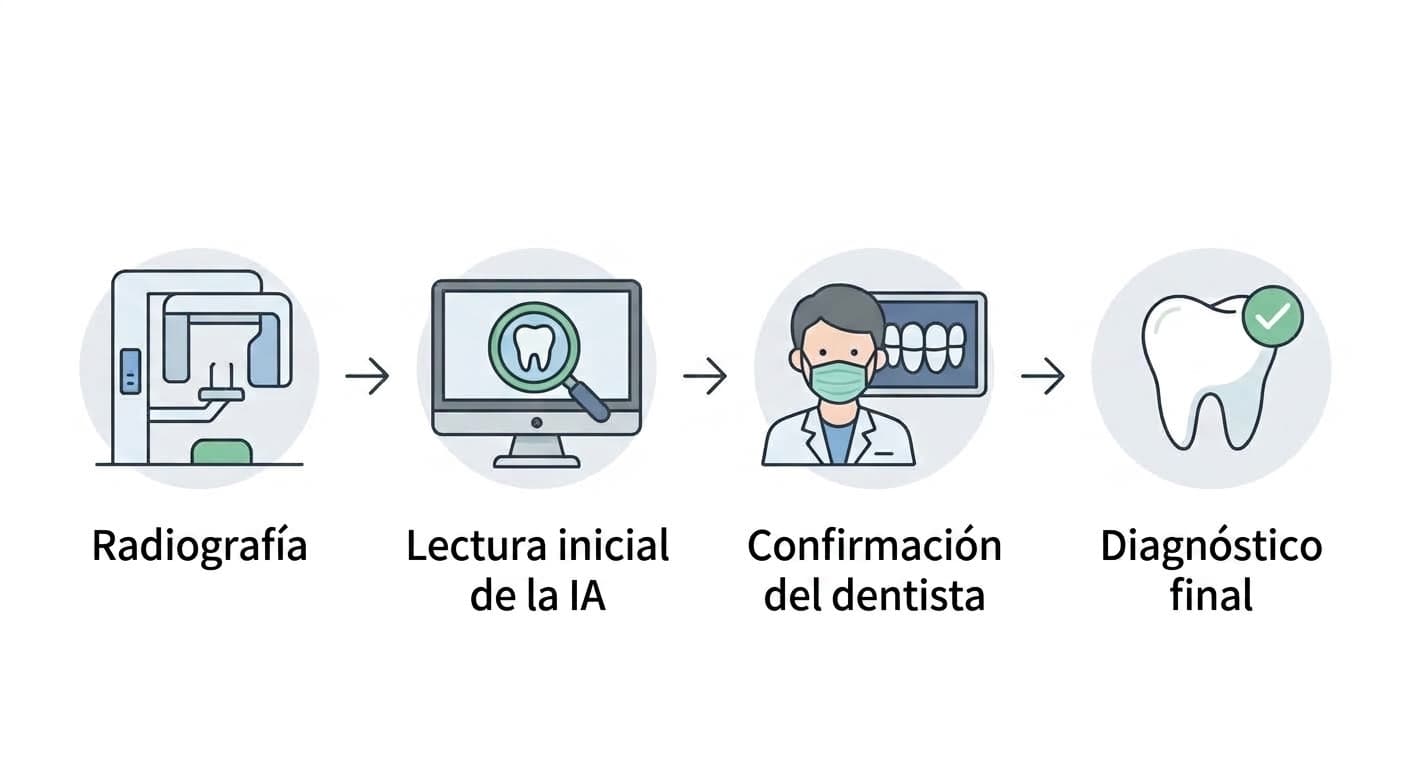
The researchers who compiled these studies pointed out a limitation: most existing studies rely on previously collected images analyzed after the fact, and cases validated in advance within an actual clinical workflow are rare. Their conclusion is that even though AI shows high accuracy under experimental conditions, at this stage it should only be used as a supporting tool to assist dentists, not recommended for making a diagnosis on its own. Studies checking whether AI performs equally well across people of different ages, tooth conditions, or tooth colors have also been hard to find so far. Research directly comparing actual clinical outcomes is still rare, but in one such study, a care team assisted by AI found more cavities, but also recommended drilling or filling more aggressively as a result, and in the end there was little difference from the unassisted team in treatment cost or how long teeth were kept intact. Finding more isn't necessarily the same as benefiting the patient more.
So if you're told about an AI reading result at the clinic, it's worth asking whether it's the dentist's final confirmed opinion or just the AI's initial flag. In particular, if you're recommended immediate drilling or filling for a flagged spot, you can ask whether it was double-checked visually or with another exam. On the other hand, there's no need to push back your regular checkup schedule just because AI flagged an area as "no cavity"; the absence of a flag doesn't mean every early-stage lesion has been ruled out.