
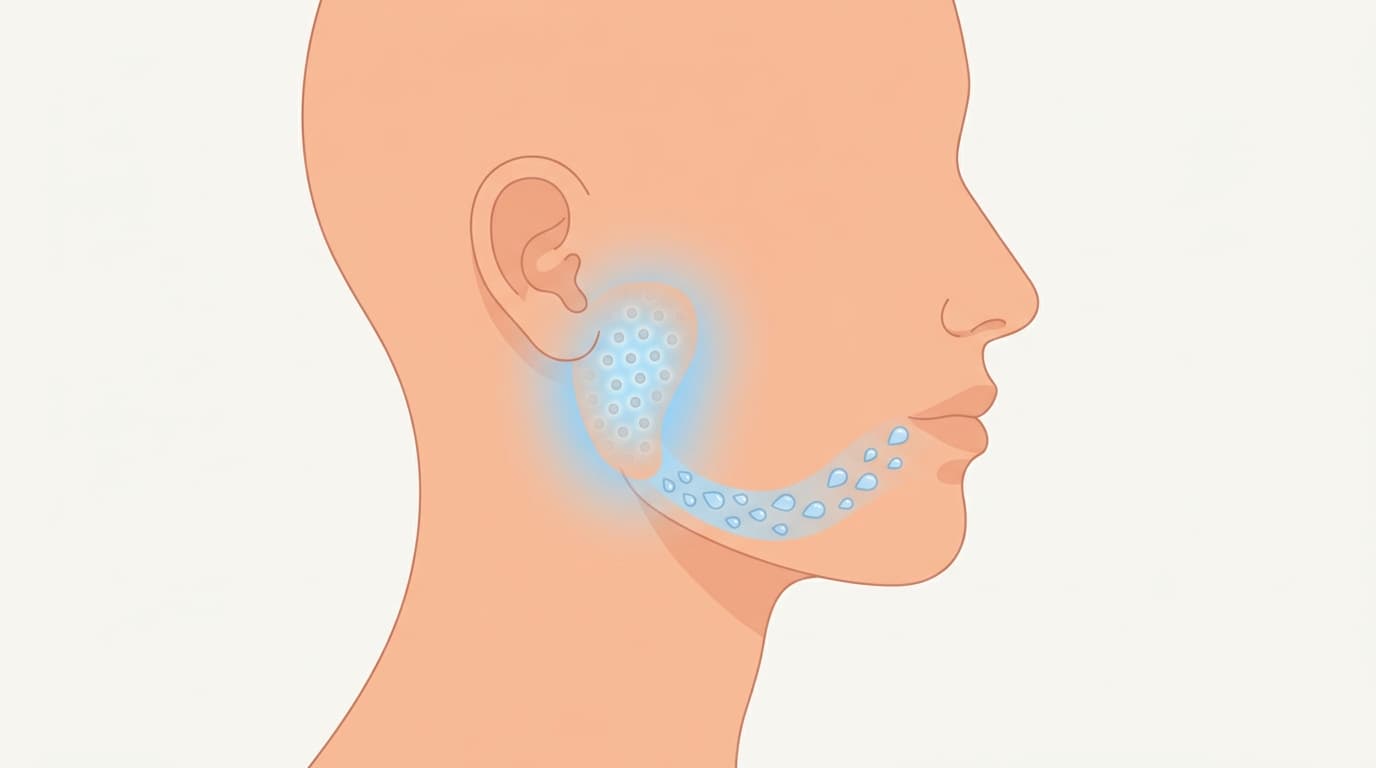
Radiation therapy for head and neck cancer often destroys the salivary glands, and until now the best that people with radiation-damaged glands could do was rely on artificial saliva or saliva-stimulating drugs. A Phase 1 clinical trial run by the U.S. gene therapy company MeiraGTx has now shown that injecting a gene into a damaged salivary gland can get saliva flowing again. Over a 12-month follow-up of 24 patients, saliva output more than doubled on average. The key to this therapy is not reviving dead cells, but building a new channel for water to pass through in the cells that survived.
Acinar Cells Die, but Ductal Cells Survive
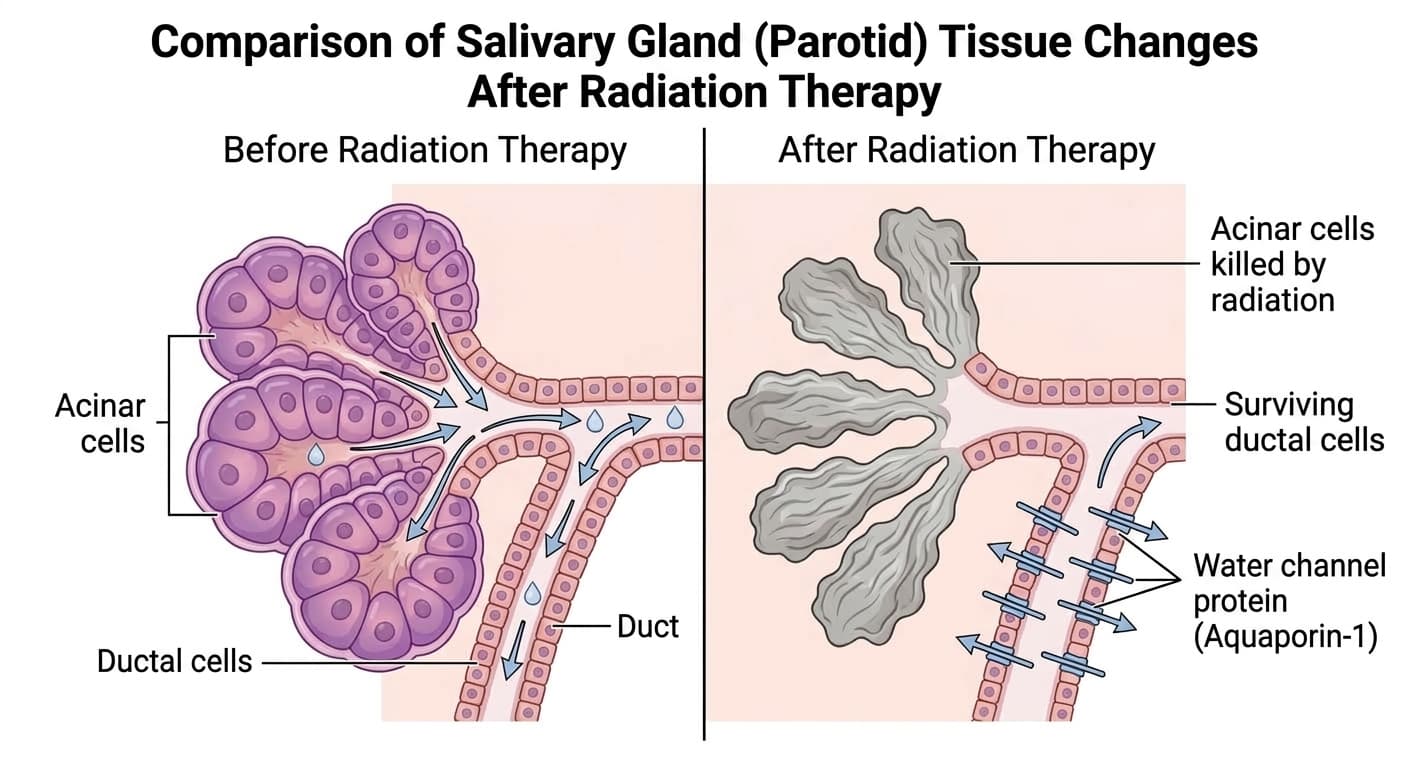
Saliva starts as a watery fluid made by acinar cells inside the parotid gland (the largest salivary gland, located below the ear). As this fluid passes through the duct, sodium and chloride are absorbed and potassium is added, turning it into the saliva that reaches the mouth. Radiation damages acinar cells especially severely, killing them and replacing them with fibrous tissue. The ductal cells that make up the duct are relatively resistant to radiation and often survive.
The problem is that ductal cells are naturally poor at letting water pass through. Even if ductal cells survive, saliva cannot form once the acinar cells that would have supplied the fluid are gone. Saliva stimulants such as pilocarpine work by squeezing whatever acinar cells remain, so their effect was limited, and many patients stopped treatment because of side effects such as excessive sweating or frequent urination.
Opening a Water Channel in Cells That Survive
Researchers at the U.S. National Institute of Dental and Craniofacial Research (NIDCR) noticed that potassium concentration inside the duct stays high even after radiation exposure. Their calculation was that if this concentration gradient could be harnessed as a force to draw in water, all the ductal cells would need is a channel for water to pass through. The protein that can serve as that channel is Aquaporin-1, a member of the aquaporin family (membrane channel proteins that let only water molecules pass through). It is common in red blood cells and vascular endothelial cells but is not normally present in salivary duct cells.
Against this backdrop, the gene therapy AAV2-hAQP1 was developed: it carries the human Aquaporin-1 gene inside an adeno-associated virus (AAV) vector so that ductal cells can make the protein themselves. An earlier clinical trial had used an adenovirus vector, but it triggered a strong immune response in the body. MeiraGTx switched to the relatively less immunogenic AAV vector and ran this trial across multiple centers.
The Numbers From 24 Patients Followed for 12 Months
This Phase 1 trial enrolled 24 patients who still had moderate-to-severe chronic dry mouth despite it having been at least 5 years (2 years for HPV-positive head and neck cancer) since they finished radiation therapy. Twelve received a single injection of the therapy into one parotid gland, and 12 received it into both parotid glands, with the dose escalated across patients while safety was assessed in parallel.
There were no serious treatment-related adverse events, and all 24 patients completed the trial. Unstimulated saliva output at 12 months increased by an average of 112.5%. Patient-reported dry mouth questionnaire scores improved by 39.5%, and 19 of the 24 patients (79%) reported a clear improvement in symptoms. However, this trial had no placebo comparison group and included only 24 participants, so how much natural variation or participant expectation contributed to the results is something the next stage, a placebo-controlled trial, will need to determine.
Why the Therapy Is Delivered to Just One Gland
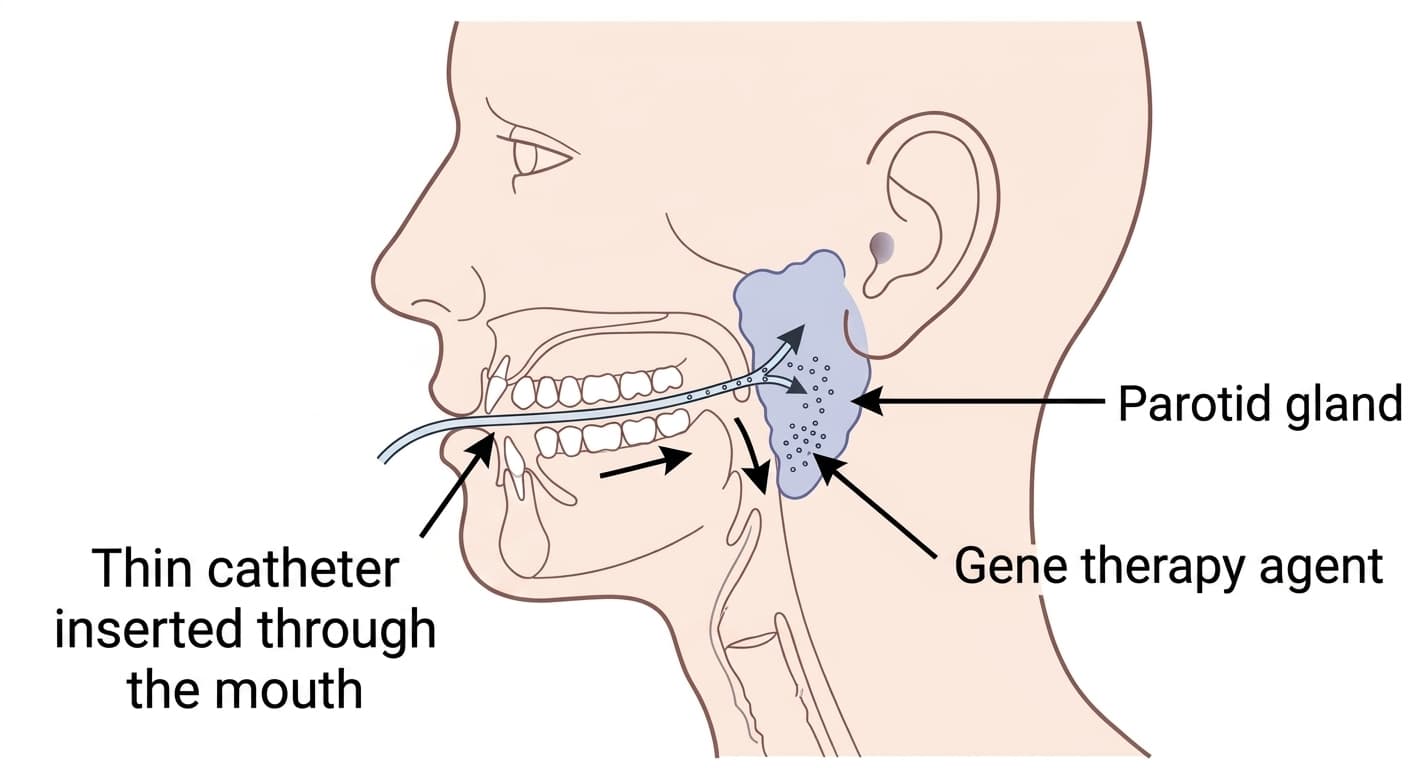
This therapy is not given as an injection into the arm. Instead, a thin catheter is inserted through the opening of the parotid gland duct, located inside the cheek next to the molars, and the therapy is delivered directly into the gland. Delivering the gene to a single gland rather than the whole body is meant to limit the effect on other organs.
These results amount to building a bypass route by installing a water channel in surviving ductal cells, rather than reviving dead salivary gland tissue. Radiation-damaged salivary glands have so far only had symptomatic treatments such as artificial saliva and stimulants, and gene therapy that installs a new function inside cells has now emerged as a new candidate.