
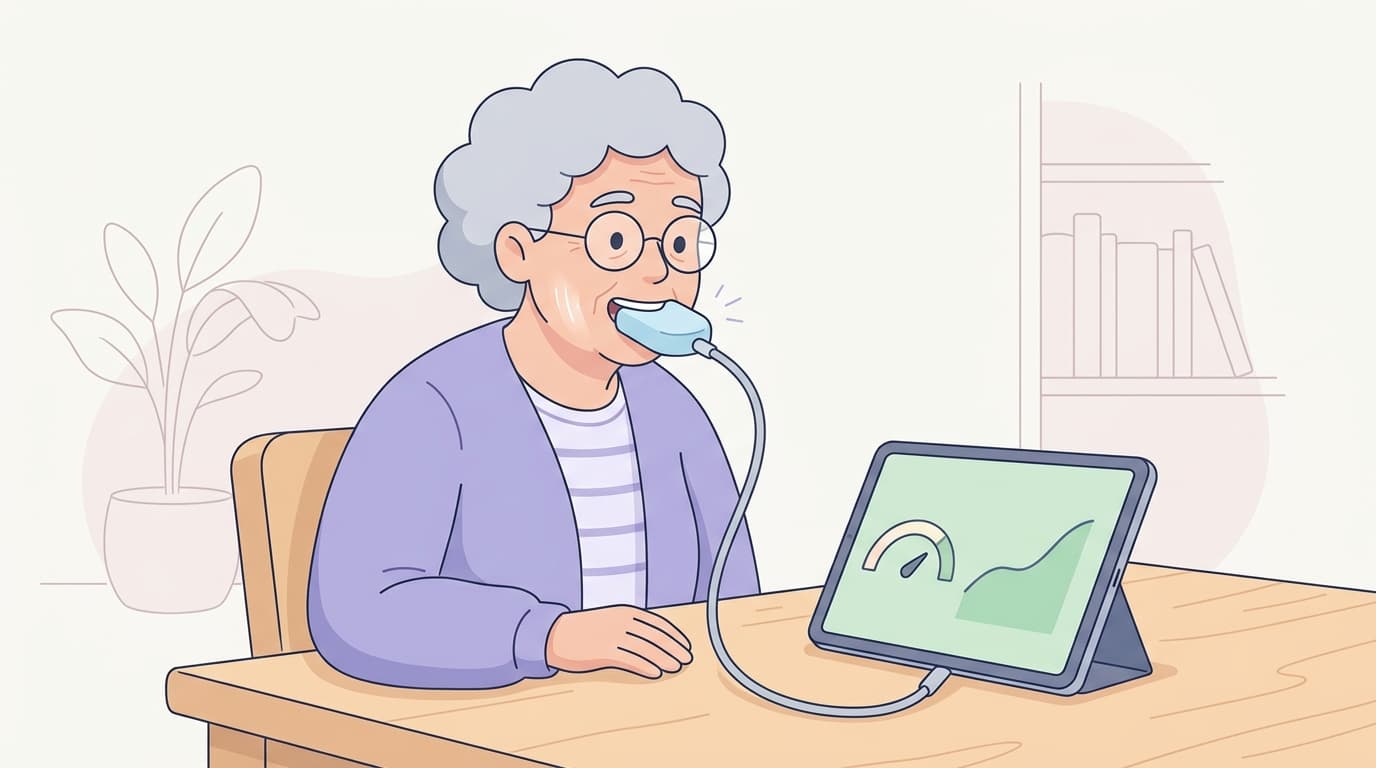
In a clinical trial that split older adults into two groups to compare chewing training methods, a device that let participants watch their bite force on a screen while training raised bite force and the thickness of the chewing muscle more than gum-chewing exercises did. Researchers from Pusan National University and other Korean and Japanese institutions compared the two methods in older adults with "oral frailty," a state in which tooth count and the ability to chew and swallow decline together.
Oral Frailty Starts With Wavering Bite Force
Oral frailty refers to a state in which tooth count declines with age while chewing, swallowing, dry mouth, and speech all worsen together; the term was first proposed in Japan in 2014. Diagnostic criteria compiled in 2024 by the Japan Geriatrics Society and two other academic societies classify someone as having oral frailty if they meet two or more of five criteria: fewer teeth, difficulty chewing, difficulty swallowing, dry mouth, and declining speech clarity. One survey found that about 40% of community-dwelling older adults meet this criteria, while a pooled analysis of data from multiple countries put the figure at 24% for oral frailty itself, rising to 57% when the preceding stage is included. The two figures differ because, even for the same concept, the survey tools used for diagnosis varied across studies. Left unaddressed, oral frailty has been reported to also raise the risk of overall frailty, malnutrition, and death.
Chewing Ability, Once Measured and Trained With Gum
There is still no standardized method for measuring chewing ability. A review of the literature on chewing function in older adults found that assessing how finely a piece of gum is broken down was the most commonly used method, followed by bite force (occlusal force). Tooth loss was identified as the leading cause of declining chewing function. Gum chewing has also been used as a training method, not just a measurement tool. An analysis found that having older adults with dry mouth chew gum increased their saliva flow, which is why this clinical trial also chose it as the comparison method. However, gum chewing has a limitation: older adults have no way to check for themselves how hard they should be chewing or how hard they are chewing right now.
What Makes a Screen-Guided Chewing Device Different
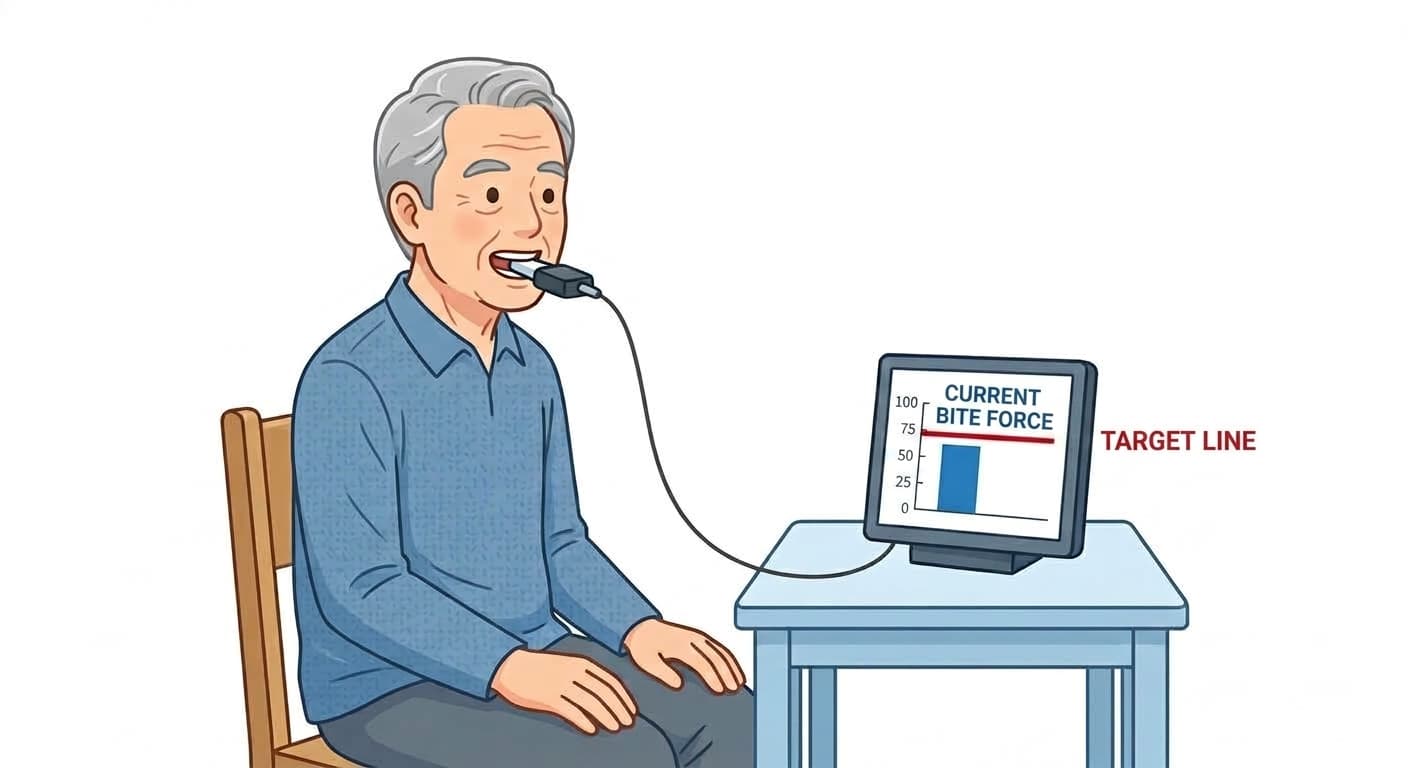
The device introduced here combines a mouthpiece sensor that measures bite force with a screen that displays the reading in real time. Before training, each participant's maximum bite force was measured, and a target line set at 70% of that value was displayed on screen; participants then trained to match that line, chewing 60 times a day, 5 days a week, for 6 weeks. This essentially carries over the strength-training practice of setting a load based on an individual's maximum strength and applies it to the chewing muscles. Because the screen shows exactly how hard someone is chewing in real time, users can check and adjust their effort against a set target, unlike gum chewing, where force is judged only by feel.
After 6 Weeks, Bite Force and Masseter Thickness Diverged
After 6 weeks of training, the group that trained while watching the screen showed greater improvement than the gum-chewing group across all four measures: maximum bite force, masticatory performance (how finely food is broken down), the thickness of the chewing muscle (masseter) measured by ultrasound, and the moistness of the oral mucosa.
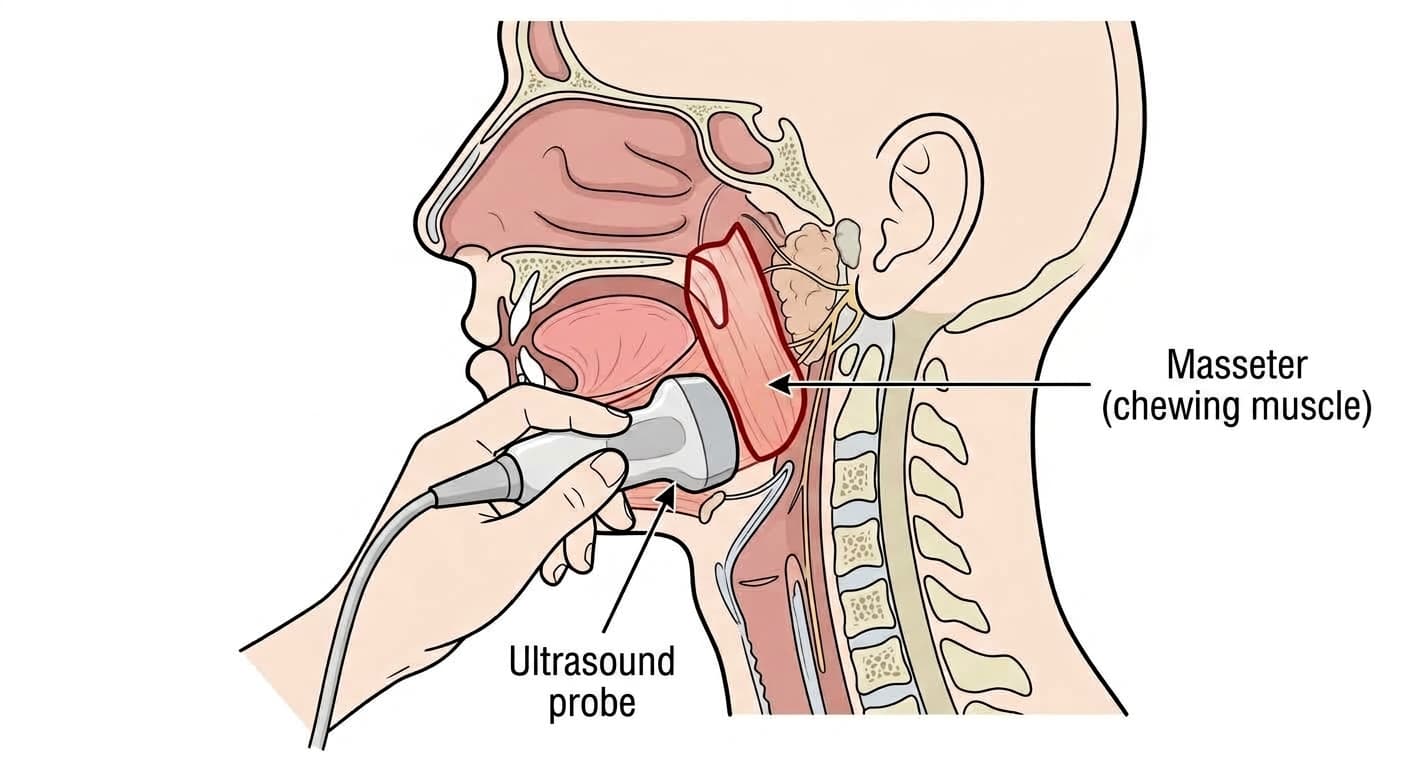
Masseter thickness is a measure that earlier research reported as being linked to bite force. The same research found that this muscle's density on ultrasound (a measure of muscle quality) moves together with grip strength and walking speed, which is used as evidence that a thinner or weaker chewing muscle can also signal weakening strength throughout the body. Because this result comes from splitting a single group of older adults into two and comparing them over 6 weeks, whether the difference persists longer or is reproduced in older-adult populations of different countries or sizes remains unconfirmed. Even so, this comparison shows oral frailty care shifting from estimating bite force by feel toward setting a target and training while checking progress on a screen.