
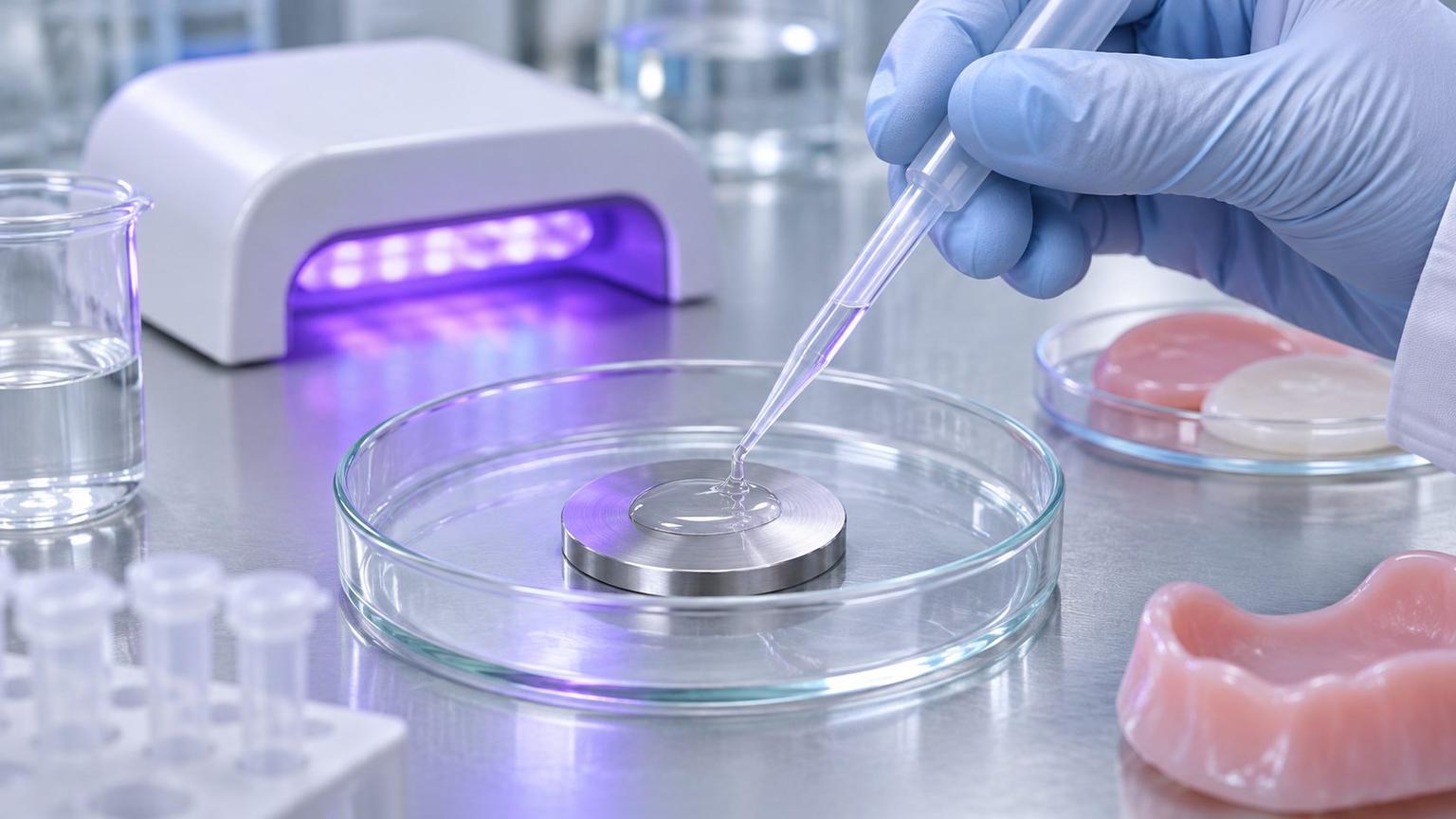
Researchers at Western University in Canada developed a denture coating containing cannabidiol (CBD) that reduced bacterial biofilms in laboratory tests. In the study published in February 2025, biofilms of Staphylococcus aureus and Escherichia coli were reduced by 99% compared with a plain plastic coating. These findings came from growing bacteria on coated discs, rather than from people wearing finished dentures.
Adding an antimicrobial layer to denture surfaces
PMMA, widely used for denture bases, is a plastic that is easy to process and has useful physical properties. However, the material itself lacks sufficient antimicrobial activity. Research to address this has taken two approaches: mixing antimicrobial ingredients into the base material or applying them as a surface coating. This study chose to add a surface layer containing CBD.
The earlier article on antimicrobial denture resin examined fungal adhesion and strength after aging when ingredients were mixed into the base material. Here, we look at a different approach: releasing an ingredient from a surface coating to inhibit biofilms.
CBD is a substance derived from cannabis, and the researchers used CBD isolate supplied by Mera Cannabis. The study developed an antimicrobial coating without antibiotics. It targets biofilms formed when bacteria gather on a surface, and the researchers separately evaluated tests for reducing bacteria in liquid and tests for biofilms that establish themselves on a surface.
Curing the CBD coating with ultraviolet light
The starting material for the coating was MMA, the raw material used to make PMMA. The researchers mixed it with CBD, PMMA to increase viscosity, and HMP, a photoinitiator that starts the curing reaction when exposed to light. When the photoinitiator absorbs ultraviolet energy and initiates the reaction, small raw-material molecules link together to form a plastic layer.
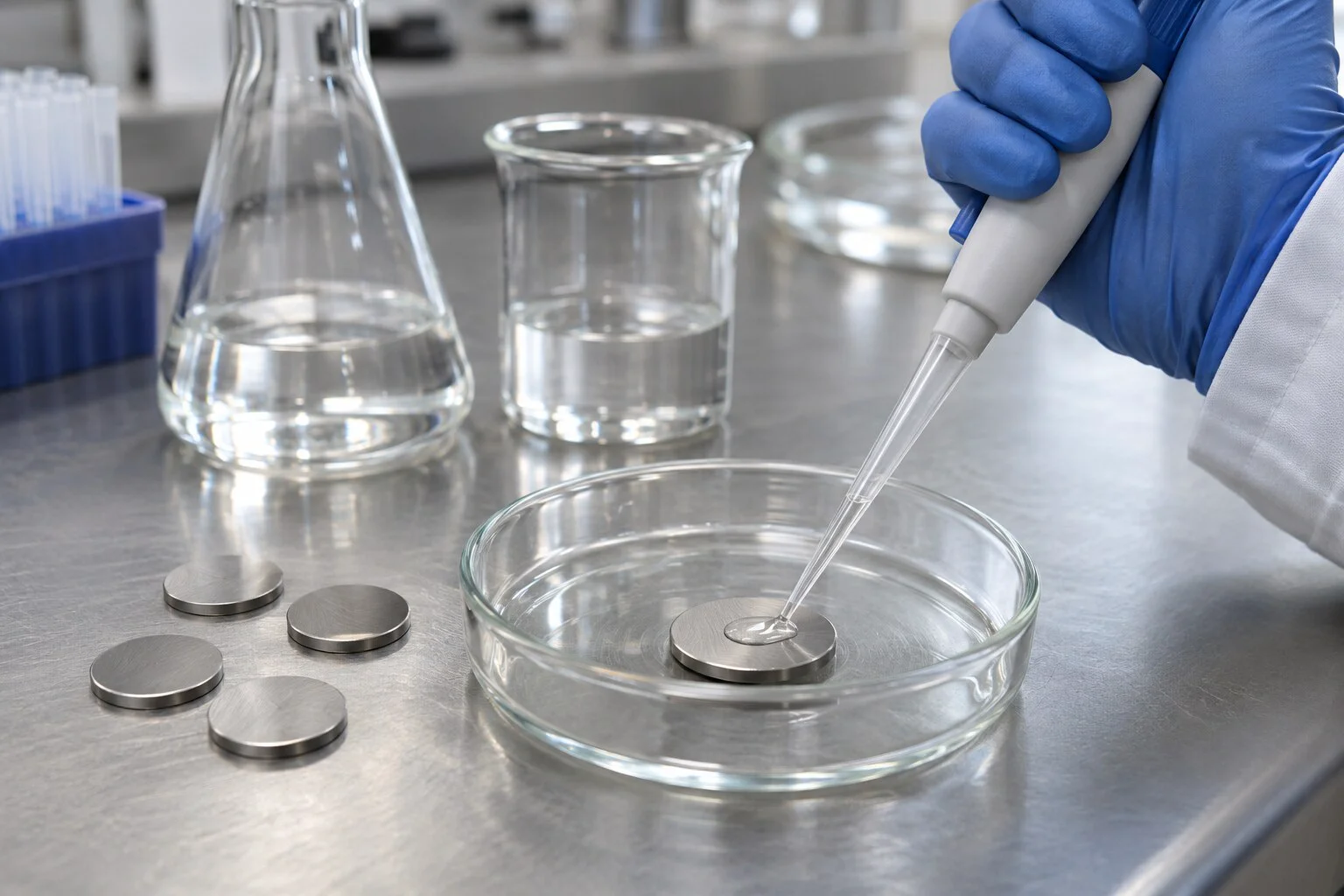
The researchers spread a thin layer of the mixture onto titanium discs and cured it with a UVP Blak-Ray ultraviolet lamp. Metal discs were used to make it easier to examine the surface with an electron microscope. The test subjects were therefore coating specimens, rather than complete dentures. After curing, remaining volatile substances were removed in a vacuum oven.
The researchers also checked whether the raw material had reacted sufficiently. Samples exposed to ultraviolet light for five minutes still showed a signal from unreacted MMA, but that signal disappeared after 15 minutes or longer. The paper explains that ultraviolet curing can take less time and use lower temperatures than conventional heat curing. However, attempts to chemically link CBD to the plastic chains were unsuccessful, so CBD was physically held within the finished layer.
Free-floating bacteria versus biofilms
The bacteria tested were Staphylococcus aureus, Escherichia coli and Streptococcus agalactiae. The coated discs were immersed in a culture medium containing bacteria, allowing biofilms to form over one day. Compared with PMMA coatings without CBD, biofilms of Staphylococcus aureus and Escherichia coli were reduced by 99%, and those of Streptococcus agalactiae by 99.99%.
An interesting difference emerged with Escherichia coli. CBD did not inhibit the growth of Escherichia coli floating in liquid, but it reduced Escherichia coli biofilms on the coating surface. This is why a reduction in biofilms cannot be interpreted as the ability to kill bacteria in every state. The researchers also identified pathways involved in adhesion and biofilm maintenance as areas for further investigation.
Plastic that releases its contents
The release of CBD from the coating into the surrounding liquid is important to its antimicrobial action. In release tests, the ingredient emerged rapidly during the first 12 hours, then more slowly. The researchers suggested that CBD near the surface of the thin coating may have dissolved or diffused out first.
This initial release may contribute to biofilm inhibition, but it differs from a design that provides a steady supply over a long period. Where the ingredient is held and how quickly it is released therefore influence the coating's function as much as the amount incorporated. These findings demonstrate a route for turning the surface of denture plastic into a reservoir for an antimicrobial ingredient and releasing that ingredient to reduce biofilms.