
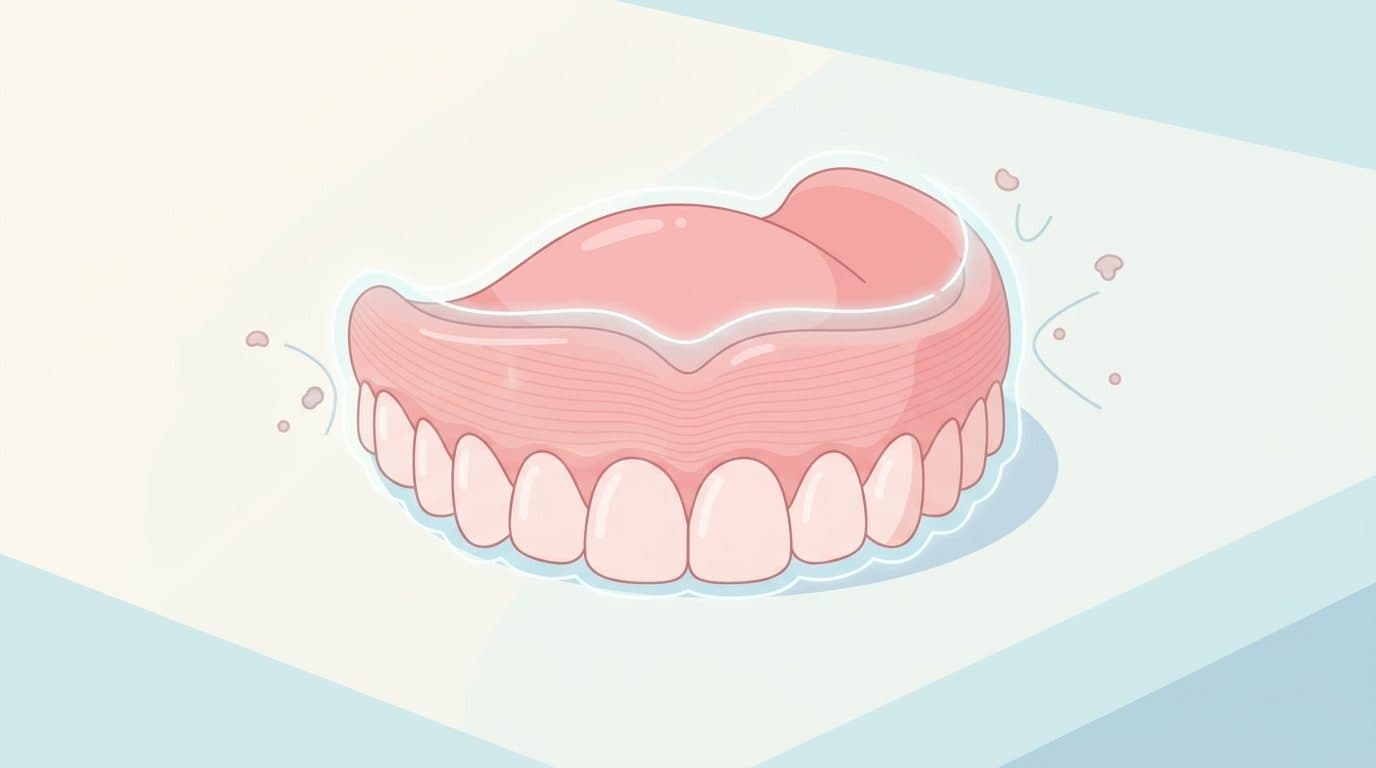
Many denture wearers experience red, swollen gums and bad breath. In most cases, the cause is denture stomatitis, triggered by the fungus Candida clinging to the denture surface. A dental research team at Yonsei University mixed two fungus-blocking compounds directly into 3D-printed denture resin and ran an aging test equivalent to about a year of use to see how long the effect would last. When both compounds were added together, the least fungus attached, and the resin's strength under chewing force still met the international standard.
The Fungal Adhesion Problem of 3D-Printed Dentures
The body of a denture, called the denture base, is mostly made from a plastic called PMMA. It is inexpensive and can match the color of the gums, but it offers little resistance to bacteria or fungus. Rather than hand-kneading the base and hardening it with heat, more dentures are now being made by 3D printing, which builds up the base by hardening liquid resin layer by layer. However, prior studies comparing the two methods had only established that 3D-printed dentures attract more bacteria than milled ones, and that surface roughness alone does not explain why. The cause was only assumed to be microscopic gaps between layers or leftover uncured material.
Until now, this problem has typically been addressed after the denture is already in the mouth, by cleaning it daily with a denture cleanser or applying an antifungal drug once inflammation has already appeared. The trouble is that the more often antifungal drugs are used, the greater the risk that fungus resistant to the drug will emerge. The research team took a different approach, choosing instead to mix fungus-blocking compounds directly into the resin from the start.
Two Antifungal Compounds and How They Were Combined
The research team chose two compounds that block fungus in different ways.
MPC, Which Prevents Adhesion with a Water Layer
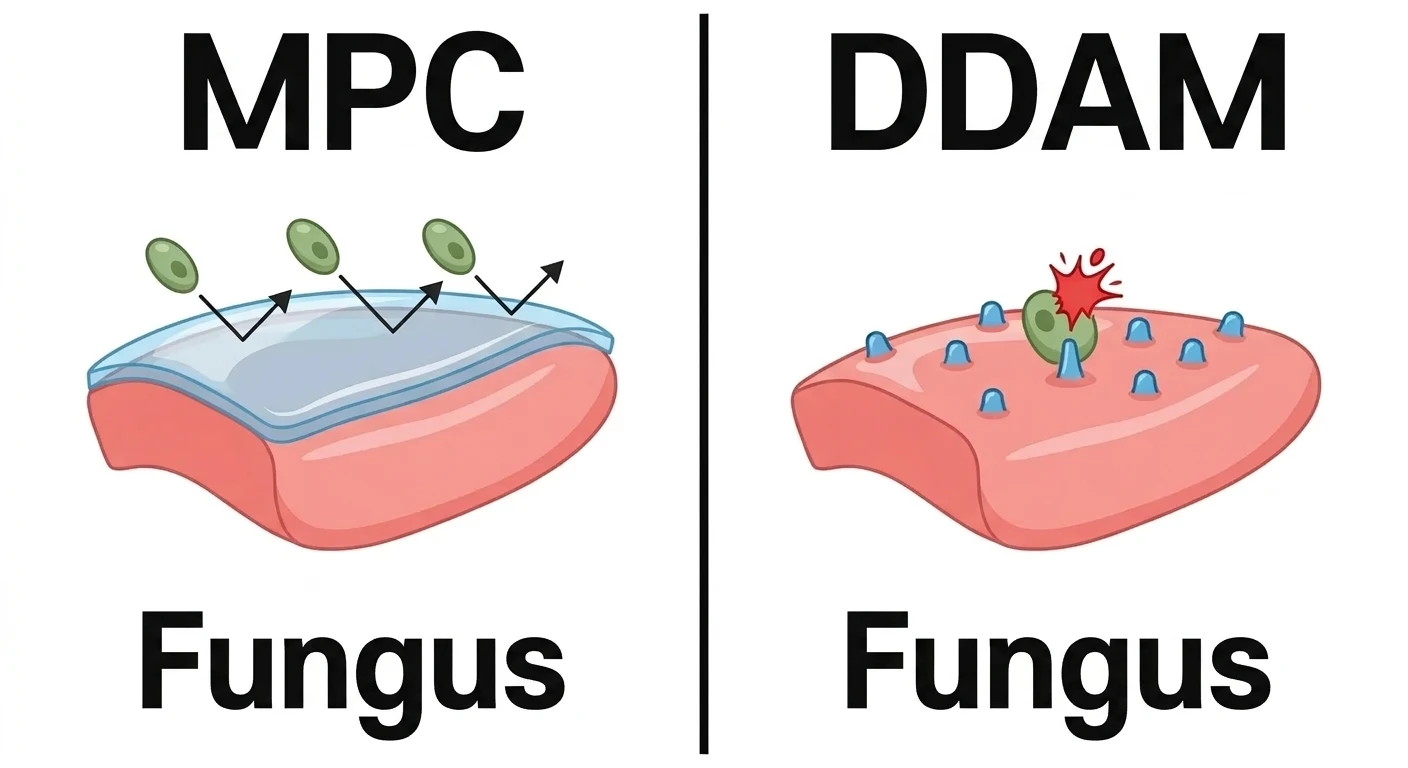
One is MPC. It strongly attracts water molecules, forming a thin water layer on the resin surface. For fungus to take hold, it must first attach to the surface, and this slippery water layer makes that difficult from the start. Rather than killing the fungus, it works by preventing attachment.
DDAM, Which Kills Fungus on Contact
The other is DDAM, a quaternary ammonium compound. Carrying a positive charge, it attaches directly to the fungal cell membrane and tears it open. Rather than preventing attachment, it kills fungus on contact once it has already attached.
Single and Combined Test Groups
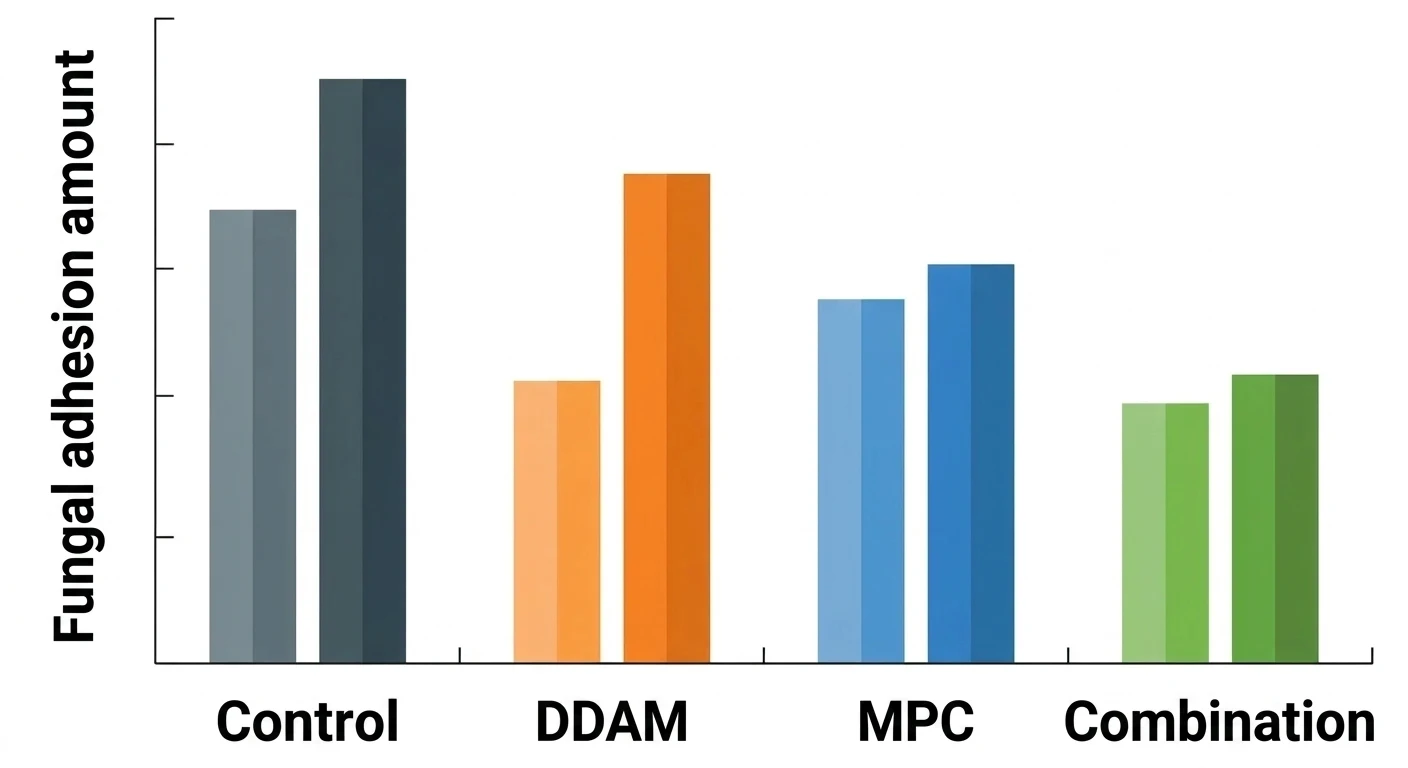
The team compared resins with each compound added alone at 2%, and a combination with each added at 1%.
Fungal Suppression and Strength After a Simulated Year of Aging
Dentures move between hot food and cold drinks several times a day. The research team reproduced this by immersing the resin in water alternating between 5°C and 55°C for 10,000 cycles, simulating roughly a year of wear.
Fungal Adhesion Before and After Aging
Measuring how much fungus attached by colony count (clusters of bacteria or fungus), the combination group had the least fungal attachment both before and after aging. All four groups showed somewhat reduced antifungal suppression after aging, but the combination group's decline was the smallest.
Flexural Strength and the International Standard
Strength under chewing force (flexural strength), on the other hand, dropped the most in the DDAM-only group. After aging, only the DDAM-only group fell below 65 MPa, the minimum required by the international standard (ISO 20795-1). Both the MPC-only group and the combination group met the standard, and the combination group (67.68 MPa) was so stable that the difference in strength before and after aging was not statistically significant. Antifungal power was greatest when both compounds were added together, and the side effect of reduced strength was smallest in the combination that lowered DDAM and added more MPC. In effect, the two compounds compensated for each other's weaknesses when used alone.
Limits and Significance of a Single-Strain Lab Result
These results were confirmed not in the human mouth but on laboratory discs cultured with a single fungal strain, Candida albicans. The real mouth contains a mix of saliva and many other bacteria, so whether the same balance holds up will need to be confirmed in the next stage of research. Even so, this study is meaningful because, rather than treating the denture after the fact through cleaning or medication, it identified a combination that embeds both a fungus-blocking compound and a fungus-killing compound directly into the 3D-printed resin and withstands nearly a year of aging.