
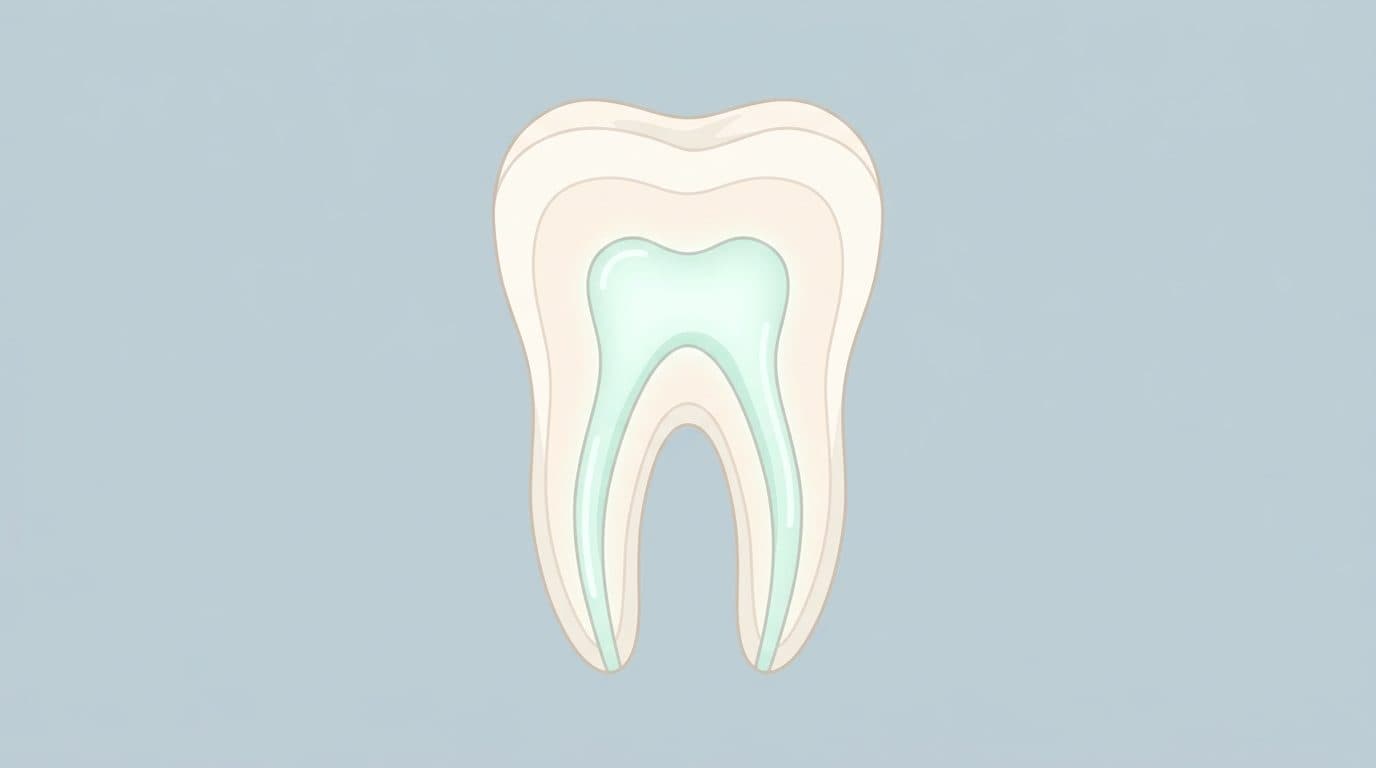
A research team at the University of Bologna in Italy has published three-year follow-up results for 52 patients and 58 teeth treated with root canal treatment using the single-cone technique with the Korean-made root canal sealer CeraSeal. At three years, the survival rate was 92.7%, and the success rate, defined as complete healing with the lesion disappearing on radiographs, was 85.4%. Teeth with necrotic pulp and an apical lesion all healed by the three-year mark. Unlike the conventional method of compacting multiple accessory cones, this approach simply flows in a single sealer and lets it set, and this is the longest real-world follow-up published so far for that technique.
Lateral Compaction Versus the Bioceramic Single-Cone Technique
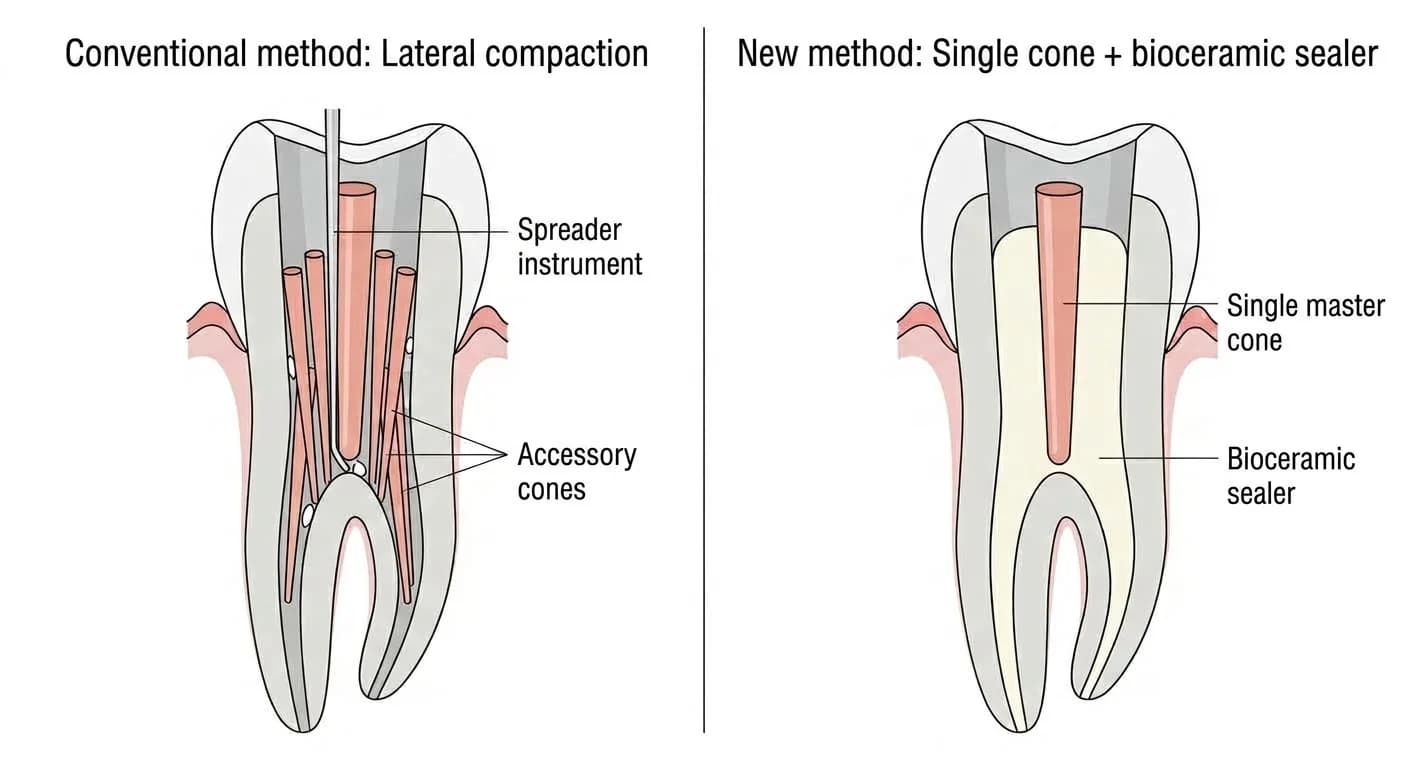
The rubber-like filling material used to obturate root canals does not bond to dentin on its own. That is why the conventional approach applies sealer and then packs several small accessory cones alongside the central cone, pushing them laterally with an instrument called a spreader (the lateral compaction technique). The sealer used in this method is mostly epoxy resin-based, a hydrophobic material that does not set properly if moisture is present while it cures.
Calcium silicate-based bioceramic sealers like CeraSeal work differently. They come premixed in a syringe, with no need to mix powder and liquid separately, and they set by reacting with the moisture remaining in the dentin, bonding chemically with tooth structure as they cure. Because of their good flowability, a single cone is enough to fill the curved gaps inside the root canal on its own, so accessory cones don't need to be packed in. This property is why pairing the single-cone technique with these sealers has become more common in recent years.
Three-Year Survival and Success Rates by Treatment History
From 2019 to 2023, the research team enrolled 52 patients and 58 teeth requiring root canal treatment at the University of Bologna's dental clinic. Before treatment, 58.6% of the teeth already had an apical lesion, and many of these resulted from pulp necrosis or a failed prior root canal treatment. Among the teeth that completed three years of follow-up, the survival rate was 92.7% and the success rate, meaning the lesion had disappeared on radiographs, was 85.4%.
The results varied by diagnosis. Teeth receiving root canal treatment for the first time, or with pulp necrosis alone, healed 100% at three years, while teeth that had already had root canal treatment and were being retreated healed only 80% of the time. This means that even teeth with apical periodontitis accompanied by an apical lesion had a reasonably good prognosis, as long as it was their first treatment.
Resorption and Bioactivity of Sealer Extruded Past the Root Tip
In this study, sealer extruded beyond the root apex in 14 of 58 cases (24.2%), and 21% of those extrusions disappeared completely on radiographs over time. Studies using other premixed bioceramic sealers have reported much higher extrusion rates. A study using a different product with the same single-cone technique found an extrusion rate of 47.4%, and a study combining a warm technique with these sealers found 46% extrusion, with half of that resorbed.
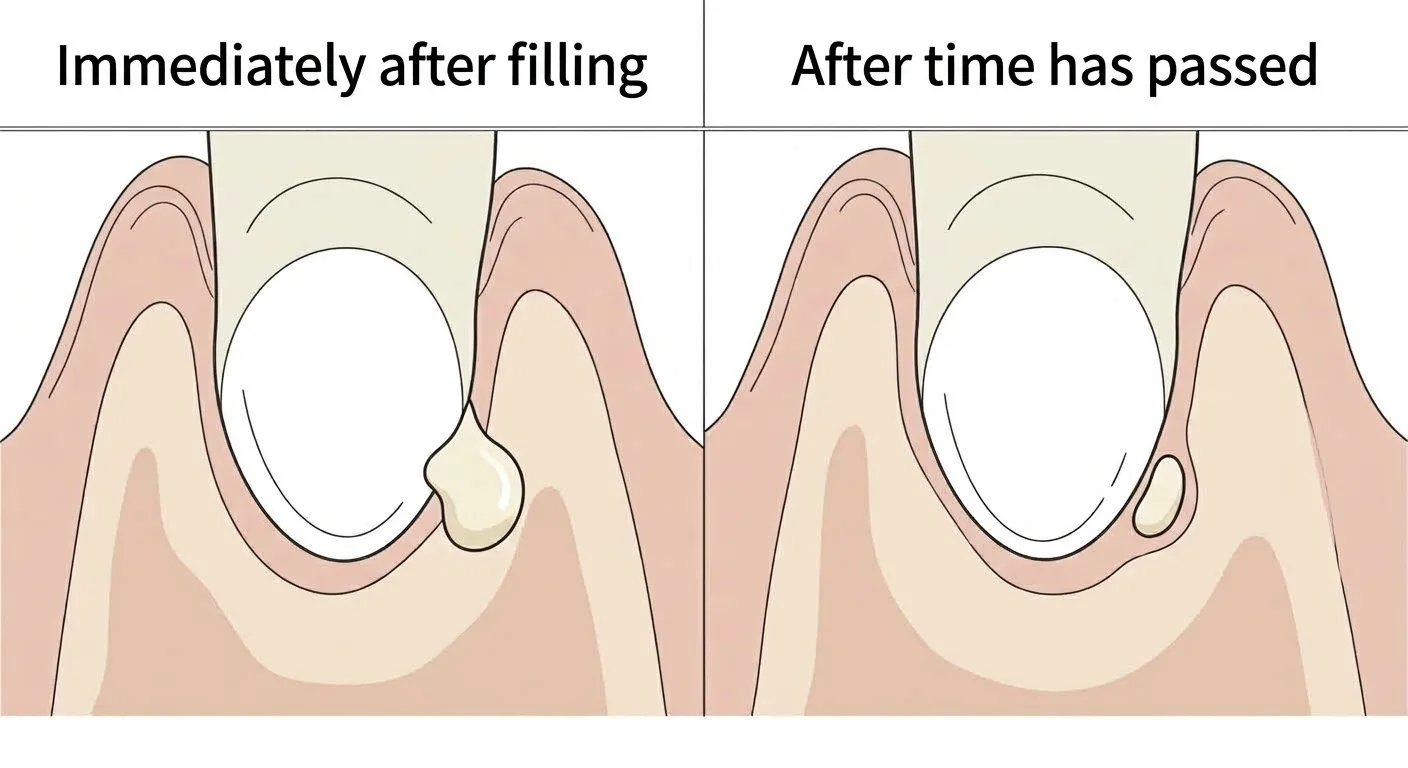
Unlike epoxy resin sealer, which remains in place without being resorbed when it extrudes, calcium silicate-based materials are bioactive, releasing calcium ions and raising the surrounding pH, which the research team suggests may aid bone healing. However, the causal link between this property and actual healing has not been confirmed; it is presented only as a possibility.
Limits of a Single-Arm Observational Study and the Four-Year Follow-Up Standard
This study is a single-arm observational study with no comparison group. To claim that CeraSeal outperforms conventional epoxy resin sealer, data comparing the two materials under the same conditions would be needed. Indeed, a 2024 meta-analysis pooling 15 clinical trials found no statistically significant difference in survival or success rates between bioceramic and standard sealers. Extrusion rates and pain within 24 hours after treatment were somewhat lower for the bioceramic group, but this difference was also not significant. Another meta-analysis pooling overall failure rates for treatments using calcium silicate sealer with the single-cone technique likewise found no clear difference compared with other sealer-technique combinations.
The European Society of Endodontology recommends following patients for at least four years to confirm healing. This three-year result falls slightly short of that benchmark. Filling root canals with a single cone and a liquid-state sealer is already used widely in clinics, and this follow-up result supports its safety. Still, a simpler procedure and a better outcome than the conventional method are not yet the same claim.