
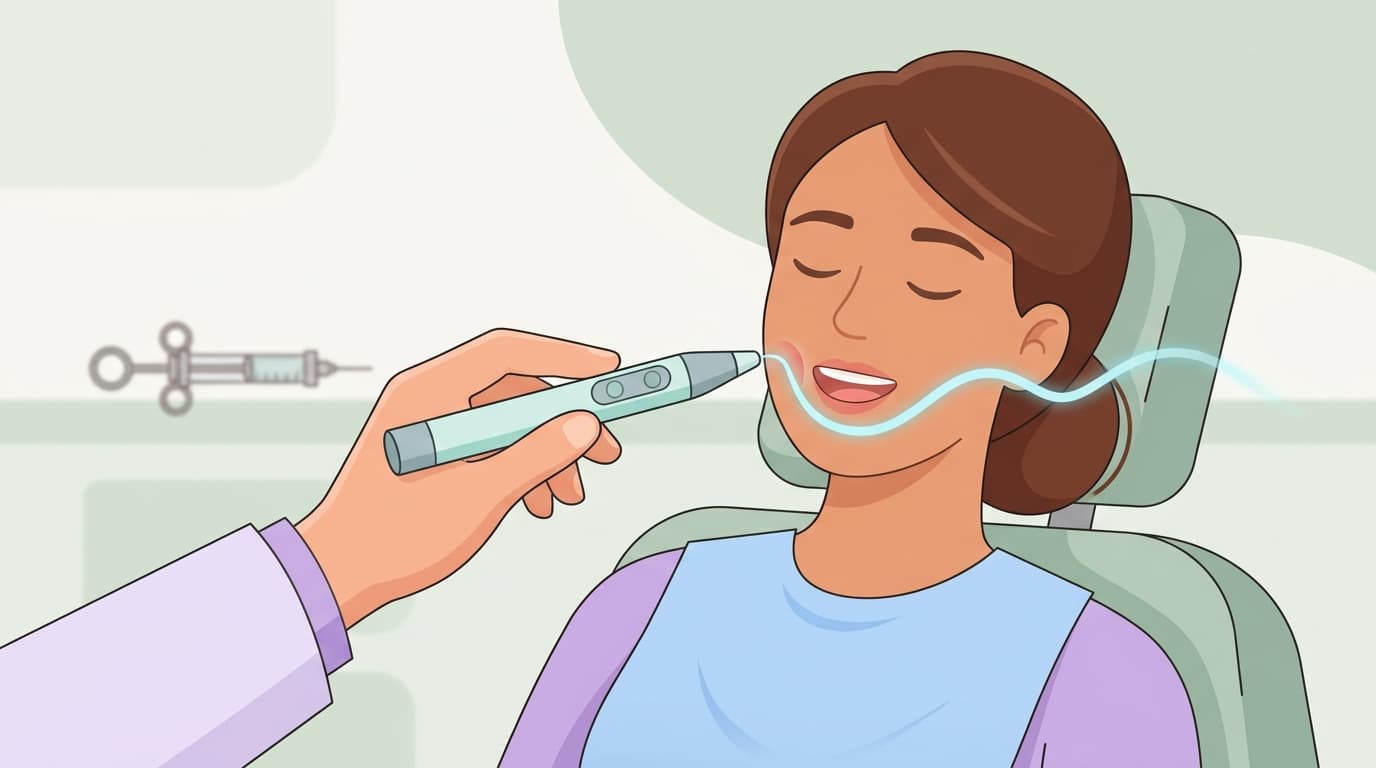
When a dental anesthetic injection is given into the gum, the moment that hurts most isn't when the needle goes in; it's when the drug is pushed in quickly and the tissue suddenly swells. In recent years, devices that let a computer, rather than a human hand, finely control this pressure and release the drug very slowly have been gaining ground, especially in pediatric dentistry. A systematic review pooling fourteen clinical trials found that this method clearly lowers pain scores compared with a traditional syringe and makes patients more cooperative. In Korea, it is commonly known as 'digital painless anesthesia' or 'computer-controlled anesthesia.'
The Computer Pushes the Drug, Not the Hand
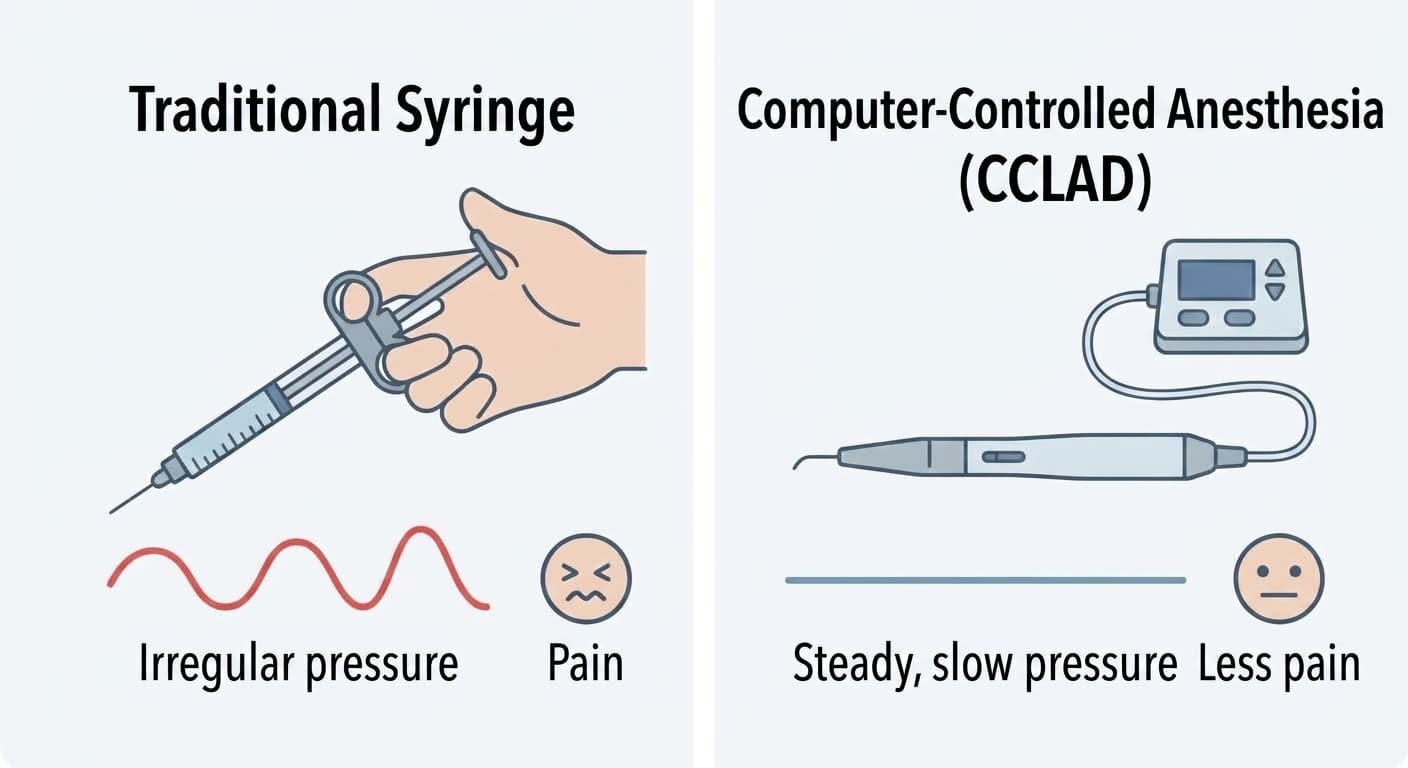
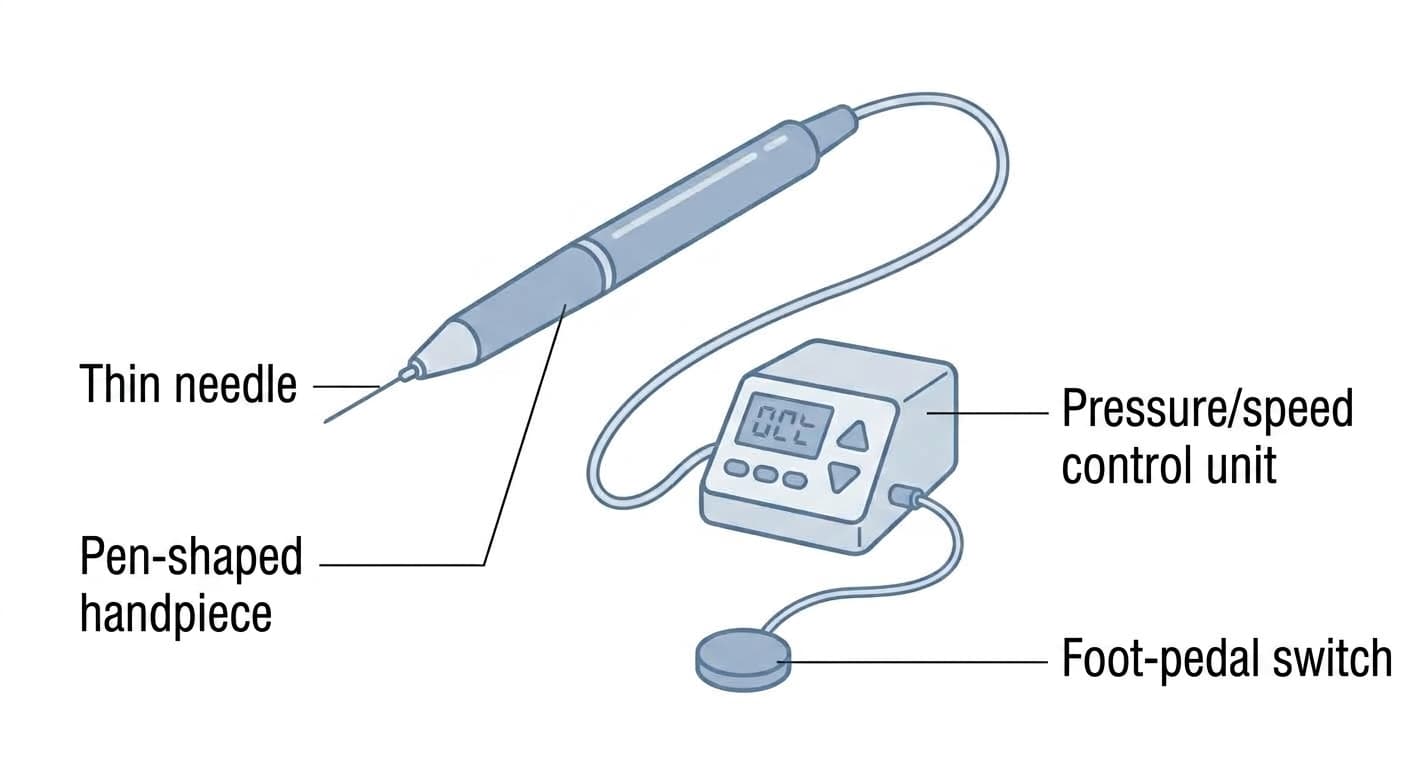
With a traditional syringe, the dentist presses the plunger by hand, so the speed and pressure vary from moment to moment. When that pressure spikes, the gum tissue suddenly stretches and triggers a pain signal. Computer-controlled local anesthesia delivery (CCLAD) uses a motorized device to push the drug in at a fixed, steady rate, eliminating these pressure swings. These devices are also usually designed with a thinner needle, which reduces even the stimulus at the moment of insertion.
The Same Results Held Even for Anxious Adult Patients
CCLAD first took hold in pediatric dentistry as a way to soothe children who are afraid of needles. Indeed, in several randomized controlled trials with children, the CCLAD group scored lower than the traditional syringe group on both pain and anxiety, and behavioral measures such as facial expression and crying were also more stable. But this result wasn't limited to children. In a randomized crossover trial with 130 adults, injections into the upper front-tooth area using a computer-controlled device with a 'ramp-up' delivery, starting very slowly and gradually increasing speed (Dentapen), produced markedly less pain than a traditional syringe, and three-quarters of participants said they would choose this method again. This means the same principle works even for adults with dental phobia.
Different Devices Reduced Pain to Different Degrees
Not all CCLAD devices performed the same. In a trial with 30 children where one side of the same mouth was injected with The Wand STA and the other with Calaject, the Calaject side scored lower on pain than The Wand STA. However, Calaject clearly took longer to deliver the drug than The Wand. In a trial comparing SleeperOne S4 with a traditional syringe, the SleeperOne side also showed lower pain, but even with the same device, injections into baby teeth hurt more than into permanent teeth, and younger children felt more pain. This means results can vary by device, age, and gum condition, so it's hard to expect the same experience from the phrase 'computer anesthesia' alone.
Time and Cost Are Still a Downside
CCLAD's drawbacks have also been noted repeatedly across studies. Because it delivers the drug slowly at a fixed rate, it takes longer than a traditional syringe. In Korea, it isn't covered by national health insurance, so clinics often charge an additional fee. Even so, this device has its place. In a trial with 100 children using computer-controlled devices (The Wand STA, QuickSleeper) for injection techniques that are hard to control by hand (such as intraosseous anesthesia, which delivers the drug directly into bone, or intraligamentary anesthesia, injected between the tooth and its ligament), both the pain of the injection itself and post-procedure discomfort were lower than with a traditional inferior alveolar nerve block, which numbs the entire nerve, and children also preferred this method. In the end, what this device changed wasn't anesthesia itself but the pressure during the few seconds after the needle goes in while the drug spreads, and cutting down those few seconds has been confirmed repeatedly, across studies in multiple countries, in both pain scores and patient cooperation.