
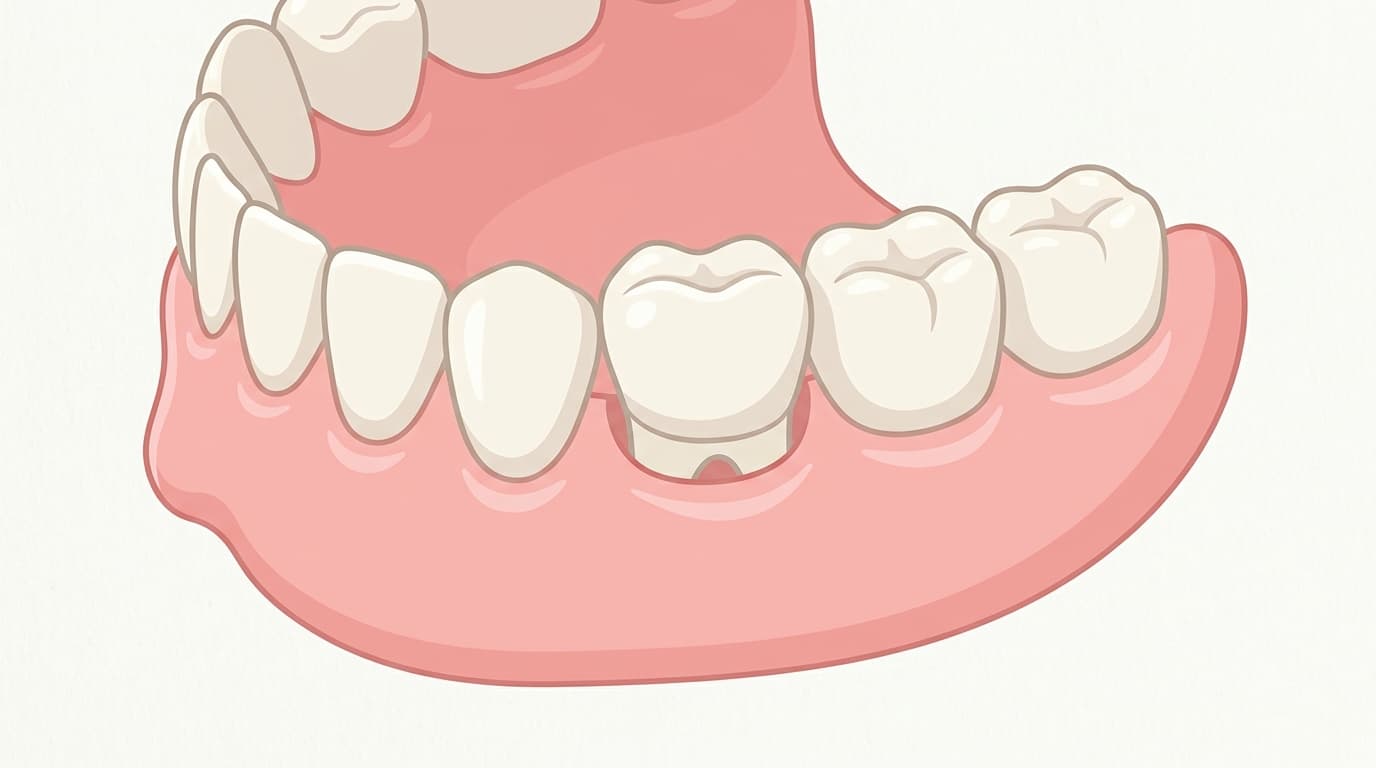
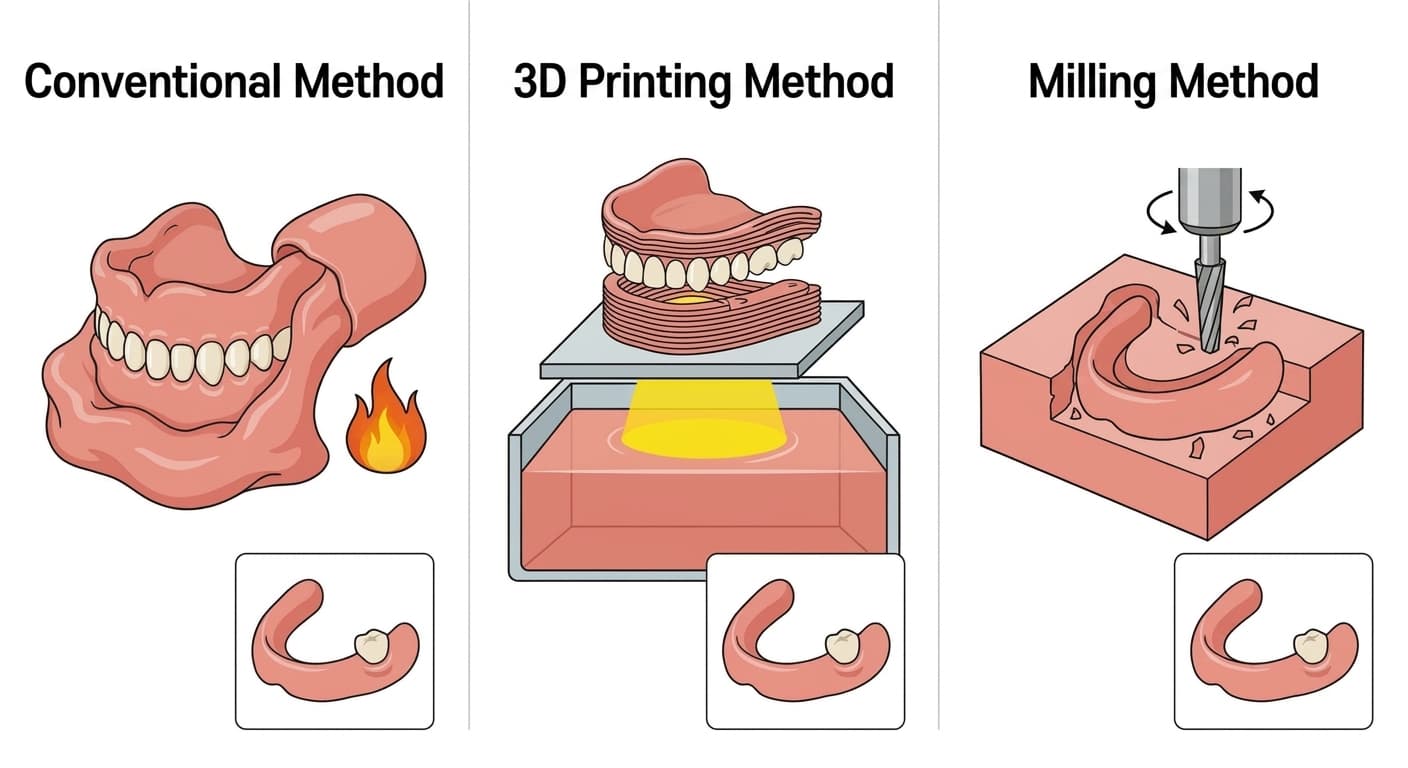
There is more than one way to make a denture. Alongside the conventional method (shaping the teeth in wax, then pressing them into hot resin to cure), two other approaches have entered dental clinics in recent years: 3D printing, which cures liquid resin layer by layer, and milling (CAD/CAM), which carves the denture out of an already hardened block. A recent experimental study that simulated nearly 1.3 million chewing cycles found that although the milling method uses the hardest material, its teeth were actually the most likely to detach from the denture base.
Three Ways to Make a Denture
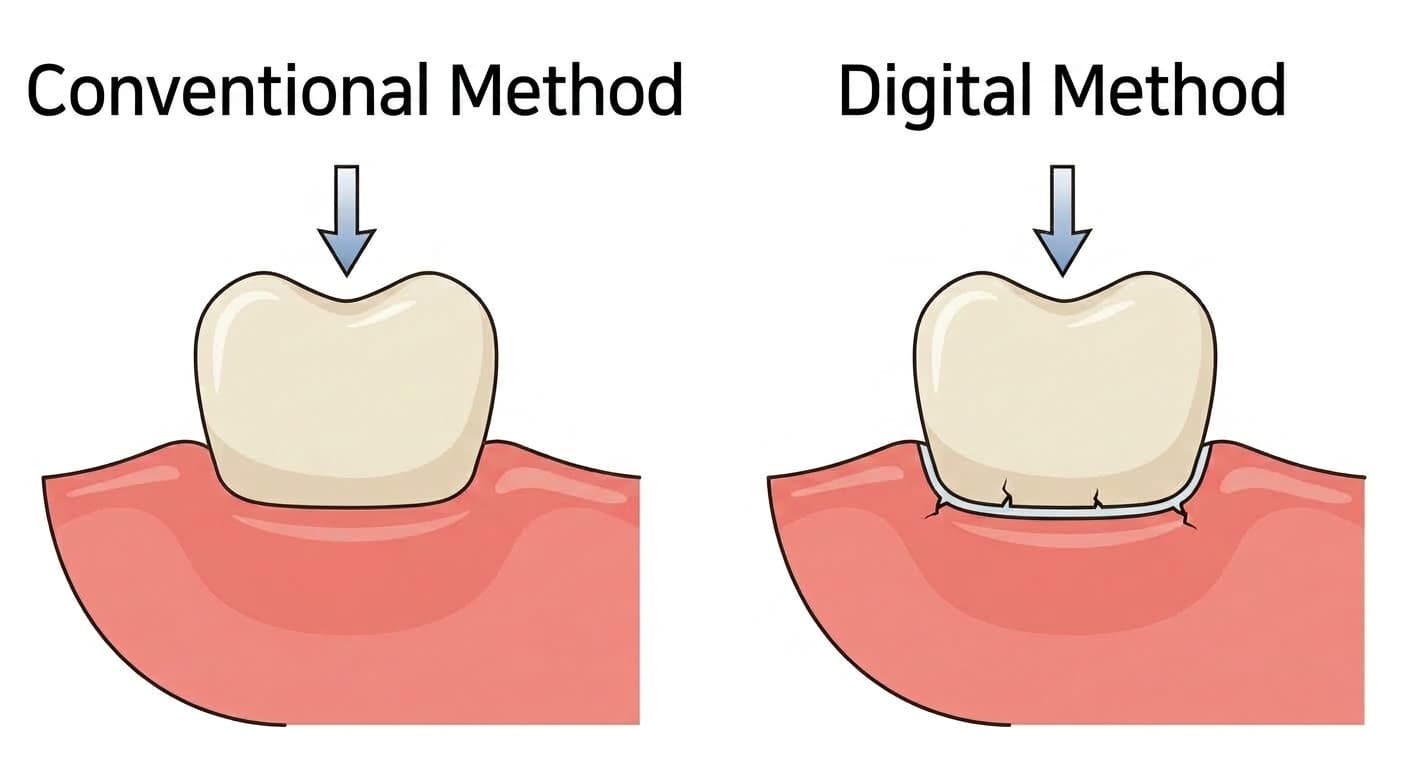
In the conventional method, the artificial teeth are embedded in still-uncured resin dough, which is then cured with heat. Because the teeth become fused into a single mass with the denture base, there is no separate bonding interface to serve as a weak point. The 3D printing and milling methods work in reverse order: the denture base and the teeth are made separately, then joined with adhesive. 3D printing cures liquid resin into thin stacked layers using light to build the base shape, while milling carves a base out of a PMMA block that has already been hardened at the factory, using a 5-axis machine. Both methods start from data captured with an intraoral scanner of the gums. We have already covered how accurate that scan itself is, mainly in the context of placing implants; here we look at how long the finished denture holds up in the mouth after the scan.
Simulating 1.3 Million Chewing Cycles
The research team made denture specimens in eight combinations and subjected them to 1.3 million cycles of combined thermal cycling, alternating between 5°C and 55°C, and chewing force, a load roughly equivalent to several years of a person's chewing. With the conventional method, peak strength before aging was 445 N and remained at 412 N after aging, retaining 92% of its strength, and every specimen survived without fracturing. The 3D-printed method showed mixed results depending on the material: one DLP-printed material lost as much as 57% of its strength, dropping from 317 N to 181 N. The worst results came from the milling method, where the proportion of specimens that survived aging fell to between 50% and 62.5%, and most fractures occurred right at the bonding interface between the teeth and the base.
Milling blocks are materials in which the chemical curing reaction has already been carried nearly to completion at the factory. That leaves little open surface for new adhesive to bond to, so the joint has to rely purely on the adhesive's physical grip. 3D-printed resin, by contrast, is only 74% to 87% cured, leaving room for a genuine chemical bond to form when the teeth are attached. The conventional method has no bonding step at all, so it is free of this weakness in the first place. The research team explained that this difference stems from how fully the material is cured, rather than from the adhesive's performance.
Milling Material Itself Is Harder
A weak bonding interface does not mean milled material is inherently poor. A broad review of 3D-printed denture base materials found that milled material actually performed best in flexural strength and surface hardness, and also showed the lowest bacterial adhesion. 3D-printed materials, meanwhile, varied widely between products, with some reports of discoloration or greater bacterial adhesion. In other words, the weakness at the bonding interface and the hardness of the material itself are two separate issues.
What Happens When Patients Actually Use Them
Clinical trials show a similar pattern. In a randomized crossover trial in which denture-less patients wore conventional and 3D-printed dentures for three months each, bacterial counts were lower with the 3D-printed dentures at both time points, and overall satisfaction was slightly higher with 3D printing, though the difference was not statistically significant. In another trial comparing chewing ability, the conventional denture performed better both at evenly chewing and mixing food and in speech satisfaction. Even so, in a trial that asked patients to choose which denture they would keep using in the end, two out of ten chose the 3D-printed denture.
If you are getting a new denture made or your denture teeth keep coming loose, it may help to ask your clinic how the base and teeth are made and joined. The key finding of this research is that durability depends heavily on how the two parts are bonded together.