
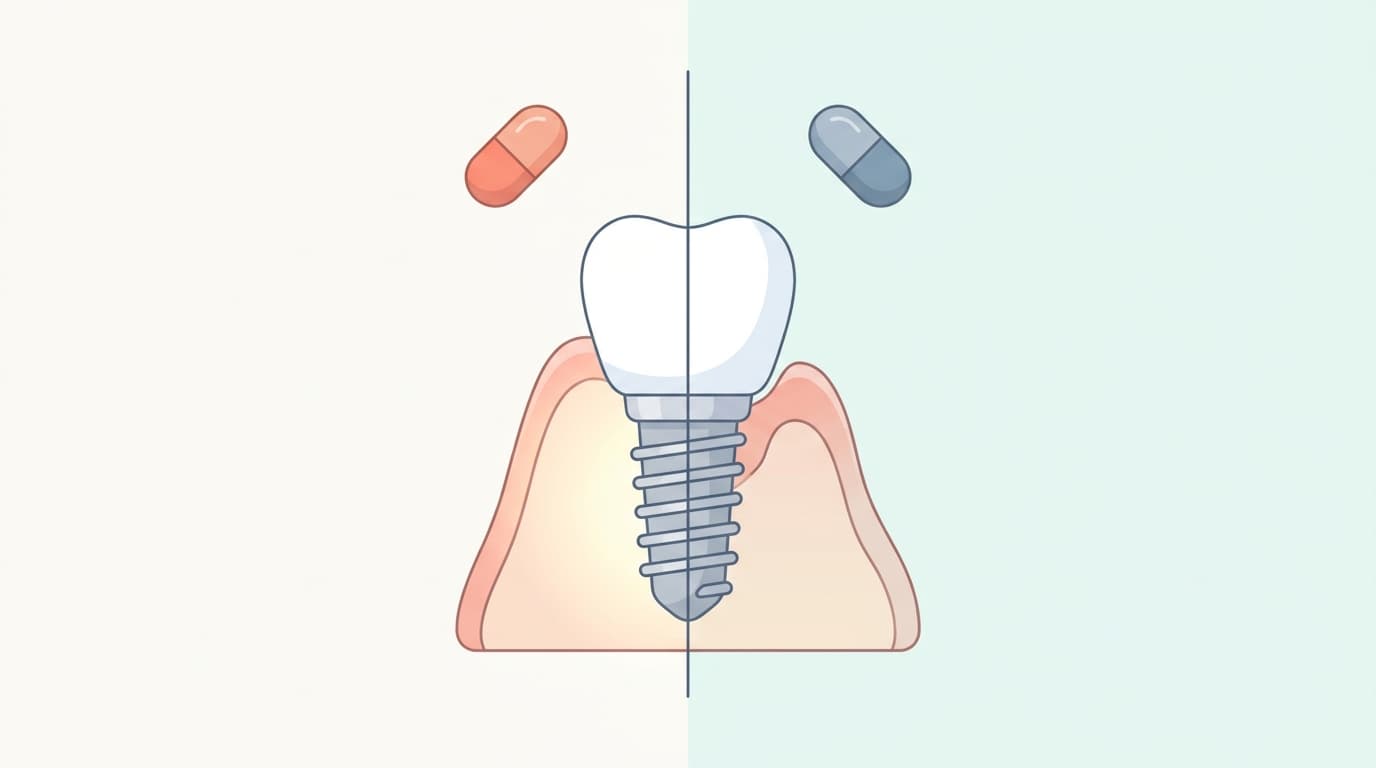
Evidence has emerged that GLP-1 receptor agonists, used to treat diabetes, may also protect the bone around dental implants. According to a 2025 review paper that gathered research in this field, among diabetic patients who had received implants, those taking GLP-1 class drugs lost less bone around their implants than those taking insulin or metformin. Diabetes drugs have long been seen purely as a way to lower blood sugar, but this suggests that the choice of drug itself can determine the fate of the gums and the implant.
Why Diabetes Is a Risk for Implants
When blood sugar is poorly controlled, inflammation in the gum tissue persists longer and the activity of bone-forming cells declines. For this reason, diabetes has long been considered a factor that raises the risk of peri-implantitis, interferes with osseointegration (the process by which an implant fuses tightly to bone), and increases the risk of implant failure itself. Unlike local treatments such as laser or photodynamic therapy that manage peri-implantitis after the fact, this paper is different in that it looks for a way to reduce that risk within the diabetes medication patients are already taking. It also means that, without developing any new device or material, simply choosing among already-prescribed drugs could change the fate of the gums and bone.
Effects Confirmed at the Cellular Level
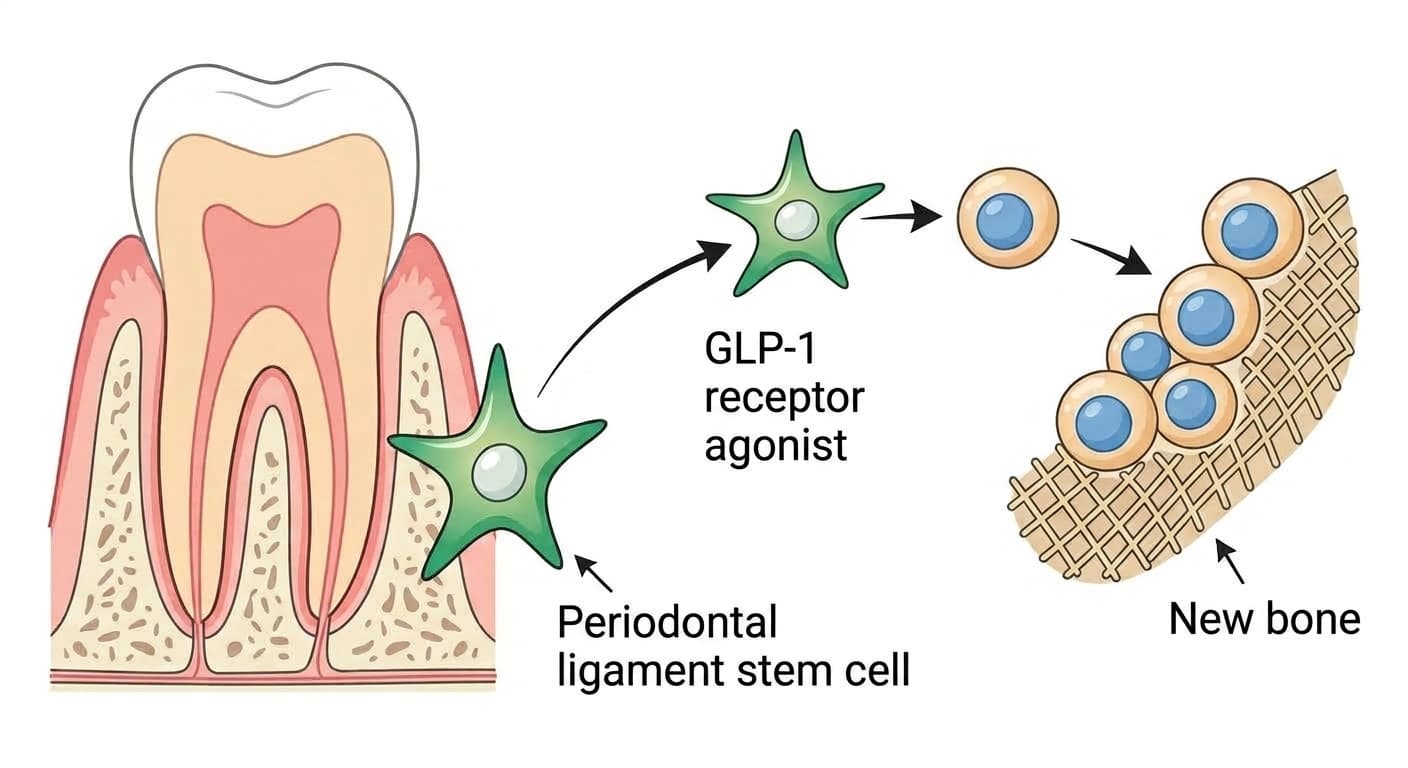
The GLP-1 receptor agonists exenatide and liraglutide promoted bone differentiation in stem cells found in the ligament surrounding the tooth root (periodontal ligament stem cells). This drug class also includes semaglutide, recently well known as an obesity treatment, but the cell and animal studies reviewed here were conducted with the earlier drugs exenatide and liraglutide. In cell studies, the bone-differentiation effect held up even under conditions of high blood sugar or inflammation, and it worked through the Wnt/β-catenin and MAPK pathways involved in bone formation. Combining the drugs with SDF-1, a signaling molecule that supports bone regeneration, further increased stem cell proliferation and bone formation. This suggests there is a pathway that acts directly on bone cells, separate from the blood-sugar-lowering effect.
Animal Studies and Local Delivery Technology
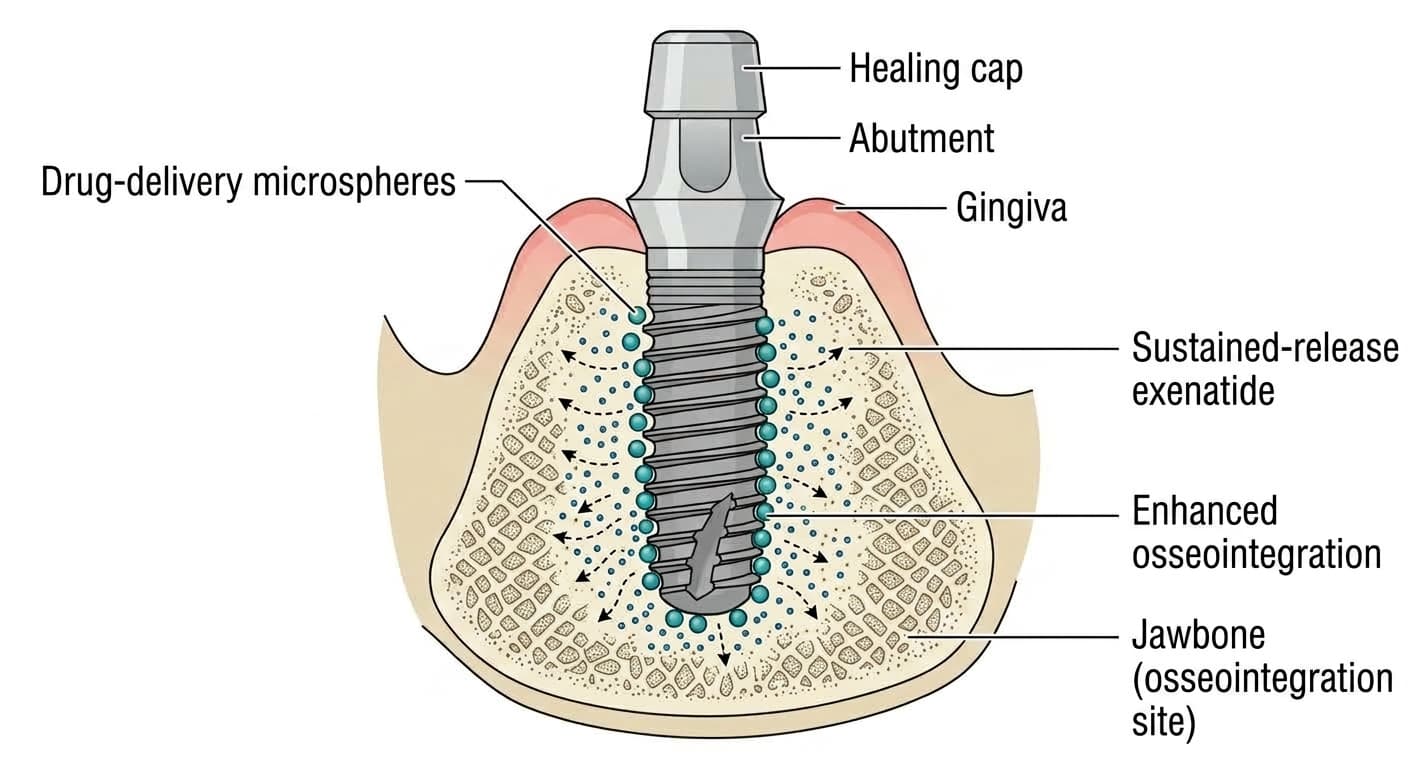
In studies using rats, GLP-1 class drugs reduced gum inflammation, oxidative stress, and alveolar bone resorption, and sped up bone attachment around implants, regardless of whether blood sugar was controlled. There have also been attempts to make the drug act only around the implant rather than administering it throughout the body. In one approach, exenatide was loaded into microspheres (tiny particles) made of the biodegradable polymer PLGA and released slowly around the implant, further boosting osseointegration in diabetic animal models. Because the drug is placed only at the surgical site instead of being swallowed or injected, this approach can reduce its effect on the rest of the body.
In Humans, Only One Retrospective Study Exists
Evidence in humans is still limited. There is one retrospective study of patients with peri-implantitis. In this study, patients taking GLP-1 class drugs had statistically significantly less bone loss around their implants than those taking insulin or metformin. However, because it is a retrospective study that looked back at existing prescription records, it is hard to rule out the possibility that patients differed in ways other than which drug they took. The remaining evidence is still confined to cell and animal studies, so how well the same effect will hold up in humans needs further confirmation.
This review gathered evidence that diabetes medications may affect gum and implant health beyond blood sugar control. In cell and animal studies, the bone-protective effect appeared repeatedly through multiple pathways, but in humans only a single retrospective study has shown this possibility.