
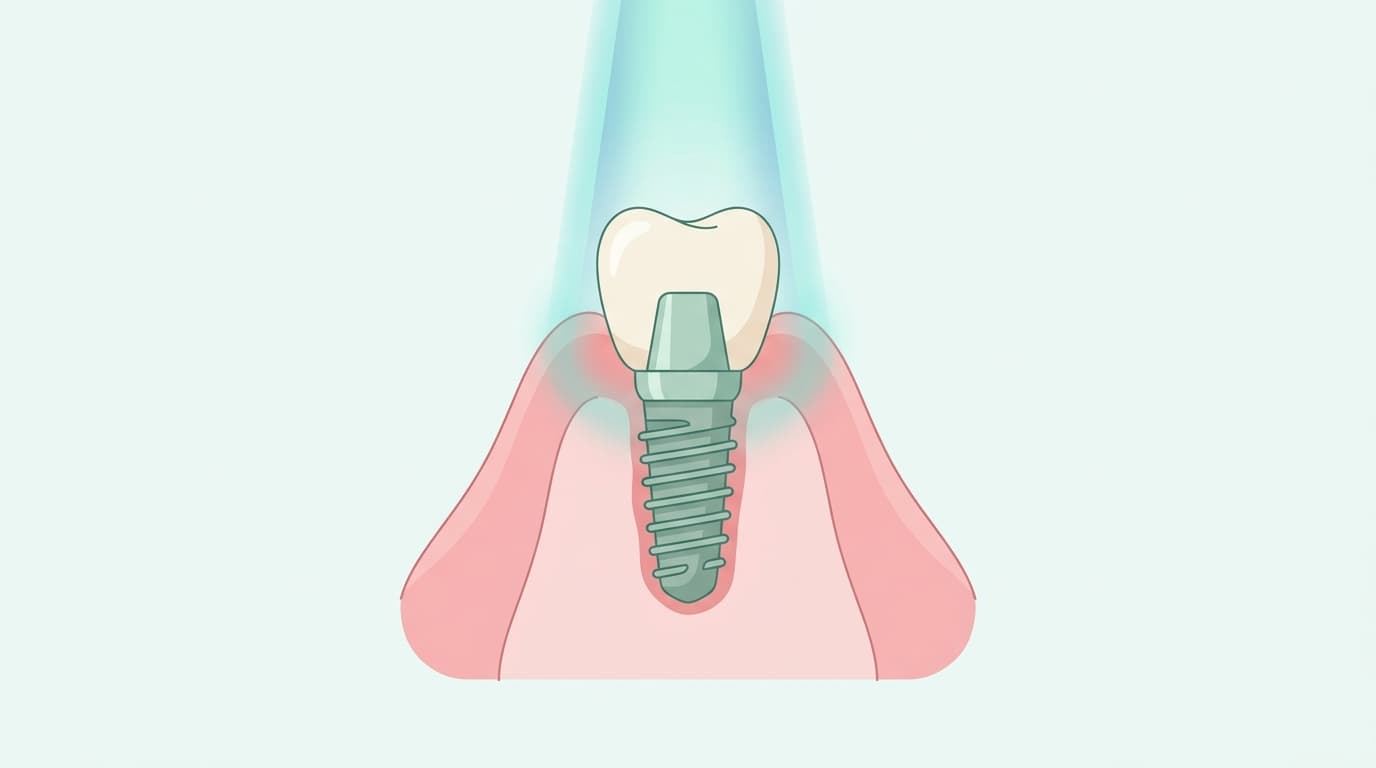
Peri-implantitis is an inflammation of the gum and bone tissue surrounding a dental implant. The standard approach has been mechanical debridement of the surface combined with antibiotics, but recently, treatments that use lasers or light to reduce bacteria have been studied as an alternative. However, older and more recent studies have reached different conclusions about their effectiveness.
What Do Lasers Do
Erbium
(Er) and diode lasers use heat and vibration to eliminate bacteria and inflamed tissue. Photodynamic therapy (PDT) applies a photosensitizer (such as indocyanine green or methylene blue) into the gum pocket, then exposes it to light, generating reactive oxygen species that destroy the bacterial biofilm.Similar Outcomes to Antibiotics
Several meta-analyses comparing photodynamic therapy with antibiotics found no significant differences in plaque index, probing depth, or bone loss. In a study comparing a control group given amoxicillin and metronidazole against a group treated with photodynamic therapy alone, the outcomes were similarly comparable, with the photodynamic therapy group showing only a better bleeding index.
Evidence on the Laser's Own Effect Is Divided
Whether adding a laser to mechanical debridement further reduces bacteria varies from study to study. A meta-analysis pooling eight trials from 2011 to 2022 found no difference in bacterial counts between the laser-added group and the debridement-only group, and rated the certainty of evidence as very low. In contrast, a new randomized controlled trial from 2026 reported greater reductions in probing depth (2.30mm vs. 1.45mm) and higher treatment success rates (81% vs. 42%) in the group that combined Er
laser with photobiomodulation (PBM). However, since this is a single trial with 45 patients, it does not yet carry enough weight to overturn the meta-analysis.Who Is It Used for Now
There is not yet solid evidence that lasers or photodynamic therapy can replace mechanical debridement. Even when AI-based diagnosis of periodontal bone loss detects the disease, choosing a treatment is a separate matter. For patients with slower healing, such as those with diabetes, or who cannot tolerate prolonged antibiotic use, these therapies may be worth considering as an adjunct, but mechanical debridement remains the foundational principle.