
Feeling Resistance Through Your Fingertips While Carving a Virtual Tooth
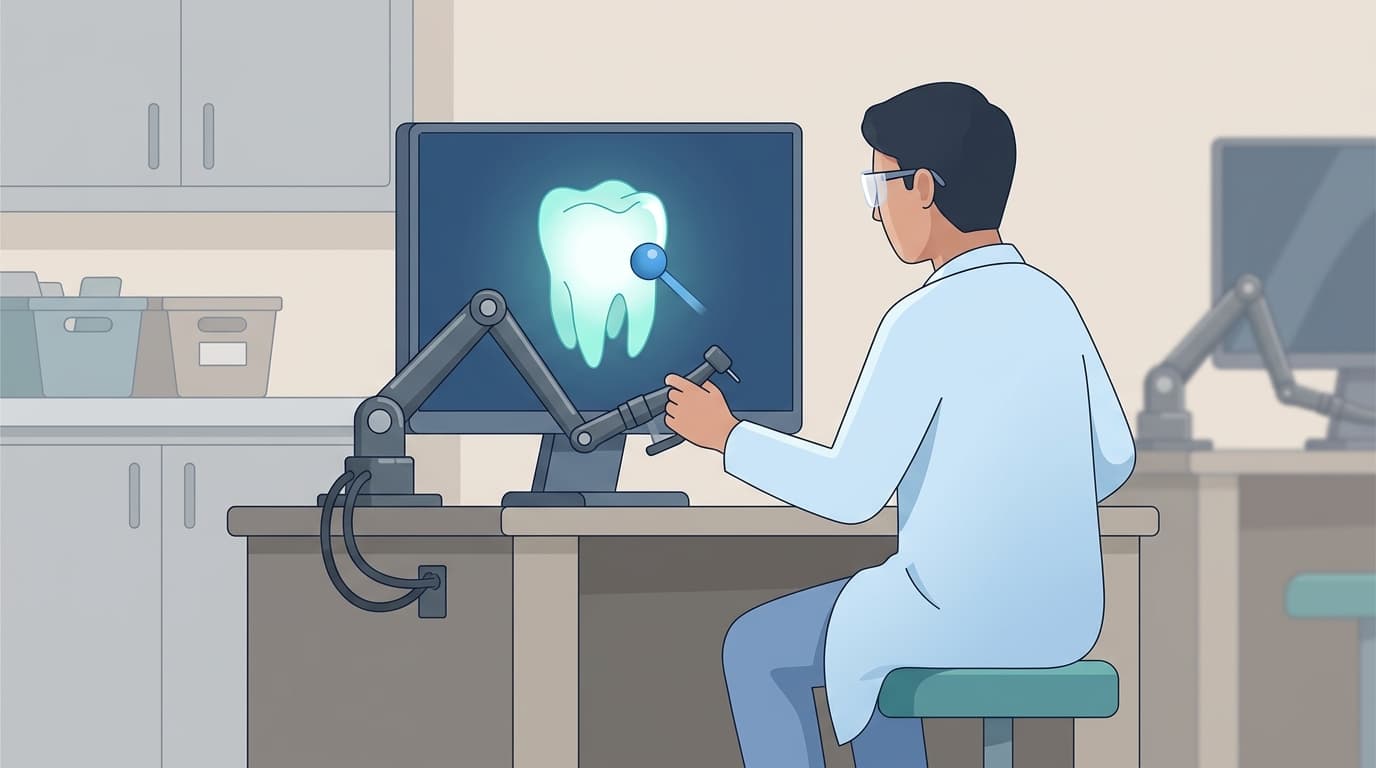
For a long time, preclinical dental training meant fitting a plastic artificial tooth into a mannequin and having students carve it by hand. Now, haptic (touch-feedback) virtual reality simulators are being added to that routine. A real dental instrument is mounted on a robotic-arm-like device that pushes back with force, and as the student carves a three-dimensional tooth on screen, the hand holding the instrument feels resistance similar to actual cutting. The 'Simodont Dental Trainer,' made by the Netherlands-based Nissin Dental, is a well-known example of this equipment.
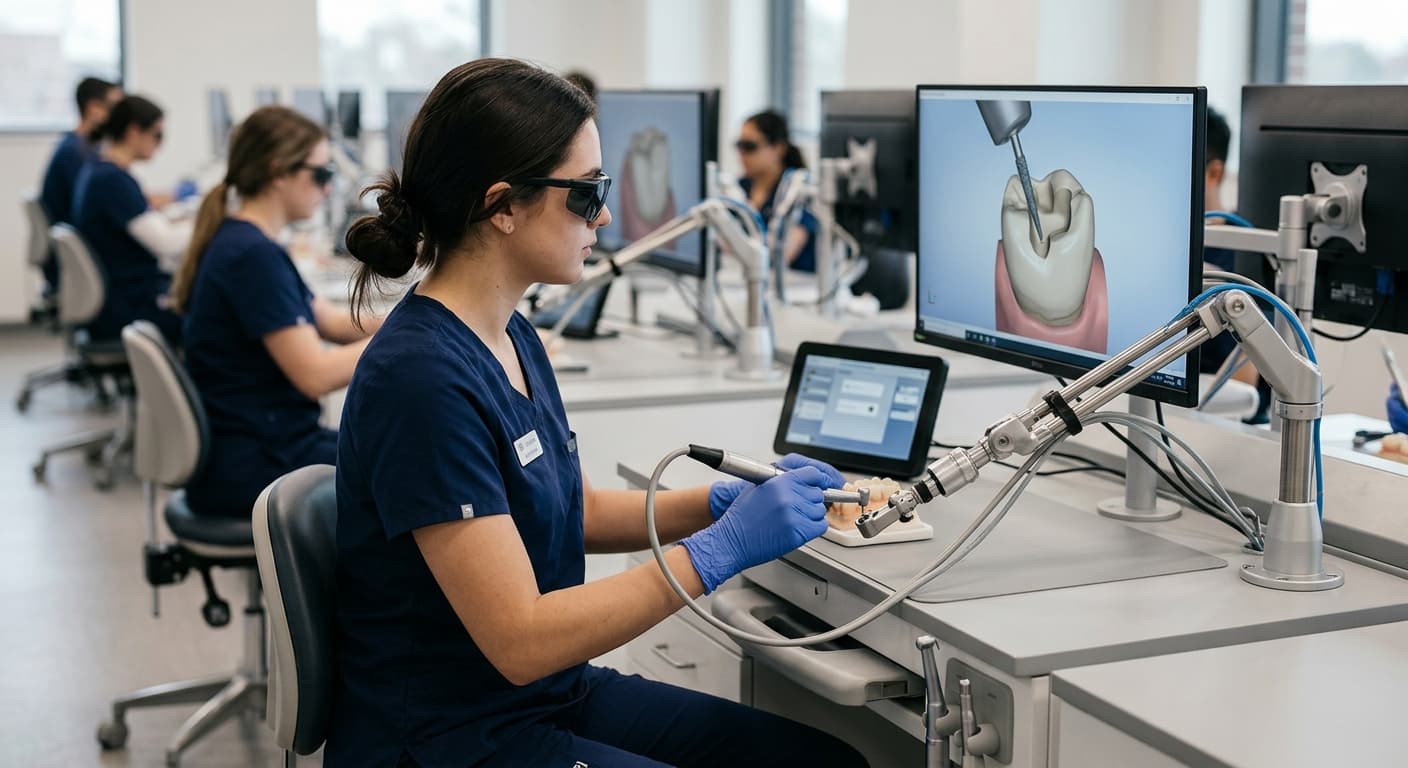
With traditional mannequin training, an instructor could only grade the work visually after the student finished carving, and each repeat attempt required a fresh artificial tooth. The simulator, by contrast, can reload the same virtual tooth as many times as needed, and the device records how much was removed, how long it took, and how much tooth structure remains in real time, scoring the attempt immediately.
They Opened the Pulp Chamber Roof Better, But Not the Shape
In a randomized controlled trial published in 2025 by a research team at the European University of Valencia in Spain, 173 third-year dental students were split into two groups and given pulpotomy training on primary teeth. One group practiced on the Simodont beforehand, while the other practiced only with traditional methods, and both groups then performed the same exercise. The results diverged by task. Students who had practiced on the Simodont were clearly better at opening the roof of the pulp chamber. On the other hand, traditional-only training produced slightly better results for the precision of shaping the inside of the pulp chamber, and there was no statistically significant difference in overall scores between the two groups.
When the same research team compared access cavity preparation for root canal treatment among 40 fourth-year students, the results were different. Students who had practiced on the simulator beforehand clearly outperformed the others on all three measures: cavity shape, roof removal, and internal form. When another Spanish research team compared cavity preparation on 61 extracted human teeth against carving a virtual tooth, the simulator group finished much faster. However, the volume removed was slightly larger on the virtual side than on real teeth, though not enough to be clinically significant.
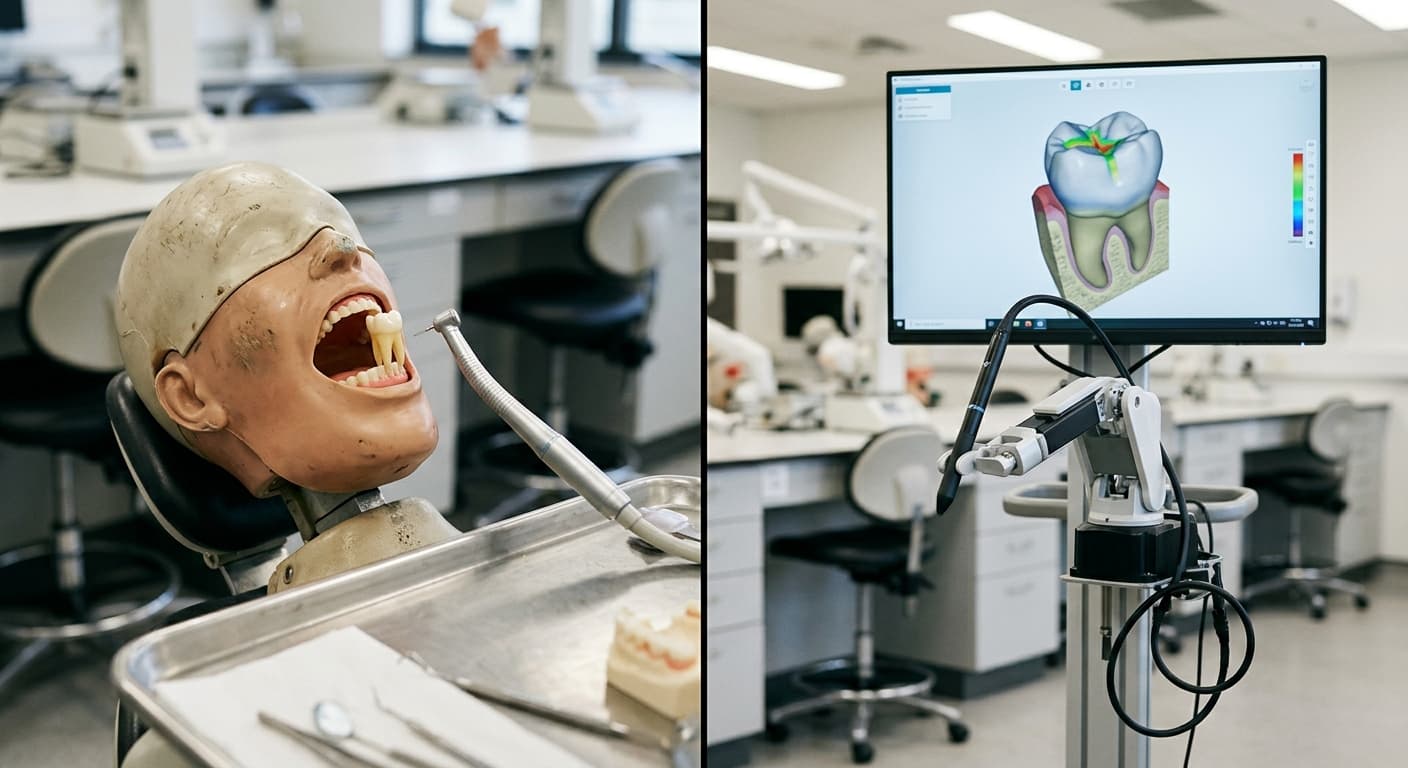
Taken together, these three studies show that the simulator doesn't lift every hand skill evenly. The benefit was clear for movements that require controlling force to drill precisely to a target point, but it was unclear, or even reversed, for movements that rely on fingertip sensitivity to refine subtle shapes.
Students Felt Their Skills Improved, But the Scores Didn't Always Follow
When researchers at the Autonomous University of San Luis Potosí in Mexico surveyed 125 students who trained on the Simodont, nearly eight in ten felt their manual dexterity had improved, and a similar proportion said their confidence in treating real patients had grown. In the earlier pulpotomy training study as well, most students said the simulator helped them understand the treatment process. However, many of the same students said the sensation transmitted through the instrument in their hand differed from an actual dental handpiece, and some said it was hard to learn the feel of opening the pulp chamber roof through the simulator. In other words, the confidence students felt and the scores on their evaluation sheets didn't always move in the same direction.
A systematic review published in 2024, which pooled 23 earlier clinical studies covering more than 1,300 students, concluded that haptic simulators generally improve hand skills. The individual randomized controlled trials that have come out more recently broke that assessment down into specific tasks and found that results vary by procedure and by which skill is being measured. The shift in dental school training tools from mannequins to virtual teeth is clear, but it hasn't yet carried over evenly to every individual fingertip skill.