
A cavity vaccine built the same way as the United States' COVID-19 mRNA vaccines cut cavity progression by more than 60% in a rat trial. A joint research team from Hebei Medical University and the pharmaceutical company CSPC in China encoded a surface protein of cavity-causing bacteria as mRNA, packaged it in lipid nanoparticles, and administered it with a single injection into the arm followed by a nasal spray. Salivary antibodies stayed elevated for more than four months, and the bacteria's ability to attach and form a biofilm was sharply suppressed. The work is still at the rat-trial stage, but it is regarded as the first evidence that mRNA vaccine technology, so far validated only against viruses, can also be applied to bacteria.
Why No Cavity Vaccine Has Emerged in Over 50 Years
The main culprit behind cavities is a bacterium called Streptococcus mutans (S. mutans). This bacterium attaches to the tooth surface, forms a biofilm, and breaks down sugars into acid; as the acid strips minerals from the tooth surface, a cavity begins. Until now, methods such as applying silver diamine fluoride to suppress the bacteria or using fluoride to replace lost minerals have been used, but all of them depend on consistent human cooperation, such as regular application or brushing.
Attempts to block bacterial colonization itself through a vaccine date back to a first proposal in 1969, and have continued for more than half a century since. Protein- and DNA-based vaccine candidates reduced bacterial colonization by up to 47% in animal trials, but none produced a salivary antibody response strong and durable enough for human use, so none reached commercialization.
Applying COVID Vaccine Technology to Cavity Bacteria
The method the research team chose is the same as COVID-19 mRNA vaccines. The team encoded the blueprint of the protein (PAc antigen) that cavity bacteria use to attach to the tooth surface as mRNA, and wrapped it in a lipid nanoparticle (LNP), an oily shell, so it would not break down inside the body. Once this mRNA enters a cell, the cell produces the PAc antigen on its own, and the immune system recognizes it as an invader and produces antibodies.
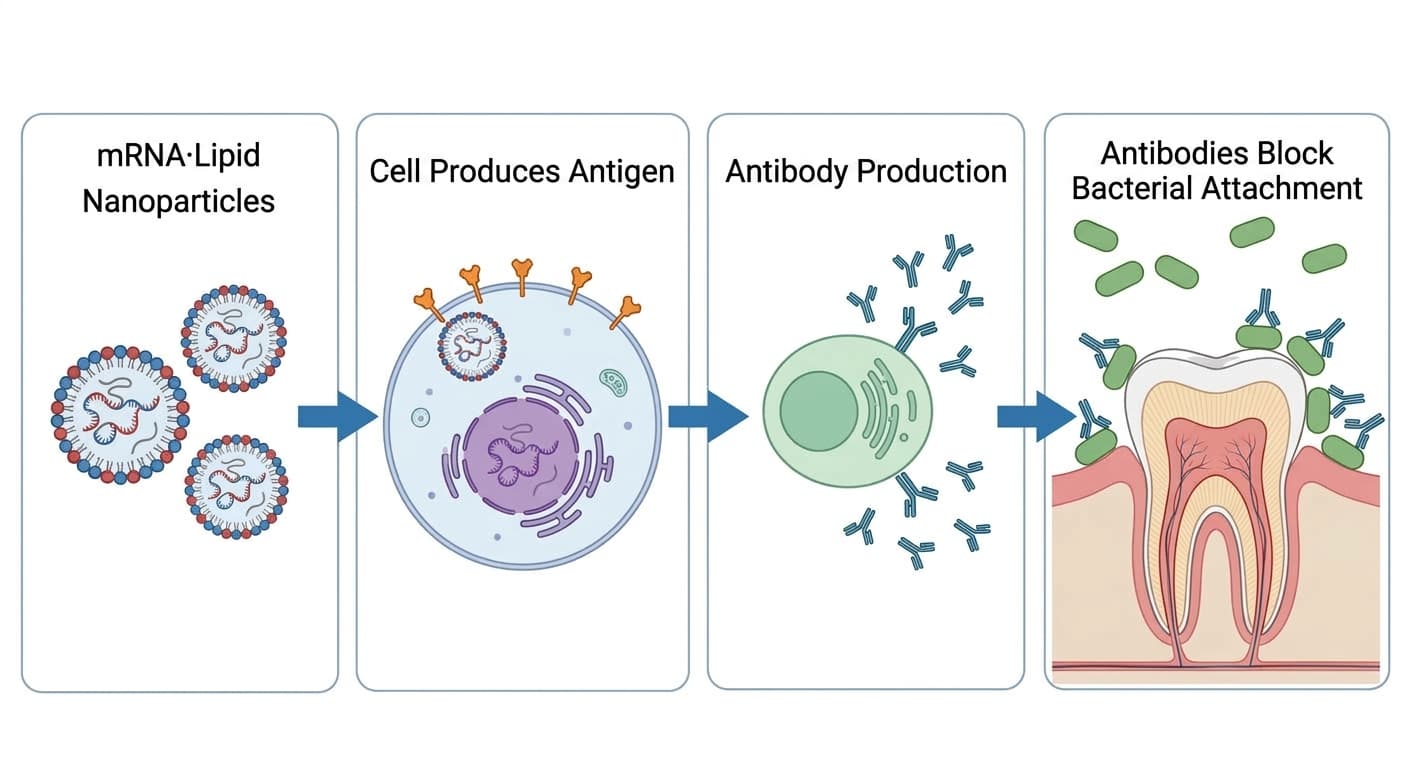
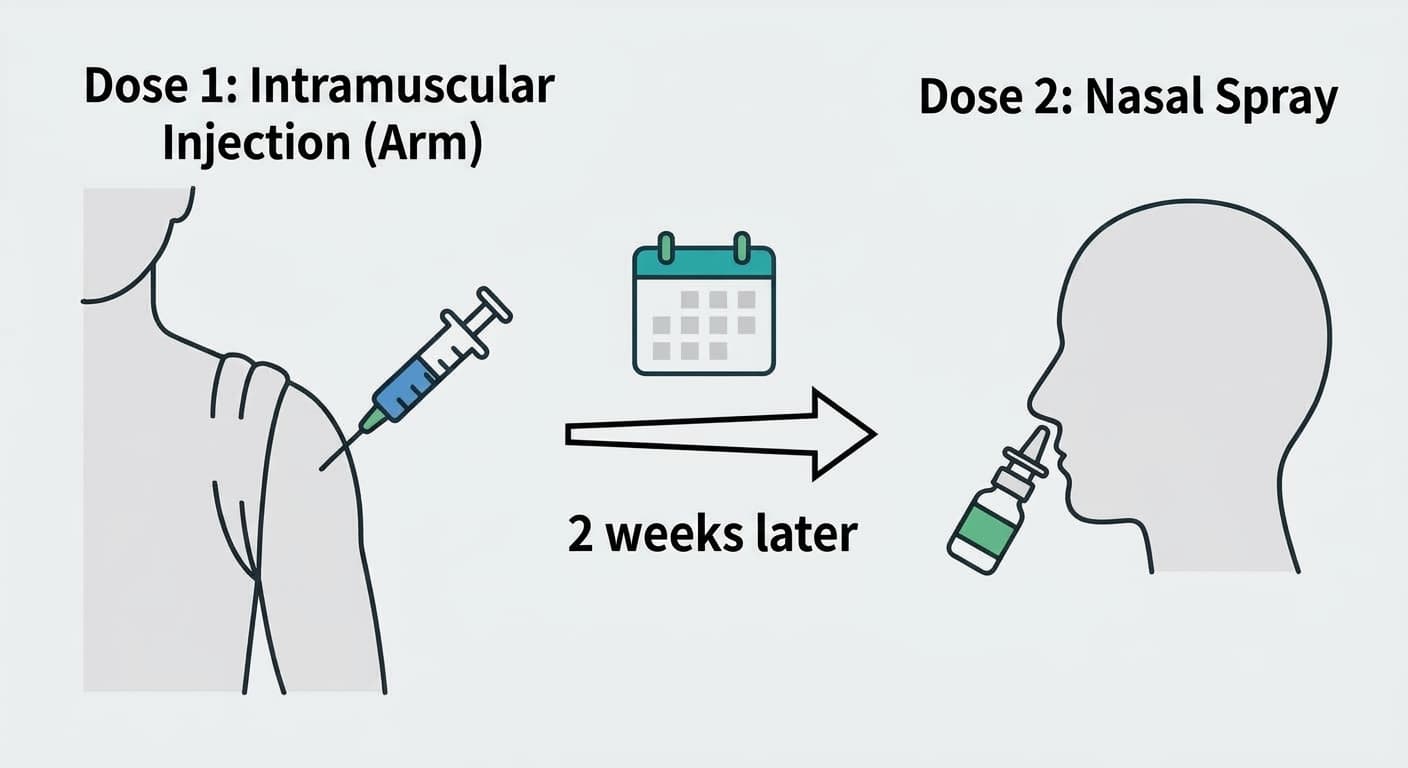
One more element was added here: a fragment of a human antibody (an Fc fragment) was fused to the PAc antigen. The Fc fragment binds to a receptor (FcRn) abundant in the nasal mucosa and has the property of crossing mucosal barriers, helping the vaccine antigen reach immune cells in the nose more effectively. The administration method was not fixed to a single route either. The team first injected the vaccine into arm muscle to raise the body's overall immune response, then, two weeks later, sprayed it into the nose to additionally stimulate mucosal immunity.
Figures Confirmed in Mouse and Rat Trials
When administered to mice, the combination of an intramuscular injection followed by a nasal spray produced the highest and longest-lasting (more than four months) levels of salivary antibody (secretory immunoglobulin A, sIgA), outperforming repeated intramuscular injections alone or repeated nasal sprays alone. The vaccine with the Fc fragment attached produced 2.6 times more of this antibody than the version without it, and saliva containing this antibody clearly suppressed cavity bacteria from forming a biofilm in lab dishes.
In a rat trial where the animals were actually infected with cavity bacteria, the vaccinated group had noticeably fewer intermediate-stage cavity lesions than the group that received only saline, and the overall cavity score was significantly lower. However, this trial has limitations: each group had only 4 to 5 animals, and only a single time point, day 90 after vaccination, was examined. Increasing the nasal spray dose raised antibody levels further but also caused a side effect of weight loss. The research team selected a dose without side effects for the remaining experiments.
The significance of this study lies in being the first to show, through an animal trial, that the mRNA and lipid nanoparticle vaccine platform, previously validated only against viruses, can also be applied to bacteria. The research team is planning primate trials, whose immune systems are closer to humans, and studies on the effects on the oral bacterial ecosystem as next steps. Several stages remain before this can advance to human clinical trials.