
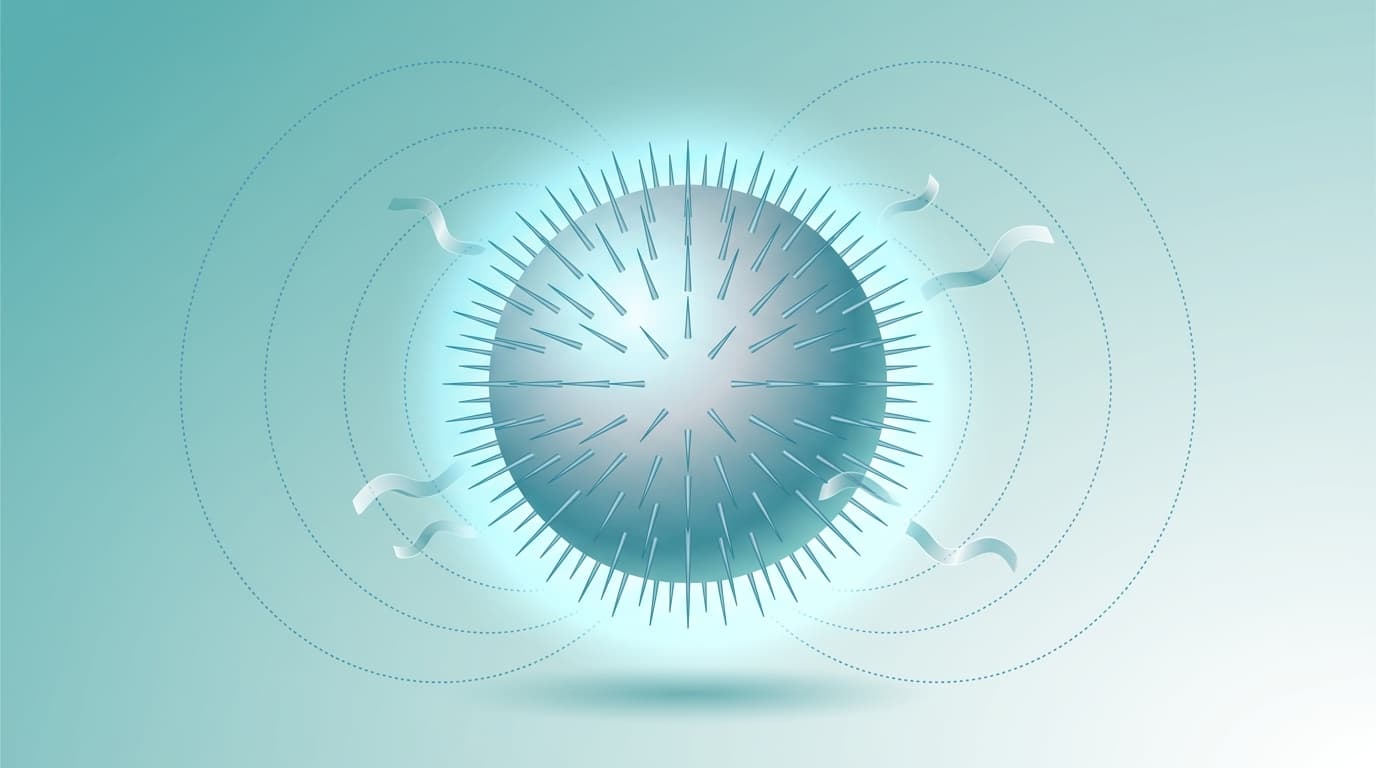
Periodontitis, believed to affect more than half of adults worldwide, begins when biofilm builds up inside the periodontal pocket, the narrow, deep gap between tooth and gum. That gap is hard to reach, whether with a toothbrush or a scaling instrument. In a 2026 study, a Chinese research team built magnetically steered "nanothorn" robots just 10 micrometers in diameter, injected them into the periodontal pockets of mice with periodontitis, and reported that the robots mechanically scraped away biofilm while releasing anti-inflammatory compounds on site, reducing bone loss as well. Human trials have not yet begun; the work remains at the animal-study stage in mice.
Research continues to show that periodontitis does not stay confined to the mouth but can affect organs far away. One study found periodontitis bacteria spreading to the heart and worsening heart attacks, underscoring why properly clearing biofilm from the periodontal pocket matters.
Magnet-Driven Spikes Push Through the Mucus Barrier
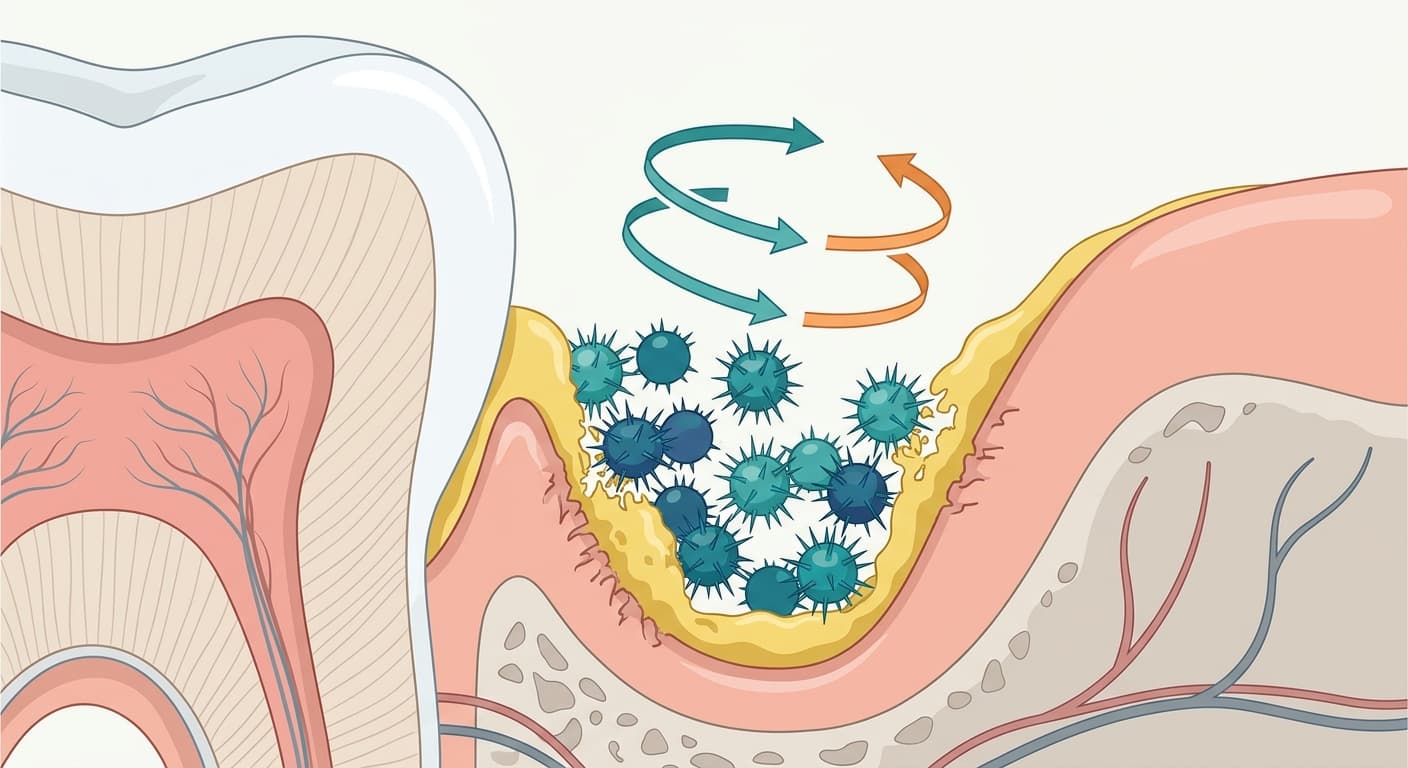
Inside the periodontal pocket, subgingival exudate (the sticky fluid that seeps from the pocket) and saliva flow continuously, washing medication away. The biofilm itself is wrapped in a sticky protective substance secreted by bacteria, making it hard for antibiotics or anti-inflammatory drugs to penetrate deep inside. Conventional approaches, such as scraping with an ultrasonic scaler or applying topical medication, leave spots unreached by instruments when the pocket is curved or deep.
The research team built 10-micrometer particles that encased the anti-inflammatory compound curcumin (a natural anti-inflammatory derived from turmeric) in an "ionogel," a special gel that traps ionic liquid. They coated the surface with layers of iron, platinum, and gold in sequence so it would respond to a magnet, then grew a dense layer of sharp-tipped thorn structures on the gold surface. Each thorn measured about 60 nanometers across, raising the robot's surface roughness nearly 70-fold compared with a thorn-free version.
Applying a rotating magnetic field made these particles roll or spin in place to move. The thorned robots moved 2.6 times faster than thornless ones and penetrated 1.5 times deeper into a simulated periodontal pocket mucus matched to saliva's viscosity. Their adhesion to gum epithelial cells was also 2.3 times higher than the thornless robot's, letting them linger without being washed away by saliva.
Scraping with Spikes, Releasing Medicine on the Spot
The nanothorns on the robot's surface do more than aid movement, they also serve as tools that directly break down biofilm. When a magnetic field rotated the robots against biofilm grown from the cavity-causing bacterium Streptococcus mutans, the number of living bacteria fell by 74% and biofilm thickness dropped by 88%. That removal effect was 1.6 times stronger than with a thornless robot, and similar results appeared against biofilm formed by Porphyromonas gingivalis and Fusobacterium nucleatum, bacteria that cause periodontitis.
Once the biofilm cleared, curcumin inside the robot was released, a process designed to speed up on contact with ethanol. The released curcumin suppressed Porphyromonas gingivalis by about 90%, Streptococcus mutans by 96%, and Fusobacterium nucleatum by 89%, while also scavenging reactive oxygen species. It also lowered the proportion of M1 macrophages (a type of immune cell that drives inflammation) and raised the proportion of M2 macrophages, which support tissue repair, killing bacteria while easing the inflammatory response itself.
Bone Loss Eased in the Mouse Trial, But It's Still a Mouse-Stage Study
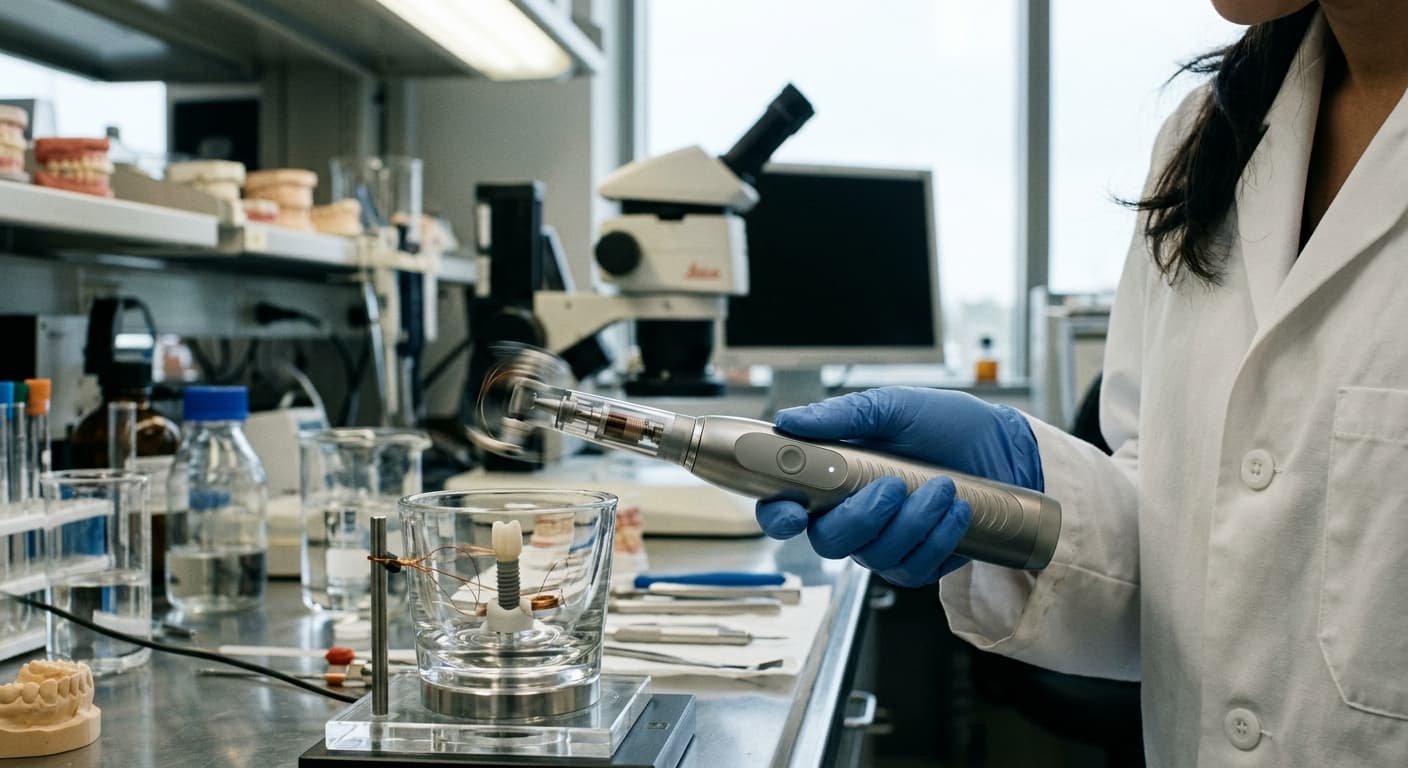
The research team induced periodontitis in mice by ligating a thread around the second molar, then injected the robots into the periodontal pocket every two days over two weeks, applying a magnetic field for 30 minutes at a time with a handheld, electric-toothbrush-shaped magnetic device.
After treatment, computed tomography (CT) scans of the jawbone showed increased bone volume and trabecular (densely arranged bone structure) number, along with narrower spacing between trabeculae, signs that the bone loss typical of periodontitis had been suppressed. Analysis of the bacterial composition in gum tissue also showed a shift back toward a healthier balance, with a drop in the bacterial proportions that typically rise in periodontitis. The iron and gold used in the robots briefly rose in the gums and saliva within 6 hours after treatment but returned to baseline within 24 hours, and no accumulation was detected in major organs such as the heart, liver, or kidneys.
Still, these results come from a single animal study in mice, and the mucus barrier the robots penetrated was not actual periodontal pocket fluid but a simulated substance matched only for viscosity. The research team itself noted that imaging equipment to track the robots' movement in real time, and validation in larger animals, remain to be done. Even so, this study stands as the first demonstration, inside a living mouse, of a magnetically steered microrobot reaching deep into the periodontal pocket to directly break down biofilm while releasing medication on the spot.